Browse by category

Updated for 2026. This guide is for restaurant owners, operations managers, Updated for 2026. This guide is for construction teams, contractors, project managers, site supervisors, and operations teams that need a more reliable way to document field work. It is especially useful if your team is still managing daily reports, punch lists, submittals, and crew schedules across spreadsheets, chat messages, email threads, and paper forms.
Construction projects rarely fail because one form is missing. They usually become difficult to manage because important information is scattered. A site issue is mentioned in a message but not recorded in the daily report. A punch item is assigned but not followed up. A submittal is waiting for approval, but the field team does not know the latest status. A crew schedule changes, but the change is not visible to everyone who needs it.
A strong construction documentation workflow connects field activity, open issues, approvals, labor planning, and project closeout. The goal is not to create more paperwork. The goal is to make project information easier to trust.
What is construction site documentation?
Construction site documentation is the process of recording what happens on a jobsite, who was involved, what work was completed, what issues remain, and what decisions or approvals are still needed. It gives project managers, site supervisors, subcontractors, and office teams a shared record of project progress.
Good documentation helps answer practical questions:
- What work was completed today?
- Who was on site?
- What issues, delays, or safety concerns were reported?
- Which punch list items are still open?
- Which submittals are approved, pending, revised, or rejected?
- Which crews are scheduled for upcoming work?
When those answers are easy to find, construction teams can reduce rework, improve accountability, and keep projects moving with fewer status meetings.
Core documents every construction team should manage
Every project is different, but most construction documentation workflows depend on four core records: daily reports, punch lists, submittal logs, and crew schedules.
| Document | Main purpose | Best time to use it |
|---|---|---|
| Construction daily report | Records site activity, labor, equipment, weather, progress, delays, and incidents. | Every workday or site visit. |
| Punch list | Tracks incomplete, defective, or corrective work before handover or closeout. | During inspections, walkthroughs, and closeout reviews. |
| Construction submittal log | Tracks materials, drawings, product data, samples, and approval status. | Before procurement, installation, or work that requires approval. |
| Crew schedule | Plans labor assignments, trade coverage, work shifts, and site availability. | During weekly planning, lookahead scheduling, and daily coordination. |
1. Construction daily reports: create the project record
A construction daily report is the foundation of site documentation. It records what happened on a specific day and creates a timeline that can be used for progress tracking, dispute resolution, billing support, and internal review.
A useful daily report should include:
- Project and date information: project name, location, report date, report author, and site supervisor.
- Weather and site conditions: weather, temperature, site access, and conditions that affected work.
- Labor and crew details: companies on site, crew size, trade, working hours, and assigned tasks.
- Work completed: completed activities, work areas, quantities, milestones, and progress notes.
- Equipment and materials: equipment used, material deliveries, shortages, and storage issues.
- Delays and disruptions: late deliveries, access problems, design questions, inspection delays, or weather impacts.
- Safety and incidents: toolbox talks, safety observations, near misses, injuries, and corrective actions.
- Photos and attachments: site photos, delivery photos, inspection evidence, and supporting files.
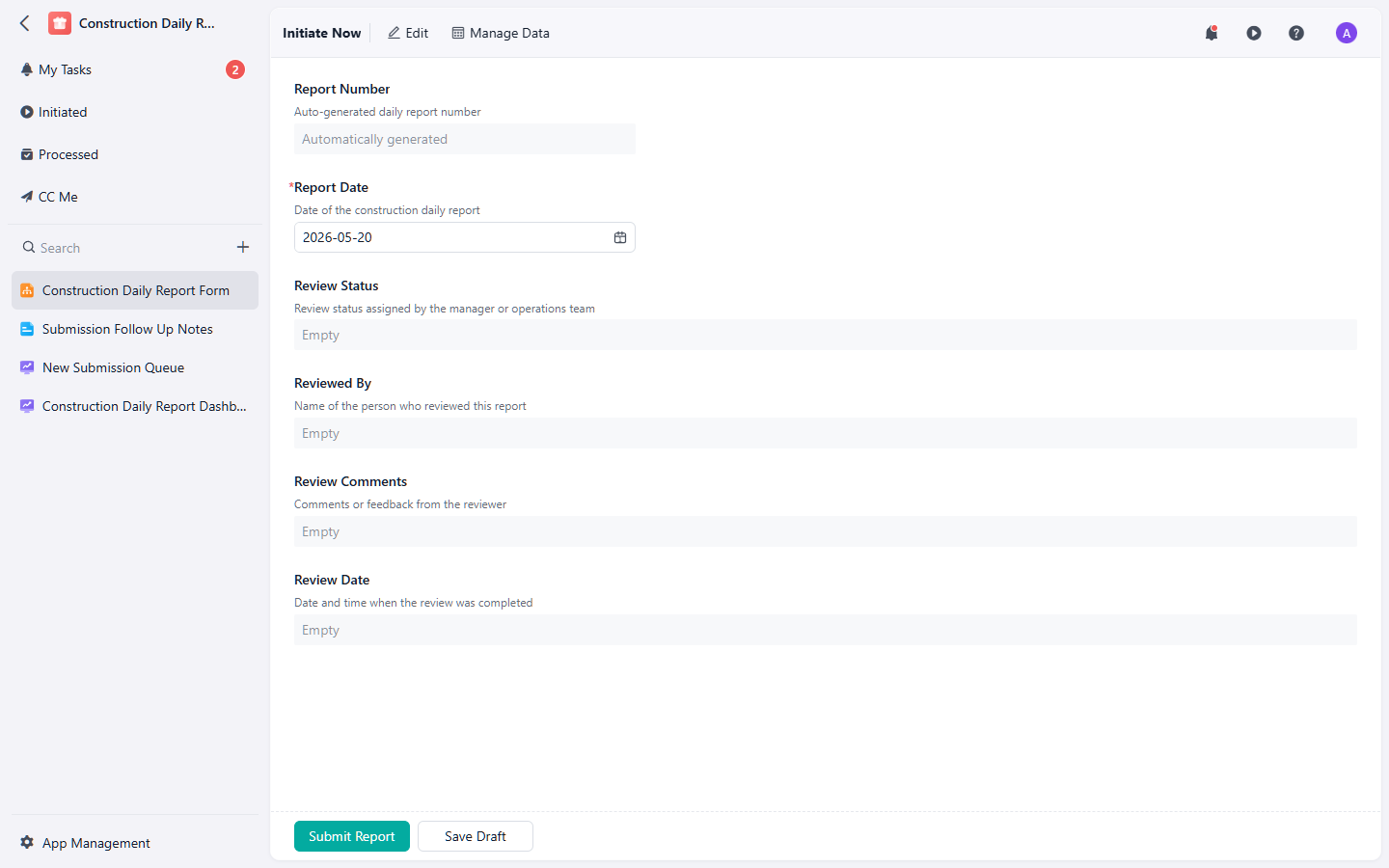
A daily report helps turn jobsite activity into a reliable project record.
If your team needs a structured starting point, the construction daily report form can help standardize how field teams record site progress, delays, labor, equipment, and daily notes.
2. Punch lists: manage defects and closeout work
A punch list tracks work that must be corrected, completed, or verified before a project area can be accepted. It is one of the most important documents during inspections, walkthroughs, and closeout.
Punch list issues often include incomplete finishes, damaged materials, missing fixtures, failed inspections, installation defects, documentation gaps, or items that require owner approval. If these items are not tracked clearly, closeout can become a long chain of emails and repeated site visits.
A strong punch list should include:
- Issue description: what needs to be fixed, completed, or verified.
- Location: building, floor, room, zone, unit, or drawing reference.
- Responsible party: subcontractor, trade, internal owner, or project lead.
- Priority: critical, high, normal, or low.
- Due date: target date for correction or verification.
- Status: open, assigned, in progress, ready for review, rejected, or closed.
- Evidence: photos before correction, photos after correction, comments, and sign-off.
The punch list form is useful when teams need a repeatable way to assign issues, track responsibility, attach evidence, and confirm closeout status.
3. Submittal logs: keep approvals visible
A construction submittal log tracks the review and approval process for materials, product data, shop drawings, samples, equipment specifications, and other project documents. It helps prevent work from starting before the required approvals are complete.
Submittals are important because they connect design intent, procurement, field installation, and project quality. If approval status is unclear, teams may order the wrong material, install before approval, miss a revision, or delay work while waiting for a decision.
A practical submittal log should include:
- Submittal number: a unique ID for tracking and reference.
- Specification section: the spec, drawing, or work package related to the submittal.
- Submittal type: shop drawing, product data, sample, certificate, manual, or other document.
- Responsible party: subcontractor, supplier, reviewer, architect, engineer, or project manager.
- Submission date: when the item was submitted for review.
- Review status: pending, approved, approved as noted, revise and resubmit, rejected, or closed.
- Required date: the date approval is needed to avoid procurement or installation delays.
- Revision history: version number, comments, resubmission date, and final decision.
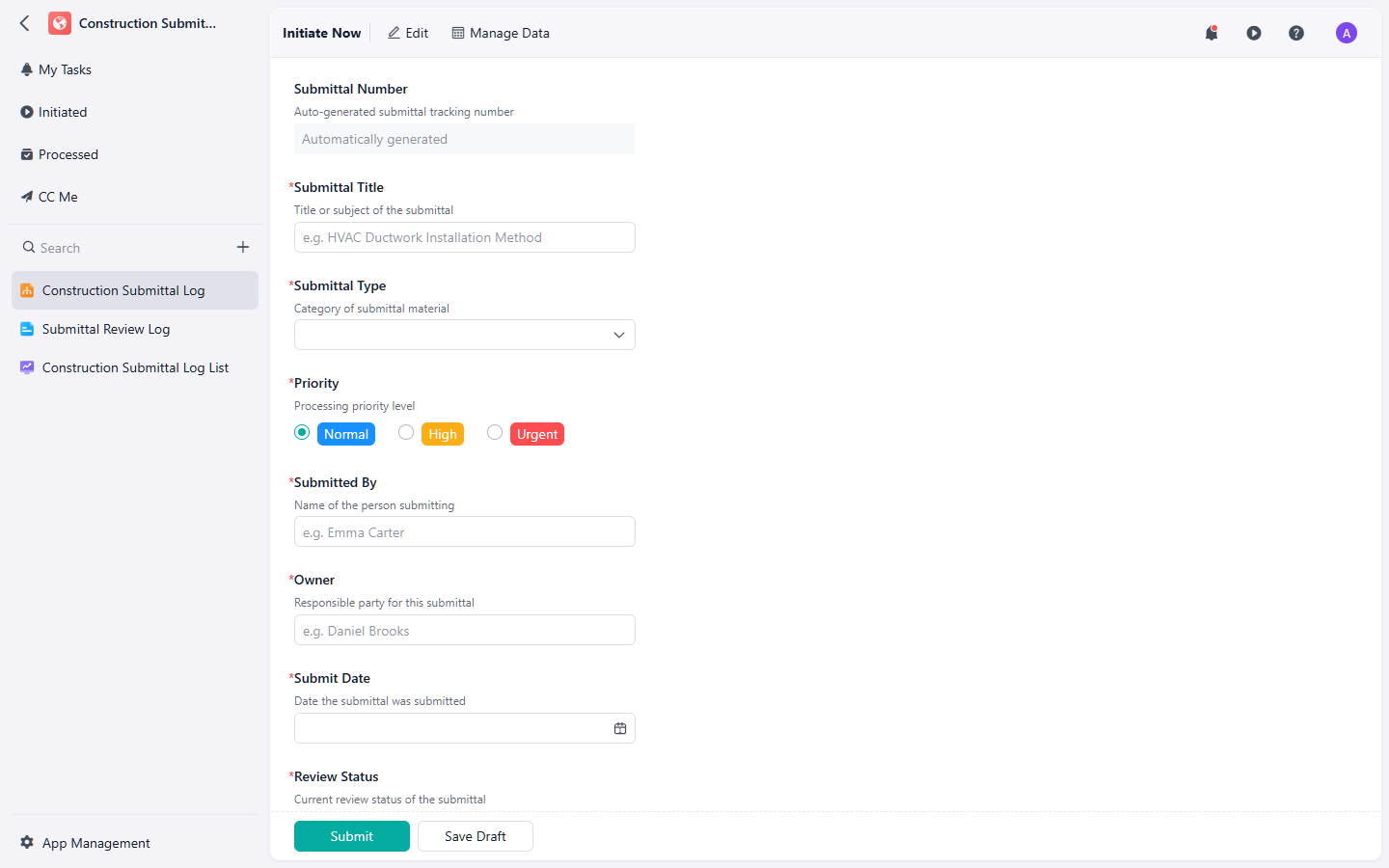
A submittal log helps teams see which approvals are pending, revised, approved, or blocking work.
The construction submittal log can help teams organize approval status, review ownership, required dates, and revision history in one shared process.
4. Crew scheduling: connect labor plans with field execution
Crew scheduling is where planning becomes daily execution. Even when drawings, materials, and approvals are ready, the work still depends on having the right crew on site at the right time.
A construction crew schedule should make labor plans visible across project managers, site supervisors, foremen, and subcontractors. It should show who is scheduled, where they are working, what task they are assigned to, and whether any change affects the project plan.
A useful crew schedule should include:
- Project or work area: site, phase, floor, zone, or unit.
- Trade or crew type: electrical, plumbing, HVAC, concrete, framing, finishing, inspection, or general labor.
- Assigned crew: crew name, supervisor, company, team size, and contact details.
- Work date and shift: planned date, start time, end time, and shift notes.
- Task details: scope of work, planned output, required equipment, and dependencies.
- Status: scheduled, confirmed, delayed, completed, cancelled, or rescheduled.
- Constraints: access restrictions, inspection windows, material readiness, or safety requirements.
The construction crew scheduling template can help teams coordinate labor assignments, shift plans, work areas, and schedule changes without relying only on messages or separate spreadsheets.
How these documents should work together
The real value of construction documentation comes from connecting the documents, not just creating them separately.
- The crew schedule sets the plan. It shows who should be on site and what work is expected.
- The daily report records what actually happened. It confirms completed work, delays, labor, equipment, weather, and site conditions.
- The submittal log controls what can move forward. It shows whether materials, drawings, or product data are approved before work begins.
- The punch list captures what still needs correction. It turns inspection findings and closeout issues into assigned, trackable tasks.
When these records are disconnected, project managers have to reconstruct the truth manually. When they are connected, the team can see the plan, the actual progress, the approval blockers, and the remaining closeout work.
Common construction documentation mistakes
Most documentation problems come from inconsistent habits rather than missing tools. The following mistakes are common on growing construction teams.
- Writing reports too late: Daily reports become less accurate when they are completed days after the work happened.
- Using vague issue descriptions: A punch item such as “fix wall” is hard to assign, verify, or close without location and evidence.
- Tracking submittals only in email: Email threads make it difficult to see current status, required dates, and revision history.
- Separating crew schedules from field updates: If the schedule changes but the daily report does not reflect the change, the project record becomes unreliable.
- Not attaching photos: Photos make progress, defects, delays, and completed corrections easier to verify.
- Using too many status labels: A complicated status system makes reporting harder. Use simple statuses that the field team will actually update.
Best practices for construction documentation in 2026
Construction teams do not need to document everything equally. They need to document the information that affects schedule, cost, quality, safety, accountability, and closeout.
- Standardize required fields: Decide which fields must be completed before a report, issue, submittal, or schedule entry can be considered valid.
- Use consistent naming: Keep project names, locations, work areas, subcontractor names, and status labels consistent.
- Capture evidence at the source: Let field teams attach photos, notes, and updates while the work is happening.
- Make ownership clear: Every open issue, submittal, and schedule change should have a responsible person or company.
- Review exceptions, not everything: Managers should focus on delays, overdue items, rejected submittals, open punch items, and unresolved blockers.
- Keep documentation tied to action: A report should lead to visibility, a punch item should lead to correction, and a submittal status should guide procurement or installation.
Final thoughts
Construction site documentation is not just an administrative task. It is how teams protect project history, coordinate field work, manage approvals, and reduce avoidable confusion.
If your current process depends on disconnected spreadsheets, chat messages, email threads, and paper forms, start by standardizing the core records: daily reports, punch lists, submittal logs, and crew schedules. Together, they give construction teams a clearer way to track what was planned, what happened, what is blocked, and what still needs to be completed.