Browse by category

100%
Reported Equipment-Inspection Completion
95%
Equipment-Networking Rate
Over 50
Apps Built in One Year
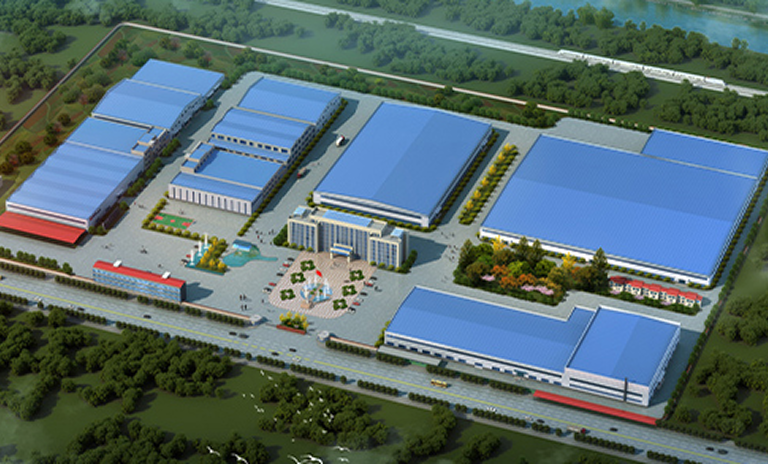
ZC Rubber Group, a major tire manufacturer, used Jodoo at one of its truck tire plants to digitize quality reporting and equipment inspections. Teams replaced paper forms with digital records and gave managers faster access to production data.
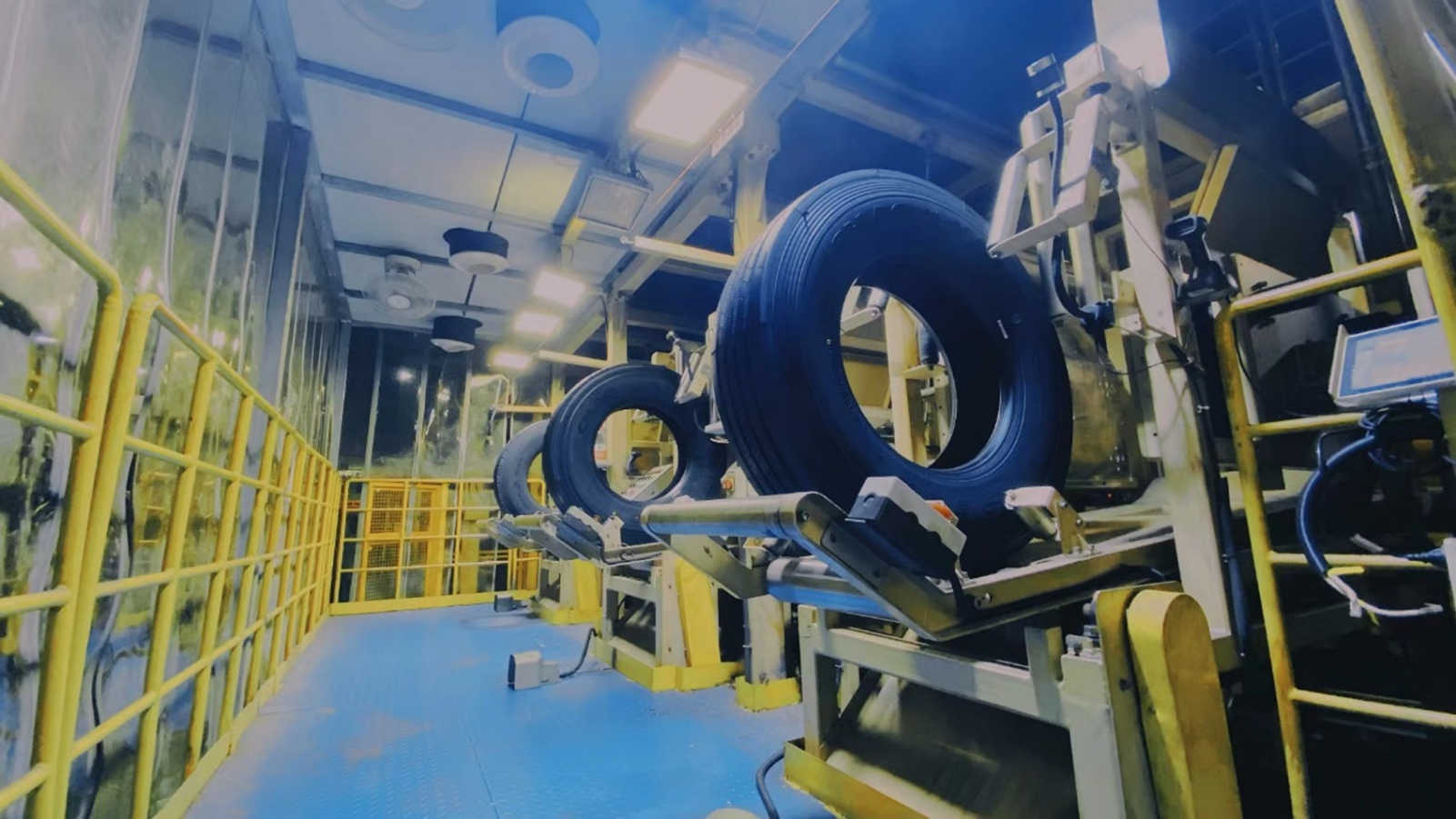
For ZC Rubber Group, a tire is more than a finished product. It is the outcome of many linked decisions: material formulation, mixing, production execution, inspection, equipment reliability, energy use, logistics, safety, and traceability. One missing inspection, unclear repair request, or miscalculated quality statistic can affect far more than a single form. It can affect production continuity, product quality, employee safety, and the company’s ability to meet customer expectations.
ZC Rubber Group had already made serious investments in industrial digitalization. Its manufacturing environment included systems for mixing-process execution, all-steel tire production management, online inspection, energy management, and quality control. These systems had begun to exchange data, giving the company a foundation for broader analysis. But the day-to-day work around those systems — inspections, data collection, approvals, repairs, reporting, and safety follow-up — still needed a simpler way to move from the shop floor to management action.
ZC Rubber Group’s next step was to make factory data useful for day-to-day decisions, while cutting down on paperwork, repeated calculations, and phone calls.
The Challenge: Bridging the Gap Between Digital Systems and Daily Factory Operations
ZC Rubber Group began exploring information management in 2017, first using WhatsApp for employee attendance and administrative approvals. That was a useful first step, but the company’s manufacturing environment demanded more. The business had many management modules and complex processes. Off-the-shelf software offered limited flexibility for ZC Rubber Group’s specialized workflows, while custom development required additional investment and longer adjustment cycles.
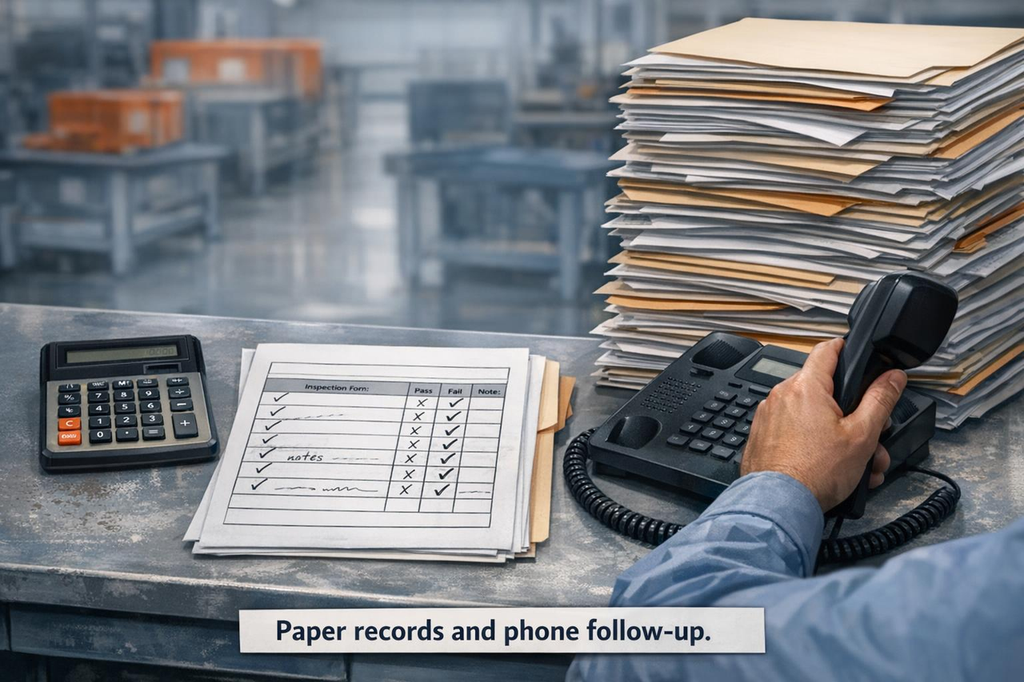
The problems were especially visible in four areas.
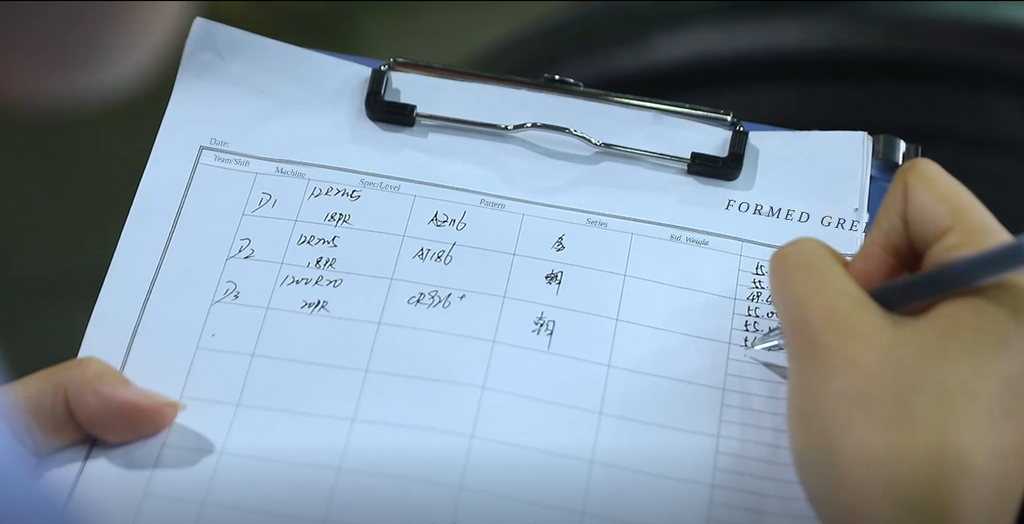
- Quality sampling was slow and exposed to manual error.Tire quality is a defining issue for a manufacturer. Before the digital workflow, employees pulled tires from a production line for testing, recorded results on paper, graded the products, and then calculated the batch pass rate by hand. For a single production-line sample, the statistics and calculations alone took four to five hours. The forms then had to be collected and consolidated. Missed items and calculation errors were a persistent risk.
- Finished-product inspection created more repetitive work than insight. Every tire needs a final inspection before it reaches the finished-goods warehouse. The old process required people to perform repeated, mechanical recording and calculation work. That consumed labor, created downstream reconciliation costs, and delayed the management view of quality data.
- Equipment maintenance was difficult to control. When a machine failed, workers often relied on phone calls to report the problem. In a busy, noisy workshop with constant logistics traffic, that was not a dependable channel. Information could be incomplete or misunderstood, and managers could not easily see repair progress from report through closure.
- Safety inspections were hard to verify. A missed hazard can stop a machine, affect a larger production area, or create a safety risk for people. Yet manual inspection records required employees to remember the task, supervisors to chase the status, and staff to archive data later. Managers could not always tell in time whether a planned inspection had happened, whether the inspection was real, or whether a finding had received action.
These challenges are familiar to many manufacturers. Core systems may capture production data, but the “last mile” of management still depends on people: the operator who checks a machine, the inspector who records a result, the maintenance worker who receives an alert, and the manager who needs a current view. When those people work with paper and disconnected messages, data arrives too late to guide the work.
ZC Rubber Group needed a flexible way to digitize those operating details without launching a long custom-development project for each new process.
The Solution: A Digital Operations Layer That Works Alongside Core Manufacturing Systems
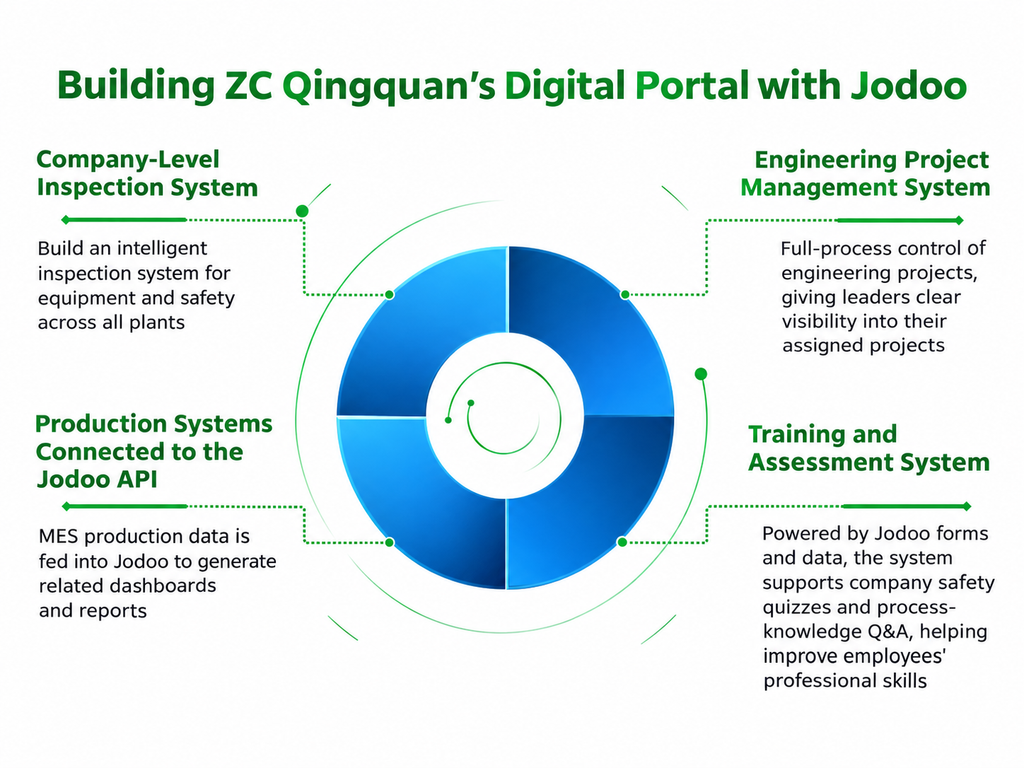
ZC Rubber Group approached the change in stages. It did not attempt to replace its manufacturing execution, energy, testing, or production-management systems. Instead, it used Jodoo as a flexible operational layer for the business workflows that surround and extend those systems.Disconnected Operational Data
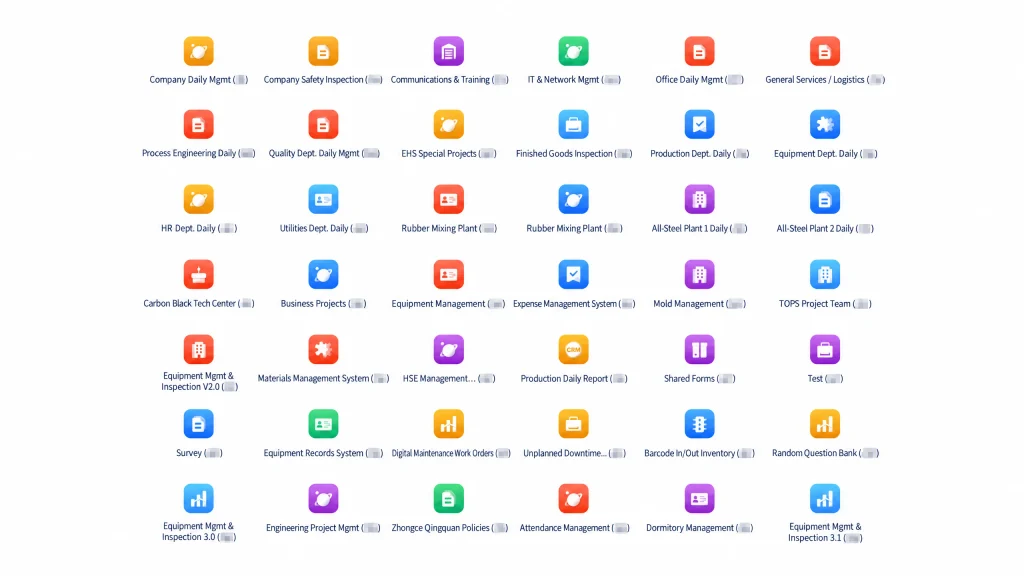
The company first mapped the factory’s needs, then built apps around the actual activities of quality teams, equipment owners, safety personnel, and managers. Within about a year, the organization — then employing more than 2,900 people — reported business-wide coverage across office approvals, manufacturing processes, data reporting, and real-time data summaries.
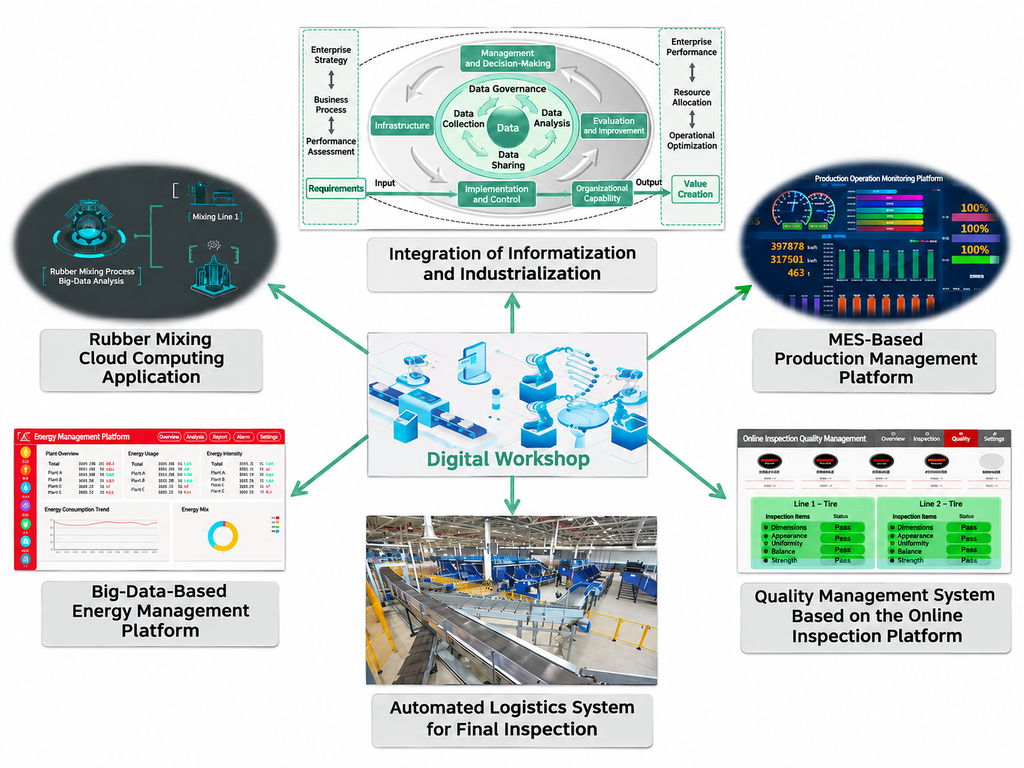
Jodoo works alongside ZC Rubber’s existing manufacturing systems to bring shop-floor data into one place.
The company’s existing digital foundation included several systems supporting different aspects of its manufacturing operations:
- The mixing MES system collects production data, manages process formulas, and supports quality traceability.
- The all-steel TOPS production-management system connects production information through barcodes and supports control of process, quality, production, inspection, repair, and warehouse activity.
- The online-detection system monitors product data and supports the quality-management center.
- The energy-management system uses equipment information to support more precise energy control.
- Automation systems — including automated guided vehicles, robots, monorail transport, and conveyors — move materials, compounds, components, green tires, and cured tires between process stages.
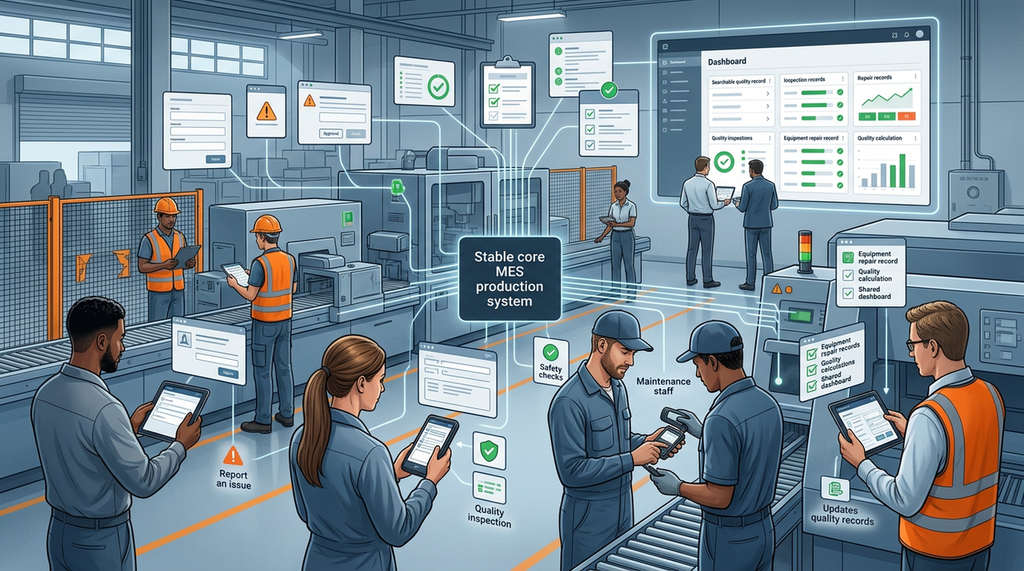
The important point is that ZC Rubber Group did not treat these as separate technology projects. Its goal was a connected operating environment: production systems generate data; frontline apps collect the missing details; workflows assign responsibility; dashboards turn both into management visibility.
Tire Quality Sampling: Cutting Calculation Time by Over 50%
The first major use case focused on tire quality sampling.
The original paper process was straightforward but labor-intensive. An employee sampled a tire from the line, completed the check, recorded the result, and later helped calculate the batch pass rate. The calculation and statistics phase alone took four to five hours for one production line. By the time the paper records had been collected and summarized, a quality manager could be looking at a delayed and potentially incomplete picture.
ZC Rubber Group built a digital Tire Quality Sampling app. Employees enter inspection data online through the appropriate form. Once submitted, the system calculates the pass rate automatically and saves the result to the cloud. Management can retrieve the information when needed instead of waiting for a manually assembled report.
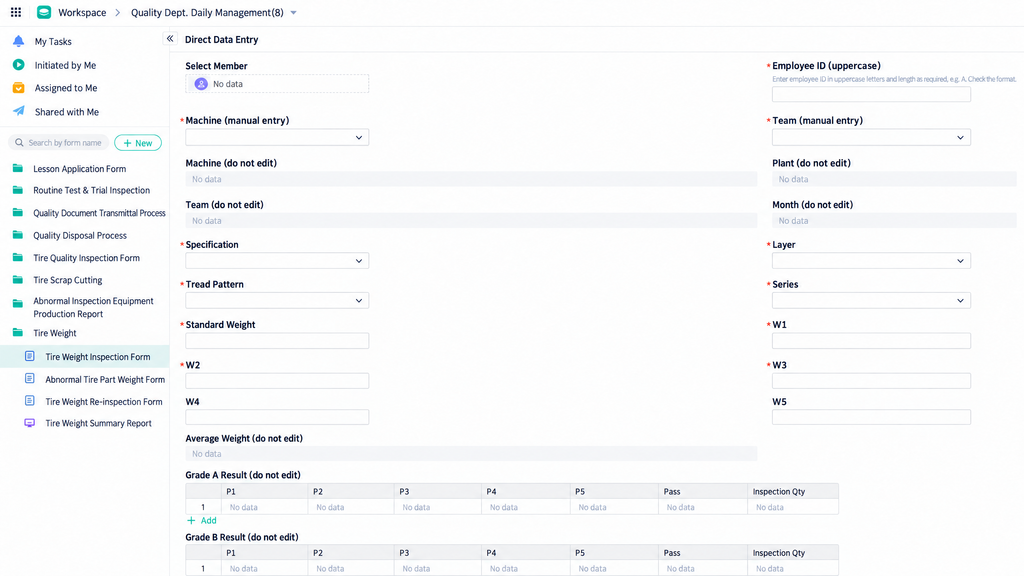
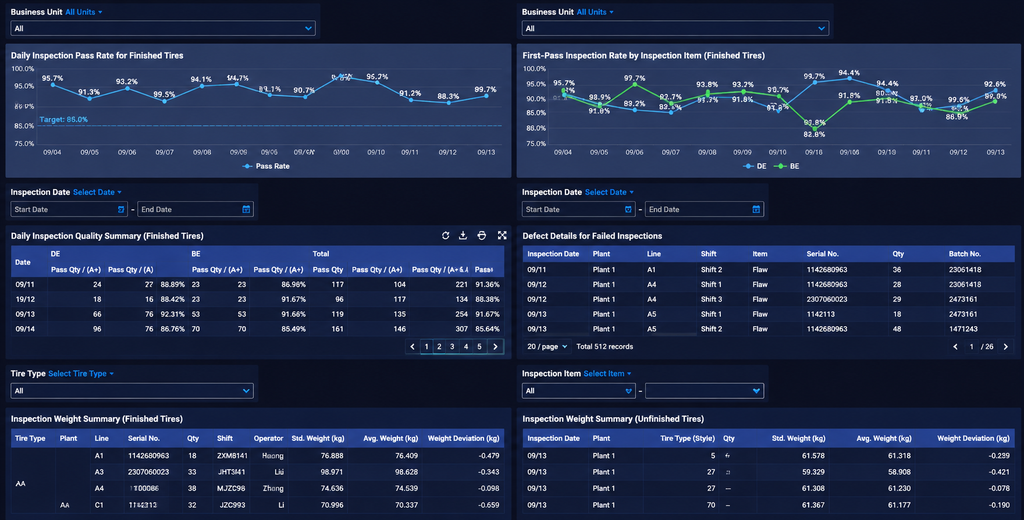
With Jodoo, ZC Rubber Group reduced the time required for quality sampling calculations and statistics from four to five hours to under two hours, achieving a reduction of more than 50%. Beyond time savings, automated calculations and centralized records improved data accessibility and gave quality managers more timely information to support continuous improvement.
ZC Rubber Group extended the same logic to final product inspection. Employees enter finished-product data online, and the system calculates the results and produces real-time reports. At the end of a shift, reports can be sent to departments and company leaders according to their needs. Employees do not have to physically deliver inspection reports, and quality information becomes available in the same working cycle.
Equipment Management and Safety Inspection: Making Every Check Visible
ZC Rubber Group’s equipment-management and safety-inspection workflows show how digitalization can change the rhythm of daily factory work.
With a large and diverse equipment base supporting interconnected production processes, ZC Rubber Group needed a more efficient way to coordinate maintenance activities. Previously, equipment issues were primarily reported through phone calls or verbal communication, which could be challenging in busy workshop environments. A centralized digital workflow would help teams track repair progress, improve communication, and reduce the administrative work associated with maintenance records.
The company created a digital equipment-management app. Equipment records are available in the app. When an issue appears, the system issues an alert and routes a handling process to the appropriate maintenance personnel. When values return to normal and work is complete, the process creates a maintenance record automatically.
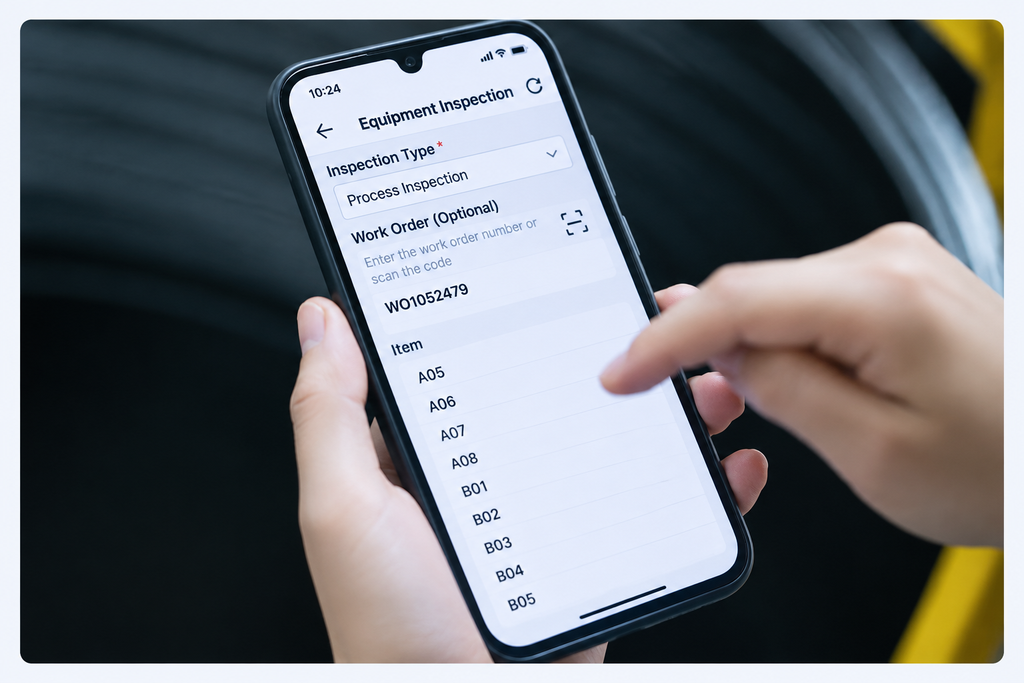
Beyond equipment maintenance, ZC Rubber Group also established a structured safety-inspection workflow to help teams stay on top of scheduled checks. ZC Rubber Group defines inspection plans for individual devices, with weekly, semi-monthly, or monthly cycles. It configures an inspection scheme for each piece of equipment and sends reminders at the planned time. When a check is missed, the system can escalate notifications through up to three management levels.
The process also includes controls designed to reduce false inspection records. Staff must use the required inspection approach, including location-related controls and photo evidence where the plan requires it. The system then converts what had been manual statistics into automatic summaries: equipment inspection totals, filtered inspection views, and completed-versus-uncompleted reports.
The result is a reported 100% inspection-completion rate. Relevant leaders receive immediate notice when an inspection is overdue. Automatic reminders and reports reduce the need for manual follow-up and statistical consolidation, saving an estimated 1.5 staff hours a day. The system does not replace the expertise of the person checking the equipment. It makes sure that expertise is consistently requested, recorded, and visible.
Mobile Operations and Real-Time Reporting: Bringing Factory Data to the People Who Need It
ZC Rubber Group also used its digital environment to make existing production information more accessible.
By November 19, 2021, the company had 3,947 WhatsApp-registered users. Of these, 241 had not activated their accounts, and 216 were external workers. The company reported a 99.37% WhatsApp usage rate for its internal population. This mobile foundation helped ZC Rubber Group bring work instructions, alerts, and reporting closer to the people who needed them.
For example, the company collects production data, equipment downtime records, and daily repair-cost information from its mixing MES and spare-parts systems. It classifies the data, compares it against company indicators, and automatically pushes the prior day’s equipment-fault status, daily repair cost, and final-mixing output. Compared with manual Excel reporting, each report reduces manual-statistics time by 30 minutes per day.
ZC Rubber Group also displays TOPS production-management data on desktop and mobile devices, making current production information easier to access. Its access-control and visitor-management systems integrate license-plate recognition, sensors, visitor terminals, and identity verification to manage vehicle and personnel access dynamically.
For example, operators can submit production updates directly from their phones, giving managers access to the latest reports without waiting for paper records to be collected.
These examples illustrate a broader operating shift. The company moved from data that was locked in separate screens or spreadsheets to data that can reach the appropriate manager or employee in the context of a daily decision.
At the time of reporting, ZC Rubber Group had built more than 50 apps through Jodoo, covering production-quality control, safety checks, equipment inspections, and other modules. The apps supported 220 workflows and had accumulated more than 1.844 million data records. The company describes the result as a stronger ability to retain and analyze data, work without paper, and present information in real time.
Traceability: Extending Digital Control From Raw Material to Finished Tire
ZC Rubber Group’s long-term vision is to make each tire’s production history traceable throughout the manufacturing process. The company uses RFID chips and QR codes as data-capture methods connected to its mixing MES, all-steel MES, finished-product inspection logistics, and warehouse-management systems.
The traceability design connects key moments: raw-material receipt, mixing, semi-finished production, tire building, curing, finished-product inspection, and outbound logistics. Real-time scanning and transmission reduce manual recording and verification errors while improving operating efficiency. The resulting record also supports quality traceability and gives the company stronger evidence for after-sales warranty and claim work.
This is a natural extension of the workflow approach. A product identifier alone does not create value. It becomes valuable when the associated data is reliable, processes use it consistently, and people can find the right record at the moment a decision is required.
The Results: 100% Inspection Completion and a Factory Data Foundation
ZC Rubber Group’s digital transformation has produced a connected set of operational gains rather than a single isolated result.
| Key measure | Result |
|---|---|
| Quality-sampling calculation and statistics | 4–5 hours → under 2 hours |
| Equipment-inspection completion rate | 100% |
| Manual time saved by automated inspection reminders and reports | 1.5 staff hours per day |
| Manual time saved per automated production / maintenance report | 30 minutes per day |
| Equipment connectivity rate | 95% |
The numbers tell a story of better execution.
- Quality data is faster and more dependable. Automated calculations and online reporting have replaced a large amount of paper-based calculation and consolidation work.
- Safety and equipment work is no longer invisible. Planned checks, reminders, escalations, evidence collection, and automated summaries make it easier to maintain inspection discipline and respond to issues.
- Management has more timely information. Daily production, equipment, maintenance, and quality indicators can be reached through mobile and desktop views instead of waiting for manual Excel reporting.
- The factory has created reusable digital capacity. More than 50 apps and 220 workflows give ZC Rubber Group a foundation it can continue to adapt as its processes change.
- Traceability is becoming an operating capability. RFID and QR-based data capture help link the product’s physical journey to a digital record that supports quality control and after-sales accountability.
Future Outlook: ZC Rubber Group Builds Its Own Digital Factory Blueprint
ZC Rubber Group’s transformation is not a finished system rollout. It is a method for making the factory more responsive as new needs emerge.
In 2020, ZC Rubber Group was recognized as a pilot enterprise for integrating digital technologies into manufacturing. In 2021, it was selected for the first cohort of a regional “Future Factory” digital workshop development initiative. It continues to invest over $1 million annually in automation and intelligent upgrades, and it reports an equipment-connectivity rate of 95%.
Building on this progress, ZC Rubber planned to develop a third production facility as part of its Phase III future-factory initiative. The proposed facility would integrate access control, video monitoring, facial recognition, digital-twin capabilities, and smart-factory visualization, supporting more connected digital management of scheduling, production, material delivery, safety, and environmental operations.
The development process is convenient and fast, and the platform is easy to learn and use for both builders and users. Development and operating costs are lower, and data security is manageable. For a company like ours, it has met the need to bring customized daily business functions online.
—— ZC Rubber Group’s deputy general manager, He Haiyang
For ZC Rubber Group, the platform’s flexibility makes it easier to address new operational needs without launching a separate software development project each time. A quality manager, safety lead, equipment owner, or production team can identify a real operational gap, shape a digital workflow around it, and then use the data to refine the next version.
What Other Leaders Can Take Away
Zhongce ZC Rubber Group’s experience offers three lessons for manufacturing leaders:
- Digitize the process around the core system. Large MES and production systems are essential, but the forms, alerts, approvals, and inspections around them often determine whether the shop floor can act quickly.
- Let business users own the last mile. Employees and managers closest to the work can describe the real process and adjust an application as requirements change. This reduces dependence on a long external-development cycle for every improvement.
- Treat records as a management asset. A quality record, inspection record, or repair record is more valuable when it can be searched, combined, compared, and turned into an action.
For Zhongce ZC Rubber Group, the path to a future factory is built from many connected improvements. A faster quality calculation, a visible repair workflow, a completed safety inspection, and a shared dashboard may seem like separate projects. Together, they create a factory that can see problems earlier, respond with clearer ownership, and improve with evidence.
Ready to give your frontline teams a governed way to turn factory data into faster action?