Browse by category

What Hazard Symbols Mean in Manufacturing
In manufacturing, hazard symbols work as a fast visual language on drums, spray bottles, transfer containers, safety data sheets, and shop-floor signs, helping people spot risk before direct exposure happens. This guide will explain the 9 GHS pictograms, show how to read a full chemical label, and clarify where these symbols appear across the plant.
The first distinction to make is that GHS pictograms are specifically for chemical hazards. These are the red-diamond symbols used to show risks such as flammability, corrosion, acute toxicity, or respiratory harm. They are different from general workplace safety signs, such as mandatory PPE signs, forklift traffic warnings, or emergency exit markings, which guide behavior and movement rather than classify chemical danger.
Just as important, a pictogram is only one part of hazard communication. A complete label also includes the product name, signal word, hazard statements, precautionary instructions, and supplier details. When workers understand how these elements fit together, they can handle, store, and respond to chemicals more safely in both general manufacturing and higher-risk process environments.
The 9 GHS Hazard Symbols Explained for Shop-Floor Workers
Below is a practical reference for the nine standard GHS hazard symbols you are most likely to see in manufacturing. If you have ever asked, “What do chemical safety pictograms mean in day-to-day work“, use this as a quick guide to the core risk, a typical factory example, and the first action to take before handling the material.
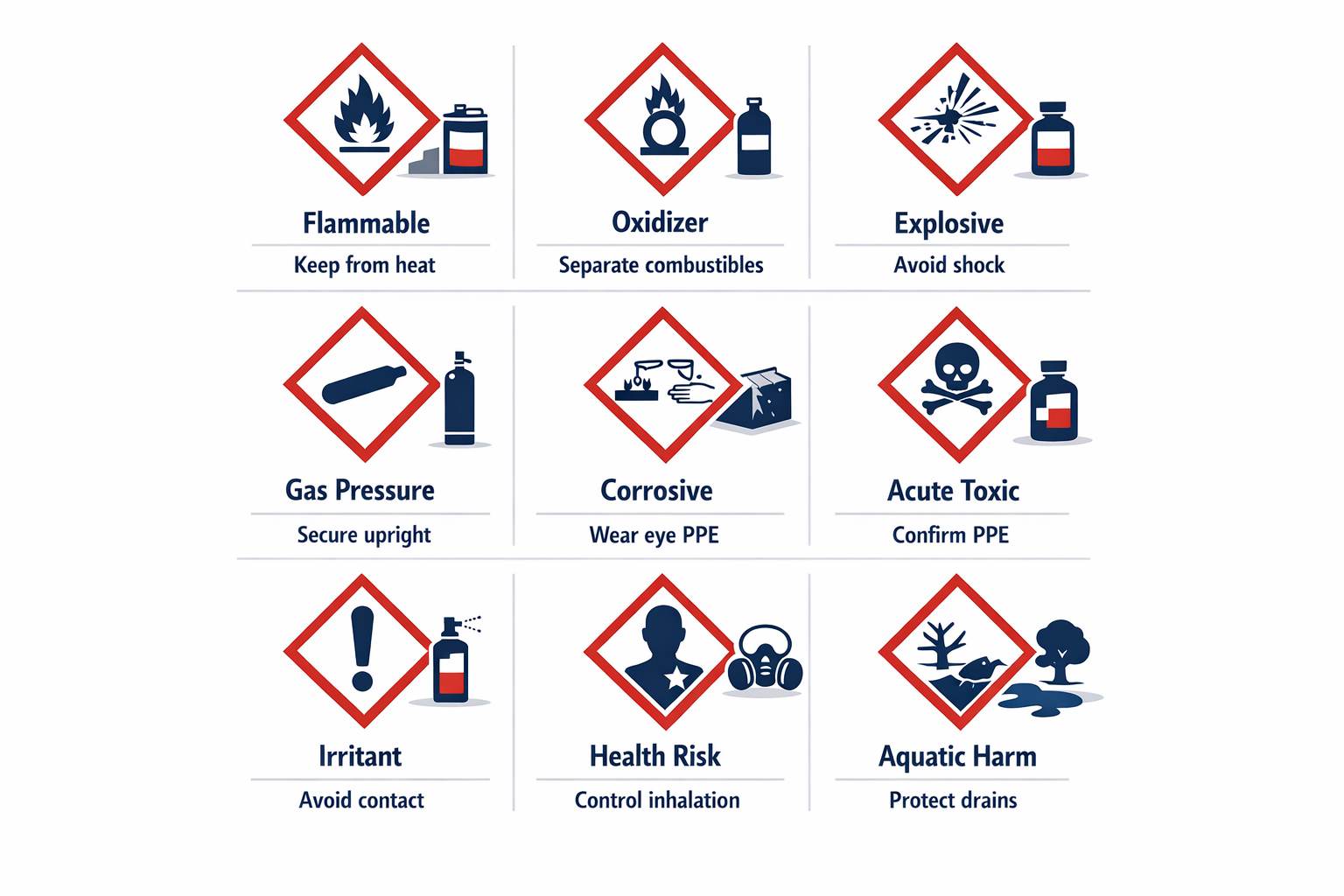
Flame
This symbol warns of flammable materials, self-reactive substances, or chemicals that can release flammable gas. Common examples include solvent thinners, alcohol-based cleaners, and some adhesives used in electronics or furniture production.
First action: keep the container away from sparks, hot surfaces, and welding areas, then confirm ventilation before use.
Flame Over Circle
This marks an oxidizer, which can intensify fire even if the chemical itself does not burn. You may see it on peroxide-based cleaners, bleaching agents, or certain water-treatment chemicals in food and beverage plants.
First action: separate it from oils, rags, solvents, and other combustibles immediately.
Exploding Bomb
This symbol indicates explosive or highly unstable reactive materials. In manufacturing, it may appear on specialized curing agents, organic peroxides, or laboratory-scale process chemicals.
First action: stop normal handling, avoid shock or friction, and escalate to the supervisor or EHS lead if storage or use conditions are unclear.
Gas Cylinder
This means the container holds gas under pressure, such as compressed, liquefied, or refrigerated gas. Typical examples include oxygen, nitrogen, CO2, or argon cylinders used in welding, packaging, or process systems.
First action: secure the cylinder upright and check the regulator, cap, and hose condition before moving or connecting it.
Corrosion
This symbol warns that a substance can cause severe skin burns, eye damage, or metal corrosion. Workers often see it on caustic cleaners, hydrochloric acid, or metal-treatment chemicals in plating lines.
First action: wear the specified gloves and eye protection, and confirm the nearest eyewash station is accessible.
Skull And Crossbones
This is the signal for acute toxicity, meaning small exposures can cause serious poisoning or death. It may appear on certain pesticides, cyanide compounds, or highly toxic process chemicals in controlled industrial settings.
First action: do not open or transfer the material until the required PPE and handling procedure are confirmed.
Exclamation Mark
This symbol covers less severe but still important health effects, including skin irritation, eye irritation, or harmful exposure. Examples include degreasers, resins, and coating chemicals that can irritate workers during mixing or spraying.
First action: avoid direct contact and check whether gloves, goggles, or local exhaust are required.
Health Hazard
This indicates longer-term or serious health risks such as carcinogenicity, respiratory sensitization, or organ toxicity. It is common on isocyanates, some epoxy components, and certain solvents used in coating or composite manufacturing.
First action: prevent inhalation exposure and verify the approved respirator or ventilation control.
Environment
This symbol warns of aquatic toxicity and environmental harm if the material is spilled or drained improperly. You may find it on paints, oils, biocides, and chemical additives.
First action: keep it out of drains and follow the plant’s spill-control procedure.
How to Read Chemical Labels Beyond the Pictogram
A GHS pictogram gives you a fast warning, but safe handling depends on the full label. If you only recognize the symbol and skip the text, you can miss the exact route of exposure, storage limit, or required PPE. In practical terms, GHS hazard symbols explained means understanding how the symbol works with the rest of the label. Use the full label before you handle, transfer, or store any chemical.
Step 1: Start With the Product Identifier
Imagine a line operator receives a small container labeled Acetone at a workstation for cleaning metal parts before assembly. The product identifier tells the worker exactly what substance is inside and lets them match it to the Safety Data Sheet, work instruction, and approved use on that line. This matters because similar-looking liquids can have very different risks and storage rules. Before opening the container, the worker should confirm that the product name matches the task and the SDS on file.
Step 2: Read the Signal Word and Hazard Statements Together
Now the operator sees the flame pictogram, the signal word Danger, and hazard statements such as Highly flammable liquid and vapor and Causes serious eye irritation. This is the practical answer to what chemical safety pictograms mean: the pictogram shows the hazard type, while the signal word and statements show severity and specific harm. Together, they tell the worker that the solvent is not just flammable in general, but also risky around sparks, heat, and eye exposure during wipe-down work.
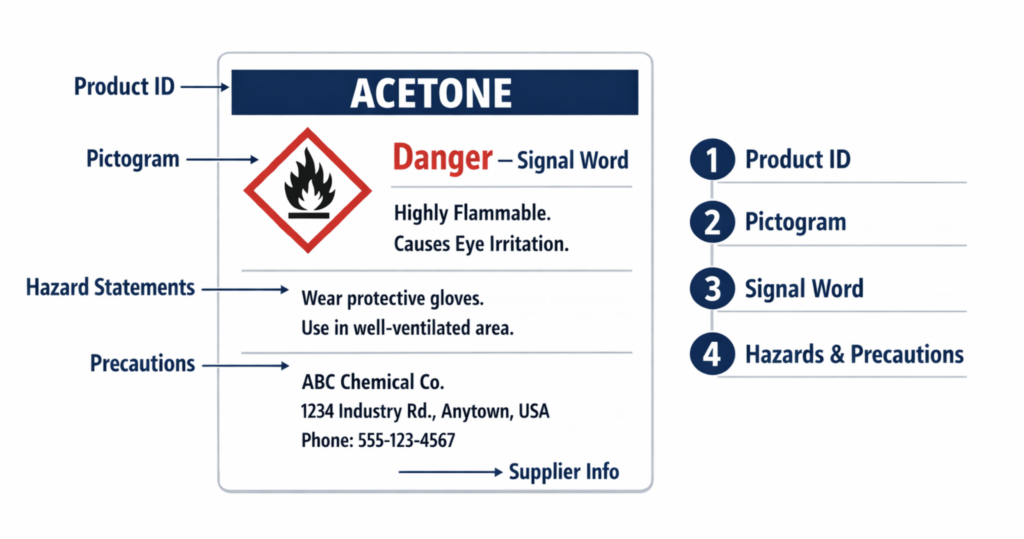
Step 3: Check the Precautionary Statements Before Use
Precautionary statements turn hazard information into action. On the same acetone container, the label may state Keep away from heat, hot surfaces, sparks, and open flames, Use only in a well-ventilated area, and Wear protective gloves and eye protection. That tells the operator to stop and confirm local exhaust is running, remove ignition sources, and use the specified PPE before starting the cleaning task. This is where label reading becomes behavior, not just recognition.
Step 4: Review Supplier Information and Container Legibility
The supplier name, address, and contact details help the plant verify that the chemical came from an approved source and that updated safety information is available if something is unclear. If the label is damaged, unreadable, or partly missing, the container should not be used until it is identified correctly. Workers sometimes focus on workplace safety signs and their meanings around the area, but the container label is the primary source for that chemical. For transfers into secondary containers, the same identification and hazard communication must stay attached to the material.
Where Hazard Symbols Appear Across the Plant
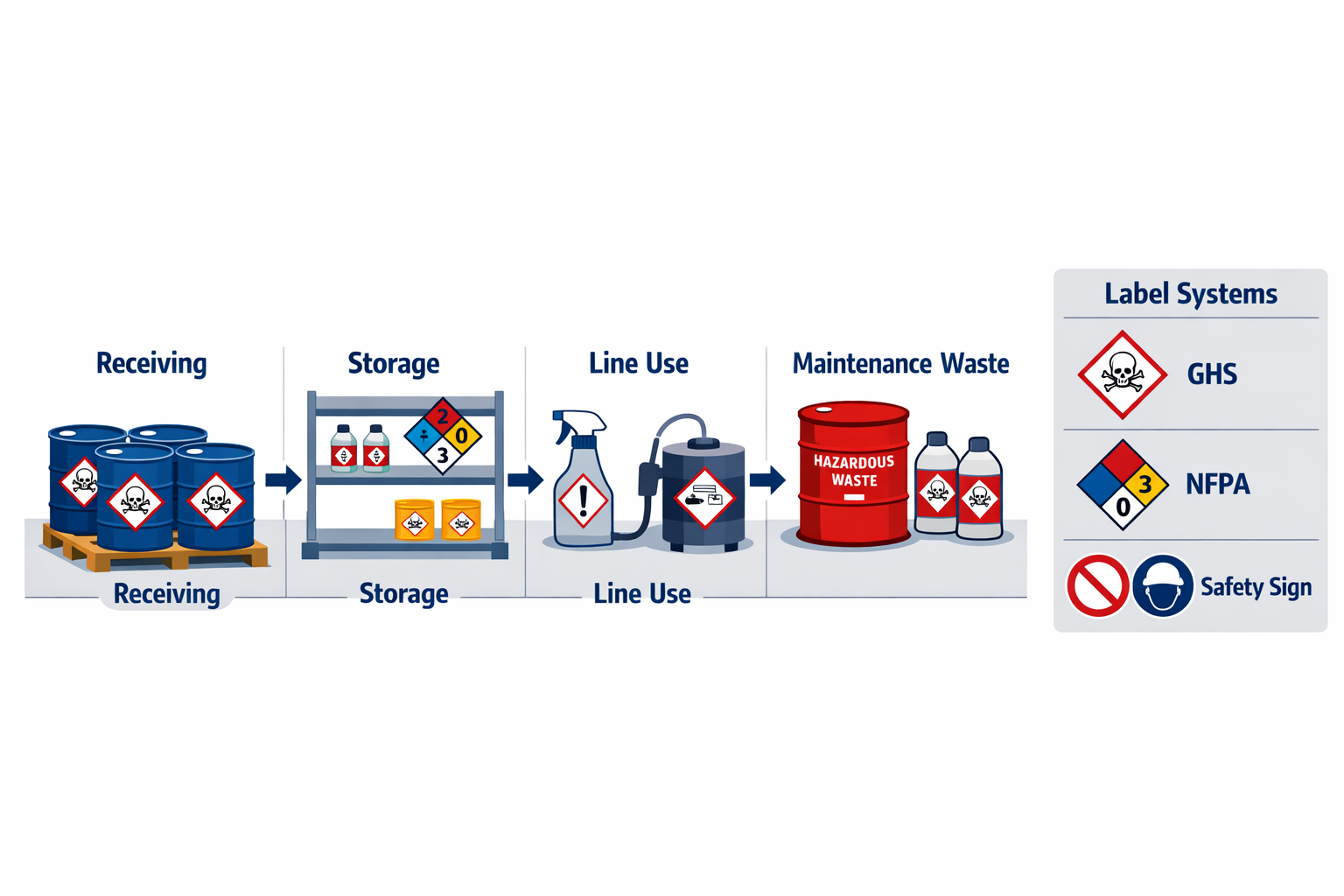
Workers do not only see hazard symbols on drums in a chemical room. In most factories, they appear at multiple handoff points where materials are received, stored, used, moved, and discarded. That is why GHS hazard symbols explained in training must be tied to actual plant locations, not just classroom slides. The practical question on the floor is simple: where will this symbol show up before someone opens, transfers, or cleans up a substance?
Receiving and Incoming Materials
The first encounter usually happens at receiving. Solvents, adhesives, cleaning agents, oils, and treatment chemicals often arrive with supplier labels that include GHS pictograms, product names, and handling warnings. A receiving clerk checking a pallet of metal treatment chemicals, for example, may see the corrosion symbol before the containers ever enter storage. That first check matters because damaged packaging, missing labels, or mismatched paperwork should be flagged before materials move deeper into the plant.
Warehouse Storage and Internal Labeling
In storage areas, hazard symbols appear on original containers, secondary containers, rack labels, and segregation markings. A warehouse storing aerosols, acids, and oxidizers may use location labels and compatible-storage signs to prevent unsafe placement. Here, workers need to understand what chemical safety pictograms mean in context: the symbol identifies the chemical hazard, while storage signs tell them how that area must be managed. One label warns about the material itself; the other supports safe handling and separation.
Line-Side Use and Operator Stations
On the production line, symbols are often seen on small-day tanks, spray bottles, wipe containers, and process chemical feeders. In an electronics assembly area, isopropyl alcohol at a cleaning station may carry a flame pictogram even when it is dispensed into a smaller approved bottle. Operators should not assume a reduced quantity means reduced risk. If the substance is transferred, the hazard communication must follow the material to the point of use.
Maintenance, Utilities, and Waste Handling
Maintenance teams meet hazard symbols on lubricant cans, degreasers, refrigerant cylinders, battery chemicals, and water-treatment products on mobile carts or in utility rooms. Waste handlers see them again on used solvent drums, contaminated rag bins, and chemical waste totes, where disposal status does not remove the original hazard. This is also where confusion between symbol systems is common. GHS pictograms identify chemical hazards on labels, NFPA diamonds show emergency-response severity ratings, and facility safety signs cover instructions such as PPE, eyewash, or no smoking as part of broader workplace safety signs and their meanings.
Common Hazard Communication Mistakes and How Manufacturers Prevent Them
In many plants, the problem is not whether workers have seen hazard symbols. The problem is whether the symbol on the container, instruction, and task briefing still matches the chemical actually used on the line. Consider a metal finishing line using an acidic descaler, alkaline cleaner, and solvent wipe-down fluid before startup. On paper, the plant understands the hazards; in execution, small gaps create real exposure risk.
Secondary Containers Without Labels
A common failure starts when operators transfer chemicals from the original drum into spray bottles, buckets, or small day tanks. The main container may carry the correct GHS label, but the secondary container is left blank or marked only with a product nickname like “cleaner A.” That breaks the chain between the hazard symbols and the worker handling the fluid during the shift.
The fix is simple but must be enforced at line level. Every secondary container should carry the product name, relevant pictogram, and core handling precaution before use begins. For safety officers, this is where “GHS hazard symbols explained” becomes practical: the symbol alone is not enough unless it stays attached to the exact chemical in the worker’s hands.
Outdated Work Instructions on the Line
The next gap appears when the chemical changes but the standard work sheet does not. In our finishing-line example, purchasing may switch to a stronger descaler, but the laminated instruction at the station still lists old PPE and rinse steps. Workers then follow a valid-looking document that no longer reflects the actual risk.
Prevention requires controlled document updates tied to material changes. If a chemical, concentration, or supplier changes, the work instruction should be reviewed before the new batch reaches production. This is also where workplace safety signs and their meanings can be misunderstood; a wall sign may warn generally about corrosives, but the task instruction must state the exact gloves, face protection, and ventilation controls for that product.
Symbols Posted Without Task-Specific Precautions
Another weak point is posting pictograms on cabinets or boards without translating them into action. Workers may know what chemical safety pictograms mean in broad terms, yet still not know what to do during mixing, transfer, or spill response. A corrosion symbol should trigger specific steps, not just awareness.
Before startup, leading plants run a short hazard verification workflow at the line: confirm the chemical in use, check that the container label matches the task sheet, verify PPE, and record operator acknowledgment. Supervisors then sign off only after discrepancies are corrected, not after the run has already started.
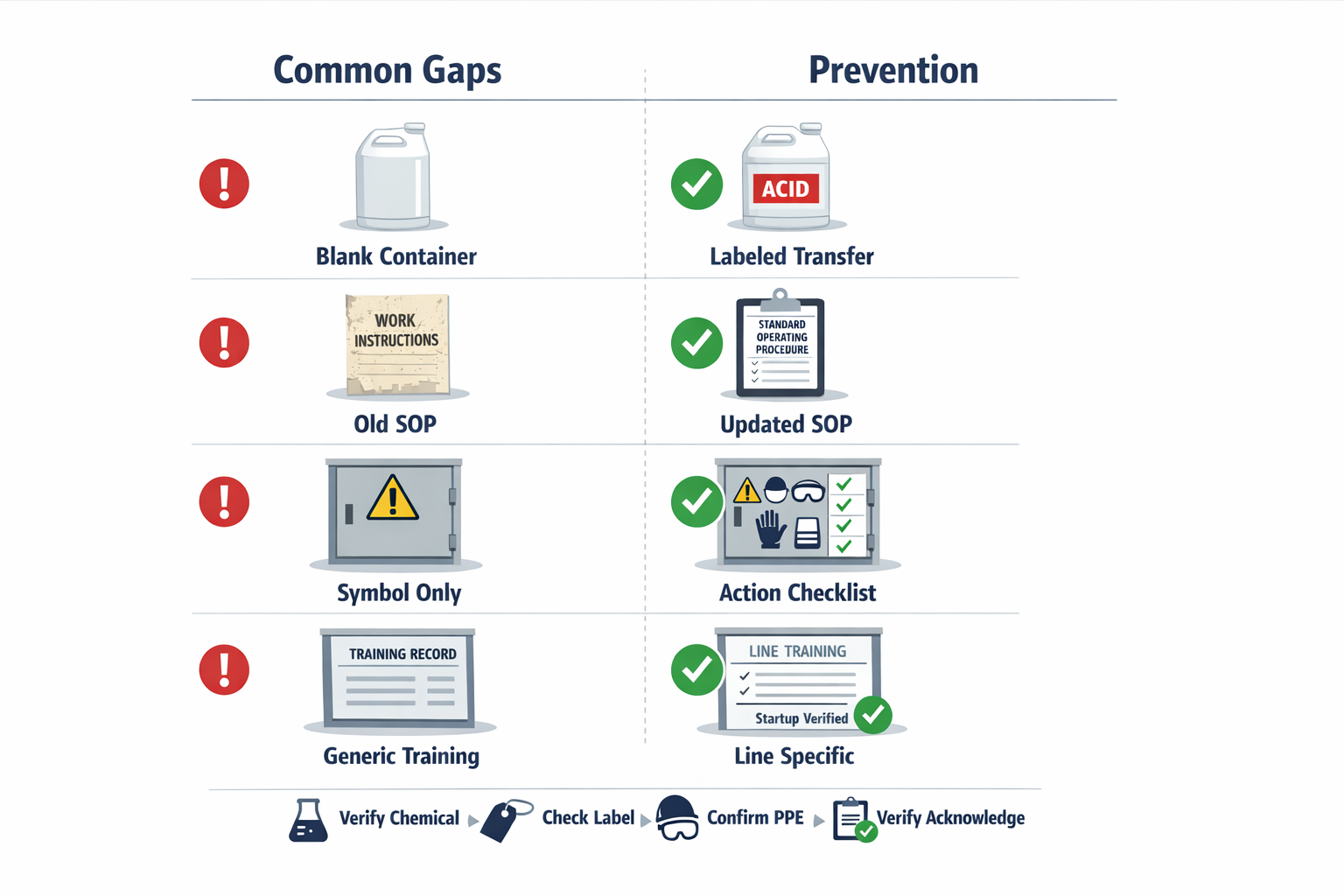
Training Records That Do Not Match Real Exposure
Many training systems show that an employee completed annual chemical safety training, but not whether they were trained on the exact hazards present at Line 3 this week. That creates a compliance record without operational value. Manufacturers prevent this by linking training, startup checklists, and line-specific hazards so acknowledgment is tied to actual exposure conditions, not generic classroom completion.
Turn Hazard Symbol Knowledge into Safer Digital Workflows with Jodoo
Understanding hazard symbols is a necessary first step, but safer manufacturing depends on consistent execution at the point of work. In practice, that means the right chemical pictograms, precautions, and handling steps must appear in the forms, SOPs, labels, and startup checks workers use every day. When hazard communication stays on paper or across disconnected files, missed labels, outdated instructions, and weak traceability become much more likely.
This is where a digital workflow matters. With Jodoo, a no-code lean manufacturing platform, safety teams can build digital SOPs that display the relevant hazard symbols for each process, require pre-run confirmation of PPE and handling controls, and route exceptions to supervisors before production starts. A maintenance team handling corrosive cleaners, for example, can be required to acknowledge the corrosion pictogram, confirm glove and face shield use, and attach photos of secondary container labels before the task is approved.
Jodoo also gives you audit trails, role-based approvals, and mobile data capture, so safety officers can verify that hazard communication is not just posted but completed. If you want to standardize hazard communication without heavy IT work, you can explore a no-code hazard communication workflow template with Jodoo. Start a free trial or book a demo to see how it fits your plant.