Browse by category

Introduction: Why Near Miss Reporting Deserves More Attention in Manufacturing
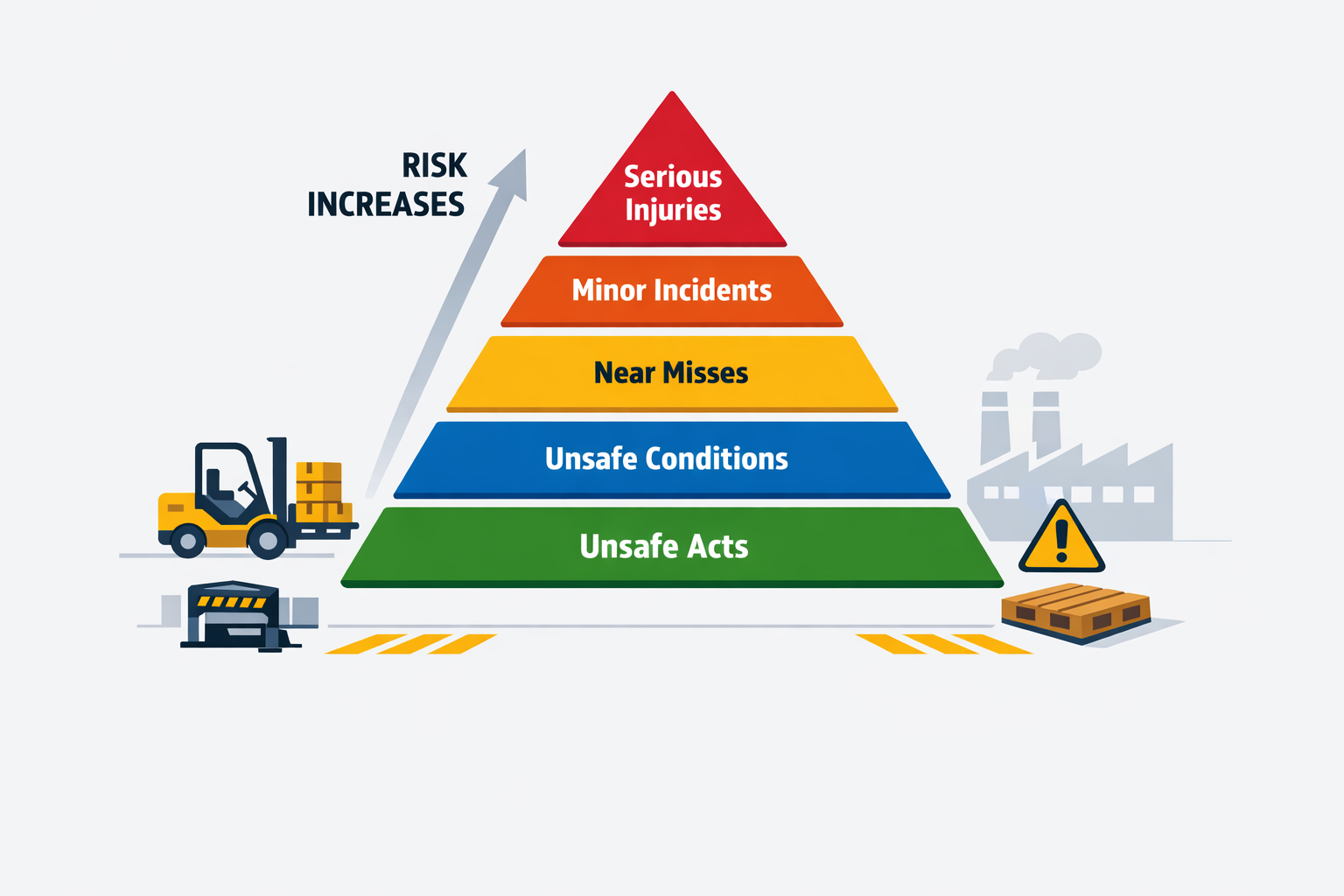
Many factory injuries do not start with a major failure. They start with a near miss that was seen, discussed briefly, and never recorded. According to Heinrich’s long-cited safety triangle, serious injuries are often preceded by far more minor incidents and unsafe acts, which is why unreported close calls matter far more than they appear to in the moment.
In manufacturing terms, a near miss is an unplanned event that could have caused injury, equipment damage, scrap, or production loss, but did not this time. A pallet that nearly tips during forklift movement, a hand that comes too close to an unguarded point, or a leaking hose found before it bursts all qualify. For EHS managers, safety officers, and plant managers, these events are not minor admin tasks. They are early warnings about control gaps on the shop floor.
This article explains what counts as a near miss, how it differs from an accident, and why the safety pyramid still matters in modern plants. It also walks through how to report a near miss incident effectively and why paper-based systems often suppress reporting, delay follow-up, and hide recurring risks.
What Counts as a Near Miss
If you want consistent reporting across shifts and plants, you need clear event definitions. Many teams say they want more visibility, but operators and supervisors still interpret the same event differently. That is where reporting breaks down. Before you decide how to report a near miss incident, you need a shared understanding of what qualifies.
Near Miss vs. Accident vs. Incident
A near miss is an unplanned event that could have caused injury, equipment damage, product loss, or environmental impact, but did not. The key point is potential harm with no actual loss outcome. An accident is different because harm or damage did occur, even if it was minor.
An incident is a broader umbrella term that may include near misses, accidents, spills, fires, and other abnormal events. Some companies use “incident” to cover everything and then classify severity underneath it. That approach works, but only if your categories are defined clearly in SOPs and forms. Otherwise, one plant logs a close call as a hazard while another treats the same event as nothing worth reporting.
Hazard vs. Unsafe Condition vs. Unsafe Act
A hazard is a source of potential harm, such as an unguarded pinch point, exposed wiring, or a forklift blind corner. An unsafe condition is the state of the workplace that creates risk, such as oil on the floor, a blocked emergency exit, or damaged racking. An unsafe act is a person’s behavior that increases risk, such as bypassing lockout/tagout or reaching into a running machine. These are not always near misses by themselves.
A near miss usually happens when a hazard or unsafe condition leads to an event. For example, a cracked lifting sling stored in the rigging area is a hazard. If that sling is used and a load drops but lands clear of workers, that is a near miss.
Manufacturing Examples That Should Be Reported
In an automotive stamping plant, a die protection sensor fails to trigger, and the press cycle stops only because the operator hits emergency stop in time. No one is injured, and the tool is not damaged. This is still a near miss because the potential for serious hand injury and costly die damage was real. It should not be dismissed as “nothing happened.”
In electronics assembly, an operator notices smoke from a soldering station power supply and unplugs it before fire spreads. Since there was no burn injury or line shutdown, some teams would log this as maintenance only. That is too narrow. It is a near miss with electrical and fire risk, and it belongs in the safety reporting process.
In material handling, a forklift rounds a warehouse aisle and brakes hard to avoid a pedestrian stepping out from behind stacked pallets. No contact occurs. That is not just a reminder to “be careful”; it is a reportable near miss tied to layout, visibility, traffic control, and pedestrian discipline. Borderline events like these are exactly why near miss reporting matters.
Why Near Miss Reporting Matters
The Safety Pyramid Shows What Happens Upstream
A near miss is not just a lucky escape. In manufacturing, it is a leading indicator that exposes weak controls before they become recordable injuries, equipment damage, or production loss. That is the practical reason why near miss reporting matters: it gives plant leaders visibility into risk while there is still time to intervene at low cost. If you only measure accidents, you are looking at safety after the system has already failed.
The safety pyramid illustrates this relationship clearly. At the top are serious injuries and major losses, but those events are usually preceded by a much larger base of minor incidents, unsafe acts, unsafe conditions, and near misses. While the exact ratios vary by industry and plant, the operational message is consistent: severe outcomes rarely appear without warning. A factory that captures and acts on close calls is managing the base of the pyramid, where prevention is still practical and affordable.
Silence Makes Risk Harder to See
When near misses go unreported, recurring patterns stay hidden inside normal operations. A supervisor may see one slippery patch as housekeeping, one dropped load as operator error, and one forklift-brake issue as a maintenance delay. Once those events are reported together, however, they often reveal a systemic problem in one area, one shift, or one workflow. That visibility is what turns scattered observations into actionable safety intelligence.
According to the U.S. National Safety Council, for every workplace injury, many more close calls and unsafe behaviors typically occur beforehand. Studies from industrial safety programs also show that organizations with stronger leading-indicator tracking often achieve lower total recordable incident rates over time because they intervene earlier, not because they react faster after harm occurs. In other words, a high near miss reporting rate can be a sign of a healthier safety culture, not a more dangerous plant.
Better Reporting Improves Operations, Not Just Compliance
Strong near miss reporting reduces more than injury risk. It helps cut unplanned downtime, rework, scrap, emergency maintenance, and the management time consumed by serious investigations. In a production environment, one avoided line stoppage can protect output, delivery performance, and labor efficiency far beyond the safety department’s KPIs. That makes near miss data valuable to plant managers as well as EHS teams.
It also strengthens continuous improvement. When you trend near misses by shift, line, machine family, or contractor activity, you can prioritize corrective action where exposure is actually rising. This is more useful than relying only on annual lagging indicators, which often arrive too late to guide daily supervision. Before you refine how to report a near miss incident, you need agreement that every close call is operational data worth capturing.
How to Report a Near Miss Incident in a Manufacturing Environment
Start With Immediate Control and Fast Escalation
A practical near miss reporting process should move in minutes, not days. Imagine an operator on a CNC machining line sees a forklift clip a pallet of metal blanks, causing the load to shift and one stack to lean into the aisle without falling. No one is hurt, so this is not an accident, but the difference between a near miss and an accident is only a few seconds and a small change in timing.
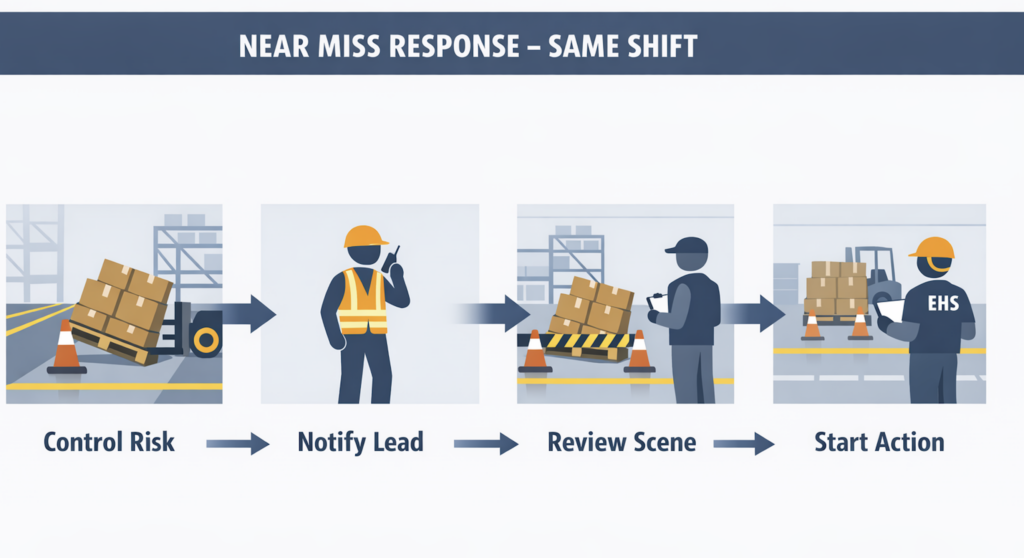
The operator’s first job is not paperwork. It is to stop exposure by warning nearby workers, blocking the aisle, and notifying the line supervisor if the load, traffic path, or equipment still creates risk. If there is any chance of secondary injury, such as unstable material, leaking hydraulic oil, or damaged racking, the area should be made safe before normal work resumes.
Once the area is controlled, the event should move quickly from operator to supervisor to EHS. The operator reports what happened as soon as possible, the supervisor confirms the immediate condition and preserves evidence, and EHS decides whether a formal investigation or short-form review is required based on severity and recurrence risk. In strong plants, this handoff happens within the same shift so facts do not fade and corrective action starts while the context is still fresh.
Capture the Right Facts at the Source
If you want to know how to report a near miss incident effectively, focus on recording facts before interpretations take over. In the forklift example, the best report is not “driver was careless” but “forklift turning into aisle B3 contacted pallet corner at 10:12 a.m., shifting load by approximately 15 cm.” This gives EHS something observable to investigate instead of a conclusion that may or may not be true.
A strong near miss report form should capture the date, time, area, line or department, people involved, equipment involved, a short event description, immediate risk level, and whether production was stopped. It should also include photos, witness names, temporary controls taken, and the reporting employee’s name or anonymous option, depending on policy. If your plant wants useful data later, add structured fields for shift, hazard category, task type, and potential consequence.
Investigate Causes, Not Just the Event
After submission, the supervisor and EHS team should review the report the same day or by the next shift at the latest. In this case, they may find that the forklift route was narrowed by overflow WIP, the pallet was stacked above the marked limit, and the aisle mirror at the blind corner had been missing for two weeks. Those findings matter more than the close call itself because they point to system weaknesses that can be fixed.
The root cause analysis does not need to be overly complex for every case, but it should go beyond operator error. A simple 5 Whys analysis is often enough for routine events, while repeated or high-potential near misses may justify a fuller investigation. This is where why near miss reporting matters becomes operational: each report becomes a lead indicator tied to layout, training, material flow, or supervision.
Assign Actions and Verify Closure
Corrective action should have an owner, due date, and verification method. In this example, actions might include repainting aisle boundaries, removing overflow pallets from the traffic lane, reinstalling the mirror, and retraining forklift operators on turning clearance with long loads. Without named ownership, reports accumulate, but risk remains in place.
Closure should only happen after someone verifies the fix on the floor. EHS or the area supervisor should confirm that the controls were implemented and that the hazard is no longer present under normal operating conditions. That final step turns reporting from recordkeeping into prevention.
Why Reporting Breaks Down on the Shop Floor—and How Digital Workflows Increase Participation
Most plants do not struggle because workers fail to see risk. They struggle because reporting a near miss is often slower than the job itself. In a packaging line example, an operator sees a pallet corner clip a pedestrian walkway and nearly strike a forklift charger, but the paper form is in the supervisor’s office, the shift is behind target, and the operator decides to mention it later. By the end of the shift, key details are blurred, and a report that should have taken three minutes becomes one more unfinished task.
Paper systems also break the link between event, evidence, and action. Handwritten descriptions are often vague, photos are missing, and timestamps depend on memory rather than actual submission time. That makes it harder for EHS teams to judge severity, especially when they are already balancing the difference between a near miss and an accident and deciding what needs immediate escalation. In practice, the issue is not whether people care about safety, but whether the system respects the pace of manufacturing work.
The breakdown of paper-based reporting usually happens at four points. First, access is poor: forms are stored far from the event, or only certain staff know where they are. Second, reporting is delayed until after the shift, which reduces accuracy and lowers submission rates; several safety studies have found that reporting compliance drops sharply when frontline workers must leave their work area or complete duplicate paperwork. Third, routing is inconsistent, so one supervisor acts while another leaves forms in an inbox. Fourth, trending is weak because paper records do not easily show repeat patterns by line, shift, contractor, or equipment type.
How a Mobile-First Workflow Removes Friction
A mobile-first process changes behavior because it removes delay at the exact point where delay starts. The operator scans a QR code posted at the line, opens a short form on a phone or shared device, adds a photo of the pallet position, selects the area, and submits it before the shift restarts. That is much closer to how to report a near miss incident in real life: fast, simple, and tied to the actual location and time of the event.
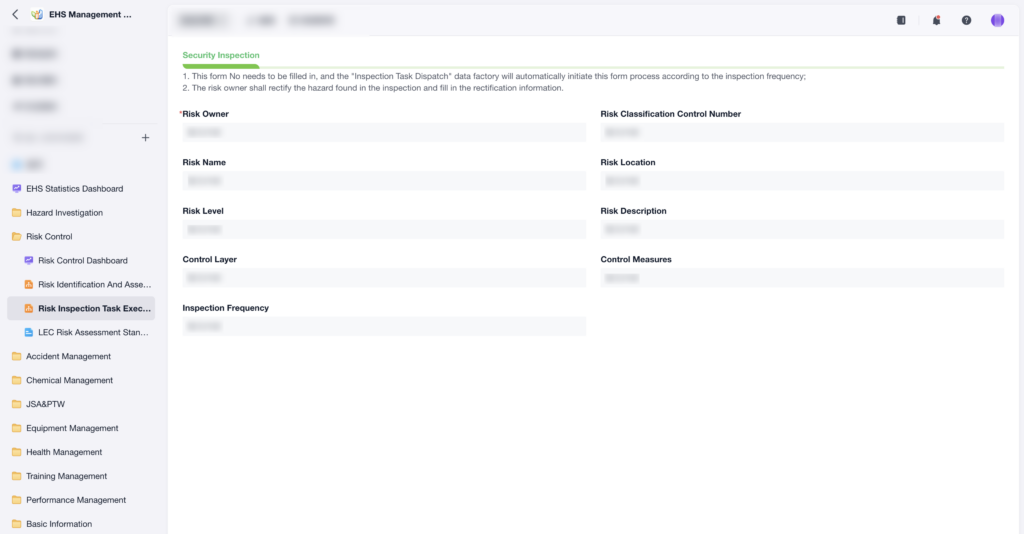
With Jodoo, manufacturers can build that workflow without waiting for a full IT project. A no-code form can require key fields, allow photo capture, trigger notifications to the supervisor and EHS team, and assign follow-up tasks based on area or risk level. Status tracking also gives reporters visibility, which matters because workers participate more when they can see that reports lead to action.
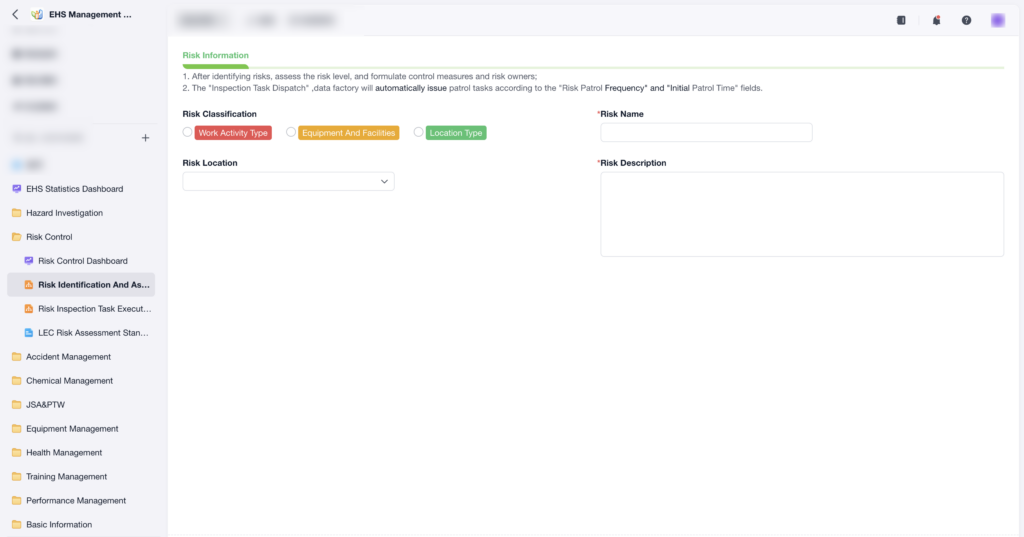
The same report can then move automatically from submission to review, investigation, and corrective action tracking. EHS can monitor open cases by department, aging time, repeated hazard type, and closure rate through dashboards instead of spreadsheets. Over time, that gives plant leaders a more reliable leading-indicator view of exposure across the site, not just a stack of forms after the fact.
Conclusion: Build a Near Miss Reporting Culture With the Right Process and Tools
A near miss is not a minor paperwork issue. In manufacturing, it is an early warning that a process, condition, or behavior has moved closer to harm, even if no injury or damage occurred this time. Plants that treat near-miss reporting seriously gain a practical advantage: they can correct risks before they become recordable incidents, equipment damage, or production disruption.
The real challenge is not whether people understand safety. It is whether the reporting process is easy enough to use in the moment and disciplined enough to drive action afterward. When reporting is slow, paper-based, or unclear, workers delay submissions, supervisors miss patterns, and EHS teams lose visibility into recurring risks by line, shift, or area. When the process is fast, mobile, and trackable, reporting rates rise, and corrective actions move faster.
If you want to build that system without heavy custom development, Jodoo gives manufacturers a no-code way to create a near miss reporting workflow that fits actual plant operations. You can set up mobile forms, QR-code submission, photo capture, automatic routing, corrective action tracking, and real-time dashboards for EHS and plant leadership. To see how it can work in your factory, start a free trial or book a demo now.