Browse by category

Introduction: Why Physical Hazards Remain a Top Manufacturing Safety Risk
According to the International Labour Organization, millions of workers are injured on the job each year, and manufacturing remains one of the highest-risk sectors because exposure is constant, repetitive, and often built into daily operations.
In plain terms, a physical hazard is a workplace condition that can harm the body through energy, motion, or environmental exposure rather than through chemical contact or infection. On a plant floor, that can mean excessive noise from stamping presses, vibration from handheld tools, heat near curing ovens, cold in controlled storage areas, or radiation from welding and certain inspection processes.
Even plants with mature safety programs still struggle because physical hazards change with product mix, maintenance condition, staffing, and line speed. This article breaks the topic down into clear types, real manufacturing examples, practical control methods, and a more reliable way to manage inspections, exposure records, and follow-up actions.
What Counts as a Physical Hazard in Manufacturing?
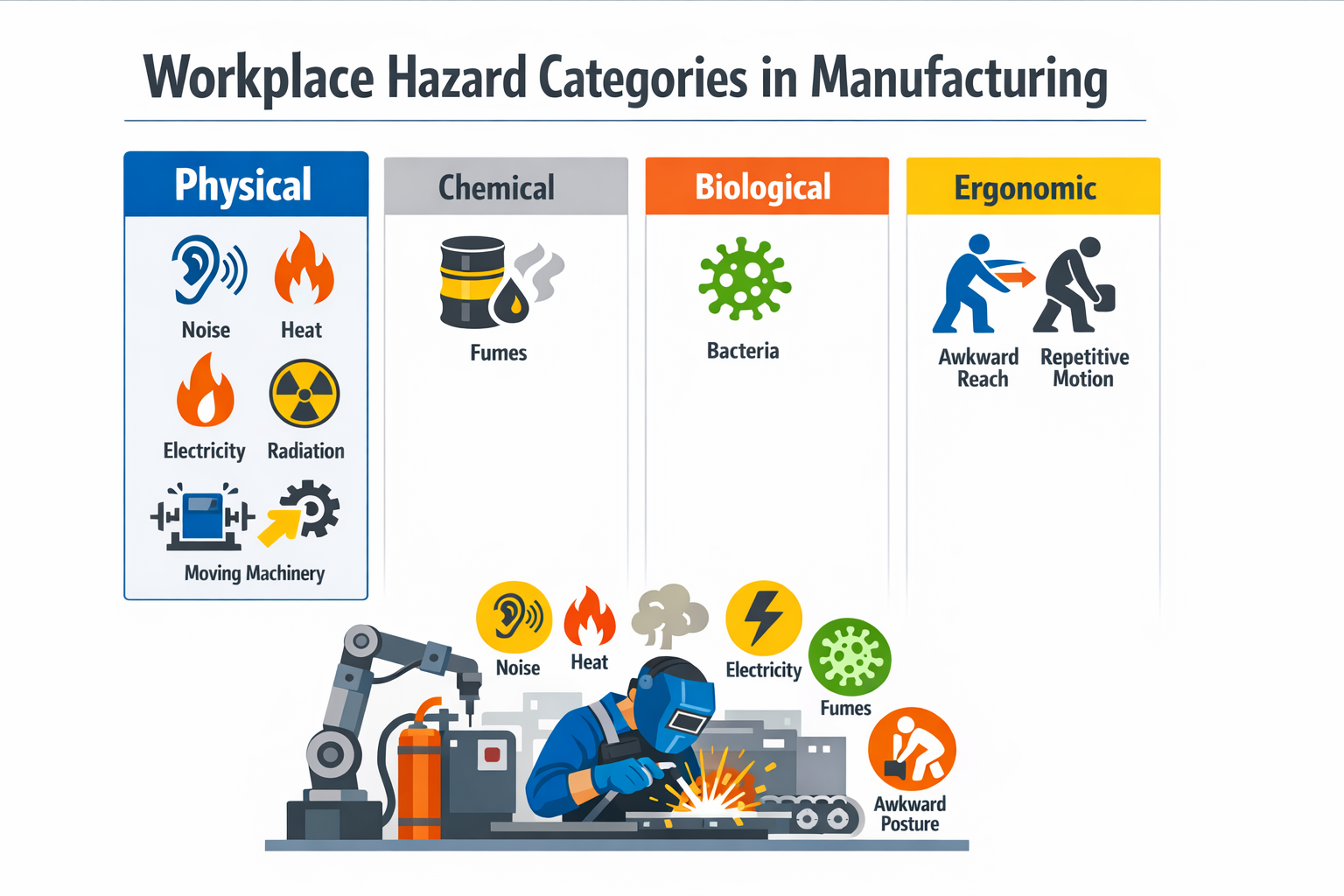
A physical hazard in manufacturing is a workplace condition or energy source that can injure a person directly or harm them through repeated exposure over time. Unlike a chemical hazard, which comes from substances such as solvents or fumes, or a biological hazard, which involves organisms like bacteria or mold, a physical hazard comes from the environment, equipment, or process itself. It also differs from an ergonomic hazard: poor posture and repetitive motion strain the body mechanically, while physical hazards include external exposures such as noise, heat, electricity, or radiation.
Noise and Vibration
Noise is one of the most common examples of physical hazards in the workplace, especially near stamping presses, CNC machining centers, air blow-off points, and compressors. OSHA requires hearing conservation programs at 85 dBA as an 8-hour time-weighted average, and many plants still have localized areas above that threshold. Vibration is often less visible but still important, particularly for operators using grinders, chipping tools, or powered hand tools, where long-term exposure can contribute to hand-arm vibration syndrome.
Heat, Cold, and Radiation
Heat hazards appear around furnaces, curing ovens, foundry operations, and poorly ventilated production zones, where workers can face dehydration, heat exhaustion, or reduced concentration. Cold exposure is less widespread but relevant in refrigerated processing areas or cold-storage loading zones, where dexterity and reaction time can drop. Radiation in manufacturing may include ionizing radiation in non-destructive testing and non-ionizing radiation from welding arcs, lasers, or infrared equipment, each requiring different controls and exposure limits.
Electrical and Moving Equipment Hazards
Electrical hazards include exposed conductors, damaged cords, energized panels, and improper lockout during maintenance. These conditions can cause shock, arc flash, burns, or fatal electrocution within seconds. Moving equipment hazards come from conveyors, robotic arms, rotating shafts, forklifts, and machine parts that create caught-in, struck-by, or crushed-by risks.
Slips, Falls, and Impact Hazards
Not all physical hazards involve complex equipment. Wet floors near washdown areas, oil around machines, uneven walkways, poor stacking, and unsecured materials can all lead to slips, trips, falls, or impact injuries. When safety teams review how to control physical hazards, these basic conditions deserve the same discipline as higher-tech risks because they are frequent, easy to normalize, and often serious when ignored.
Examples of Physical Hazards in the Workplace
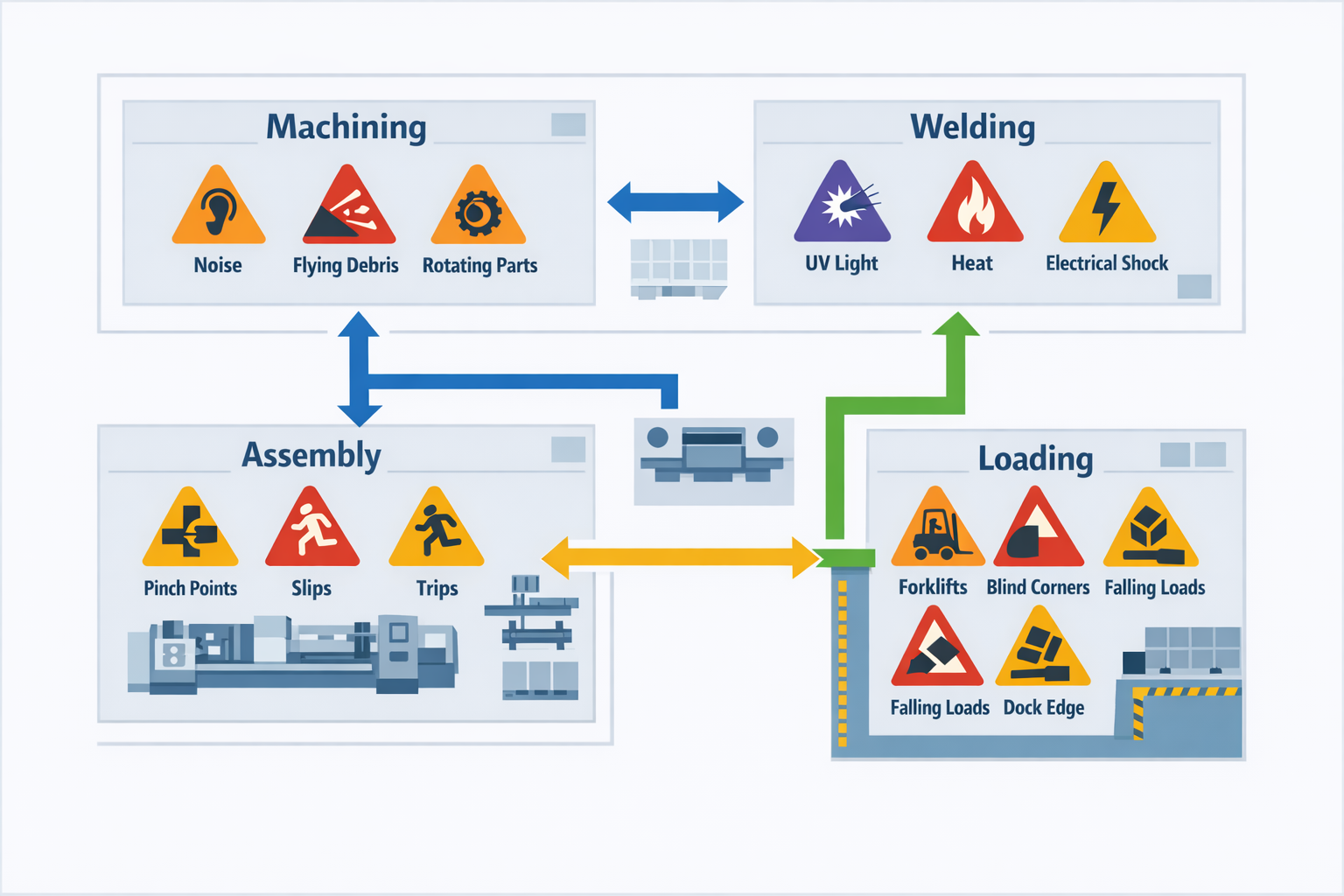
On most plant floors, physical hazards cluster by process area rather than appearing randomly. Machining cells tend to concentrate noise, flying particles, and rotating equipment hazards, while welding bays add intense light, hot surfaces, and electrical exposure. Assembly lines often create repetitive contact with conveyors, pinch points, and slip risks from oils or dropped parts. Paint, curing, and loading areas introduce a different mix, including heat, vehicle movement, and impact hazards, which is why mapping hazards by work area is one of the most practical ways to spot the main types of physical hazards in manufacturing.
Machining Cells: Noise, Rotation, and Flying Debris
In CNC and manual machining areas, the exposure is usually obvious to operators but easy for supervisors or maintenance staff to underestimate during short visits. Workers can face continuous noise above 85 dBA, a threshold where long-term hearing loss risk increases without effective controls. Chip ejection, broken tooling, and rotating chucks also create immediate impact and entanglement danger, especially during setup, clearing jams, or measuring parts between cycles. If these hazards are missed, the result may be anything from gradual hearing damage to severe hand injuries.
Welding Areas: Radiation, Heat, and Electrical Contact
Welding stations combine several physical hazards in one footprint. Welders, helpers, and nearby operators can be exposed to ultraviolet and infrared radiation, hot metal, sparks, and electric shock from damaged cables or poor grounding. Arc flash eye injuries can occur in seconds, while repeated exposure to radiant heat can drive fatigue and increase error rates late in the shift. In busy fabrication shops, the hazard often extends beyond the welding booth if screens are missing or poorly positioned.
Assembly Lines: Pinch Points and Surface-Level Risks
Assembly environments may look lower-risk than fabrication zones, but many reportable incidents happen there because exposures are frequent and normalized. Operators working beside conveyors, lift assists, and indexing fixtures can catch fingers in moving parts or suffer struck-by injuries from unstable components. At floor level, loose fasteners, plastic wrap, and fluid drips create slip and trip conditions that affect assemblers, material handlers, and quality staff moving between stations. When these examples of physical hazards in the workplace are treated as minor housekeeping issues, incident rates tend to rise.
Paint, Curing, and Loading Areas: Heat and Vehicle Interaction
Near curing ovens, drying tunnels, or heat-treatment zones, workers may experience surface contact burns, elevated ambient temperature, and heat stress during long tasks such as changeovers or inspection. In loading bays and forklift routes, the main exposure shifts to pedestrian-vehicle interaction, blind corners, dock edges, and falling loads. The people most at risk are often not dedicated drivers, but pickers, supervisors, and maintenance technicians crossing the area. Later, when deciding how to control physical hazards, these location-specific patterns matter because controls must match the actual exposure, not just the department name.
How to Control Physical Hazards Using the Hierarchy of Controls
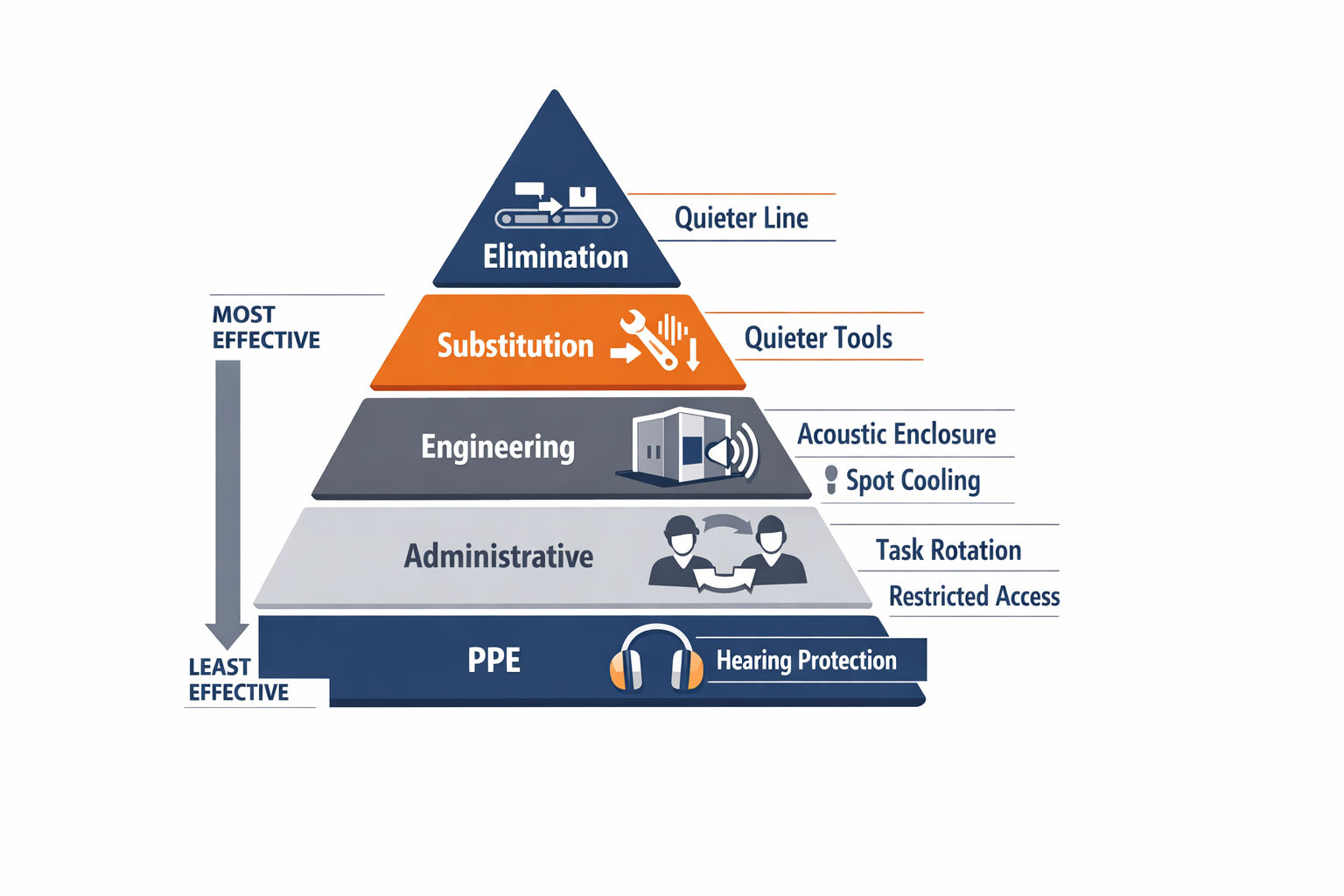
The hierarchy of controls helps you decide how to control physical hazards in the right order: remove the hazard first, then reduce exposure through design and work methods, and use PPE only as the last layer. For EHS teams, this matters because many examples of physical hazards in the workplace—especially noise and heat—cannot be managed reliably by earplugs or cooling vests alone. In practice, the most durable controls are the ones that change the process, equipment, or environment before they depend on worker behavior.
Elimination: Remove the Exposure Entirely
Start with the strongest question: can the task, machine, or layout be changed so the exposure no longer exists? In a metal fabrication plant, imagine a stamping area where operators face continuous noise above 90 dBA during full-shift production. The first review may show that one older press is creating most of the exposure because it is handling a product family that could be moved to a quieter servo-driven line in another bay.
That decision does not just lower decibels; it removes routine exposure hours for the operators assigned to that press. Elimination is often overlooked because it may involve production planning, capital scheduling, or line balancing rather than a traditional safety fix. But when it works, it delivers the most reliable reduction across shifts and supervisors.
Substitution: Replace the Source With a Lower-Risk Option
If you cannot remove the task, the next step is substitution. In the same stamping area, the team may replace worn impact tooling with lower-noise tooling and switch to a servo press for future volume increases. This approach keeps output stable while reducing the physical hazard at its source.
Substitution also applies to heat-generating processes. If a curing step can be redesigned to use lower-temperature equipment without affecting quality, workers near the line face less radiant heat. Among the main types of physical hazards in manufacturing, noise and temperature are both good candidates for substitution when procurement is involved early.
Engineering Controls: Isolate People From the Hazard
Engineering controls reduce exposure without asking operators to compensate for poor conditions. The stamping team might install acoustic enclosures, vibration-damping mounts, and sound-absorbing wall panels, then add barriers that separate walkways from the highest-noise zone. If heat is also building up near adjacent equipment, localized exhaust and spot cooling can reduce ambient temperature around workstations.
Administrative Controls and PPE: Control Time, Then Protect the Worker
When residual exposure remains, administrative controls help limit duration. The plant can rotate tasks, schedule the loudest jobs when fewer people are nearby, post restricted-access zones, and require preventive maintenance so loose guards or worn bearings do not drive noise back up. These steps are useful, but they are weaker because they depend on daily discipline.
PPE still matters, especially hearing protection selected by actual attenuation needs and fit testing. But PPE should confirm a strong control strategy, not replace it. If your current program for physical hazards starts and ends with earplugs, the hierarchy is telling you to move upstream.
How Manufacturers Can Monitor, Document, and Reduce Physical Hazard Exposure
Turn Hazard Controls Into a Managed Routine
Once controls are defined, the real challenge is execution. In a metal fabrication plant, for example, an EHS manager may already know the main physical hazards in manufacturing on Line 3: high noise near presses, heat around the curing oven, and intermittent forklift traffic at changeover. What determines results is whether those risks are checked on schedule, recorded consistently, and escalated fast enough when conditions drift. That is where many safety programs weaken.
Paper checklists and disconnected spreadsheets usually fail at shift boundaries. A supervisor may note that noise levels were above target during the morning run, but if that record stays on paper, maintenance may not see it until the next day. The same gap affects temperature checks, PPE stock, and operator exposure time, especially when multiple departments share responsibility. In practice, the issue is less about awareness and more about follow-through.
Build a Simple Inspection-to-Action Workflow
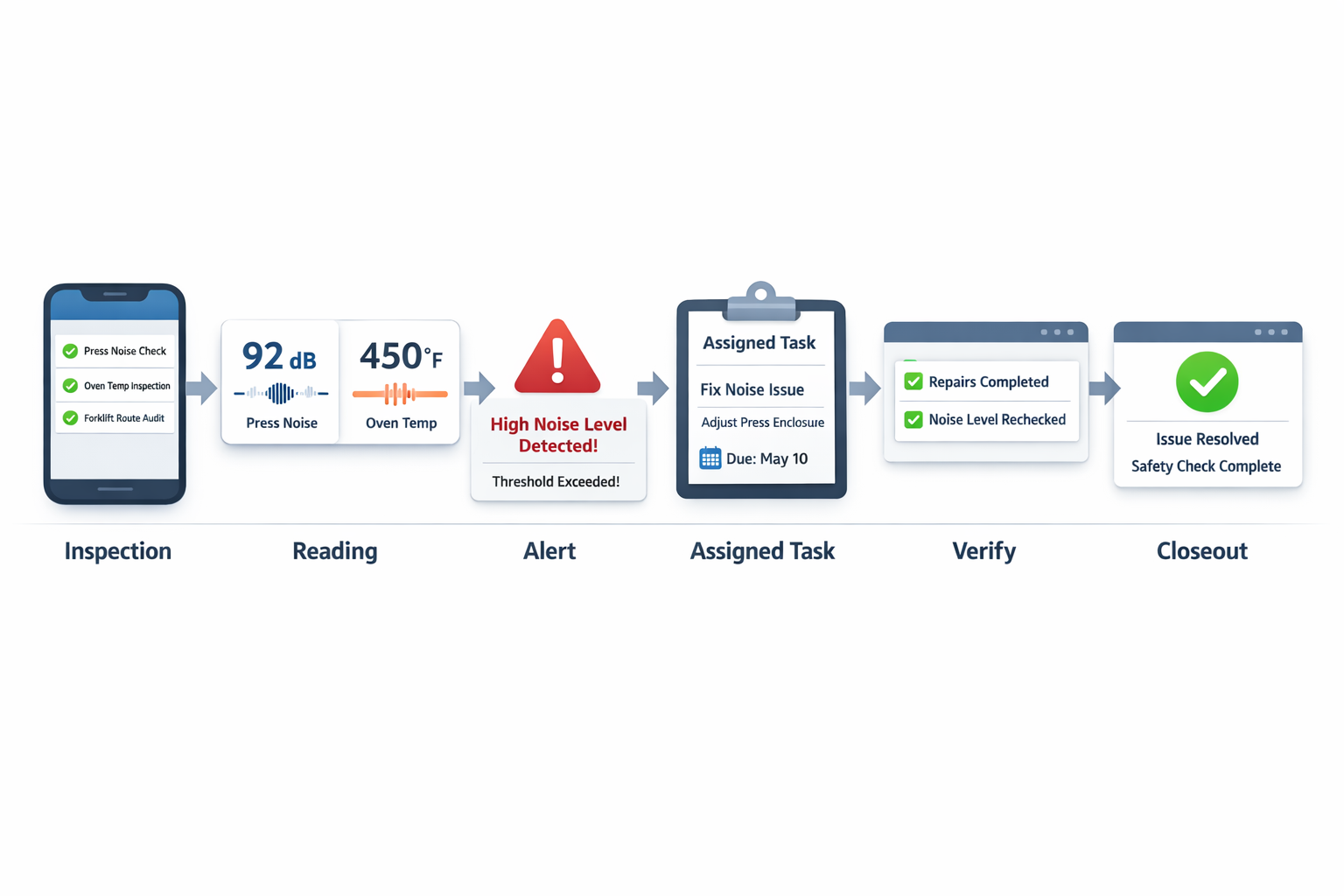
A workable model starts with recurring inspections tied to the actual exposure points. In the fabrication example, safety technicians can schedule weekly noise mapping at fixed press locations, while line leaders complete daily oven-area temperature checks and forklift route inspections at shift start. Each check should capture the reading, location, timestamp, responsible person, and whether the condition exceeds the plant’s action threshold. That structure turns scattered observations into usable operational data.
When a reading is out of range, the next step should be automatic corrective action assignment. If press noise exceeds the limit, the system should route a task to maintenance to inspect dampening panels or machine condition, with due dates and verification steps attached. If oven temperatures create excessive worker exposure, production and EHS should both see the alert so they can adjust rotation schedules and confirm temporary controls. This is how to control physical hazards in daily operations, not just in audits.
Track PPE and Exposure Across Shifts
PPE only works if the right equipment is available, issued, and replaced on time. For the same line, that means tracking hearing protection stock, face shields, cooling vests, and replacement intervals by work area instead of relying on monthly storeroom counts. A simple availability record can also reveal whether repeated shortages are increasing real exposure on specific shifts. That makes PPE tracking part of hazard control, not just inventory control.
Exposure logging also needs to continue across handovers. If one operator spends three hours near a high-noise press and the next operator rotates into the same zone, the cumulative exposure picture should carry forward instead of resetting with each supervisor’s notebook. Digital shift handovers make that visible by passing open hazards, exposure time, temporary controls, and pending actions to the incoming team in one record.
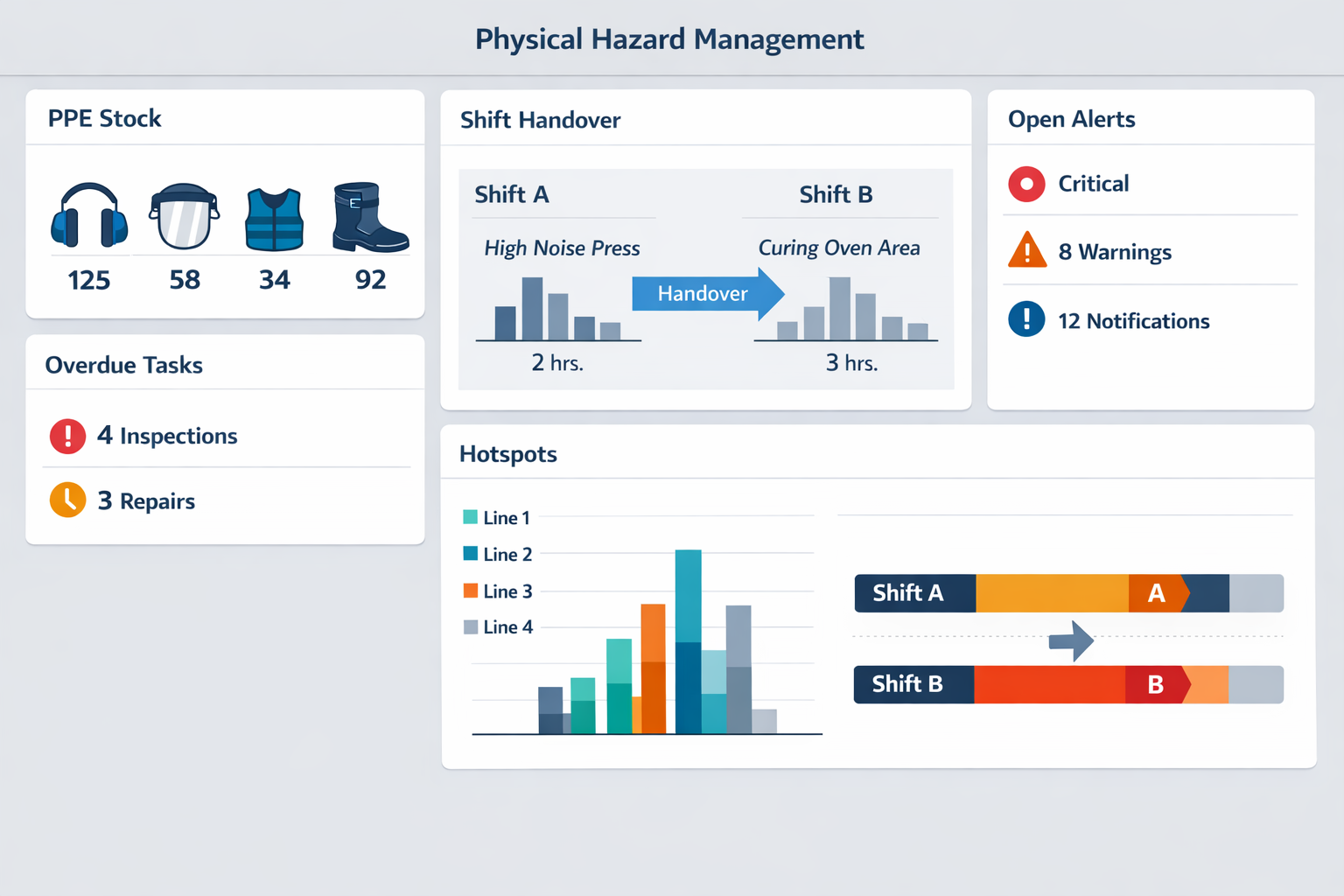
Platforms such as Jodoo help manufacturers build this workflow without custom development. A plant can configure mobile inspection forms, recurring task workflows, PPE issue records, and exposure logs in one system, then use dashboards to see overdue actions or repeated hotspots by line and shift. For EHS teams managing many examples of physical hazards in the workplace, that kind of closed-loop visibility is often what turns control plans into sustained performance.
Conclusion: Build a Stronger Physical Hazard Control Program With Jodoo
Physical hazards in manufacturing are rarely hard to identify in theory. The real challenge is controlling them consistently across shifts, departments, and plants. Noise, heat, vibration, electrical exposure, moving equipment, and slip or impact risks all require more than a one-time assessment. They need clear controls, routine verification, and fast follow-up when conditions change.
That is why strong safety programs combine the hierarchy of controls with disciplined execution. Inspections must happen on schedule, PPE must be available where needed, exposure data must be logged accurately, and corrective actions must be assigned and closed without delay. When these steps rely on paper forms, spreadsheets, or verbal handovers, gaps appear quickly and recurring physical hazards are easier to miss.
Jodoo helps manufacturers turn those safety tasks into standardized digital workflows. As a no-code lean manufacturing platform, it can be used to build recurring inspection forms, PPE tracking records, exposure logs, corrective action workflows, and real-time dashboards without heavy IT development. If you want a more reliable way to manage physical hazard controls across lines, shifts, and sites, you can start a free trial or book a demo to see how Jodoo fits your operation.