Browse by category

Introduction: Why Safety Inspections Matter in Manufacturing
A missed loose guard, blocked fire exit, or leaking hydraulic line can turn into a recordable incident faster than most teams expect. That is why a safety inspection is not just a compliance exercise. In practical terms, it is a routine check of people, equipment, materials, and work areas to identify hazards before they cause harm, downtime, or regulatory trouble.
For EHS managers and safety officers, routine inspections create three forms of control on the factory floor. First, they improve hazard detection by catching issues such as damaged machine guarding, unsafe material storage, or poor housekeeping early. Second, they strengthen compliance readiness by showing that checks are consistent, documented, and followed up. Third, they reinforce operational discipline, because teams are more likely to follow SOPs when inspection standards are visible and repeatable.
In this article, you will learn how to conduct a workplace safety inspection step by step, what to include in a manufacturing inspection checklist, how inspections differ from audits, and how digital workflows can improve corrective action follow-through.
Safety Inspection vs. Safety Audit: What Manufacturing Teams Need to Know
Manufacturing teams often use inspection and audit interchangeably, but they serve different purposes. A safety inspection is a direct check of conditions and behaviors on the floor: guarding in place, aisles clear, extinguishers accessible, operators using PPE, and hazards corrected quickly. A safety audit looks at whether the management system behind those conditions is working, including procedures, training records, legal compliance, and evidence that corrective actions are consistently closed.
The Core Difference Between an Inspection and an Audit
The simplest way to understand the difference between safety inspection and safety audit is this: inspections look for hazards in work areas, while audits test whether the organization’s safety controls are designed and managed effectively. Inspections are usually frequent, narrow, and operational. Audits are periodic, broader in scope, and often tied to internal standards, customer requirements, or regulatory expectations.
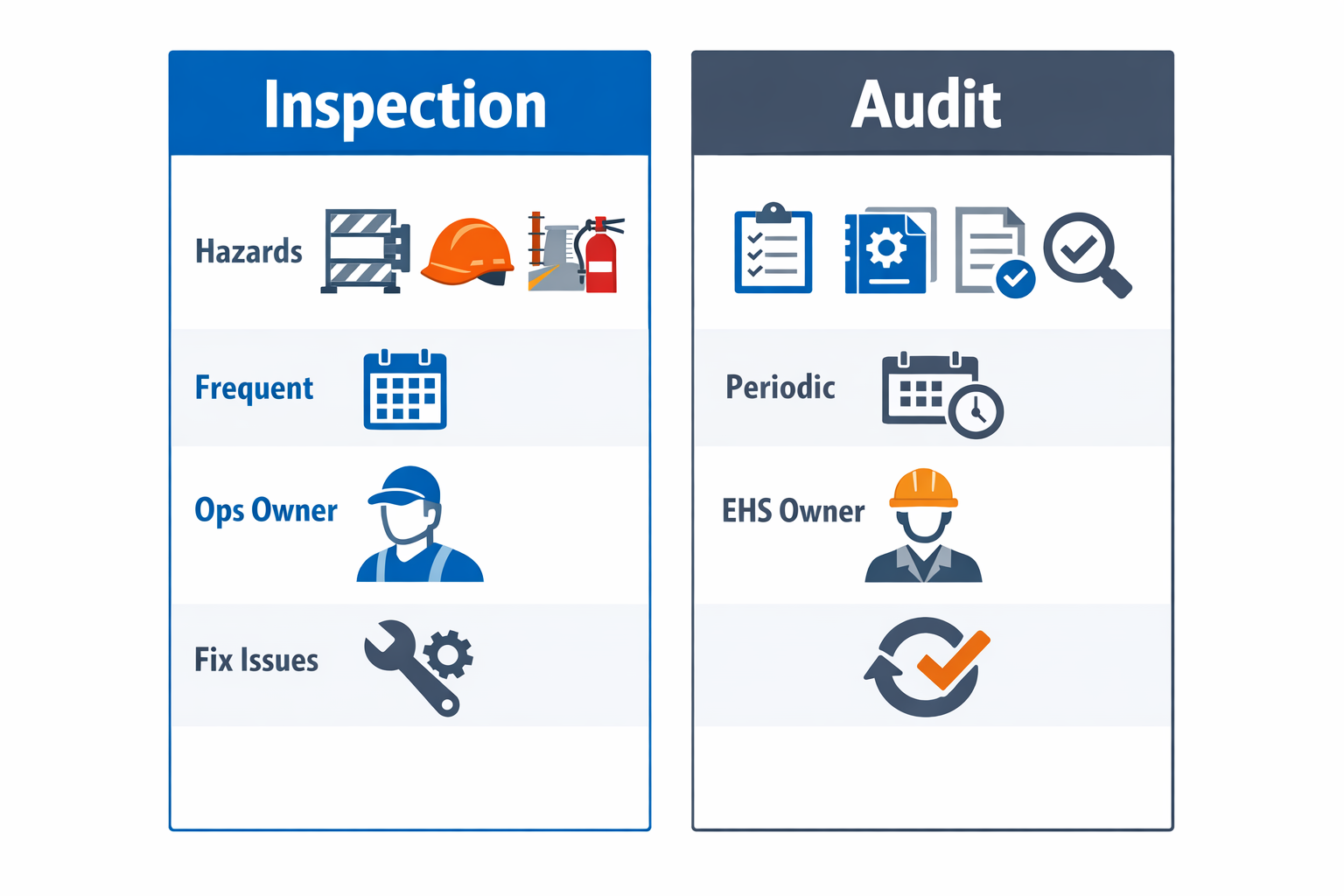
On a packaging line, for example, a weekly safety inspection might check emergency stops, cable conditions, forklift-pedestrian segregation, and housekeeping around stretch wrappers. A quarterly audit would review whether inspection routines exist, whether supervisors act on findings, whether lockout/tagout training is current, and whether repeated hazards show a control failure. One asks, “What is unsafe right now?” The other asks, “Why does this keep happening, and is the system controlling it?”
When Each Should Be Used
Use a safety inspection when you need immediate visibility into workplace conditions. This includes daily startup checks, supervisor walkthroughs, area inspections after layout changes, and targeted checks after a near miss or minor injury. These are frontline tools for maintaining control of risk in real operating environments.
Use a safety audit when you need assurance that the overall program is functioning as intended. Audits are common before external certification reviews, after major incidents, during annual EHS evaluations, or when multiple plants need to be assessed against the same standard. If you are discussing how to conduct a workplace safety inspection, you are dealing with floor execution; if you are evaluating policy effectiveness and governance, you are in audit territory.
Who Typically Owns Each Process
Ownership is another practical divider. Safety inspections are usually owned by line supervisors, area leaders, maintenance leads, or safety officers because they happen close to the work. EHS may define the safety inspection checklist for manufacturing, but operations often execute the checks.
Safety audits are typically led by EHS managers, corporate safety teams, trained internal auditors, or third-party specialists. They require independence, document review, interviews, and evidence sampling across departments. In larger plants, operations supports the audit, but should not be the sole judge of its own system performance.
Where Pre-Op, Area, and Follow-Up Inspections Fit
Pre-op checks sit at the most routine end of the inspection spectrum. Operators or team leaders complete them before equipment startup to catch visible issues such as missing guards, fluid leaks, blocked sensors, or damaged cords. Their value is speed and frequency, not system-level analysis.
Area inspections are broader walkthroughs of a zone such as welding, chemical storage, or finished goods staging. Follow-up inspections happen after corrective actions are due, confirming that the original hazard was actually removed rather than only acknowledged on paper. Together, these inspection types feed daily control, while audits test whether the whole process remains credible and effective.
How to Conduct a Workplace Safety Inspection Step by Step
Plan and Schedule the Inspection
To show how to conduct a workplace safety inspection in practice, take a metal fabrication plant with laser cutting, press brakes, and welding cells. The safety officer sets a monthly inspection for the fabrication area, then adds extra checks after layout changes and near-miss reports. That schedule matters because higher-risk zones need more frequent review than low-exposure storage areas. A good safety inspection starts with risk-based timing, not a one-size-fits-all calendar.
Before the walkthrough, define the scope, route, and objective. In this example, the officer is checking machine guarding, lockout readiness, welding fume controls, compressed gas storage, and pedestrian-vehicle separation. He also confirms who needs to join: the area supervisor, a maintenance representative, and a production lead who knows normal operating conditions. This keeps the inspection grounded in actual shop-floor practice rather than a clipboard exercise.
Prepare the Checklist and Inspection Team
The checklist should be standardized, but specific to the area being inspected. For the fabrication line, the safety inspection checklist for manufacturing includes guard interlocks, emergency stop access, cable condition, PPE use, housekeeping around scrap bins, and visibility of isolation points. It also includes fields for severity, photo evidence, immediate action taken, and owner assignment. That preparation saves time during the walk and makes findings easier to compare month to month.
The team should review recent incident records, previous open findings, and any process changes before stepping onto the floor. In the running example, the officer sees that two earlier actions on press brake guarding were marked complete, so he plans to verify them on site. This prevents the common mistake of treating each inspection as separate from prior follow-up. It also reinforces the practical difference between a safety inspection and a safety audit: this is a focused operational check, not a full management-system review.
Conduct the Walkthrough and Record Findings
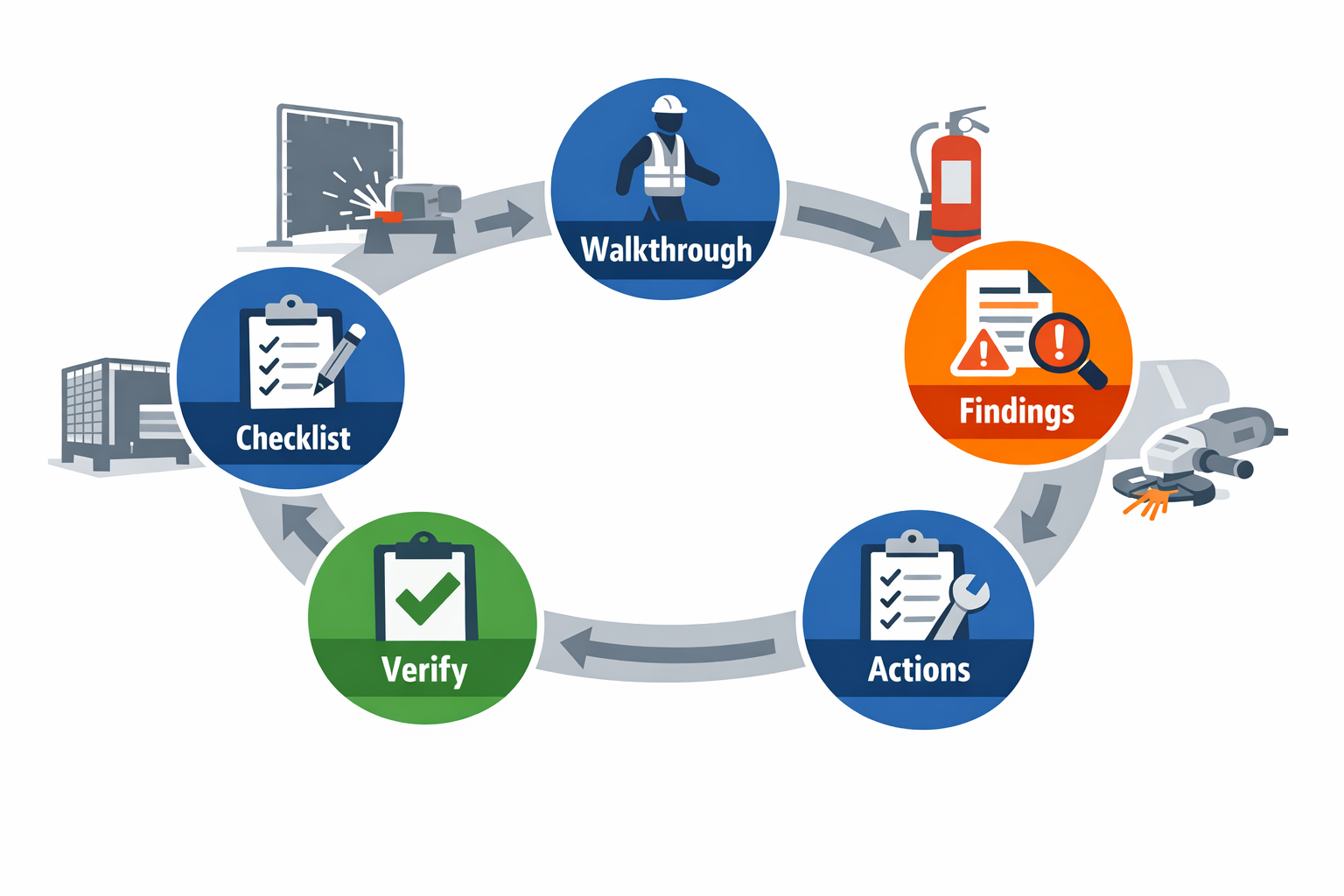
During the walkthrough, observe work as it is actually being done, not only conditions that look acceptable when supervisors are present. In the fabrication area, the officer notices one grinder with a missing side guard, blocked access to a fire extinguisher, and a welding screen positioned too far from the active arc. He speaks briefly with operators to confirm whether these are temporary conditions or recurring issues. Findings should be specific enough that another person could locate the exact hazard without further explanation.
This end-to-end process is simple but disciplined: schedule the inspection, prepare the checklist, walk the area, document hazards, assign actions, and verify closure. Skipping any one step weakens the whole system, especially the handoff from observation to correction. The goal is not to collect findings; it is to move each finding to a named owner and a confirmed fix.
Assign Corrective Actions and Verify Closure
Each finding needs an owner, deadline, and expected control measure. In this case, the missing grinder guard goes to maintenance for same-shift replacement, the blocked extinguisher goes to the area supervisor for immediate correction, and the welding screen issue is assigned to production with a 24-hour deadline. Prioritize by risk, not by convenience. Serious exposure hazards should never sit in a general action list waiting for the next meeting.
Closure requires verification, not just a completed checkbox. When the officer returns two days later, he checks that the grinder is back in service only after guard replacement, confirms extinguisher access is maintained, and verifies the welding screen now protects adjacent workers. He records evidence of closure and reopens any action that was only partially addressed. That final check is what turns inspection activity into actual risk reduction.
What to Include in a Manufacturing Safety Inspection Checklist
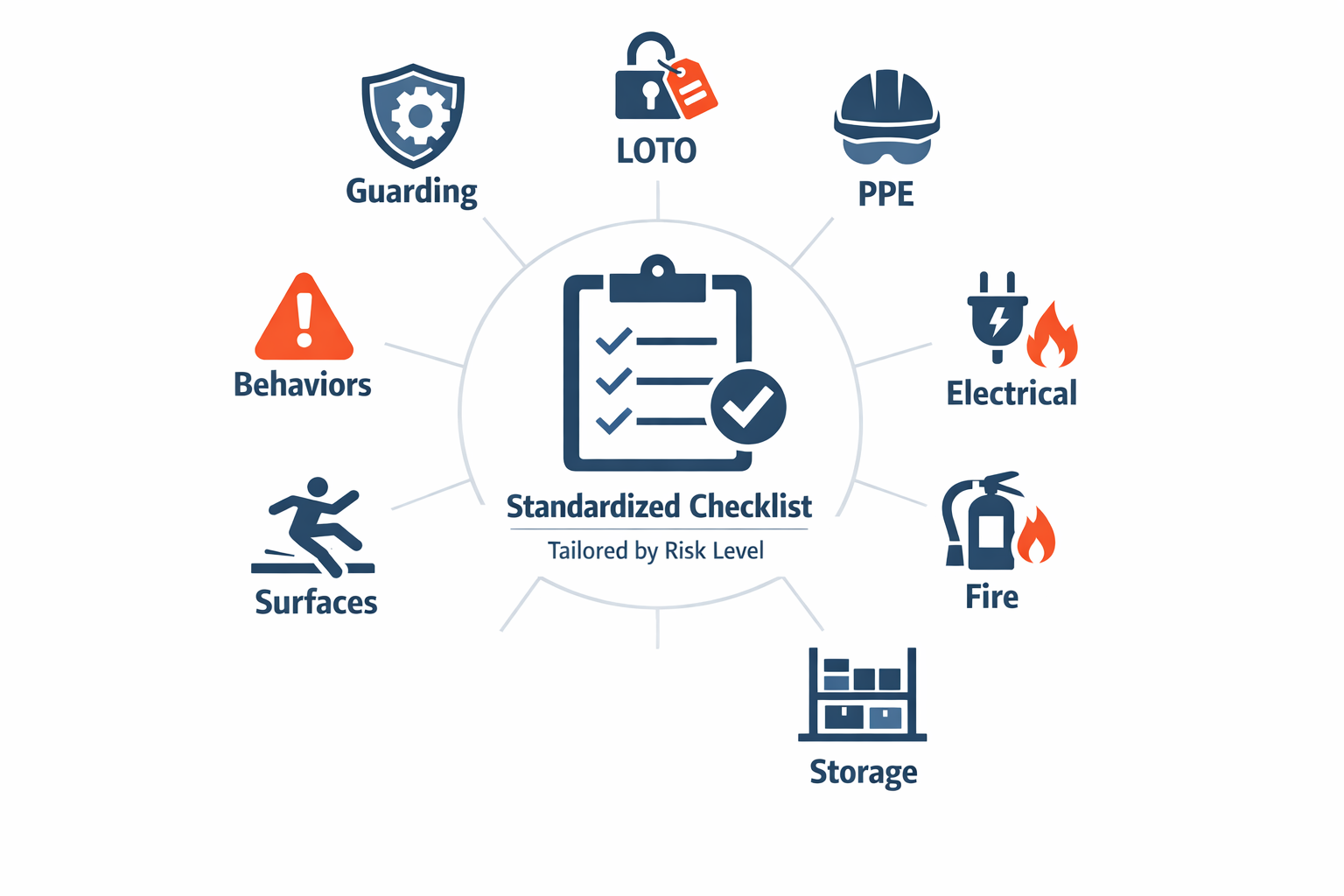
A practical safety inspection checklist for manufacturing should be organized by risk category, then adjusted for the equipment, process, and exposure level in each area. That keeps the checklist consistent enough for trend tracking, but specific enough to guide action on the shop floor.
Most manufacturing checklists should cover eight core categories: machine guarding, lockout/tagout readiness, PPE, electrical safety, fire protection, material storage, walking-working surfaces, and unsafe behaviors. These categories work across machining, assembly, packaging, food processing, and warehouse-linked production, but the inspection questions under each one should vary by area. A press line, for example, needs more guarding and energy-isolation detail than a manual packing station. A solvent-handling area needs deeper checks on ignition sources, ventilation, and spill readiness than a finished-goods zone.
Machine Guarding and Energy Isolation
Start with machine guarding because it directly affects high-severity injury risk. Check whether fixed guards are present, interlocks function properly, emergency stops are accessible, and no bypassing or removal has occurred during production. In a metal stamping cell, a checklist should also verify point-of-operation protection, two-hand controls where applicable, and clear access around emergency devices.
Lockout/tagout readiness should focus on whether isolation can be executed correctly, not just whether a written procedure exists. Inspectors should confirm that energy sources are labeled, lockout points are accessible, employee-specific locks are available, and machine-specific procedures match the current configuration. For equipment with hydraulic, pneumatic, thermal, or stored mechanical energy, the checklist should go beyond electrical isolation alone.
PPE, Electrical, and Fire Protection
PPE checks should verify fit, condition, availability, and actual use in the task observed. In a welding area, that means confirming face shields, gloves, sleeves, and hearing protection are both specified and worn; in a food plant, it may mean cut-resistant gloves, slip-resistant footwear, and hygiene-related protective gear. Good checklists distinguish between missing PPE, damaged PPE, and incorrect PPE for the hazard.
Electrical and fire protection items should stay tightly observable. Look for blocked panels, damaged cords, open junction boxes, overloaded outlets, missing extinguisher inspections, obstructed extinguishers, and inaccessible alarm pull stations. In many factories, these are recurring findings because they develop gradually between formal reviews.
Storage, Surfaces, and Behaviors
Material storage checks should cover rack condition, load labeling, stacking stability, cylinder restraint, and aisle clearance. Walking-working surface checks should include spills, uneven flooring, loose cables, damaged grating, stair condition, and slip resistance in wet zones. Unsafe behavior observations should capture shortcuts such as reaching into moving equipment, climbing on racks, disabling sensors, or lifting without the required aid.
Checklist depth should change with risk. A low-risk assembly bench may need ten focused questions, while a paint line or CNC area may need thirty. Standardize the category structure across the plant, then tailor the inspection points by line, hazard profile, and history of previous findings.
From Paper Forms to Mobile Workflows: How to Improve Inspection Follow-Up
Why Follow-Up Breaks Down After the Inspection
Most manufacturing teams know how to conduct a workplace safety inspection. The weak point is what happens after the walkthrough, when findings move from the shop floor into action. On paper, hazards sit in clipboards until the end of the shift, then get retyped into spreadsheets or emailed across departments.
In a packaging plant, for example, a safety officer finds a missing side guard on a case erector during a weekly area inspection. She takes notes by hand, snaps a photo on her phone, and later emails maintenance and production with a vague subject line. By the time the issue is discussed, the line has already run two more shifts, nobody is sure who owns the fix, and there is no reliable record tying the hazard to a due date, verification, or escalation path.
Paper-based follow-up usually fails in four places. First, records are incomplete because photos, location details, risk ratings, and corrective actions sit in separate places. Second, ownership is weak because findings are “shared” by email instead of assigned to one accountable person. Third, status tracking is poor, so EHS cannot quickly tell which actions are open, overdue, or verified. Fourth, trend visibility is limited, making it hard to see whether one line, shift, or department keeps generating the same findings despite a standardized safety inspection checklist for manufacturing.
How Mobile Workflows Close the Loop
A mobile workflow changes the sequence from “record now, organize later” to “capture once, route immediately.” On the factory floor, the safety officer logs the missing guard directly into a digital form with line number, machine ID, photo evidence, hazard category, risk level, and temporary control. The system then creates a corrective action automatically instead of waiting for someone to rewrite notes after the round.
With Jodoo, that inspection finding can trigger a no-code workflow the moment the form is submitted. A high-severity machine-guarding issue can be routed first to maintenance, copied to the production supervisor, and escalated to the EHS manager if it remains open past the deadline. Required fields, photo attachments, approval steps, and digital sign-off make the record complete enough for verification without chasing updates through calls and emails.
What Better Execution Looks Like in Practice
In the packaging plant example, maintenance receives the task instantly on mobile, adds a repair photo after reinstalling the guard, and marks the action ready for verification. The safety officer then rechecks the machine, closes the item, and the full history stays attached to the original inspection record. Instead of manually compiling monthly reports, EHS can view dashboards by area, hazard type, overdue actions, repeat findings, and closure time.
That visibility supports better decisions, not just faster paperwork. If one converting line shows repeated guarding issues, you can target supervisor accountability, PM routines, or operator retraining before the next inspection cycle. The result is a safer process with less admin work and fewer gaps between finding a hazard and proving it was fixed.
Conclusion: Build a Safer, Faster Inspection Process with Jodoo
An effective safety inspection program does more than identify hazards on the factory floor. It creates a repeatable system for conducting checks on time, documenting findings clearly, assigning corrective actions to the right people, and verifying that issues are actually closed. That discipline is what turns inspections from a compliance activity into a practical risk-control process.
For EHS managers and safety officers, the real challenge is usually not building a checklist. It is maintaining consistency across shifts, lines, and sites while keeping records complete and follow-up visible. When inspections stay on paper or in scattered spreadsheets, delays, missed actions, and weak trend tracking become much more likely.
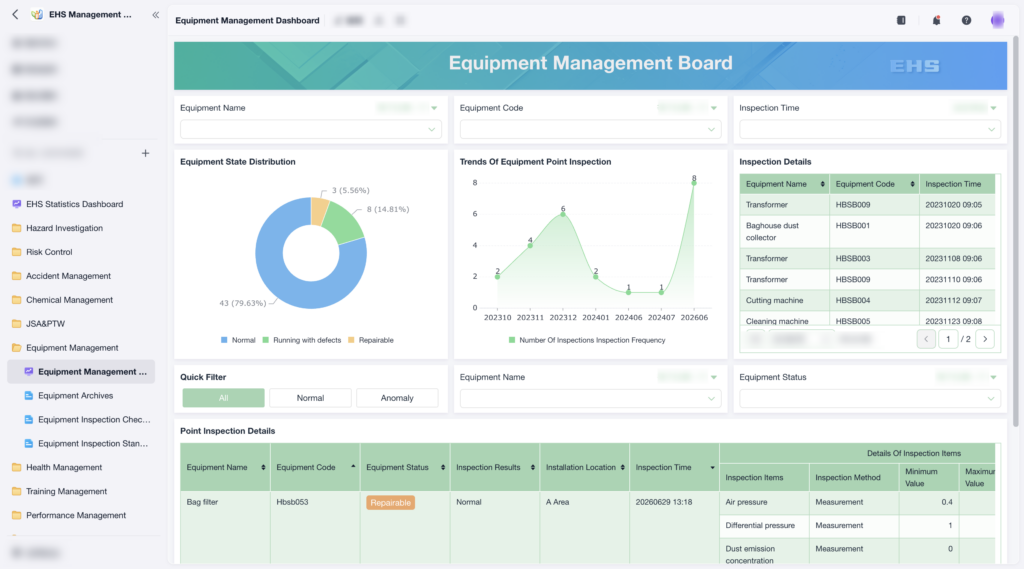
Jodoo gives manufacturing teams a practical way to digitize that process without heavy IT work. As a no-code lean manufacturing platform, it can help you standardize inspection forms, capture photos and signatures on mobile devices, route findings into corrective action workflows, and monitor closure status through real-time dashboards. If you want a safer and faster way to manage workplace inspections, you can start a free trial or book a demo to see how Jodoo fits your operation.