Browse by category

Updated for 2026. This guide is for operations teams, safety managers, field supervisors, construction teams, maintenance teams, warehouse teams, and service businesses that need a more consistent way to document workplace safety risks. It is especially useful if your team still relies on paper forms, chat messages, spreadsheets, or scattered photos to manage safety records.
Workplace safety reporting often breaks down because teams treat each form as a separate task. An incident report is completed after something goes wrong. A job safety analysis is done before work starts. A confined space permit is prepared for higher-risk entry. A vehicle inspection is checked before equipment is used. Each document matters, but the bigger value comes from connecting them into one safety workflow.
A stronger safety reporting process helps teams answer three practical questions: what could go wrong, what happened, and what needs to change before it happens again.
What is workplace safety reporting?
Workplace safety reporting is the process of documenting hazards, inspections, incidents, near misses, corrective actions, and safety controls. The goal is not just to create records. The goal is to help teams identify risk earlier, respond faster, and build a more reliable safety history.
A good safety reporting workflow usually includes:
- Pre-task risk review: identifying hazards before work begins.
- Permit control: confirming that higher-risk work has the right approvals and precautions.
- Inspection checks: verifying that vehicles, tools, equipment, and work areas are safe to use.
- Incident documentation: recording what happened, who was involved, what was affected, and what actions were taken.
- Corrective action tracking: making sure safety issues are not simply reported and forgotten.
Key safety records and when to use them
| Safety record | Main purpose | Best time to use it |
|---|---|---|
| Incident report | Documents injuries, property damage, near misses, unsafe conditions, and corrective actions. | After an incident, near miss, or safety concern is identified. |
| Job safety analysis | Breaks a task into steps, identifies hazards, and defines controls before work begins. | Before non-routine, hazardous, complex, or changing work. |
| Confined space permit | Controls entry into confined spaces where hazards may require authorization, testing, monitoring, and rescue planning. | Before confined space entry when permit requirements apply. |
| Vehicle inspection | Checks whether a vehicle or mobile equipment is safe to operate. | Before use, during routine inspections, or after defects are reported. |
1. Incident reports: document what happened and what changed
An incident report should do more than record that an event occurred. It should capture enough detail for supervisors, safety teams, and operations leaders to understand the event and prevent similar issues.
Incident reports are commonly used for injuries, illnesses, near misses, property damage, equipment damage, environmental issues, unsafe conditions, and security-related events. The exact requirements depend on location, industry, and company policy, so teams should align their process with applicable regulations and internal safety procedures.
A useful incident report should include:
- Basic event details: date, time, location, department, shift, and report owner.
- People involved: employee, contractor, visitor, witness, supervisor, and contact information where appropriate.
- Incident type: injury, near miss, property damage, equipment failure, unsafe condition, spill, vehicle event, or other category.
- Description: what happened, what task was being performed, and what conditions were present.
- Immediate response: first aid, medical care, area isolation, equipment shutdown, notification, or emergency response.
- Evidence: photos, witness notes, equipment details, environmental conditions, and supporting attachments.
- Root cause notes: contributing factors such as training gaps, missing procedures, equipment issues, workload, layout, or communication problems.
- Corrective actions: assigned owner, action required, due date, completion status, and verification notes.
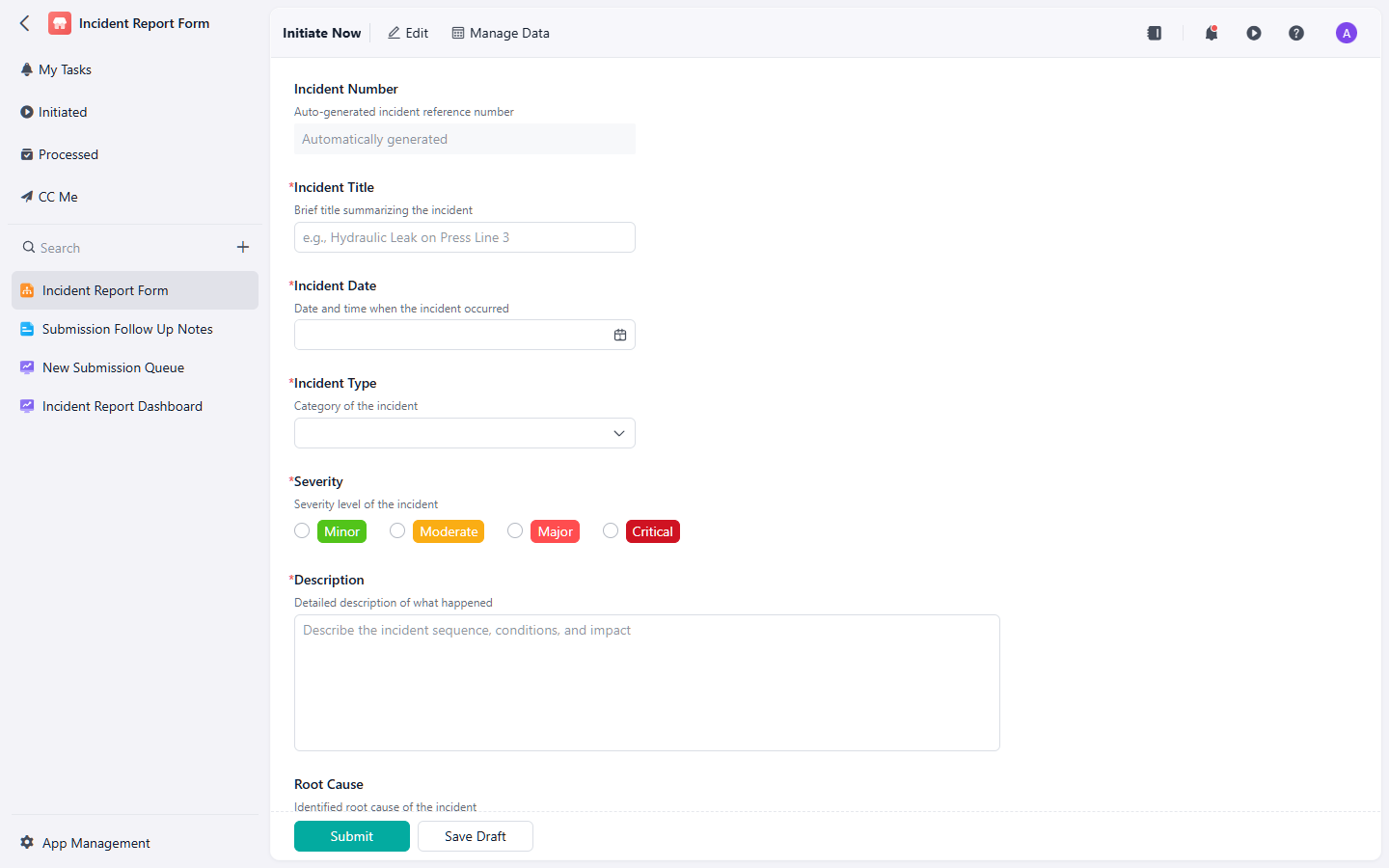
An incident report should connect the event details with corrective actions, not just describe what happened.
If your team needs a structured starting point, the incident report form can help standardize event details, evidence, investigation notes, and follow-up actions.
2. Job safety analysis: identify hazards before work starts
A job safety analysis, often called JSA or job hazard analysis, is used before work begins. It breaks a job into steps, identifies hazards in each step, and defines controls that reduce risk.
JSA is especially useful for non-routine work, high-risk tasks, new procedures, work involving multiple teams, tasks with a history of incidents, and jobs where conditions may change during the day.
A practical JSA should include:
- Job or task name: the specific activity being reviewed.
- Work location: site, area, equipment, building, floor, or zone.
- Task steps: a clear sequence of what workers will do.
- Hazards for each step: falls, struck-by risks, caught-between hazards, electrical exposure, chemicals, heat, noise, poor visibility, ergonomics, or moving equipment.
- Control measures: elimination, substitution, engineering controls, administrative controls, PPE, training, signage, barriers, lockout, ventilation, or monitoring.
- Required permits: hot work, confined space, electrical, excavation, lifting, or other permit requirements.
- Review and approval: supervisor review, worker acknowledgment, date, and signature where needed.
The job safety analysis form can help teams document task steps, hazards, controls, responsibilities, and approvals before work begins.
3. Confined space permits: control higher-risk entry work
Confined space work requires stricter control because hazards may not be obvious from outside the space. Depending on the space and applicable regulation, teams may need to evaluate entry conditions, atmospheric hazards, isolation, ventilation, communication, attendants, rescue procedures, and authorization before entry.
A confined space permit should not be treated as a routine checklist. It should confirm that the entry is planned, authorized, monitored, and controlled.
A strong confined space permit should include:
- Space identification: space name, location, entry point, equipment ID, and description.
- Purpose of entry: inspection, repair, cleaning, maintenance, installation, or testing.
- Authorized personnel: entrants, attendants, entry supervisor, rescue contact, and approving person.
- Hazard review: oxygen deficiency or enrichment, toxic atmosphere, flammable atmosphere, engulfment, mechanical hazards, electrical hazards, heat, noise, or poor access.
- Atmospheric testing: test results, time tested, instrument used, tester name, and retest requirements.
- Controls: ventilation, isolation, lockout/tagout, barriers, lighting, communication, PPE, and emergency equipment.
- Rescue plan: rescue method, emergency contact, rescue equipment, and response procedure.
- Permit timing: issue time, expiration time, cancellation time, and reauthorization rules.
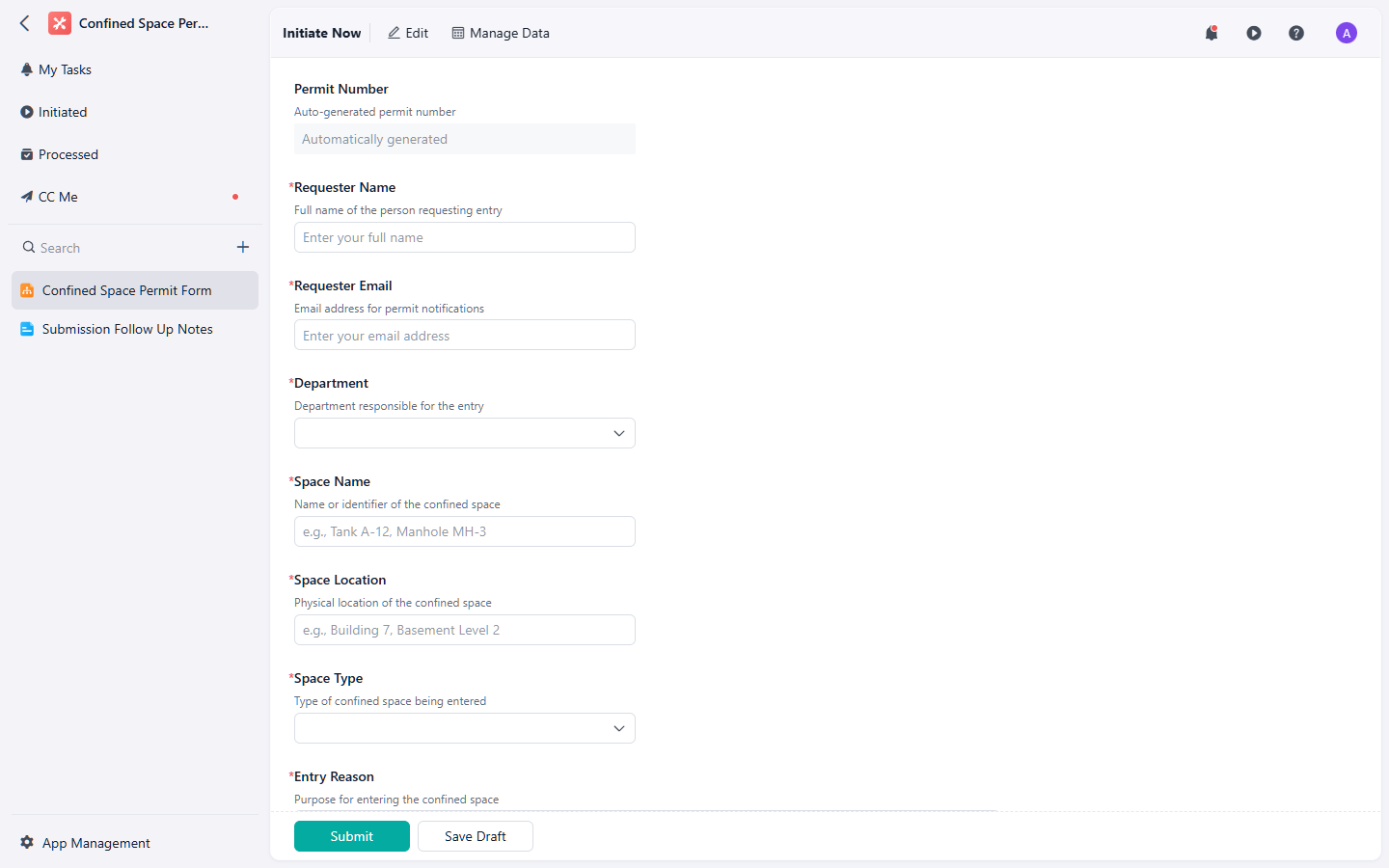
A confined space permit should make entry conditions, controls, and authorization clear before work starts.
The confined space permit form can help teams organize entry details, hazard checks, atmospheric testing, control measures, and approval records in a repeatable process.
4. Vehicle inspections: prevent avoidable equipment-related incidents
Vehicle inspections are a practical way to catch problems before a driver or operator starts work. For field service, construction, logistics, maintenance, and warehouse teams, vehicle and mobile equipment issues can quickly become safety, scheduling, and cost problems.
A vehicle inspection should be simple enough to complete consistently, but detailed enough to flag defects that affect safe operation.
A useful vehicle inspection checklist may include:
- Vehicle information: vehicle ID, license plate, mileage, operator, date, and location.
- Exterior condition: body damage, mirrors, windshield, windows, lights, tires, leaks, and visible defects.
- Safety equipment: horn, seat belts, backup alarm, fire extinguisher, emergency kit, reflective devices, and warning lights.
- Operating systems: brakes, steering, parking brake, wipers, suspension, fluids, battery, and dashboard warnings.
- Load and storage: secured tools, materials, cargo, ladders, tanks, and equipment.
- Defect reporting: issue description, severity, photos, repair owner, status, and out-of-service decision if needed.
The vehicle inspection form is useful when teams need a consistent way to document pre-use checks, defects, photos, and repair follow-up.
How these safety records should work together
The best safety reporting systems connect prevention, control, reporting, and follow-up.
- JSA identifies risks before work begins. The team reviews job steps, hazards, and controls.
- Permits control higher-risk work. Confined space entry and other permit-based tasks require documented authorization and safeguards.
- Inspections verify readiness. Vehicle and equipment checks help confirm that work can begin safely.
- Incident reports capture what went wrong. They record events, near misses, evidence, and immediate response.
- Corrective actions close the loop. Follow-up tasks make sure hazards are addressed instead of simply documented.
When these records are disconnected, safety teams may see the same issue repeat in different forms. When they are connected, a near miss can trigger a JSA update, a vehicle defect can create a repair action, and a confined space concern can lead to stronger entry controls.
Common workplace safety reporting mistakes
- Reporting incidents without tracking corrective actions: A report is incomplete if no one owns the next step.
- Using JSA as a paperwork exercise: If workers do not discuss the actual task and site conditions, the form does not reduce risk.
- Approving permits too casually: Higher-risk work needs clear authorization, current conditions, and defined controls.
- Ignoring near misses: Near misses can reveal weak controls before an injury or loss occurs.
- Keeping inspection failures separate from maintenance: A failed vehicle inspection should lead to a repair decision, not just a checked box.
- Using vague hazard descriptions: “Be careful” is not a control. The record should say what hazard exists and what action reduces it.
Best practices for safety reporting in 2026
- Standardize required fields: Make sure every report captures the minimum information needed for review and action.
- Use simple status labels: Open, assigned, in progress, completed, verified, and closed are often enough for most teams.
- Capture photos at the source: Photos help supervisors understand field conditions without relying only on written descriptions.
- Assign owners and due dates: Corrective actions should have clear responsibility and timing.
- Review trends, not just individual reports: Look for repeated hazards, frequent locations, recurring equipment defects, and delayed corrective actions.
- Keep compliance separate from operational convenience: Templates can help standardize records, but your safety process still needs to follow applicable laws, regulations, and company policies.
Compliance note
Safety requirements vary by country, state, industry, and type of work. For U.S. employers, OSHA provides official resources on job hazard analysis, injury and illness recordkeeping forms, confined space standards, and vehicle inspection topics. Use those resources, local rules, and professional safety guidance when designing your internal process.
Final thoughts
Workplace safety reporting is most useful when it creates action, not just documentation. Incident reports, job safety analysis, confined space permits, and vehicle inspections each serve a different purpose, but they should all support the same goal: identifying hazards, controlling risk, and preventing repeat problems.
If your current process is scattered across paper forms, spreadsheets, photos, and messages, start by standardizing the safety records that affect your highest-risk work. Templates for incident reporting, job safety analysis, confined space permits, and vehicle inspections can help your team build a clearer safety reporting workflow without turning the process into disconnected paperwork.