Browse by category

Introduction: Why 8D Problem Solving Software Matters in Modern Manufacturing
A customer complaint can escalate fast when your 8D report is still sitting in someone’s inbox, waiting for updates from quality, production, and engineering. In many factories, corrective action still depends on spreadsheets, email chains, and paper forms, even though the cost of poor quality can reach 15%–20% of sales in some manufacturing environments. That is why 8D problem solving software is becoming a priority for automotive and electronics manufacturers that need faster containment, clearer ownership, and stronger audit trails.
Imagine a production manager at an automotive parts plant who discovers a recurring torque defect on a high-volume line. The team launches containment, but action items are tracked in Excel, photos sit in WhatsApp chats, and approval status is unclear across shifts. In that situation, delays are not just administrative problems; they can increase scrap, disrupt shipments, and raise the risk of repeat defects reaching the customer.
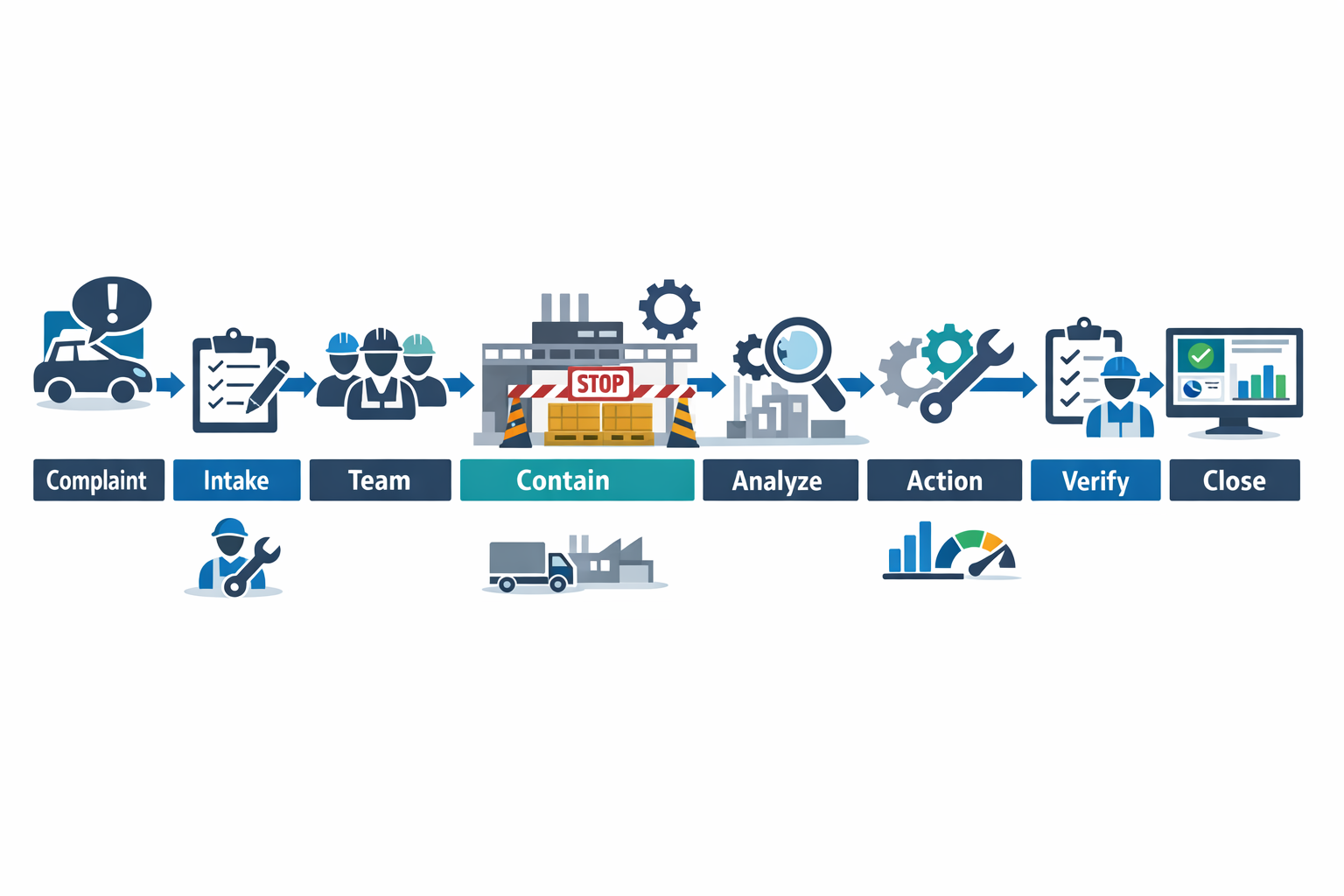
This article explains why manufacturers are replacing manual 8D reports with a connected digital platform. You will see how 8D problem solving software improves response speed, standardizes root cause analysis, strengthens traceability for ISO 9001 and customer audits, and gives quality, production, and lean leaders better visibility into every corrective action.
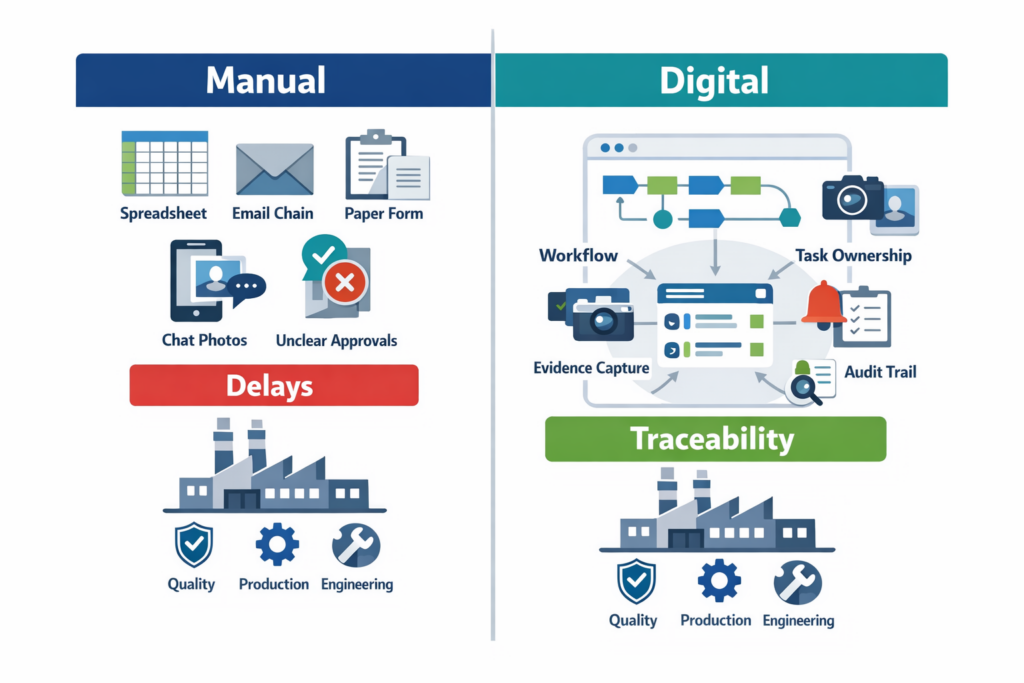
What Is 8D Problem Solving Software and How Does It Support Corrective Action?
8D problem solving software is a digital system that helps manufacturers run the full Eight Disciplines process in a controlled, traceable, and repeatable way. Instead of managing corrective actions through Word files, spreadsheets, and long email chains, the software centralizes every step of the investigation, from problem definition to closure. This matters because corrective action failures are rarely caused by poor intent; they usually happen because data is incomplete, owners are unclear, or follow-up is inconsistent. In a factory environment where customer complaints, internal defects, and supplier issues can disrupt output within hours, that lack of control becomes expensive very quickly.
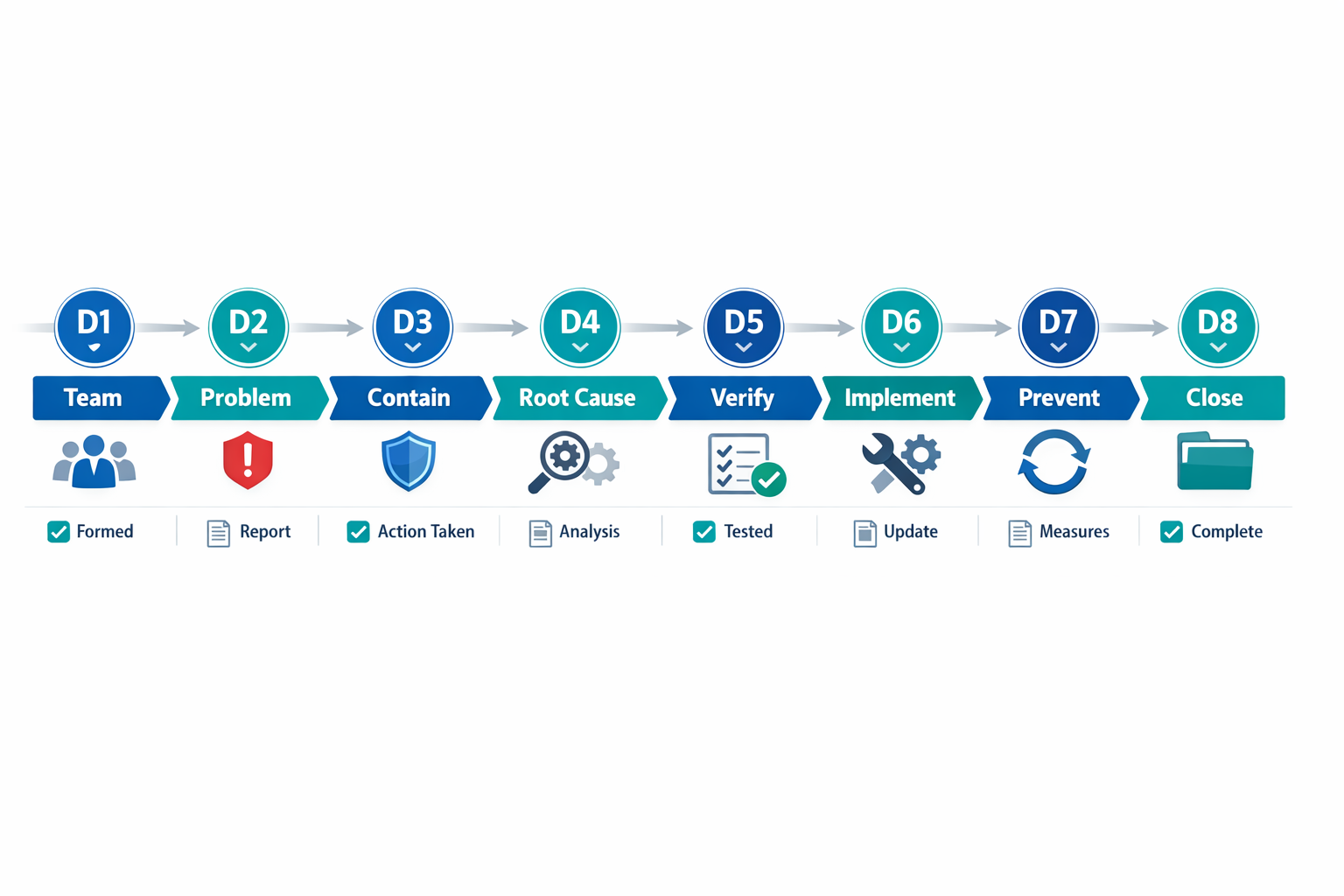
The 8D method itself is widely used in automotive, electronics, and other quality-driven industries because it provides a structured path for solving recurring problems. Teams move through eight disciplines: form the team, describe the problem, implement containment, identify root causes, choose and verify corrective actions, implement permanent corrective actions, prevent recurrence, and recognize the team. A good 8D corrective action software platform does more than digitize a form for each step. It connects people, evidence, approvals, deadlines, and verification data so the 8D process becomes an active workflow rather than a static document.
Why Manufacturers Move Beyond Static 8D Templates
Many plants still run 8D using Excel trackers and emailed attachments, but this approach creates delays and version control issues. Take an automotive parts plant as an example: a production manager receives a customer complaint about out-of-spec brake component dimensions. The quality engineer starts an 8D in one spreadsheet, maintenance adds machine inspection notes in another file, and the supplier quality team shares photos by email. By the time the team reaches corrective action verification, nobody is fully sure which root cause version was approved or whether containment was removed on the right date.
That is where 8D report software adds real operational value. It gives the team one live record with controlled access, document history, due dates, attachments, comments, and escalation rules. Instead of asking, “Who has the latest file?” the plant can ask, “What is blocking closure, and what data proves the fix worked?” This shift is important because poor quality already consumes a meaningful share of manufacturing cost; industry estimates often place the cost of poor quality at 5% to 20% of sales, depending on process maturity and sector. When corrective action is delayed or weakly verified, those costs keep repeating.
How Software Supports Each 8D Discipline
D1: Build the Team
The first discipline is about assigning the right cross-functional team. In software, this means role-based ownership, task assignment, and notification workflows that bring quality, production, engineering, maintenance, and supplier teams into the same case. A strong 8D management tool makes responsibilities visible from day one, so actions do not sit idle in someone’s inbox. It also creates an audit trail of who approved what and when, which is useful for ISO 9001 compliance and customer audits.
D2: Describe the Problem
A vague problem statement leads to vague action plans, so software helps standardize data capture at this stage. Teams can record defect type, part number, machine, shift, lot, customer impact, defect quantity, photos, and supporting measurements in a structured form. In an electronics assembly plant, for example, a quality engineer can log that solder bridging occurred on PCB line 3 during the night shift, affecting two lots and driving a 3.2% first-pass yield loss. Because the data is standardized, teams can compare cases later and identify patterns across lines, products, or suppliers.
D3: Implement and Track Containment
Containment is often where factories lose control, especially when multiple shifts are involved. A digital workflow can assign immediate actions such as stock segregation, line inspection, supplier notification, and shipment hold status, with timestamps and proof of completion. This is much stronger than a paper checklist because managers can see in real time whether suspect inventory is still in production, quarantine, or dispatch. For plants handling high-volume output, that visibility reduces the risk of defective parts moving downstream before root cause analysis is complete.
D4: Identify Root Cause
Root cause analysis usually involves tools like 5 Whys, fishbone diagrams, defect trend charts, or process parameter review. An eight disciplines problem solving tool supports this by linking investigation notes, machine data, inspection records, photos, and test results in one place. In a food packaging factory, repeated seal failures on pouches may initially look like operator error.The team may initially suspect operator error, but linked downtime logs and temperature records show the actual cause is unstable sealing jaw temperature after changeovers. Software helps preserve that evidence trail, which improves decision quality and prevents teams from closing cases based on assumptions.
D5: Choose and Verify Corrective Actions
Not every proposed corrective action is effective, and this discipline is about validating the solution before full implementation. A proper 8D digital platform can require teams to define expected outcomes, trial dates, control measures, and verification metrics such as scrap rate, complaint rate, or Cp/Cpk improvement. In practice, that might mean testing a revised fixture setup for five production runs and comparing defect rates before and after the change. By embedding verification criteria into the workflow, the system forces the team to prove effectiveness rather than declare success too early.
D6: Implement Permanent Corrective Actions
Once verified, the permanent fix must move into standard operations. Software helps by routing tasks to the right owners for SOP updates, training, tooling changes, control plan revisions, maintenance standards, or supplier corrective action follow-up. In a tier-one automotive environment, this could include updating process FMEAs, revising control limits, and confirming operator retraining across all affected shifts. Because the actions are tracked in one system, management can see whether implementation is complete at one line only or across the entire plant.
D7: Prevent Recurrence
This is one of the most overlooked disciplines when teams rely on basic templates. Prevention requires the organization to convert one solved problem into a broader learning loop, such as updating standard work, inspection plans, layered process audits, or design rules. A good 8D corrective action software setup can trigger related follow-up workflows automatically, making sure lessons learned do not stay trapped inside one report. For multi-site manufacturers, this is especially valuable because a failure mode found in one plant may already exist in another line or country.
D8: Close Out and Recognize the Team
The final discipline is not just about celebration; it is also about formal closure and knowledge retention. Software can require final evidence, manager approval, closure comments, and documented effectiveness results before a case is marked complete. This creates a searchable database of solved problems that future teams can reuse instead of starting from zero. Over time, that turns the 8D process from reactive firefighting into an operational knowledge system.
A Practical Factory Example
Consider an electronics manufacturer producing control boards for industrial equipment. A customer reports intermittent field failures traced to weak solder joints on a connector, and the plant launches an 8D case. With 8D report software, the quality manager assigns engineering, production, and maintenance owners immediately, captures failure photos, records affected lot numbers, and activates containment to stop shipment of suspect stock. The team then links reflow oven profile data, operator shift logs, and AOI defect records to identify that temperature drift during startup caused inconsistent solder quality.
Next, the team tests a revised startup verification checklist and tighter oven profile limits before rolling out the permanent corrective action. The software tracks whether training was completed, whether the control plan was updated, and whether the defect rate stayed below target for the next several production runs. Instead of closing the report based on opinion, the plant closes it based on evidence. That is the real difference between a template and an actual 8D management tool.
What Makes Modern 8D Software More Effective
The best systems combine structured forms, workflow automation, dashboards, and traceable records in one environment. That means you can start with a complaint or nonconformance, route it into an 8D workflow, collect evidence from mobile devices on the shop floor, monitor overdue actions on a dashboard, and export a clean report for customers or auditors. For quality managers, this shortens response time and improves consistency. For production managers, it reduces the chance that unresolved issues quietly return and hit OEE, scrap, or on-time delivery a few weeks later.
This is where a configurable platform such as Jodoo fits well for manufacturers with specific corrective action workflows. Rather than forcing your plant into a rigid, generic template, Jodoo lets you build an 8D digital platform that matches your approval flow, evidence requirements, escalation rules, and KPI tracking needs. You can connect forms, workflows, dashboards, and notifications in one system, which is especially useful if your plant already handles NCRs, audits, supplier CAPA, and improvement actions across multiple departments. In short, 8D problem solving software supports corrective action by turning the Eight Disciplines from a document you fill out into a process you can manage, measure, and improve.
Common Pain Points With Spreadsheets, Email, and Static 8D Report Software
Data Gets Lost Between Teams and Systems
Many manufacturers still run the 8D process through a mix of Excel files, email chains, shared folders, and PDF templates. On paper, that sounds manageable. In practice, it creates gaps at exactly the point where speed and traceability matter most.
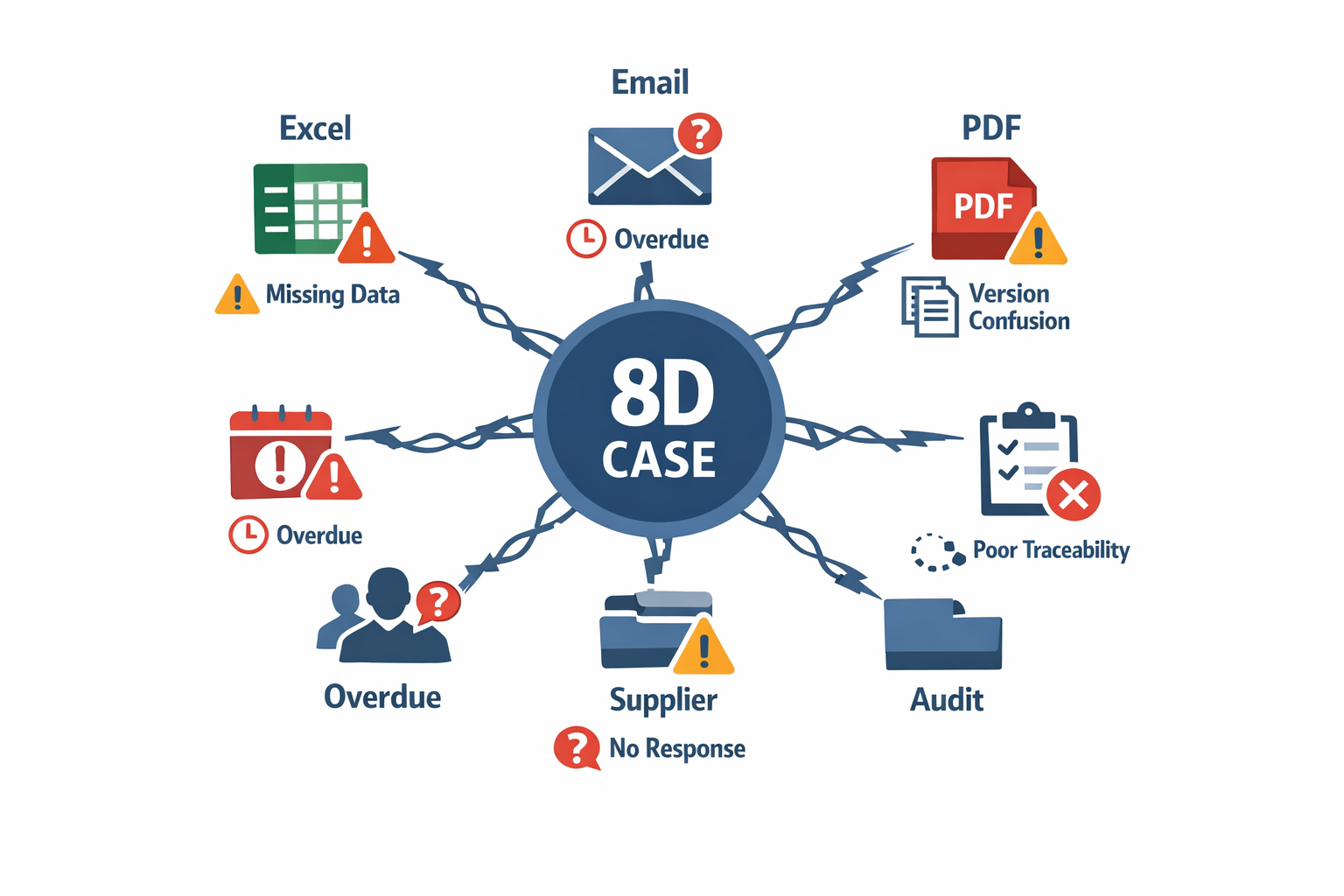
This is where manual methods and basic 8D report software start to fail. If the tool only stores a static form without connecting actions, approvals, photos, test results, and supplier responses, the team still spends too much time chasing information. Instead of solving the problem faster, they are managing document confusion.
Overdue Actions Slip Through the Cracks
An 8D report is only as effective as the actions completed after root cause is identified. In many factories, overdue actions are still tracked through colored cells in spreadsheets or reminder emails sent manually by the quality team. That approach depends too heavily on individual discipline, which is risky in busy production environments.
Consider an electronics manufacturer dealing with recurring solder joint failures. The corrective action may involve updating reflow oven parameters, retraining operators, and validating inspection criteria across two shifts. If there is no automated escalation when deadlines pass, one delayed validation step can hold up the entire corrective action cycle and increase the risk of repeat defects.
This is a major weakness of static 8D corrective action software. If the system cannot trigger reminders, assign ownership clearly, and show open versus overdue actions in real time, managers lose control of response time. For plants measured on customer PPM, complaint closure time, or supplier corrective action performance, that delay has direct cost implications.
Templates Vary Across Plants, Lines, and Suppliers
Standardization is one of the biggest reasons companies digitize quality processes, yet many organizations still use different 8D templates across sites. One plant may use an Excel file with mandatory root cause fields, while another uses a Word document with minimal structure. Supplier responses may come back in completely different formats, making comparison difficult and audit preparation painful.
This inconsistency becomes a serious problem for multi-site manufacturers. If a regional quality director wants to compare the top defect categories, average closure time, or repeat issue rates across three plants, disconnected files make that analysis slow and unreliable. A true 8D management tool should enforce common fields, workflows, and approval logic across the business, not just store separate reports.
The issue becomes even more visible during ISO 9001 audits or customer audits. Auditors do not just want to see that an 8D exists. They want evidence of controlled documentation, consistent execution, ownership, and effectiveness verification. Spreadsheet-driven systems struggle to deliver that level of control.
Supplier Follow-Up Is Often Weak and Hard to Track
Supplier-related nonconformances are one of the most common reasons teams open 8D reports, especially in automotive, electronics, and food packaging supply chains. Yet supplier follow-up is often handled outside the main quality system through email attachments and phone calls. That makes it difficult to track whether the supplier responded on time, whether containment was verified, and whether recurrence prevention was actually implemented.
Take a food manufacturer as an example: defective caps from a packaging supplier start causing leakage complaints on a filling line. The internal team opens an 8D, but the supplier sends its response as a separate PDF three days later, then updates its action plan in another email thread the following week. Without a connected eight disciplines problem solving tool, the plant quality manager has no single place to see internal actions, supplier commitments, due dates, and evidence of closure.
This lack of visibility creates risk beyond administration. According to industry quality benchmarks, poor supplier quality can account for a significant share of total cost of quality, often reaching 15% to 30% of quality-related losses in complex manufacturing environments. When supplier 8D follow-up is fragmented, recurring defects become harder to prevent and more expensive to contain.
Static Software Does Not Deliver Real-Time Visibility
Some companies move beyond spreadsheets and buy entry-level 8D report software, but many of these tools are still little more than digital forms. They may help create a cleaner report, but they do not always support end-to-end workflow, cross-functional collaboration, or management visibility. In other words, the report becomes digital, but the process stays manual.
For example, a plant may have one system for nonconformance logging, another for CAPA approvals, and a separate file for supplier claims. Quality engineers then re-enter the same data multiple times. This not only wastes time but also increases the chance of mismatched records, especially when customer complaint numbers, lot codes, or containment dates are entered differently across systems.
A modern 8D digital platform should do more than generate a document. It should connect issue intake, team assignment, root cause analysis, corrective actions, approvals, evidence collection, and dashboard reporting in one flow. That is what gives quality managers and production leaders the visibility they need to reduce closure time and prevent repeat problems.
Lack of Audit Trails Makes Compliance Harder
In regulated and customer-audited manufacturing environments, traceability is non-negotiable. You need to know who updated the report, when actions were approved, what evidence was attached, and whether effectiveness checks were completed on time. Spreadsheets and email threads rarely provide a reliable, tamper-resistant history.
This becomes a problem when a customer asks why the same defect appeared again 60 days after closure. If the original 8D was managed through disconnected files, the team may struggle to prove whether the preventive action was approved, whether training was completed, or whether process parameters were actually changed. That weakens both customer confidence and internal accountability.
A proper 8D corrective action software environment needs built-in audit trails, role-based permissions, and status tracking. Without those controls, even well-run teams can find themselves unprepared during customer escalations or certification audits.
Why Manufacturers Outgrow Basic 8D Tools
As complaint volume grows, as plants expand across regions, or as supplier networks become more complex, disconnected tools stop scaling. What worked for five reports per month in one facility often breaks down at 50 reports across multiple plants and suppliers. Teams need more than a static template; they need a system that actively drives closure and visibility.
That is why many manufacturers move from standalone files or simple 8D management tool setups to a configurable, workflow-based system. They need one place to standardize templates, automate follow-up, monitor overdue actions, and report closure performance by plant, product family, customer, or supplier. For operations leaders under pressure to improve responsiveness and reduce repeat defects, that shift is no longer optional.
What to Look for in 8D Problem Solving Software for Automotive and Electronics Manufacturers
Choosing the right 8D problem solving software is not just about replacing a Word template or Excel tracker. For automotive and electronics manufacturers, the real question is whether the system can control cross-functional problem solving at speed, across shifts, plants, and suppliers. If your team is dealing with customer complaints, line rejects, supplier defects, or recurring audit findings, the software needs to support disciplined execution, not just digital form filling.
In practice, the best 8D report software should help quality, production, engineering, and supplier teams work from one shared process. That means structured containment, clear ownership, due dates, evidence capture, and traceable approvals from D1 through D8. In sectors where one escaped defect can trigger a customer escalation, shipment hold, or warranty claim, weak workflow control creates real cost exposure.
Configurable Workflows That Match Your Actual 8D Process
No two factories run 8D exactly the same way. An automotive parts plant may require immediate customer notification after D3 containment, while an electronics manufacturer may need engineering validation before permanent corrective action is approved. A good 8D corrective action software should let you configure stages, decision points, mandatory fields, and escalation rules without forcing your team into a rigid template.
This matters because many 8D failures happen between steps, not inside them. For instance, a production manager at a printed circuit board assembly plant may identify solder bridging defects on one SMT line.If the software cannot automatically route containment tasks to production, root cause analysis to process engineering, and verification to quality, the case quickly turns into email chasing and missed deadlines.
Approval Routing and Escalation Control
An effective 8D management tool should support multi-level approval routing based on issue type, severity, customer, plant, or supplier. For example, a customer-return case in automotive may require approvals from the plant quality manager, operations manager, and customer quality engineer before closure. A minor internal issue may only need department-level review.
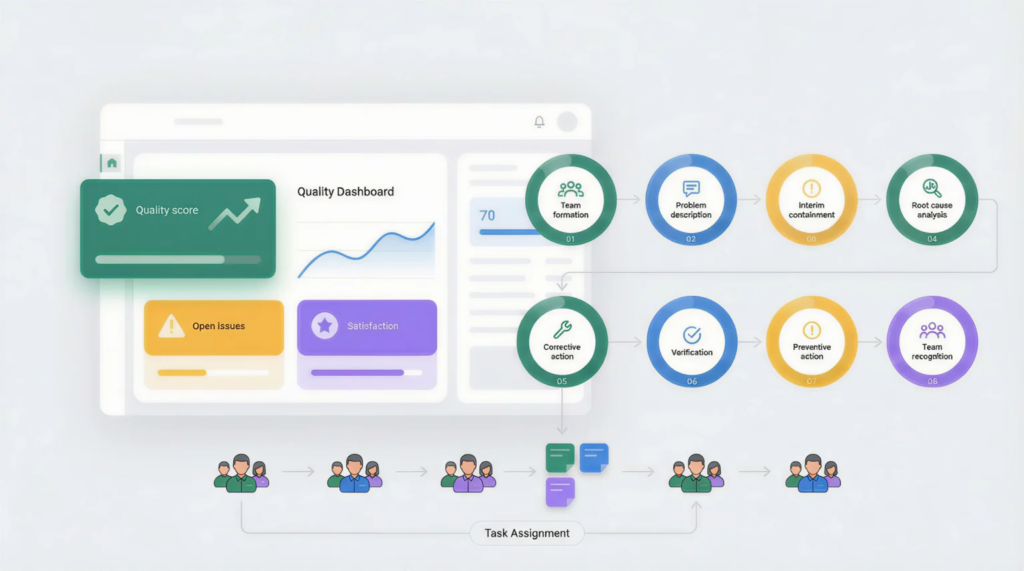
Escalation logic is equally important. If D3 containment is overdue by 24 hours or root cause verification is not completed within the target response window, the system should trigger alerts automatically. According to industry studies, poor response speed is one of the main reasons corrective actions remain open too long, which increases repeat defects and audit nonconformities.
Role-Based Permissions and Cross-Functional Accountability
In manufacturing, not every user should see or edit every part of an 8D case. Operators may need to submit defect evidence, supervisors may update containment actions, and quality managers may approve root cause and closure. Strong role-based permissions make your 8D digital platform more reliable by protecting sensitive data while still keeping collaboration fast.
This is especially important when supplier involvement is part of the process. A supplier may need access to problem description, defect photos, lot numbers, and required action deadlines, but not internal cost data or unrelated plant records. In a multi-tier automotive supply chain, controlled external collaboration reduces back-and-forth while maintaining traceability and compliance.
Mobile Data Capture for Shop Floor and Supplier Response
If your team still collects defect photos, machine settings, and containment checks on paper, your 8D process is already slower than it needs to be. Good 8D report software should support mobile data capture so supervisors, engineers, and auditors can upload evidence directly from the line, warehouse, or supplier visit. This is useful for attaching images, video, barcode scans, test results, and sign-offs in real time.
Consider an electronics contract manufacturer investigating connector damage found at final inspection. A mobile-enabled eight disciplines problem solving tool allows the line leader to record defect location, batch number, workstation, and photos immediately at the station. That reduces delays, improves data accuracy, and gives the root cause team better evidence than handwritten notes entered hours later.
Dashboards That Show Open Risks, Not Just Closed Reports
One of the biggest weaknesses in manual systems is that managers only see 8D status during weekly meetings. A strong 8D management tool should provide dashboards showing overdue actions, repeat causes, containment effectiveness, supplier response time, closure cycle time, and trends by line, product family, or plant. This turns 8D from a documentation exercise into a management process.
For example, if a dashboard shows that 38% of open cases in one automotive plant are linked to torque verification failures on two assembly lines, that is a clear signal for deeper process review. If another dashboard shows one supplier averaging 21 days to complete corrective action while your internal target is 10 days, procurement and supplier quality can intervene earlier.
Document Traceability and Audit Readiness
In regulated and customer-audited environments, every 8D record must stand up to scrutiny. Your 8D corrective action software should maintain full document traceability, including who created the case, who changed the root cause, when containment was verified, and what evidence supported final closure. Version history, approval logs, timestamps, and linked attachments are essential for ISO 9001-aligned quality systems and customer audits.
This becomes critical during customer complaints or warranty investigations. If an OEM asks for proof that a corrective action was implemented and validated across all affected lots, you need more than a final PDF. You need a searchable record of actions, approvals, verification results, and any linked nonconformance or inspection data.
Supplier Corrective Action Workflow Support
For automotive and electronics manufacturers, many serious quality incidents originate outside the plant. That is why the best 8D problem solving software should support supplier corrective action workflows, not just internal issue handling. This includes external submission, response deadlines, attachment sharing, review comments, containment confirmation, and supplier performance tracking.
A practical example is a metal stamping supplier sending mixed-spec parts to an automotive customer. The internal quality team may open an NCR, trigger containment on incoming stock, and launch a supplier 8D at the same time. If your 8D digital platform cannot connect those steps, teams will manage them separately, increasing the risk of duplicate work and incomplete follow-up.
Multi-Site Standardization Without Losing Local Flexibility
Many manufacturers operate multiple plants across Southeast Asia or globally, and inconsistent problem-solving methods create uneven results. A capable 8D management tool should let corporate quality standardize the core 8D structure, terminology, KPIs, and approval rules while allowing each site to adapt fields for its own products, customers, or equipment. This balance is important for both governance and usability.
For example, an automotive group with plants in Malaysia, Thailand, and Mexico may want one standard D4 root cause structure and one closure KPI across all sites. At the same time, the electronics plant may need extra failure analysis fields, while the injection molding plant may need machine parameter traceability. A flexible system supports both central control and plant-level practicality.
Connections to CAPA, NCR, and Audit Processes
An 8D case should not sit in isolation. In a well-designed quality system, 8D problem solving software connects directly with CAPA, NCR, customer complaints, layered process audits, and supplier quality workflows. That way, one defect event can trigger the right downstream actions automatically instead of being re-entered into multiple spreadsheets and disconnected systems.
This integration is where many factories gain the biggest efficiency improvement. If an internal audit identifies repeated label verification failures, the audit finding can trigger an NCR and, if severity thresholds are met, launch an 8D investigation. When the corrective action is verified, the CAPA record, audit action, and 8D closure status should all update together, giving managers one source of truth.
Reporting, Metrics, and Continuous Improvement Value
The best 8D report software should help you measure process effectiveness, not just store completed files. Look for reporting on recurrence rate, average closure days, on-time completion by department, top root cause categories, and cost of poor quality linked to major cases. Research from quality management programs consistently shows that structured corrective action with visibility and accountability reduces repeat nonconformities far more effectively than manual follow-up alone.
For lean and CI leaders, this reporting also helps justify investment. If you can show that digital 8D management reduced overdue corrective actions by 40% and cut average closure time from 18 days to 11 days, the value becomes concrete. That is far more useful than simply saying the team is “more organized.”
Why No-Code Flexibility Matters
Many off-the-shelf tools are too rigid for real factory workflows, especially when customer requirements, supplier processes, and internal approval chains vary by site. A no-code 8D digital platform lets you adapt forms, workflows, dashboards, and permissions as your process evolves, without waiting for long IT development cycles. That is useful when a customer adds a new reporting requirement or when your quality team wants to introduce stricter verification gates.
With Jodoo, manufacturers can build a connected eight disciplines problem solving tool that links 8D cases with NCR, CAPA, inspections, supplier actions, and dashboards in one environment. Instead of managing corrective action across paper forms, spreadsheets, and email threads, your team can standardize the process while still matching each plant’s operational reality. If you want to digitize your quality workflows without heavy custom development, Start Free Trial.
How Jodoo Solves 8D Corrective Action Challenges With No-Code Workflows
Traditional quality systems often struggle with 8D because the process itself is not the problem. The real issue is that most factories still run corrective action across paper forms, Excel trackers, email threads, and disconnected supplier communications. That makes response times slow, ownership unclear, and verification inconsistent. For manufacturers that need practical 8D problem solving software, Jodoo offers a more flexible way to digitize the full process without a long, expensive QMS rollout.
Jodoo is a no-code platform, which means your team can build an 8D corrective action software workflow that matches how your plant actually works. Instead of forcing automotive, electronics, and food manufacturers into one rigid template, you can configure forms, approvals, notifications, dashboards, and supplier collaboration around your own containment, root cause, and verification steps. This matters because 8D in a Tier 1 automotive supplier looks very different from 8D in a high-mix electronics assembly plant. A single standard system rarely fits both without heavy customization.
Build Plant-Specific 8D Forms Without IT Delays
A common frustration with off-the-shelf systems is that they treat every nonconformance the same way. In reality, a customer complaint for a brake component, a solder joint failure on a PCB, and a foreign matter issue in food packaging each require different data points, approvers, and evidence. With Jodoo, quality teams can create plant-specific 8D forms using drag-and-drop fields for defect category, part number, shift, machine ID, supplier lot, containment quantity, photo evidence, and immediate action records. That turns Jodoo into a practical 8D report software option instead of just another generic workflow app.
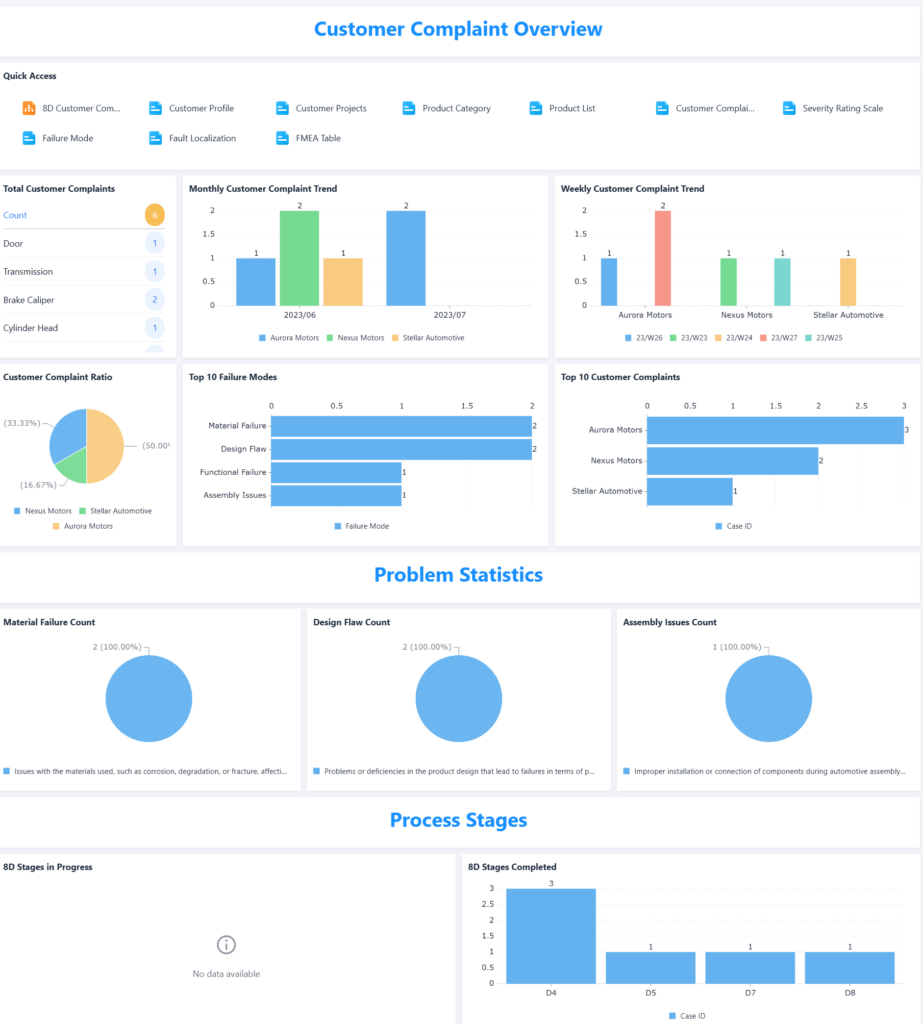
A typical example is an automotive parts plant where a production manager receives a customer complaint about out-of-spec bore diameter on a steering component. The team needs to launch D1 through D3 within hours, collect gage records, attach inspection photos, log suspect inventory by warehouse location, and assign containment tasks to production, quality, and logistics. In Jodoo, that can all sit inside one structured record with role-based access and time-stamped updates. Everyone works from the same live case instead of circulating the latest spreadsheet version by email.
Automate Approvals, Escalations, and SLA Reminders
Speed is critical in 8D, especially when OEM customers or major buyers expect containment within 24 hours and permanent corrective action updates within defined deadlines. Yet many factories still rely on people to manually chase approvers, send reminder emails, and update due date trackers. Jodoo helps by automating workflow steps for team assignment, engineering review, quality approval, and management signoff. If a deadline is missed, the system can trigger alerts and escalate the issue automatically.
This is especially useful for multi-department CAPA workflows where delays usually happen between handoffs. For example, D4 root cause analysis may depend on process engineering, while D5 and D6 require maintenance, production, and supplier quality input. A no-code workflow can route each stage to the right owner based on defect type, plant, customer, or supplier category. That makes Jodoo a strong 8D management tool for teams that need discipline and visibility without adding admin burden.
Extend 8D Collaboration to Suppliers and Cross-Functional Teams
Supplier-related quality issues often break the 8D process because external communication happens outside the system. A supplier sends a PDF, the buyer forwards comments by email, and the quality team updates a separate internal tracker later. This creates version confusion and weakens traceability, especially during audits. Jodoo solves this by letting manufacturers create secure supplier-facing forms or portals where external partners can submit containment actions, root cause evidence, corrective action updates, and supporting documents directly into the same workflow.
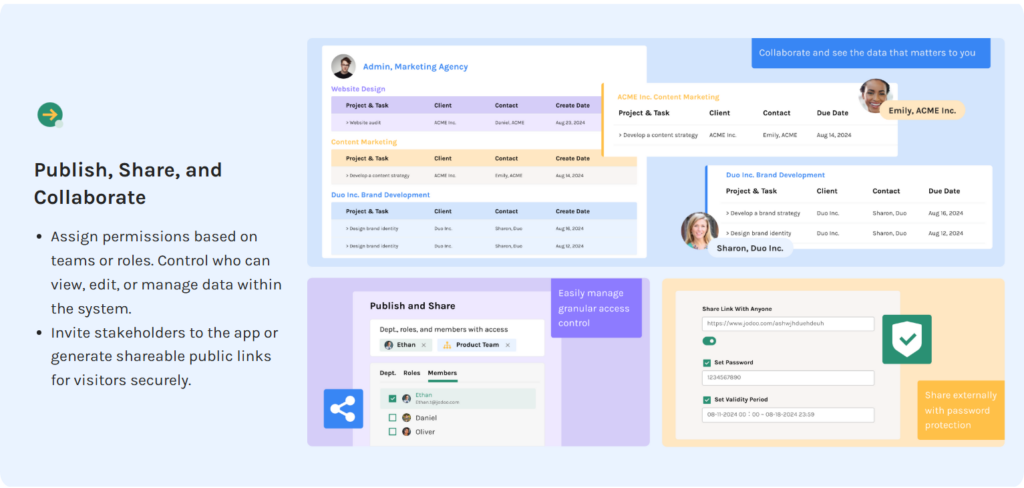
For an electronics manufacturer, this can be a major advantage. Imagine a contract manufacturer dealing with repeated connector failures traced to an incoming component supplier. The internal SQE team can open the case in Jodoo, assign internal containment tasks, and simultaneously request a supplier 8D response through a controlled external form. That creates a single digital trail for both internal and supplier actions, making Jodoo a practical 8D digital platform for supplier quality management as well as internal corrective action.
Standardize the Eight Disciplines While Keeping Flexibility
One reason teams resist software rollouts is fear of losing flexibility. Lean managers know that standardization matters, but they also know each plant has its own escalation rules, approval hierarchy, and evidence requirements. Jodoo balances both by giving you a consistent structure for D1 through D8 while still allowing conditional logic based on real factory conditions. You can require additional approval for customer complaints, trigger different checklists for recurring defects, or add verification steps for safety-critical parts.
That makes Jodoo more than a simple form builder. It functions as an eight disciplines problem solving tool that can enforce process discipline while adapting to your product risk, customer requirements, and site-level SOPs. In practice, this means one group can use a lightweight 8D flow for internal scrap issues, while another uses a more formal process for external complaints or supplier nonconformance. Both still feed the same reporting structure.
Centralize Reporting for Better Quality and Lean Decisions
A good 8D system should do more than document a case. It should help quality and operations leaders see where problems repeat, where actions stall, and which plants or suppliers create the most risk. Research from industry quality studies consistently shows that poor cost of quality can consume 15% to 20% of sales, and a large share of that comes from recurring failures, delayed containment, and weak corrective action follow-through. Without centralized reporting, those patterns stay buried in isolated files.
Jodoo brings all 8D records into one database, so teams can track open cases, overdue actions, closure time, repeat defects, supplier performance, and verification status in real time. A lean manager can view which lines generate the most 8D cases, while a quality manager can drill into root cause categories by customer, product family, or plant. That visibility helps move the conversation from “Who still has the file?” to “Why are we seeing the same failure mode on Line 3 for the third month in a row?” This is where 8D problem solving software starts supporting continuous improvement, not just compliance.
A Practical Alternative to a Heavy QMS Rollout
Many manufacturers want digital corrective action management, but they do not want a 9- to 12-month enterprise software project just to replace paper and spreadsheets. Traditional QMS platforms can be powerful, but they are often costly, slow to configure, and difficult to adapt when the process changes. Jodoo gives operations and quality teams a faster path: build the workflow you need now, test it on one line or plant, then refine and scale it. That is often a better fit for mid-sized manufacturers and multi-site groups that need results quickly.
For lean manufacturing teams, the advantage is practical control. You can start with an 8D intake form, approval workflow, automated reminders, and dashboard in a short timeframe, then expand into supplier CAPA, layered process audits, Kaizen actions, or A3 tracking on the same platform. In that sense, Jodoo is not just 8D report software. It is a connected operational platform that helps manufacturers standardize corrective action while keeping the flexibility needed on the shop floor.
Example: What a Real Digital 8D Workflow Looks Like on the Shop Floor
At 7:10 a.m., a production manager at an automotive parts plant in Malaysia gets a call: a customer has detected burr defects on stamped brackets delivered in the previous shipment. In a paper-based process, the next few hours are usually lost to phone calls, email chains, and searching for the latest 8D template. With 8D problem solving software, the issue can be logged immediately from the shop floor, assigned to the right team, and tracked from containment through permanent corrective action in one system.
A Realistic Scenario: Supplier Defect at an Automotive Parts Plant
In this case, the defect starts with a customer complaint, but the root cause points back to a raw material variation from a steel supplier combined with inconsistent die maintenance. The quality engineer opens a new case in the 8D report software and records the complaint number, affected part number, lot traceability, customer photos, and suspected production window. Because the workflow is digital, the system can automatically notify the quality manager, production supervisor, supplier quality engineer, and maintenance lead within minutes.
The first advantage is speed. According to industry benchmarks, fast containment is one of the biggest factors in reducing the cost of poor quality, because a defect left uncontrolled can spread across multiple shifts, customers, or finished goods batches. In automotive and electronics manufacturing, a single escaped defect can trigger sorting costs, premium freight, chargebacks, and lost production time that quickly reach thousands of USD in a single incident.
Step 1: Intake and Team Formation
The digital process starts with a structured intake form rather than a blank document. The form captures who reported the issue, where it was detected, defect category, severity, affected SKUs, customer impact, and required response deadline. A good 8D management tool also pulls in related production records, inspection results, and supplier lot data so the team does not waste time hunting across spreadsheets and shared folders.
For D1 and D2, the system routes tasks automatically. The quality manager assigns a cross-functional team that includes production, maintenance, supplier quality, and process engineering, while each person receives a clear due date and role. In a manual process, teams often lose a day just coordinating calendars and clarifying ownership; in a digital workflow, ownership is visible from the first hour.
Step 2: Immediate Containment on the Line
Next comes D3: containment. The line supervisor launches a containment checklist on a tablet at the stamping line, including actions such as isolating suspect WIP, stopping the affected die set, increasing first-piece inspection frequency, and checking the last three production lots. Photos of quarantined pallets, red-tag labels, and inspection findings are uploaded directly into the case, creating real-time evidence for both internal review and customer communication.
This is where 8D corrective action software becomes practical rather than administrative. Instead of writing “100% inspection started” in an email, the team can record how many parts were sorted, how many defects were found, which shifts were affected, and whether containment stock is available for urgent shipments. For example, if 12,000 brackets are in the warehouse and 3,500 units are still in transit, the system can separate containment actions by inventory location and owner, reducing confusion during a high-pressure response.
Step 3: Root Cause Analysis With Connected Data
Once the immediate risk is controlled, the team moves to D4 and D5. In many factories, root cause analysis fails because the data is fragmented: machine downtime is in one file, supplier receiving records are in another, and nonconformance reports sit in email attachments. A connected 8D digital platform brings those records into one case so the team can compare defect occurrence by supplier lot, tool change interval, machine number, operator shift, and inspection station.
Suppose the team finds that burr defects spiked after coil changes from one supplier lot and were worse on one press after the preventive maintenance interval slipped by nine days. That makes the discussion far more objective. Instead of debating opinions in a meeting room, the team can use evidence from inspection trends, maintenance history, and lot traceability to confirm both occurrence cause and escape cause.
Step 4: Corrective Action Execution and Approval
For D6, the team defines permanent actions: tighten incoming material thickness tolerance, revise die maintenance frequency from every 50,000 strokes to 35,000, add a go/no-go check for burr height at startup, and retrain operators on reaction plans. In a manual workflow, these actions often sit in separate CAPA logs or meeting minutes and lose momentum after the first week. In an eight disciplines problem solving tool, each action is assigned to an owner, linked to evidence requirements, and tracked to completion with automated reminders.
This matters because overdue actions are common in manufacturing. Many plants can contain a problem quickly, but they struggle to verify whether permanent corrective actions were actually implemented and sustained. A digital workflow makes it easier to require proof, such as updated SOPs, maintenance records, training sign-offs, trial results, and customer approval before the system marks D6 as complete.
Step 5: Verification of Effectiveness
The final test is D7: did the action work? A strong 8D problem solving software workflow does not close the case just because tasks are checked off. It can require a defined verification window, such as 30 days with zero recurrence across three production runs, or a defect PPM reduction below the plant target.
What Managers Can See in Real Time
For Quality Managers, the biggest benefit is visibility. They can see how many 8Ds are open, which ones are overdue, which customers are affected, and where bottlenecks are happening in containment or root cause analysis. For Production Managers, the value is faster recovery because the workflow shows whether stock has been sorted, the line has restarted, and temporary controls are still active.
Lean Managers benefit in a different way. They can use the same data to identify recurring loss patterns, such as repeated defects from the same supplier, machine family, or shift, and then link those insights to broader continuous improvement work. Plants that digitize action tracking often reduce overdue corrective actions significantly; in many real operations programs, moving from email and Excel to a structured workflow can cut open action backlog by 50% to 70% over time.
Why This Matters When Evaluating 8D Report Software
If you are evaluating 8D report software, the key question is not whether it can generate a form. The real question is whether it can guide the process from intake to containment to verified corrective action with accountability, traceability, and usable data. That is the difference between a static template and an operational system.
With a no-code platform like Jodoo, manufacturers can build an 8D management tool that matches their own approval rules, customer response steps, plant roles, and evidence requirements without waiting for heavy custom development. That means your team can digitize 8D workflows, connect them with inspections, supplier quality, maintenance, and dashboards, and make corrective action management part of daily operations rather than a disconnected quality document.
Conclusion: Choose 8D Problem Solving Software That Fits the Way Your Factory Works
If your team is still relying on spreadsheets, shared folders, or a static 8D form, you are not really managing corrective action end to end. You are only documenting it. In real manufacturing environments, whether at an automotive parts plant, an electronics assembly line, or a food packaging facility, effective 8D problem solving software needs to do more than store reports. It should route tasks automatically, assign owners, track due dates, capture evidence from the shop floor, and give managers real-time visibility into closure status.
That matters because poor corrective action follow-through is expensive. Studies across manufacturing consistently show that the cost of poor quality can reach 10% to 20% of sales, and recurring issues often come from weak containment, delayed verification, or actions that are never fully closed. A flexible eight disciplines problem solving tool helps standardize your process across plants while still allowing each site, customer, or product line to follow its own workflow requirements.
Jodoo gives manufacturers a practical way to build that system without heavy custom development. As a no-code lean manufacturing platform, it helps you digitize corrective action, standardize 8D workflows, and support faster continuous improvement. Start a free trial or book a demo to see how Jodoo can fit the way your factory actually works.