This 2026 guide is for warehouse, inventory, operations, and quality teams that need a clearer way to inspect storage areas, catch issues earlier, and standardize routine warehouse checks.
Warehouse problems rarely start with one obvious breakdown. More often, they build through smaller issues that go unchecked: damaged stock, blocked aisles, incorrect labels, poor storage conditions, missing safety equipment, or inconsistent receiving and putaway practices.
That is why a warehouse inspection checklist matters. A structured checklist helps teams review the same critical points every time, reduce missed issues, and make follow-up easier when something needs correction.
This guide explains what a warehouse inspection checklist should include, how to structure the inspection process, which areas teams should review first, and what common red flags to watch for before they create bigger operational problems.
What is a warehouse inspection checklist?
A warehouse inspection checklist is a structured list of items, conditions, and control points used to assess whether a warehouse is operating safely, accurately, and efficiently.
It helps teams review storage, inventory handling, labeling, housekeeping, safety conditions, equipment readiness, and process consistency in a repeatable way.
In simple terms, the checklist gives warehouse teams a standard way to answer a practical question: Is this warehouse area operating the way it should?
Why warehouse inspections matter
Without a standard inspection process, warehouse issues are often noticed only after they affect stock accuracy, picking speed, product condition, safety, or customer delivery.
That usually leads to the same problems:
- inventory discrepancies that are discovered too late
- damaged or misplaced stock
- unclear storage locations or labeling errors
- safety hazards that remain unresolved
- repeat issues with no clear accountability
A structured inspection process helps teams move from reactive cleanup to routine control.
What should a warehouse inspection checklist include?
A useful warehouse inspection checklist should cover the conditions that affect safety, stock accuracy, space control, and day-to-day warehouse execution.
Most teams should include checks across the following areas:
- aisle access and housekeeping
- racking condition and storage safety
- item labeling and location accuracy
- damaged stock and packaging condition
- temperature, cleanliness, or environment controls where required
- equipment readiness, such as scanners, carts, or forklifts
- receiving, putaway, picking, and dispatch process consistency
- inventory discrepancies, shortages, or stockouts
The exact checklist should match your operation. A warehouse for retail replenishment, manufacturing materials, medical products, or cold-chain inventory will not all inspect the same risks in the same way. But the principle stays the same: if the inspection is not standardized, it becomes harder to compare findings and harder to improve performance over time.
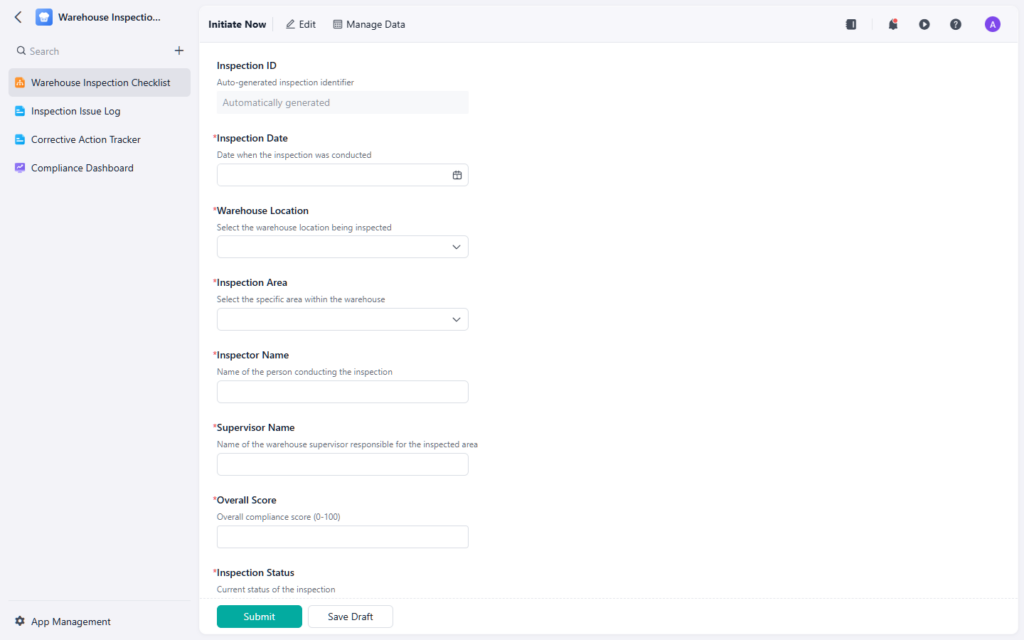
A structured warehouse inspection checklist makes it easier to review storage conditions, inventory handling, and operational risks consistently.
If your team wants a practical way to document recurring warehouse checks, this warehouse inspection checklist provides a useful starting point.
1. Storage conditions and warehouse layout
The first part of any warehouse inspection should focus on whether the space itself supports safe and efficient movement.
Typical review points include:
- aisles are clear and accessible
- floor areas are clean and free of hazards
- racks, shelves, and pallets appear stable and undamaged
- emergency exits and safety signage remain visible
- high-traffic zones are not blocked by overflow stock
These checks matter because even small layout or housekeeping issues can quickly affect safety and picking efficiency.
2. Inventory labeling and location accuracy
A warehouse can look organized and still have serious control issues if stock is stored in the wrong location or labeled inconsistently.
Inspection teams should verify:
- items are stored in the correct bin or rack location
- location labels are visible and readable
- product labels match internal records
- damaged or quarantined items are clearly separated
- returned or pending items are not mixed into active stock incorrectly
This is where warehouse inspections start connecting directly to inventory accuracy. If location and labeling controls are weak, the warehouse will eventually pay for it through mispicks, recounts, and preventable delays.
3. Stock condition and damage checks
A warehouse inspection checklist should also help teams catch issues with stock condition before they lead to write-offs, rework, or customer complaints.
That usually means checking for:
- damaged packaging
- broken seals or exposed product
- expired or near-expiry stock where relevant
- signs of moisture, contamination, or poor storage handling
- returns waiting too long without review
These checks are especially important in operations where storage conditions directly affect product usability or compliance.
If your team also needs a clearer process for handling items that come back into the warehouse, an inventory return form can help standardize return reasons, stock review, and follow-up.
4. Safety and equipment readiness
Warehouse inspections should not stop at inventory. They should also confirm whether the work environment and equipment are safe and ready for use.
Common review items include:
- forklifts, pallet jacks, scanners, or carts appear usable and available
- battery charging or storage areas are orderly
- safety equipment is visible and accessible
- operators are following basic handling and storage rules
- incident-prone areas show no unresolved hazards
The goal is not to turn every routine check into a full compliance audit. The goal is to identify practical safety and readiness issues before they slow work or create avoidable incidents.
5. Receiving, putaway, and picking controls
One of the most valuable uses of a warehouse inspection checklist is to verify whether core warehouse workflows are being followed consistently.
That may include checking whether:
- received items are recorded correctly
- putaway happens within the expected time
- picked items are staged correctly
- exceptions are documented instead of handled informally
- high-priority stock movements are visible to the team
When process discipline slips, warehouse teams usually feel it through slower picking, more follow-up, and lower confidence in inventory records.
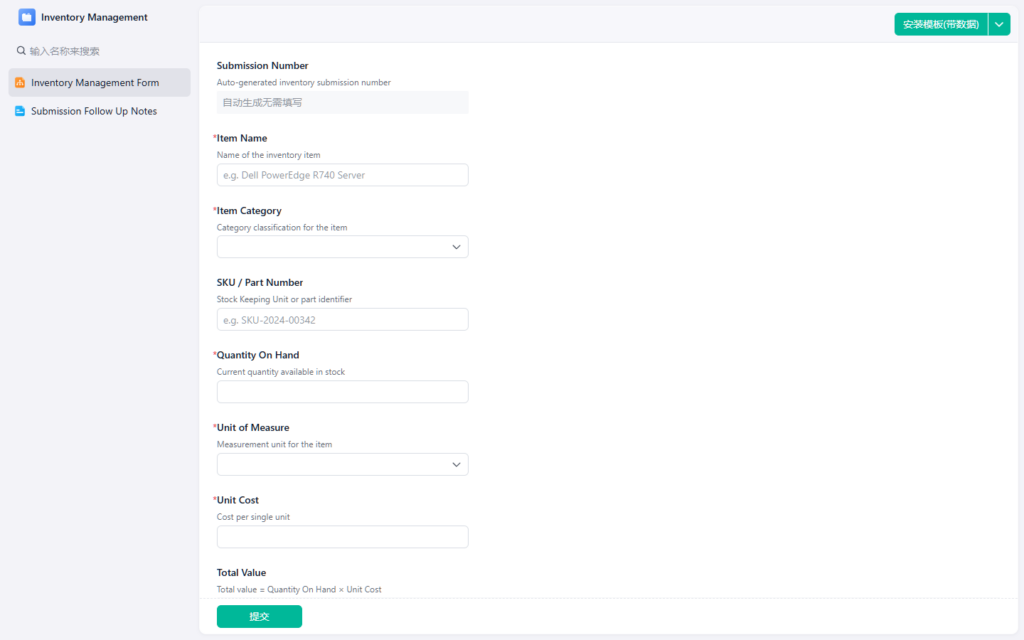
Warehouse inspections become more useful when findings connect back to day-to-day inventory records and movement controls.
If your team is still tracking many of these checks manually, this 재고 관리 양식 can help make stock movement and inventory records easier to review.
6. Low-stock and replenishment visibility
Warehouse inspections should also help surface stock risks before they become urgent shortages.
In practice, that means checking whether:
- minimum stock levels are defined for critical items
- replenishment signals are visible and acted on
- low-stock items are clearly identified
- stockouts or near-stockouts are recorded for follow-up
If low-stock conditions are only discovered when picking fails, the warehouse is already reacting too late.
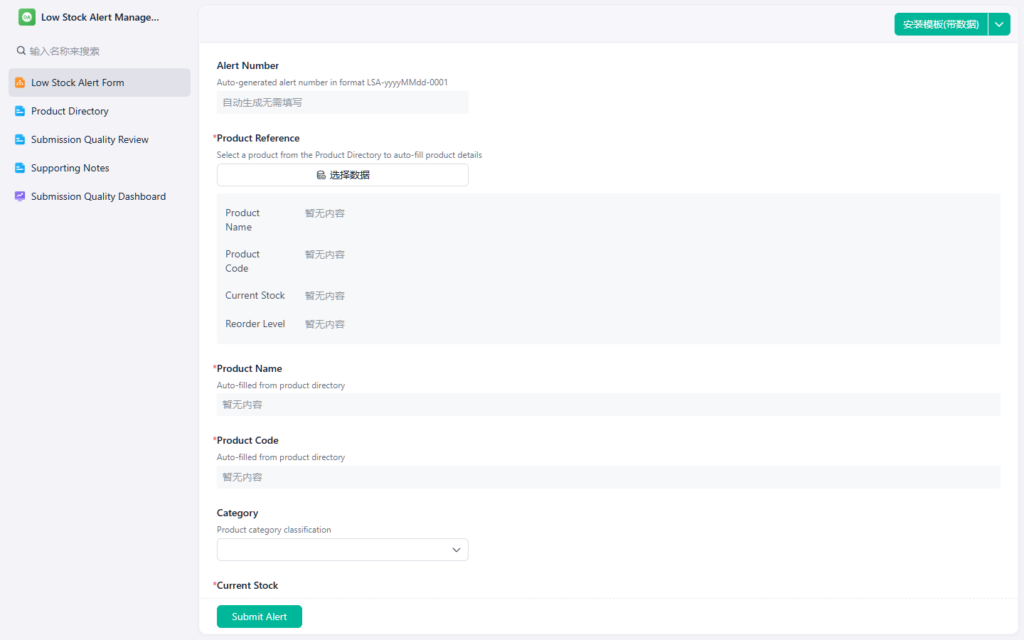
Low-stock visibility helps warehouse teams catch replenishment risks before they interrupt picking or fulfillment.
If replenishment issues are one of your recurring warehouse problems, this low-stock alert form is a practical reference for capturing and escalating shortage risks.
How often should warehouse inspections be done?
The right inspection frequency depends on warehouse size, throughput, product sensitivity, and operational risk.
In most operations, inspections are most useful when they happen at a consistent cadence, such as:
- daily checks for critical safety or housekeeping conditions
- weekly checks for storage, labeling, and process consistency
- monthly reviews for broader operational and inventory control issues
- trigger-based reviews after incidents, stock discrepancies, or repeated complaints
Consistency matters more than intensity. A shorter checklist done regularly is often more useful than a detailed inspection that happens too rarely.
Common warehouse inspection red flags
While each operation has different priorities, some warning signs appear across many warehouse inspections:
- items stored in the wrong location
- unclear or missing labels
- damaged stock with no documented action
- blocked aisles or unstable storage conditions
- repeat stock discrepancies with no root cause follow-up
- expired or outdated stock controls
- equipment that is available but not maintained well
- low-stock conditions discovered too late
One finding alone may not be a major issue. But repeated findings usually indicate that warehouse controls are too informal, inconsistent, or hard to sustain.
How to make warehouse inspections more useful
A warehouse inspection checklist is most effective when it is part of a repeatable improvement process, not a one-time review document.
That usually means:
- using the same structure each time
- recording findings clearly
- assigning follow-up ownership
- tracking recurring issues over time
- linking inspection findings to inventory and replenishment processes
Once teams can compare results across time, they can move from isolated fixes to better operational control.
최종 요약
A strong warehouse inspection checklist should cover more than housekeeping. It should help teams review storage conditions, labeling accuracy, stock condition, safety, process discipline, and replenishment visibility in a repeatable way.
When inspections are structured well, warehouse teams can catch smaller issues earlier, improve stock control, and reduce avoidable operational disruption.
If your team wants a more practical way to standardize warehouse reviews, Jodoo’s warehouse inspection checklist provides a useful starting point.