Browse by category

This 2026 guide is for procurement, quality, operations, and supplier management teams that need a more consistent way to review suppliers before onboarding, renewal, or higher-risk purchasing decisions.
A supplier problem usually does not begin with one dramatic failure. In many cases, it starts with smaller warning signs: missing documents, weak quality controls, inconsistent delivery records, or unclear ownership when issues appear.
That is why supplier audits matter. A structured audit process helps teams verify whether a supplier is actually operating at the standard the business expects, not just claiming to.
This guide explains what a supplier audit is, what a practical supplier audit checklist should include, how the process usually works, and which red flags procurement teams should watch for before risk becomes more expensive.
What is a supplier audit?
A supplier audit is a structured review of a vendor’s processes, records, controls, and operating practices to assess whether the supplier can meet your business requirements consistently.
The exact scope varies by industry, but most supplier audits are used to evaluate whether a vendor is reliable enough in areas such as quality, compliance, documentation, production controls, and corrective action handling.
In simple terms, a supplier audit helps answer a practical question: can this supplier actually support your standards, not just your purchase order?
Why supplier audits matter
Many supplier decisions are initially made based on price, availability, lead time, or prior familiarity. Those factors matter, but they do not always reveal whether a supplier’s internal controls are strong enough for the relationship you are building.
Without a defined audit process, teams often discover issues too late, such as:
- missing compliance records
- inconsistent quality checks
- weak document control
- unclear corrective action ownership
- delivery problems with no clear root cause
A supplier audit gives procurement and operations teams a more objective basis for approval, improvement planning, and ongoing vendor review.
If your team also needs a structured way to document broader supplier performance, this supplier evaluation form is a useful companion reference.
When should you conduct a supplier audit?
Not every supplier needs the same level of review. The right timing and audit depth depend on the supplier’s business impact, category risk, and compliance exposure.
In most organizations, supplier audits are most valuable when:
- onboarding a new strategic or high-risk supplier
- renewing an important supplier relationship
- responding to recurring quality or delivery issues
- reviewing suppliers in regulated or compliance-sensitive categories
- checking whether a corrective action plan was actually implemented
The more critical the supplier is to delivery, quality, or compliance, the more valuable a repeatable audit process becomes.
What should a supplier audit checklist include?
A supplier audit checklist should help reviewers evaluate the supplier consistently, not just record impressions from a meeting or site visit.
Most teams should include checks across the following areas:
- company and facility information
- quality management controls
- document and record control
- process consistency and operating procedures
- staff training and responsibility ownership
- corrective action handling
- compliance, certifications, and regulatory requirements
- traceability, inspection, or inventory controls where relevant
The exact checklist should match your category and risk profile. A supplier of packaging, ingredients, software services, industrial parts, or outsourced labor will not be reviewed in the same way. But the underlying principle is the same: use a standard structure so different suppliers can be reviewed more fairly and more consistently.
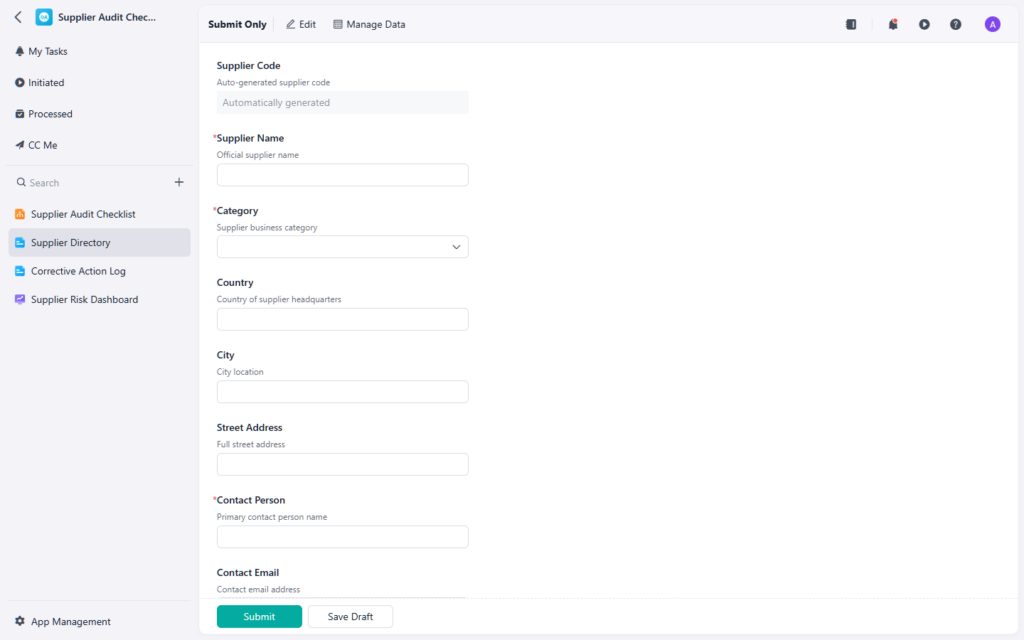
A structured supplier audit checklist makes it easier to review quality, documentation, compliance, and process control in a consistent way.
If your team wants a more organized way to document audit findings, this supplier audit checklist provides a practical starting point.
Step 1: Define the purpose and scope of the audit
Before reviewing a supplier, teams should decide why the audit is happening and what it needs to cover.
That sounds simple, but it matters. A new supplier qualification audit is different from a follow-up audit after repeated quality failures. An audit for a low-risk office supply vendor is different from one for a critical production supplier.
Start by clarifying:
- What type of supplier is being audited
- Why the audit is being conducted
- Which business units depend on the supplier
- What risks matter most in this relationship
- What evidence or records should be reviewed
This step helps prevent audits from becoming generic check-the-box exercises.
Step 2: Collect the required supplier information in advance
A supplier audit works better when the review team already has the core business and compliance information before the audit begins.
That may include:
- legal business details
- contact and facility information
- certifications
- insurance records
- compliance documents
- previous audit results
- corrective action records
- delivery or quality performance history
If this information is missing or scattered, the audit becomes slower and less reliable.
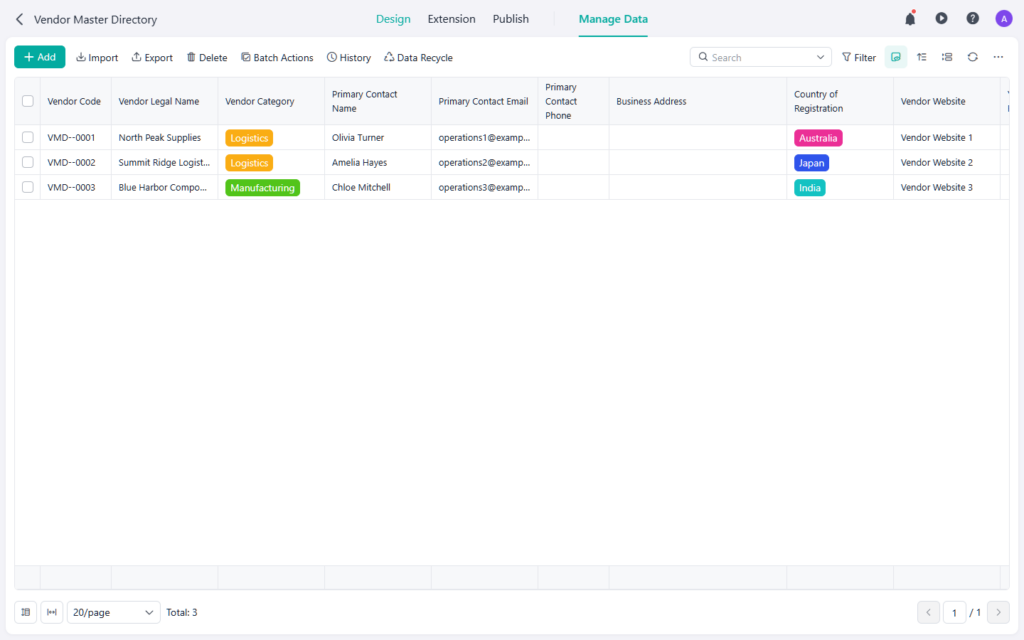
Supplier audits are easier to manage when key business, compliance, and document data are already stored in a structured vendor record.
If supplier setup records are still handled informally, a structured vendor onboarding form can make audit preparation much easier.
Step 3: Review quality, compliance, and process controls
The core of a supplier audit is usually the control environment.
Reviewers should verify whether the supplier has defined processes, follows them consistently, and keeps the right evidence. Depending on the category, this may include:
- inspection procedures
- work instructions
- nonconformance handling
- change control
- document version control
- training records
- traceability systems
- calibration or testing records
This is where audits move beyond surface-level vendor review. A supplier may appear responsive and reliable in conversation, but still have weak internal controls that create long-term risk.
Step 4: record findings and assign risk levels
An audit only becomes useful when findings are documented clearly enough to support action.
Most teams should record:
- What was reviewed
- What evidence was available
- Which issues were identified
- How serious each issue is
- What follow-up is required
A practical scoring method might use low, medium, and high severity labels, or numeric ratings if your team already uses scorecards. The important part is consistency. Audit findings should be clear enough that another reviewer could understand the issue and the business impact.
If you want a broader structure for scoring and documenting supplier performance over time, this supplier evaluation form can support that process.
Step 5: Track corrective actions and follow-up
A supplier audit should not end when the checklist is completed.
If issues were identified, the next step is to confirm whether the supplier has an action plan, who owns the response, and when the correction should be verified.
Common follow-up activities include:
- requesting missing documents
- verifying policy or process updates
- checking whether corrective actions were implemented
- reviewing evidence after a deadline
- triggering a repeat audit if necessary
Without this step, audits often become static reports instead of practical control tools.
Supplier audit checklist vs vendor audit form
These two tools often work together, but they are not exactly the same.
A supplier audit checklist is usually the reviewer’s guide. It defines what to inspect, what evidence to look for, and how to judge the supplier’s controls.
A vendor audit form is usually the record-keeping layer. It captures the audit result, reviewer notes, evidence, and follow-up items in one structured place.
In practice, teams often need both: the checklist to run the audit and the form to document it clearly.
If your team wants a more structured way to capture audit findings and corrective actions, this vendor audit form is a useful companion reference.
Common supplier audit red flags
While every category has its own risks, some red flags appear across many supplier audits:
- missing or expired certifications
- inconsistent or incomplete records
- unclear ownership for quality issues
- weak corrective action follow-up
- employees unable to explain standard procedures
- evidence that written procedures are not followed in practice
- poor traceability or weak change control
- repeat issues with no documented root cause
One red flag alone does not always mean a supplier should be rejected. But repeated or serious control gaps usually mean the relationship needs closer review before approval, renewal, or scale-up.
How supplier audits support better procurement decisions
A strong supplier audit process improves more than compliance. It also supports better procurement judgment.
When audit findings are documented clearly, teams can:
- compare suppliers more objectively
- decide whether a vendor is ready for onboarding
- flag suppliers that need conditional approval
- reduce risk before larger purchasing commitments
- track whether supplier performance is actually improving
If risk level affects downstream purchasing decisions, a defined purchase order approval workflow can help ensure higher-risk suppliers receive the right review before spend is committed.
Final takeaway
A supplier audit is not just a compliance exercise. It is a practical way to check whether a vendor’s controls, records, and operating practices are strong enough to support your business requirements.
When teams use a consistent checklist, document findings clearly, and follow up on corrective actions, audits become much more useful for procurement, quality, and supplier management.
If your team wants a more structured way to review supplier controls and record findings, Jodoo’s supplier audit checklist provides a practical starting point.