100%
Idea Traceability
ZERO
Lost Ideas
INSTANT
Reward Processing
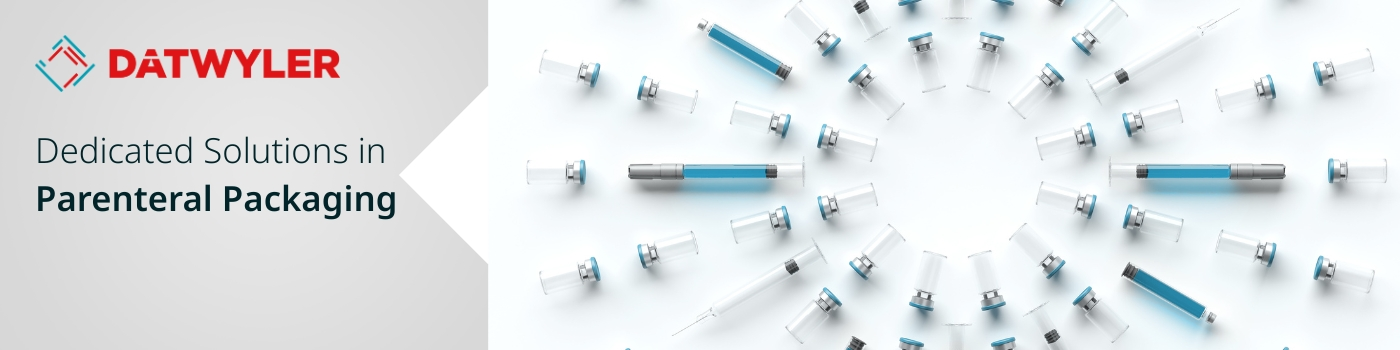
Datwyler, a leading international developer and manufacturer of specialized elastomer components and sealing solutions for the healthcare industry, has built its reputation on precision and reliability. With 25 production sites across four continents and a workforce of over 7,500 employees, the company generates annual revenue of more than USD 1.4 billion. It produces billions of system-critical components annually, including secondary packaging, such as aluminum caps for vaccines and injectable drugs.
At the core of Datwyler’s operational excellence is its robust production system, which heavily emphasizes Lean Management and continuous improvement. A key pillar of this culture is the Idea Management System, designed to capture and implement innovative suggestions from employees across all levels of the organization. However, despite the company’s advanced manufacturing capabilities, this critical process was bogged down by outdated, manual methods.
Specializing in secondary packaging solutions like aluminum caps for vaccines, Datwyler’s German facility relied on a manual “Idea Management” process that, while culturally ingrained, suffered from a lack of traceability, data silos, and significant administrative overhead. By implementing a flexible, digital solution, Datwyler transformed its Idea Management from a physical whiteboard to a transparent, data-driven ecosystem. This shift achieved 100% traceability of continuous improvement initiatives, eliminated the risk of lost ideas, and provided real-time visibility into operational excellence for stakeholders across the organization.
The Challenge: A Global Pharmaceutical Packaging Leader Limited by Paper-Based Idea Management
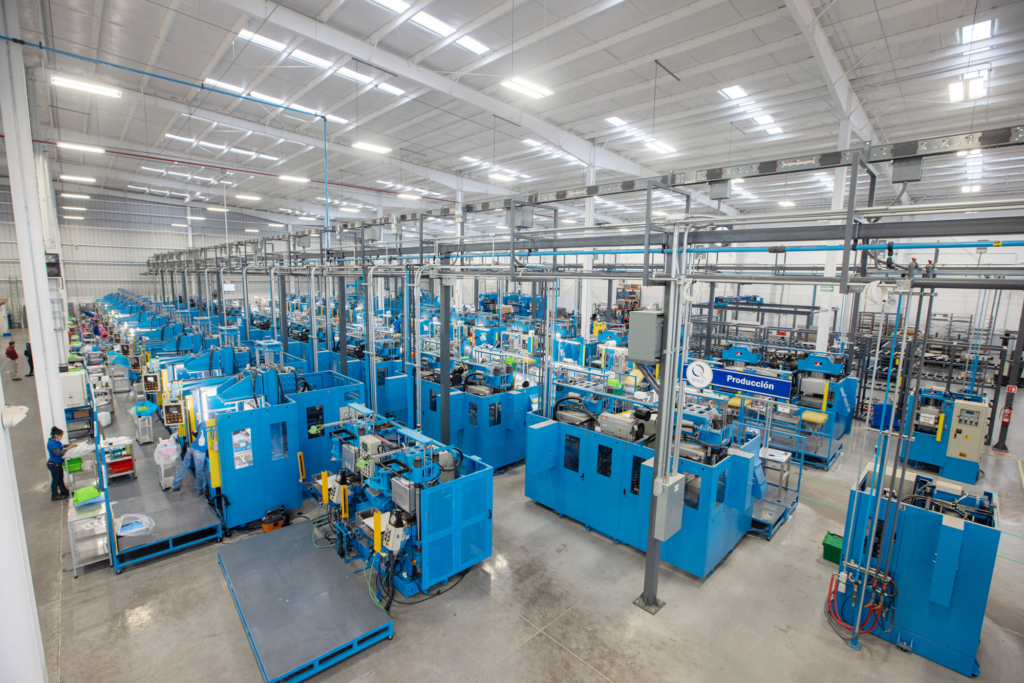
In the pharmaceutical sector, precision is not just a goal; it is a requirement. Datwyler’s facility in Germany produces critical aluminum caps used in life-saving vaccines, where every process must be optimized for quality and safety. At the heart of this operational excellence is the company’s “Lean Management” philosophy, led by a dedicated Lean Manager whose mission is to eliminate waste and maximize value-added through continuous improvement.
However, the very system designed to foster innovation—the Idea Management System—was itself becoming a source of “waste.” For years, the Idea Management System relied entirely on paper forms and physical whiteboards. When an employee had a suggestion for process improvement or waste reduction, they had to fill out a paper template and hand it to their department head. The department head would then collect these forms and bring them to a bi-weekly meeting with the Lean Manager. During these meetings, ideas were discussed, and responsibilities were assigned using colored magnets on a physical Kanban board.
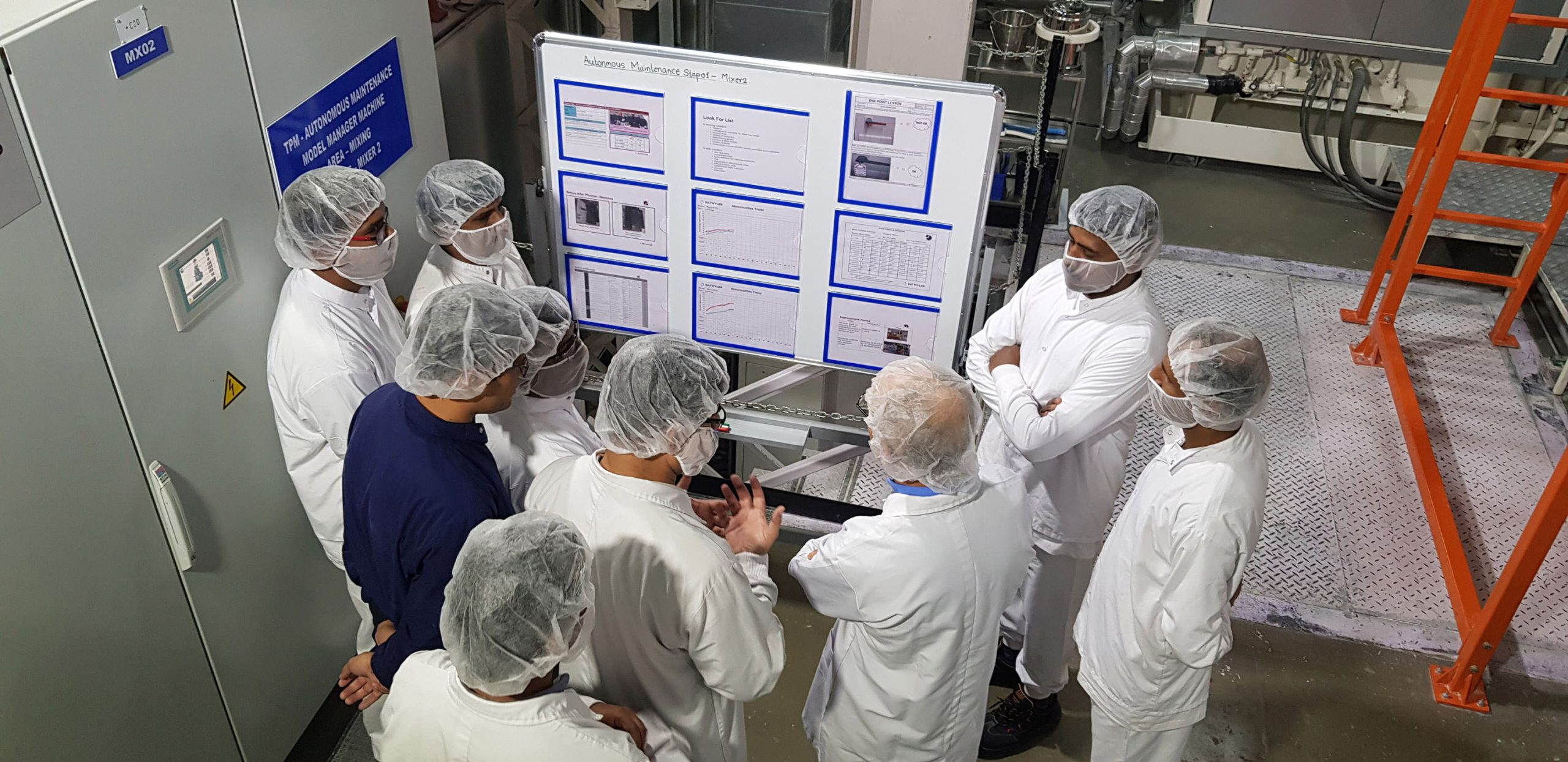
This manual chaos led to several major bottlenecks:
Lack of Traceability and Visibility: With hundreds of paper ideas hanging on physical boards, it was nearly impossible to track the status, lead time, or historical record of any single suggestion. The Lean Manager and department heads lacked a centralized overview, making it difficult to monitor progress or identify stalled initiatives.
Collaboration Barriers: The physical nature of the system meant that ideas were siloed. Employees could not easily see suggestions from other departments, and there was no efficient way to filter ideas by category, status, or responsible person.
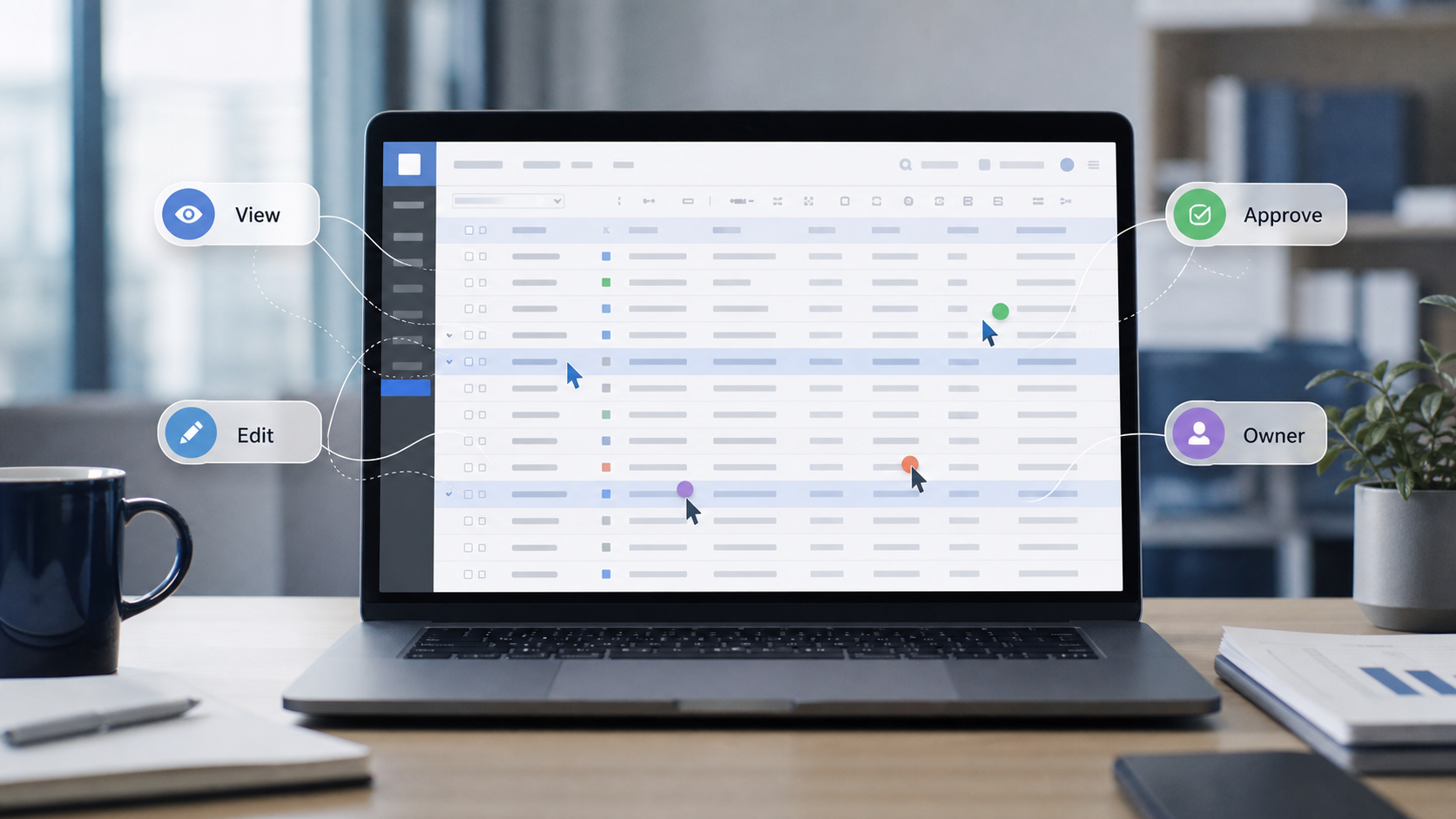
Inefficient Permission Management: Datwyler attempted to digitize the process using standard collaboration tools like Microsoft Teams. However, this approach failed because it required double work—entering data from paper into the system—and lacked granular permission controls. Without the ability to assign specific roles (like editing or viewing rights), the system was prone to errors, such as accidental deletions or unauthorized modifications.
Slow Execution Cycles: The combination of poor traceability, manual handoffs, and limited capacity meant that the execution of ideas often took far too long. Employees grew frustrated with the slow pace of implementation, even though they remained eager to contribute.
Environmental Impact: The heavy reliance on paper forms was not only inefficient but also contradicted the company’s sustainability goals. The constant printing, copying, and physical storage of paper documents generated unnecessary waste, misaligning with Datwyler’s commitment to environmentally responsible practices.
Datwyler recognized that to truly foster a culture of continuous improvement and maintain its competitive edge, it needed a digital solution that was as precise and efficient as its manufacturing processes. The company needed a platform that could provide real-time visibility, streamline collaboration, and empower its Lean Management team without requiring extensive IT resources.
We had the traceability problem,” the Lean Manager noted. “In a digital system, you can’t lose ideas. It will always be tracked, and it’s just easier to manage the entire lifecycle from submission to completion.
The Solution: A Digital “Idea Factory” Built for Flexibility
The search for a better system was spearheaded by Datwyler’s Lean Manager, who was tasked with finding a flexible, customizable tool that could perfectly match the company’s specific workflows. The internal IT department was focused on maintaining the plant’s core infrastructure and did not have the bandwidth to develop a custom application from scratch.
The breakthrough came when the Lean Manager learned that one of Datwyler’s facilities in Asia was successfully using Jodoo for document management and other operational needs. Intrigued by the positive feedback, the Lean Manager evaluated Jodoo alongside other options using online research. The deciding factor was Jodoo’s unparalleled flexibility—its no-code architecture allowed the Lean Manager to build a system tailored exactly to Datwyler’s unique specifications, without writing a single line of code.
With Jodoo, the Lean Manager quickly designed and deployed a comprehensive, digital Idea Management System. The new platform transformed the entire workflow, bringing transparency, efficiency, and automation to the continuous improvement process.
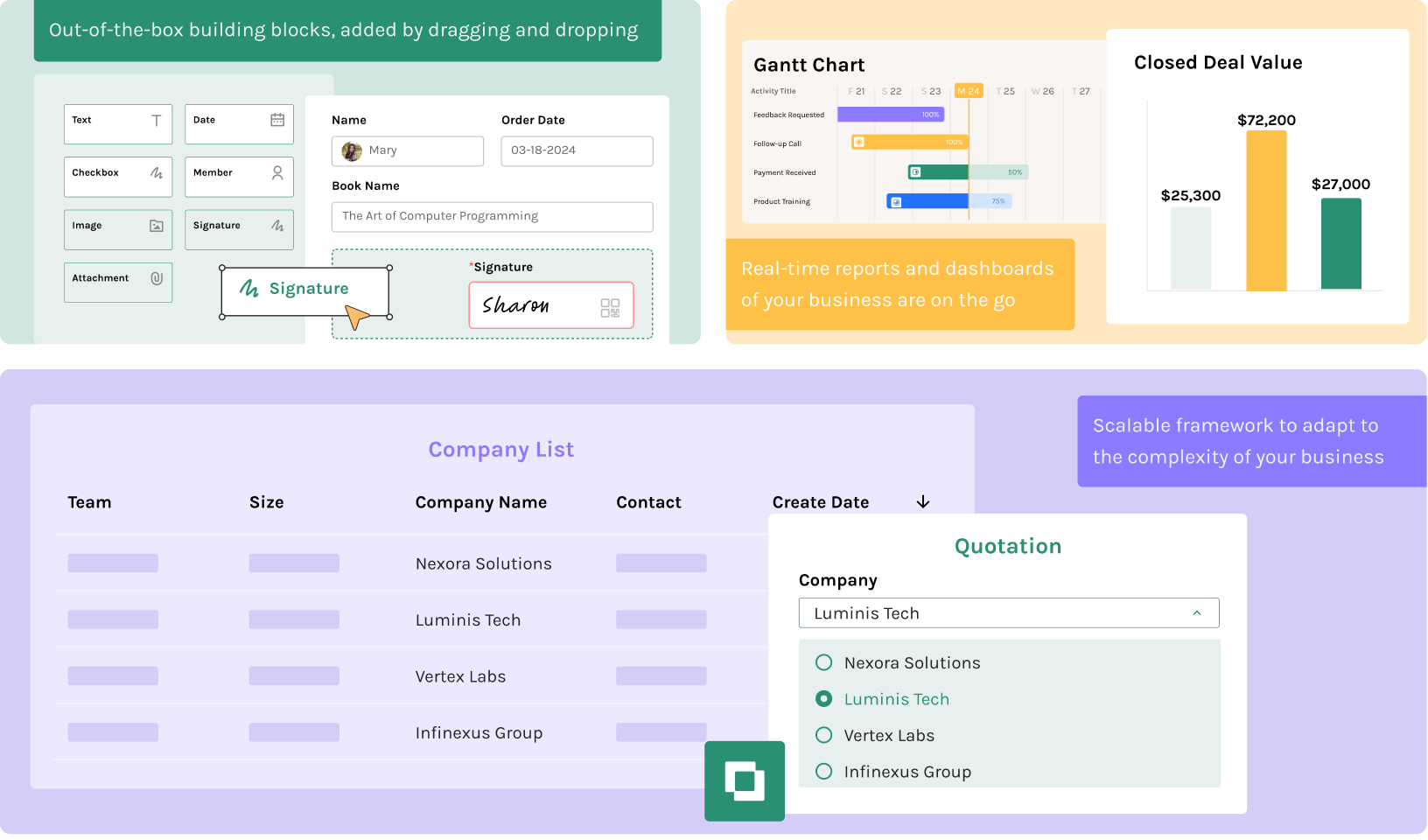
Phase 1: Digitizing the Workflow without Losing the Culture
The new digital system was designed to mirror the successful logic of the old paper system, but with the power of automation.
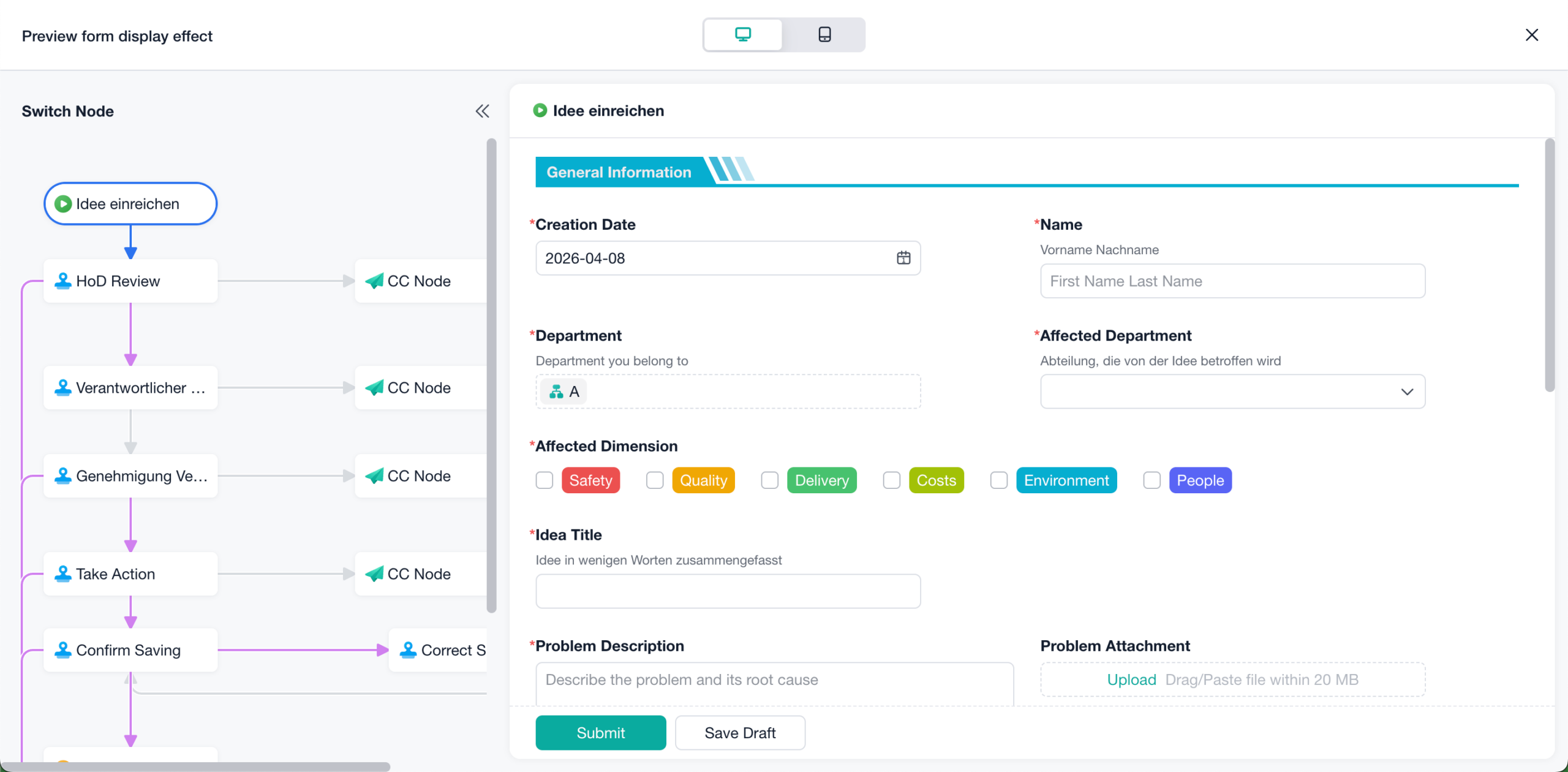
The core of the solution is a standardized, digital submission form. Employees can now easily submit their ideas through the Jodoo platform, eliminating the need for paper templates. Once submitted, the idea is instantly visible in the system, complete with all necessary details and attachments. The workflow remains familiar, but now, every step is timestamped and tracked automatically.
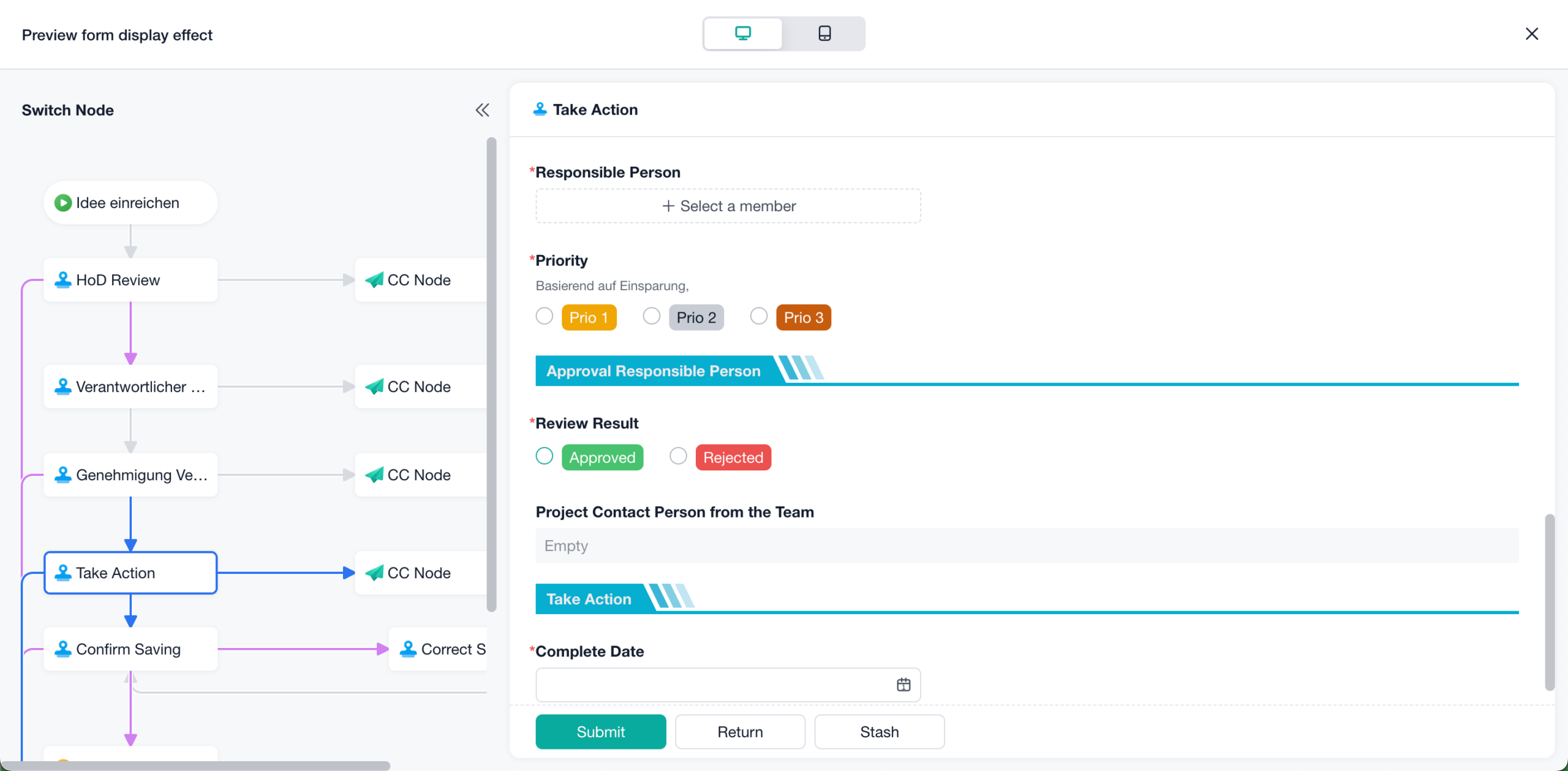
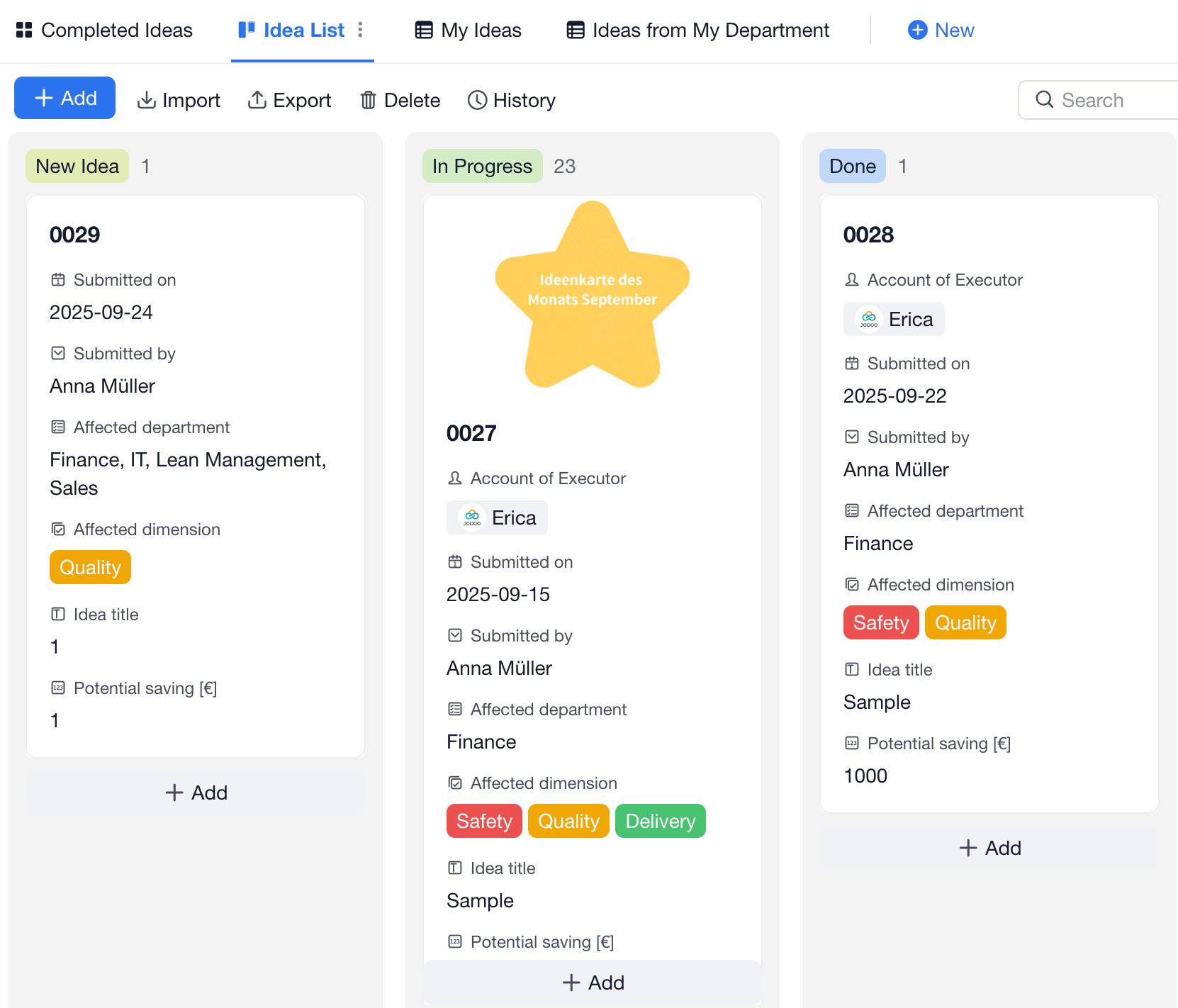
The workflow maintains the collaborative spirit of the original process but removes the administrative burden. While the team still holds bi-weekly meetings to discuss and delegate responsibilities—ensuring cross-departmental visibility and engagement—the actual management of the ideas is entirely digital. Department heads can review submissions, add comments, and update statuses directly within the app.
Phase 2: Real-Time Dashboards for Operational Excellence
One of the most significant upgrades was the implementation of live dashboards. These dashboards provide a “single source of truth” for the entire facility. The lean manager and company leadership now have an instant overview of the entire Idea Management System:
Submission Volume: Real-time tracking of how many ideas are submitted each month.
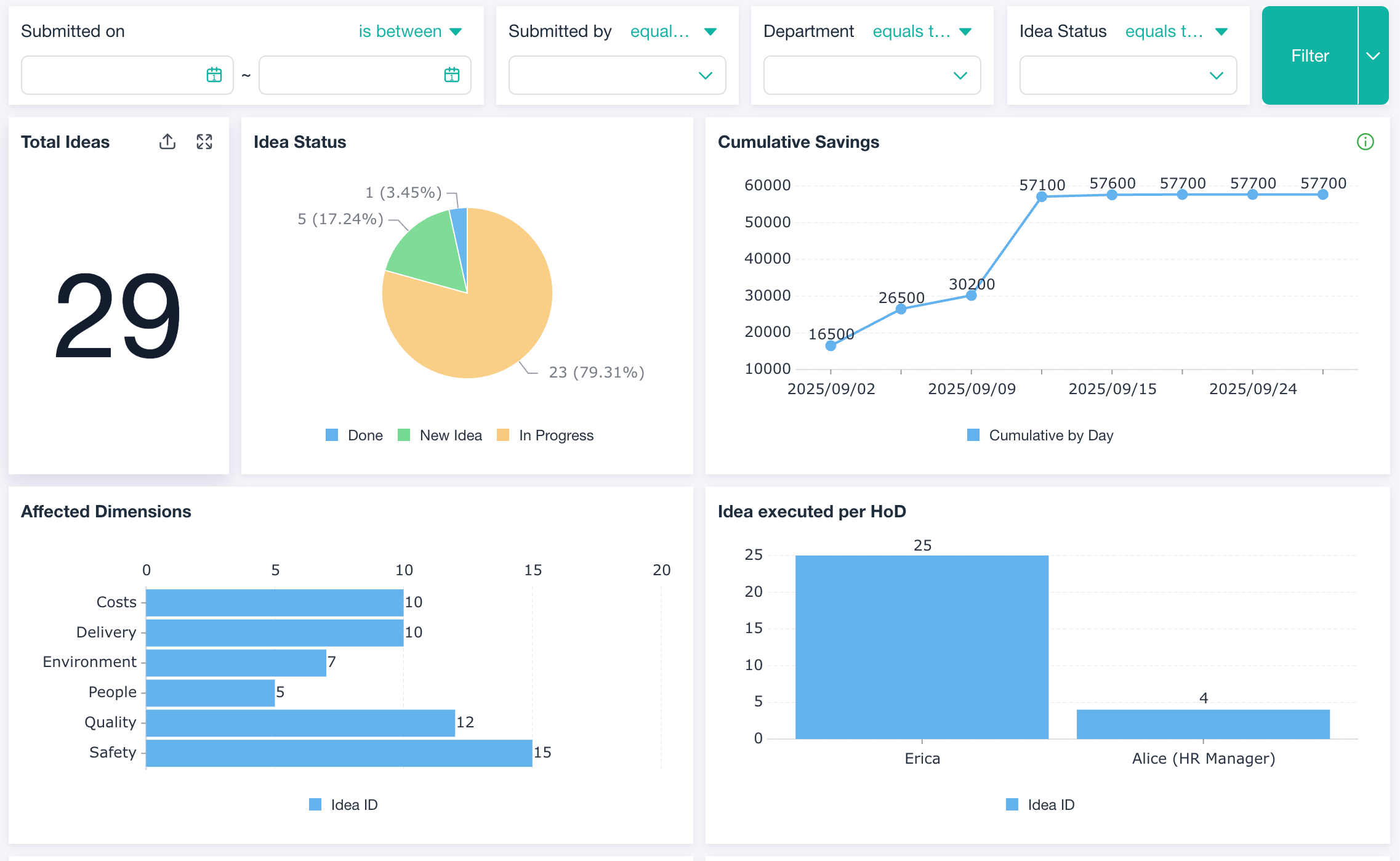
Status Tracking: A clear visual of which ideas are “New,” “In Progress,” or “Completed.”
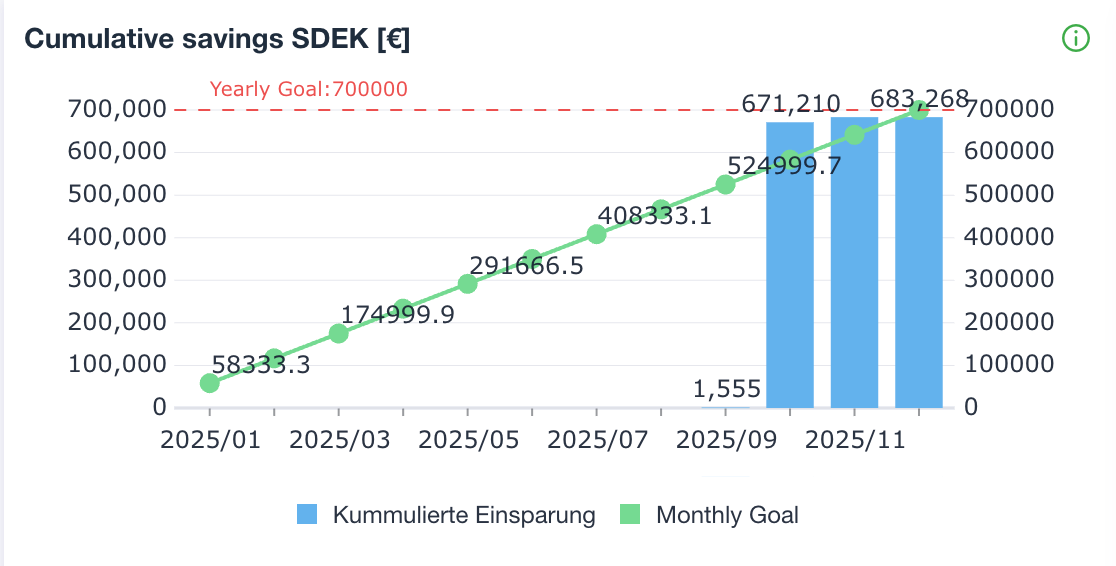
Impact Metrics: Tracking the “Savings” generated by each implemented idea, providing a direct link between lean initiatives and the bottom line.
Bonus Management: A specialized, restricted dashboard was created to calculate compensation and bonuses for employees whose ideas led to significant improvements, ensuring a fair and transparent incentive system.
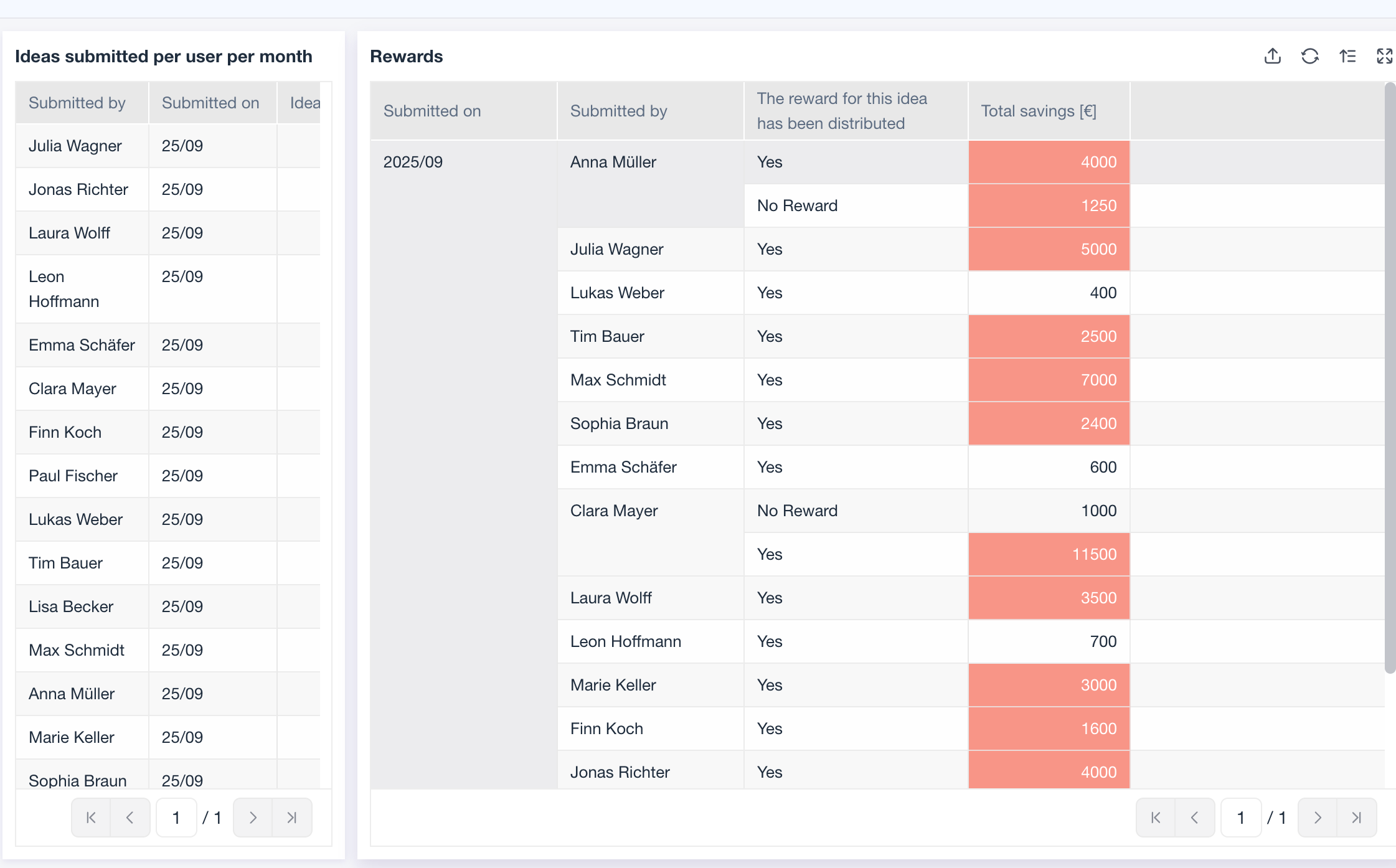
Everyone in the organization can access a general dashboard that displays key metrics. This transparency has fostered a greater sense of ownership and healthy competition among departments.
Phase 3: Promoting Sustainability and Cultivating Digital Talent
Perhaps the most remarkable aspect of the implementation is that it was driven entirely by the Lean Manager, a non-technical business user. Jodoo’s intuitive drag-and-drop interface allowed the Lean Manager to design forms, set up automated workflows, and configure complex permission structures without relying on the IT department.
When minor issues arose—such as a temporary glitch in the compensation calculation formula—the Lean Manager was able to quickly identify the problem and adjust the system settings on the fly, ensuring uninterrupted operation. This level of autonomy has dramatically accelerated the pace of digital transformation within the Lean Management department.
Furthermore, the shift to a digital platform significantly reduced the facility’s paper consumption, aligning the Idea Management System with Datwyler’s broader environmental sustainability goals. By empowering non-technical staff to build and manage digital tools, the company is actively cultivating a new generation of digital talent from within its existing workforce.
The Results: Transparency, Accountability, and a Culture of Innovation
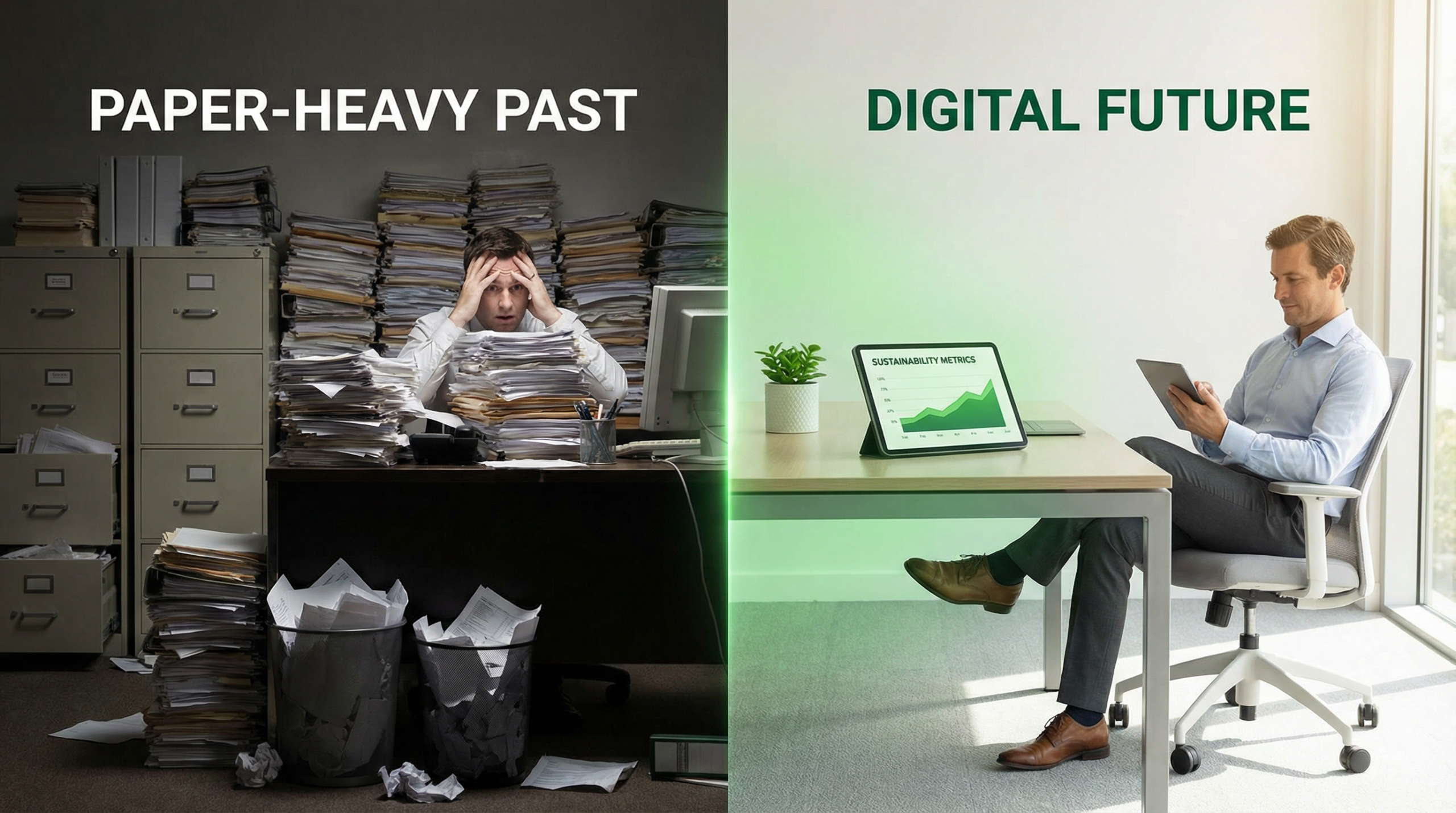
The transition from paper to a digital “Idea Factory” has fundamentally changed how Datwyler approaches continuous improvement. While the Lean Manager notes that it’s hard to put a single number on “time saved”—as the focus was on quality and transparency—the qualitative impact has been profound.
| ตัวชี้วัดประสิทธิภาพหลัก | ก่อนโจดู | หลังจากโจดู |
|---|---|---|
| Idea Traceability | Near Zero (Paper-based) | 100% Real-Time Visibility: Every idea ever submitted is now archived and searchable. The “Lead Time” for improvements is visible, allowing managers to identify and remove bottlenecks in the implementation process. |
| Data Accuracy | Prone to manual errors | Zero Lost Ideas: The risk of physical papers being lost or ignored has been eliminated. Every employee knows their voice is heard and their contribution is tracked. Standardized Data Entry: The digital system “forces” managers to fill in all necessary fields, ensuring that every idea is properly documented and evaluated before moving forward. This has significantly improved the quality of the data used for decision-making. |
| Reward Processing Time | Weeks (Manual calculation) | Instant: Automated tracking and calculation. |
| Data Integrity | Poor | Enhanced Data Integrity: With granular permission management, the facility has eliminated the “source of mistakes” found in generic tools. Only authorized personnel can move ideas through the workflow or edit critical data. |
| Environmental Impact | High paper waste | Eco-Friendly: Significant reduction in paper usage, supporting corporate sustainability goals. |
The rollout of the new system was met with zero resistance from the workforce. Employees found the Jodoo platform incredibly easy to use, and the transition from paper to digital was seamless. The transparent dashboards have also made it easier for department heads to monitor their teams’ contributions, effectively forcing them to engage more deeply with the continuous improvement process.
It’s a tool full of flexibility, you can adapt it by yourself or improve it by yourself as your processes evolve.
The Future Outlook: Scaling Digital Lean Across the Enterprise
The success of the Idea Management system has laid the groundwork for a broader digital transformation at Datwyler. The Lean Management team is already looking at other “wasteful” manual processes that could benefit from the same flexible approach.
By proving that digital tools can enhance—rather than replace—traditional lean values, Datwyler has created a blueprint for other manufacturing facilities. The goal is to move from a state where managers are “too busy” for improvement to a state where the system itself creates the time needed for innovation.
The success of the Idea Management System has proven the value of no-code digitalization at Datwyler. By giving business users the tools to build their own solutions, the company has unlocked a new level of agility and efficiency.
Jodoo is a tool full of flexibility, which you can adapt by yourself or improve by yourself,” says the Lean Manager at Datwyler. “It has given us the transparency and traceability we desperately needed, without the burden of a complex IT implementation.
Looking ahead, the Lean Manager is already exploring new ways to leverage Jodoo. Plans are underway to digitize the company’s problem-solving workflows, moving away from a demo version to a fully integrated digital process. While expanding the use of Jodoo to other departments, such as Environmental Health and Safety (EHS), requires further internal advocacy, the foundation has been laid.

Datwyler has demonstrated that true operational excellence is achieved not just through advanced manufacturing technologies, but by empowering the people on the shop floor with the right digital tools. With Jodoo, Datwyler is well-equipped to continue its journey of continuous improvement, ensuring that every good idea is captured, tracked, and transformed into tangible business value.
Ready to build your own digital Idea Management System?