This 2026 guide is for procurement, operations, warehouse, and finance teams that want a clearer way to separate internal material requests from broader purchase requests and reduce confusion before approval begins.
Many internal purchasing delays do not start with supplier issues. They start much earlier, when teams use the wrong request type for the wrong need.
A warehouse team may request raw materials for production. A facilities team may request maintenance supplies. Another department may submit a broader purchasing request for equipment or services. When all of these are handled through one inconsistent form, procurement teams lose clarity, approvals slow down, and follow-up increases.
This guide explains the difference between a material request and a purchase request, when each one should be used, what information they usually include, and how teams can structure these workflows more clearly.
What is a material request?
A material request is an internal request used to ask for specific physical items, materials, or stock needed for operations, production, maintenance, or warehouse use.
In most organizations, material requests are tied more closely to inventory movement, internal stock use, replenishment, or issue handling than to broader purchasing activity.
Examples might include:
- requesting raw materials for production
- requesting packaging supplies for warehouse operations
- requesting spare parts for equipment maintenance
- requesting stock items from internal inventory
Because the request is often tied to quantity, location, urgency, and internal stock availability, the workflow usually needs tighter coordination with inventory and warehouse operations.
What is a purchase request?
A purchase request is a broader internal request to buy a product or service.
It is usually used when someone in the business needs procurement or management approval before sourcing or purchasing begins. The request often captures business need, estimated cost, required timing, and supplier context if known.
Purchase requests may cover a wider range of categories, including:
- equipment
- software
- professional services
- office purchases
- indirect spend
- materials that are not already available through internal stock channels
If your team needs a structured intake process for broader internal buying requests, this แบบฟอร์มขอซื้อ เป็นข้อมูลอ้างอิงที่มีประโยชน์.
คำขอวัสดุ กับ คำขอซื้อ: ต่างกันอย่างไร?
The main difference is the workflow context.
A material request usually focuses on operational stock, internal inventory use, or physical materials needed for execution. A purchase request usually focuses on obtaining approval to purchase something, whether that item is a material, service, or broader business need.
| หมวดหมู่ | Material Request | Purchase Request |
|---|---|---|
| Main purpose | Request materials or stock for internal use | Request approval to buy a product or service |
| Typical users | Warehouse, maintenance, production, operations | Employees, department leads, procurement requesters |
| Workflow focus | Quantity, stock availability, location, usage | Business needs, approval, budget, sourcing |
| Often linked to | Inventory movement and internal issue handling | Procurement review and purchase approval |
| May involve supplier sourcing | Not always | Usually yes, directly or indirectly |
In some businesses, these two workflows overlap. But if the organization handles inventory internally, it usually helps to distinguish operational material requests from broader purchasing requests.
When should teams use a material request instead of a purchase request?
A material request is often the better choice when the need is operational and closely tied to physical stock movement.
Teams usually use a material request when:
- the item already exists in internal inventory
- the request is for production materials or maintenance stock
- warehouse or store personnel need controlled issue records
- the request should trigger internal stock release or replenishment follow-up
In these cases, the request is less about evaluating whether to buy something and more about controlling what is needed, where it is needed, and how it should move through operations.
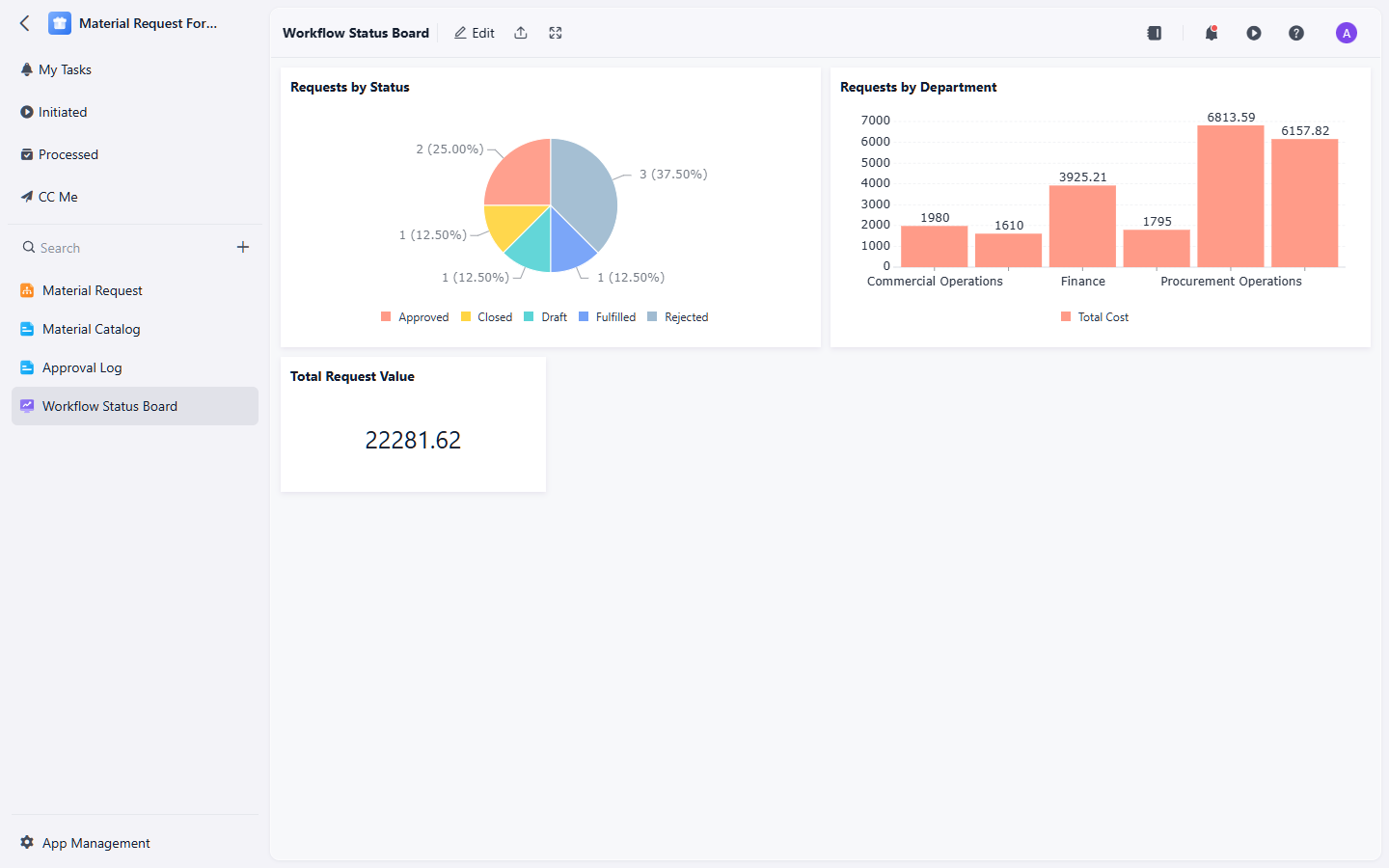
Material requests usually focus on item quantity, internal stock use, and operational timing rather than broader purchasing justification.
If your team needs a more structured way to manage this kind of request, this material request form is a practical starting point.
When should teams use a purchase request?
A purchase request is usually the better fit when the organization needs approval before procurement or sourcing moves forward.
Teams usually use a purchase request when:
- the item or service is not already available through internal stock
- the request needs budget review
- the purchase may require supplier selection or quotation
- multiple approvers need to review the request
- procurement needs a consistent intake process for buying requests
In this case, the main question is not just “what material is needed?” but also “should this purchase move forward, under what conditions, and through which approval path?”
What should a material request include?
A good material request should capture enough detail for warehouse, operations, or maintenance teams to act without repeated clarification.
Typical fields include:
- ชื่อผู้ร้องขอ
- department or work area
- material or item name
- item code or SKU if available
- quantity requested
- วันที่ที่ต้องการ
- storage location or destination
- reason for use
- urgency or priority
Because these requests are often tied to inventory control, clarity around quantity, item identification, and destination matters more than broad purchasing justification.
What should a purchase request include?
A purchase request usually needs a wider business context than a material request.
Typical fields include:
- ชื่อผู้ร้องขอ
- แผนก
- รายการหรือบริการที่ร้องขอ
- ค่าใช้จ่ายโดยประมาณ
- วันที่ที่ต้องการ
- เหตุผลทางธุรกิจ
- supplier, if known
- attachments or specifications
- approval routing details where relevant
If broader approval is one of the main goals of the workflow, the purchase request should be built to support the next step in review, not just intake.
How these workflows connect to inventory and approvals
One reason this distinction matters is that material requests often connect more directly to warehouse and stock control, while purchase requests connect more directly to approval and procurement workflows.
ตัวอย่างเช่น:
- a material request may lead to stock issue, transfer, or replenishment review
- a purchase request may lead to sourcing, approval, and purchase order creation
When teams combine both into one generic process, they often create extra noise. Warehouse teams may have to fill in approval fields they do not need. Procurement teams may receive requests that lack the financial or sourcing information required for review.
If stock visibility or movement control is a recurring issue, an แบบฟอร์มการจัดการสินค้าคงคลัง can help connect request handling more closely to inventory records.
Common mistakes teams make
Many teams struggle with request workflows not because they lack effort, but because the process design is too broad or too vague.
Common issues include:
- using one request form for every type of operational and purchasing need
- missing item codes, quantities, or stock locations in material requests
- missing budget context or business justification in purchase requests
- unclear ownership between warehouse, procurement, and approvers
- no clear distinction between internal stock use and external purchasing
These issues usually lead to more manual follow-up, slower approvals, and inconsistent records.
เมื่อโปรแกรมสเปรดชีตเริ่มไม่เพียงพออีกต่อไป
Spreadsheets can work when the request volume is low and the workflow is simple. But they usually become fragile once teams need to track request status, stock movement, approval history, or repeated exceptions across multiple people.
That is when the same symptoms start to appear:
- คำขอซ้ำซ้อน
- สถานะไม่ชัดเจน
- quantity errors
- missing approval context
- poor handoff between warehouse and procurement
A spreadsheet can hold request data. It usually cannot manage different request types and downstream actions very well.
ข้อสรุปสุดท้าย
A material request and a purchase request are related, but they serve different purposes.
A material request is usually best when the need is operational, stock-based, and closely tied to internal inventory handling. A purchase request is usually best when the organization needs broader approval before buying begins.
When teams separate these workflows clearly, they reduce confusion, improve request quality, and make warehouse, procurement, and approval handoffs easier to manage.
If your team wants a more structured starting point for operational stock requests, Jodoo’s material request form provides a practical example.