This 2026 guide is for growing procurement, operations, and finance teams that still rely on spreadsheets, email, or chat to manage internal purchasing and want a more connected workflow from request to supplier evaluation.
Procurement problems rarely start with one major failure. More often, they come from small disconnects between request intake, approval, order tracking, vendor onboarding, and supplier review. A missing field delays approval. A supplier document sits in the wrong folder. An overdue order has no clear owner. Over time, these gaps create slower decisions, weaker visibility, and more manual follow-up.
That pattern is still common. According to Ramp’s 2025 State of Procurement, 75% of business leaders still struggle with manual procurement processes, and 63% lack early spend controls. In practice, that usually means the process breaks down not because teams are not working hard enough, but because the stages are not connected well enough.
This procurement workflow guide explains how to structure the process from purchase request to supplier evaluation, what each stage should capture, where bottlenecks usually appear, and when spreadsheets start creating more coordination work than they save.
Why procurement workflows become hard to manage
Procurement gets more complicated as soon as more than one team is involved.
A department requests something. Procurement checks specifications. Finance reviews spending. An approver signs off. A supplier submits documents. Operations tracks delivery. Later, someone needs to review supplier performance.
If each step is handled in isolation, the workflow usually develops the same problems:
- incomplete intake
- unclear approval ownership
- inconsistent vendor records
- poor status visibility after approval
- supplier reviews that happen too late to influence the next decision
The practical goal of workflow design is not to add bureaucracy. It is to reduce avoidable rework.
Step 1: Define what belongs in a purchase request
A purchase request is an internal signal that something needs to be bought. It should give the next reviewer enough context to decide what happens next.
A weak request usually creates a follow-up. A stronger request reduces it.
Most procurement teams need some version of the following fields:
- requester name
- department
- item or service needed
- quantity
- required date
- business purpose
- estimated cost
- preferred supplier, if applicable
- supporting files or specifications
The right design depends on the type of purchasing you handle. A facilities request, a software request, and a raw materials request may all require different supporting details. But the general rule stays the same: collect the information that helps procurement review the request correctly the first time.
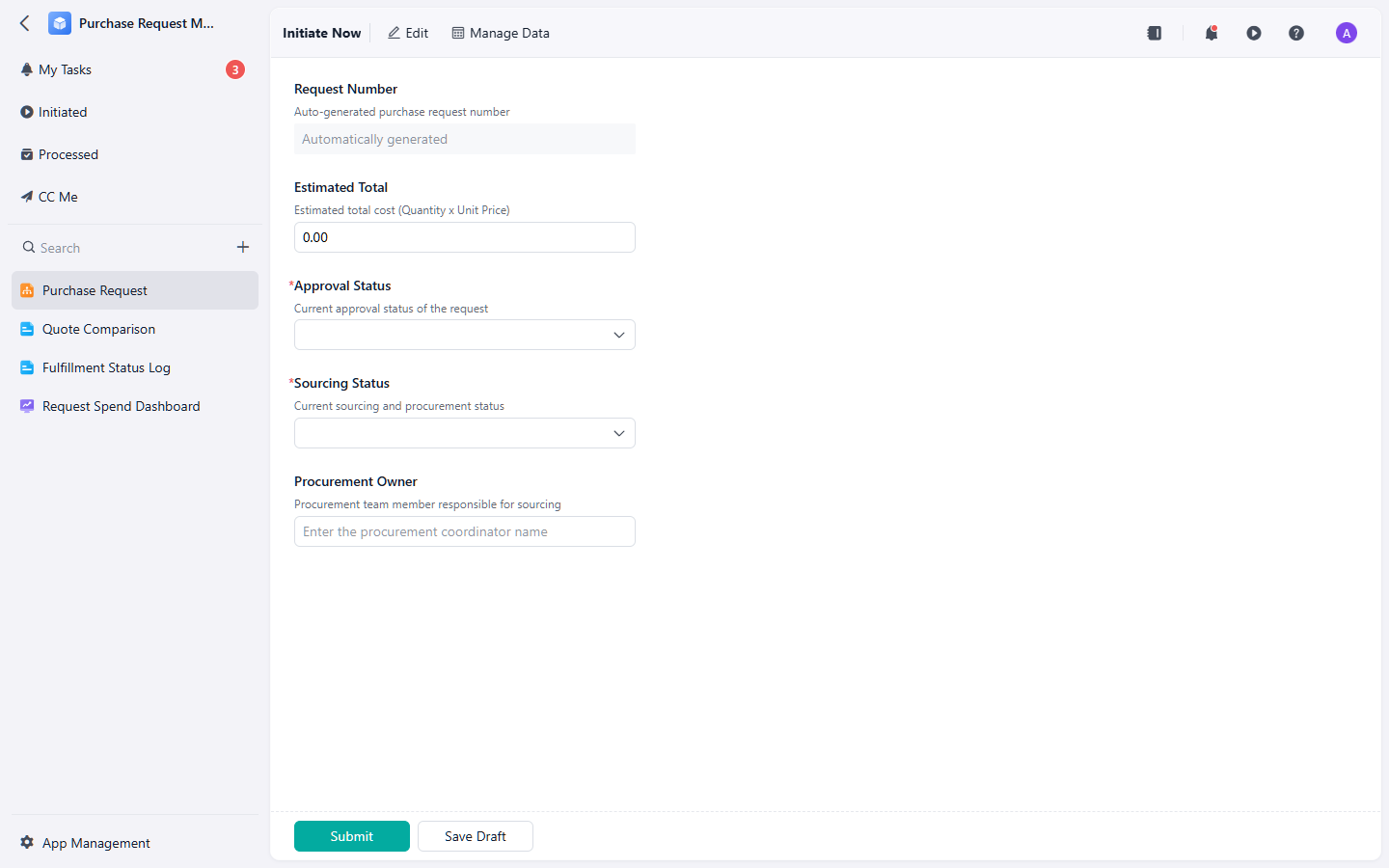
Purchase request intake works best when key business context is captured at submission, not reconstructed later.
If your team wants a structured starting point for intake fields and request routing, this purchase request form is one practical reference.
Step 2: Separate request intake from approval logic
One common procurement mistake is treating request capture and approval as the same thing.
They are related, but they are not identical.
A request form exists to capture need and context. An approval workflow exists to apply control. That control may depend on budget thresholds, department ownership, supplier rules, category risk, or documentation requirements.
A strong approval flow should answer questions like:
- Does this request have enough information to move forward?
- Does the spend require one approver or multiple approvers?
- Does procurement need to review the supplier before approval?
- What should happen to exceptions or out-of-policy requests?
- When should an overdue approval be escalated?
The goal is not to make approval more complicated than necessary. It is to make decision paths visible and repeatable.
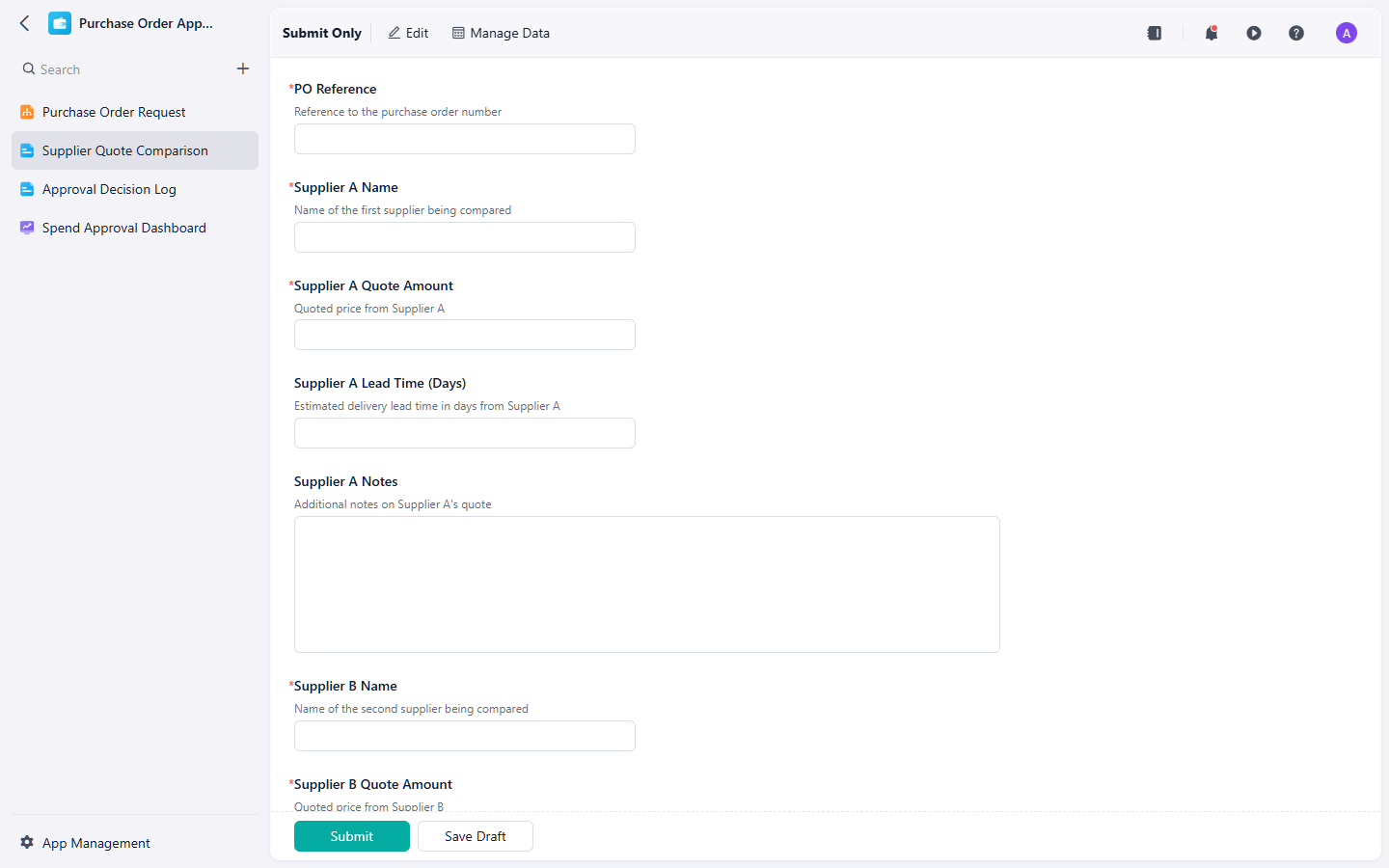
Approval stages should make ownership, status, and decision history clear enough to reduce manual follow-up.
If you need an example of how approval routing can be structured, this purchase order approval workflow is a relevant reference point.
Step 3: Track what happens after approval
Many teams focus heavily on getting an order approved, then lose visibility once execution begins.
That creates a different type of control problem. The request was approved, but now no one has a reliable shared view of what was issued, what is delayed, what is blocked, and what still needs action.
After approval, procurement or operations teams usually need to monitor:
- purchase order owner
- supplier
- issue date
- expected delivery date
- current status
- overdue items
- exceptions or blockers
- received versus pending quantities
This is where spreadsheets often become fragile. They can store rows of order data, but they usually do a poor job of surfacing aging, ownership, and next actions across multiple stakeholders.
A tracking layer becomes more valuable when order volume rises, supplier timing matters, or multiple people need the same status view.
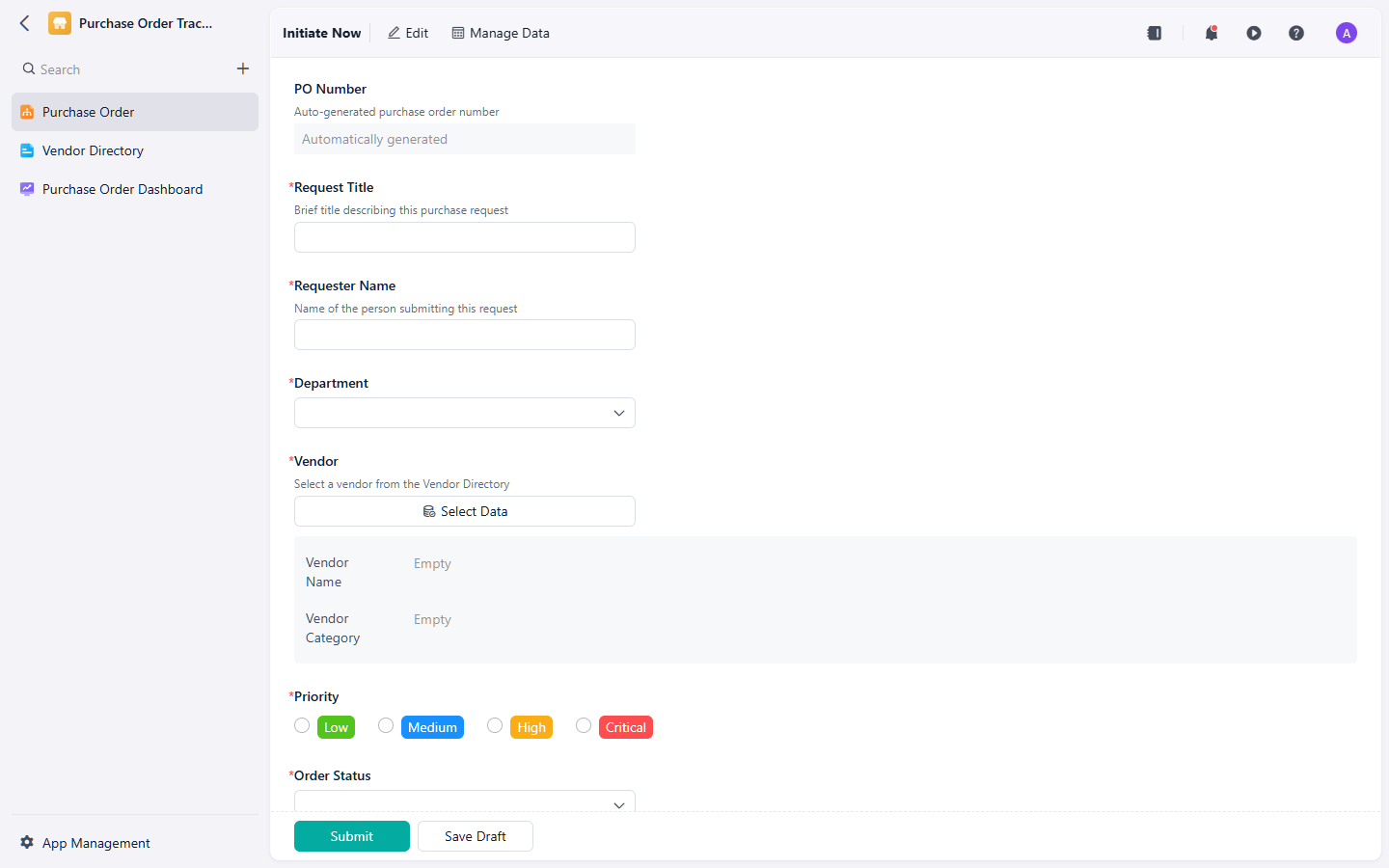
A PO tracker should make owner, supplier timing, order status, and overdue follow-up easy to review.
A purchase order tracker is useful as a reference when you want to see what a more structured post-approval view can look like.
Step 4: standardize vendor onboarding before it becomes a bottleneck
Vendor onboarding is often treated as administrative work, but it directly affects procurement speed and risk.
If supplier information is incomplete, teams may not be able to issue orders, process payments, or verify compliance in time. The result is usually delay, rework, or unnecessary back-and-forth with the supplier.
A basic onboarding process often includes:
- legal business details
- tax forms
- banking information
- contact information
- compliance documents
- insurance certificates
- internal review status
The exact document set depends on your industry and controls. The more important point is consistency. When each department asks for different information in a different format, supplier records become difficult to trust.
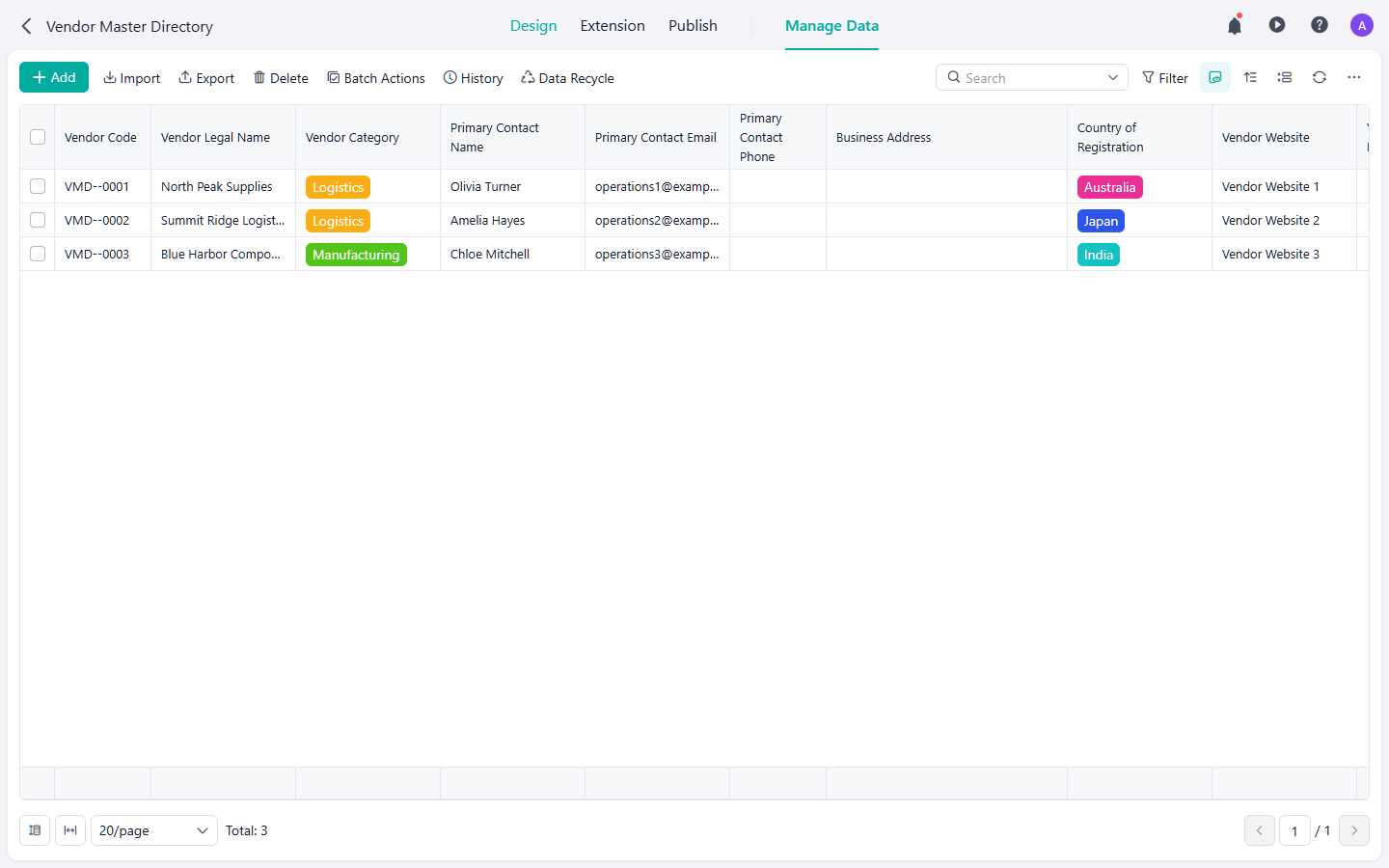
Vendor onboarding is easier to manage when required documents and review status are stored in one place.
For teams defining a more consistent supplier setup process, this vendor onboarding form is a useful example.
Step 5: Make supplier evaluation repeatable
Supplier evaluation is most useful when it supports future decisions, not just post-project commentary.
Many teams review suppliers informally. They remember which vendor caused issues, which one missed deadlines, or which one was difficult to work with. But memory is not a scalable procurement system.
A repeatable supplier review process usually works better when it evaluates clear criteria such as:
- quality
- delivery reliability
- responsiveness
- pricing
- documentation quality
- compliance
- issue resolution
The point of a scorecard is not to create extra paperwork. It is to make supplier comparisons more consistent and easier to defend.
When supplier performance is documented in a standard way, procurement teams are in a better position to make future sourcing, renewal, and approval decisions.
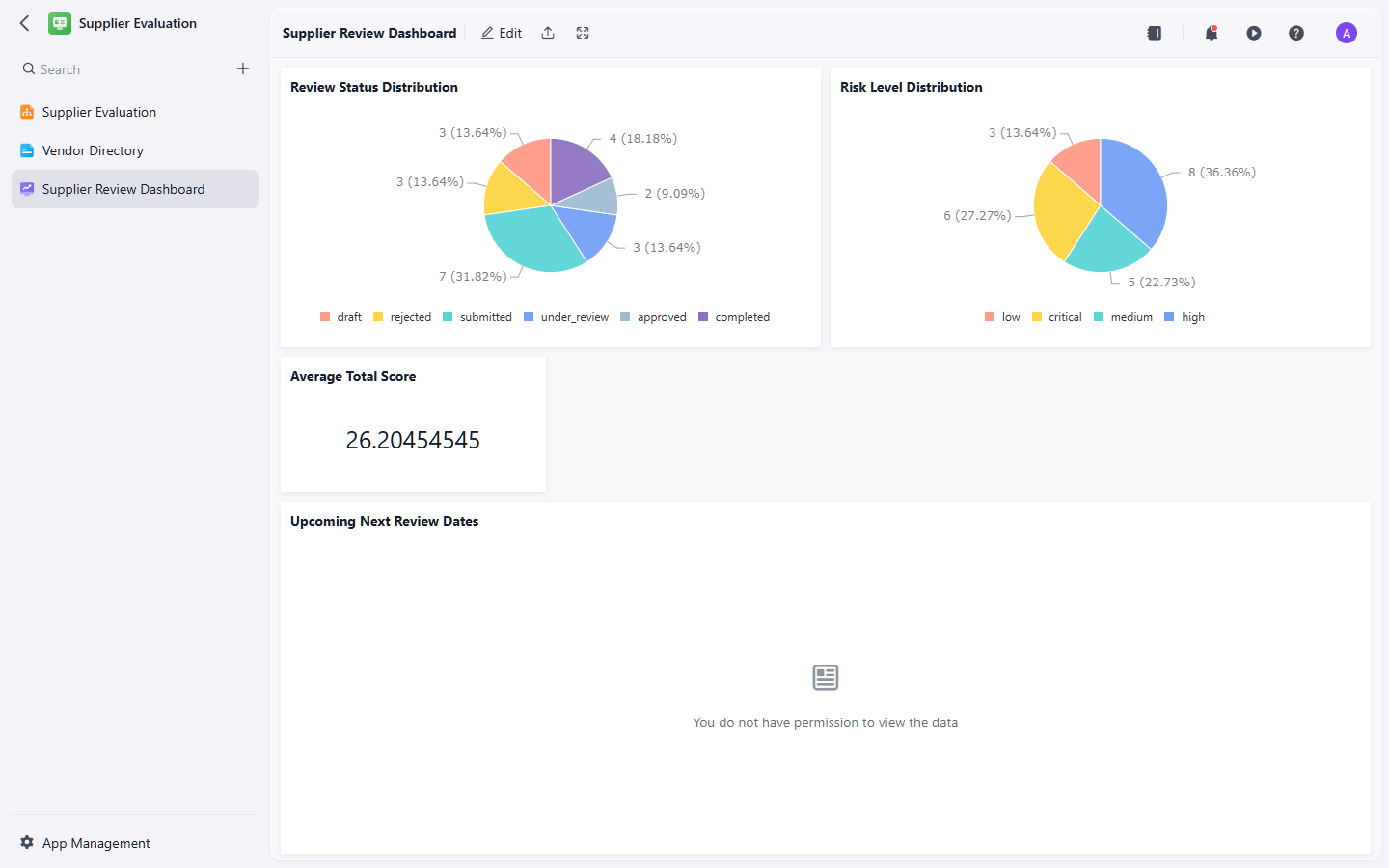
A supplier scorecard works best when ratings, evidence, and reviewer notes are captured together.
If you want a concrete example of how that information can be organized, this supplier evaluation form is a useful reference.
Common procurement bottlenecks to look for
Even well-intentioned procurement processes usually slow down in predictable ways.
Some of the most common bottlenecks include:
- requests submitted without enough detail
- approvals waiting on unclear ownership
- no shared status view after approval
- incomplete vendor setup records
- supplier reviews that are delayed until after the next buying cycle
These are not separate issues. In most organizations, they are connected. Weak intake creates weak approvals. Weak approvals create unclear execution. Weak execution makes supplier review less reliable.
That is why procurement workflow design works best when it is treated as a connected operating system instead of a set of unrelated documents.
When spreadsheets stop being enough
Spreadsheets are not the problem by themselves. They are often a sensible starting point.
But they tend to break down when procurement depends on:
- multiple approvers
- repeated status updates
- supplier document control
- overdue order visibility
- shared ownership across teams
A spreadsheet can hold procurement data. It usually cannot manage the procurement flow very well.
Once teams spend too much time asking for updates, fixing incomplete requests, or rebuilding context across tools, the process has usually reached the point where structure matters more than another spreadsheet tab.
Final takeaway
A procurement workflow does not need to be complicated to be effective. It does need to be connected.
When request intake, approval, order tracking, vendor onboarding, and supplier evaluation are treated as parts of the same process, teams usually gain better visibility, fewer handoff errors, and stronger control over spend and supplier quality.
If your team is reviewing how these stages should fit together, Jodoo’s AI template library provides practical examples across request intake, approval, order tracking, vendor onboarding, and supplier evaluation.