Browse by category

Automated
Poultry Farming Record-Keeping
2
Person-Days Saved per Batch
2x Increase
in IT Service Capacity
In the high-stakes world of modern agriculture, staying ahead of the curve isn’t just an advantage—it’s a necessity. For HAID Group, a global powerhouse in the agricultural and animal husbandry industry, this means a relentless focus on innovation and efficiency. Founded in 1998, HAID has grown into a sprawling enterprise with over 380 subsidiaries, 30,000 employees, and a market capitalization exceeding $15 billion. As a company that prides itself on its learning culture, HAID has always understood that technology is a key ingredient for success.
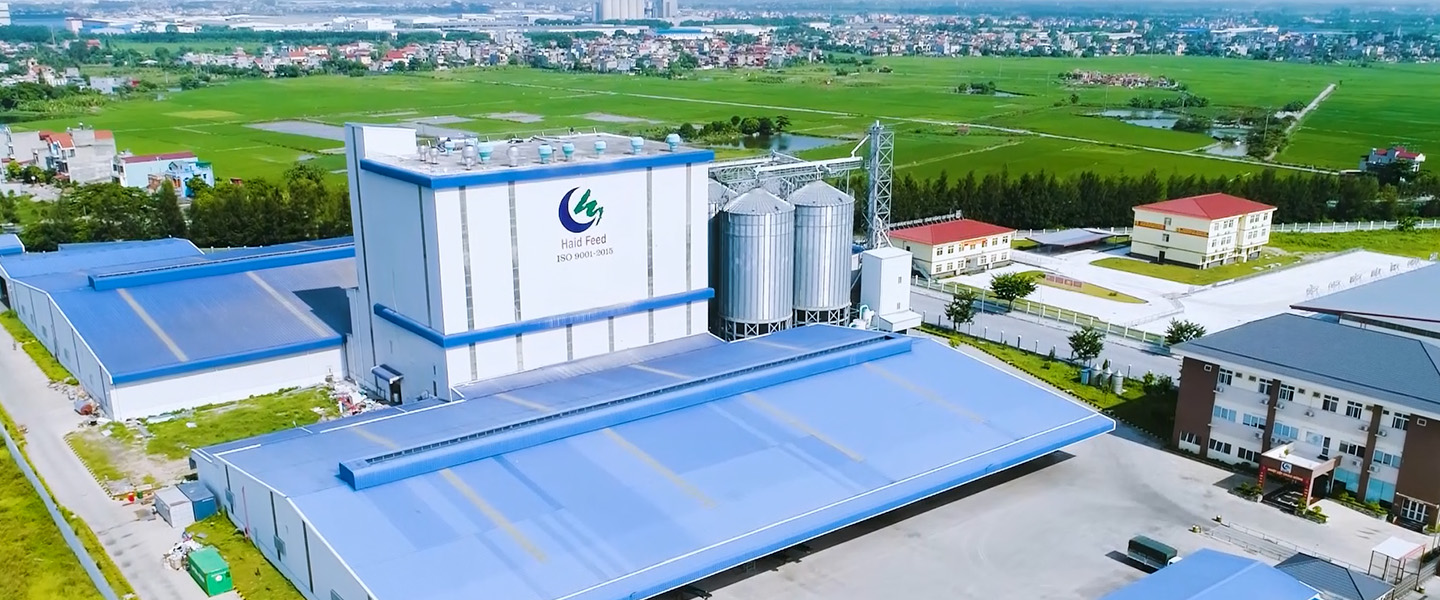
But as the company expanded at a breakneck pace, its internal IT services were struggling to keep up. The IT team, a lean group of just over 100 people, was responsible for supporting a rapidly growing workforce that had more than doubled from 15,000 to 35,000 employees in just three years. The old way of doing things—relying on traditional software development and manual processes—was no longer sustainable. HAID needed a new approach, one that would allow them to do more with less and to respond to the ever-changing needs of the business with speed and agility.
This is the story of how HAID Group transformed its IT services, empowered its employees, and unlocked a new level of efficiency and innovation—all with the help of a no-code platform and a bold new vision for the future of work.
The Challenge: Doing More with Less in a Hyper-Growth Environment
For HAID’s IT department, the rapid growth of the company presented a classic dilemma: how to support a rapidly expanding user base without a corresponding increase in IT headcount. The team was facing a perfect storm of challenges that threatened to overwhelm their resources and stifle the company’s growth.
The New Business Dilemma: A Case Study in Poultry Farming
HAID’s expansion into poultry farming made these operational challenges especially clear. This new venture, unlike their mature feed business, was characterised by uncertain business models and immature processes, highlighting the inherent risks and the critical need for a more scientific, data-driven management system.
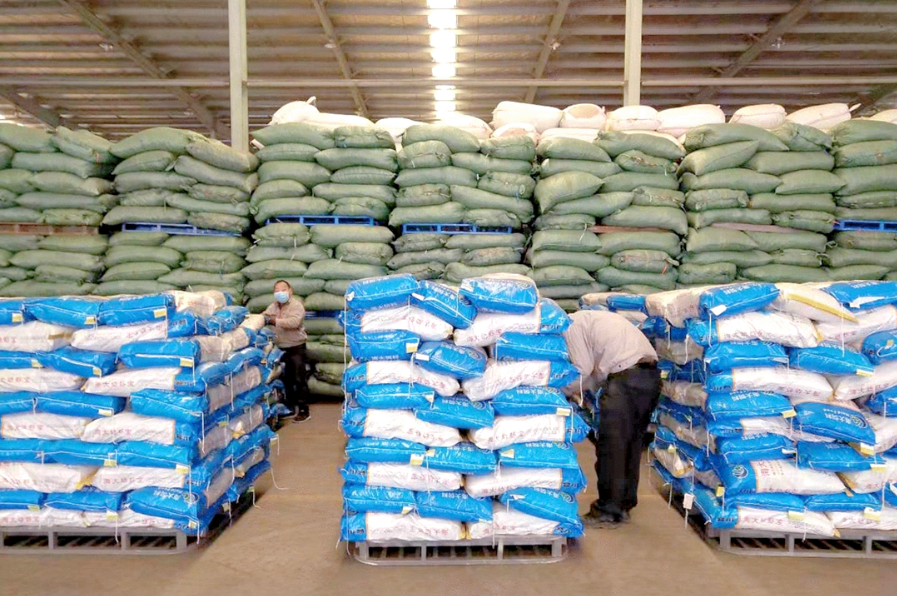
Initially, the poultry division was drowning in paper. A staggering 98% of all farming information—from chick mortality to feed and medicine usage—was recorded by hand. This created a host of problems:
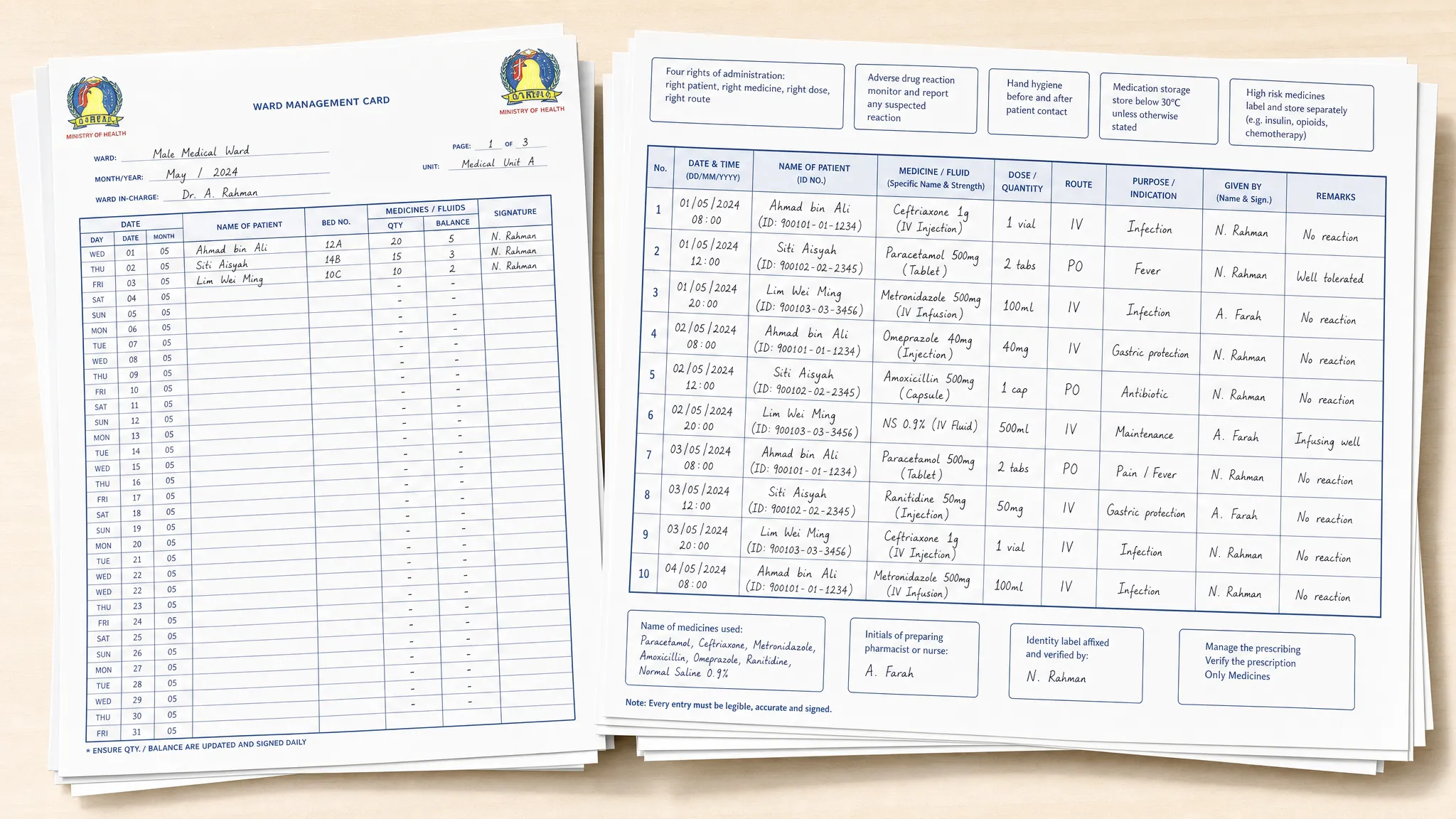
Information Asymmetry: Different departments had different versions of the truth, making it impossible to get a clear picture of the operations.
Lack of Transparency: Management had no real-time visibility into the farming process, making it difficult to optimise decisions and respond to issues quickly.
Data Silos: The only existing system was a financial settlement tool that couldn’t be accessed by more than a handful of people at a time. Production and sales teams were flying blind, unable to access real-time inventory data.
The Inefficiency of People-Driven Data Access: When a manager needed to know the profitability of a batch, they had to call a warehouse clerk, who would then have to look it up in a separate system. The process was slow, inefficient, and prone to errors.
The IT Service Bottleneck
The most pressing issue was the inefficiency of the IT service desk. The team was relying on a traditional ticketing system, but it was failing to keep up with the volume of requests. Worse, the outsourced IT support staff were often slow to respond, leading to frustration and delays for the business.
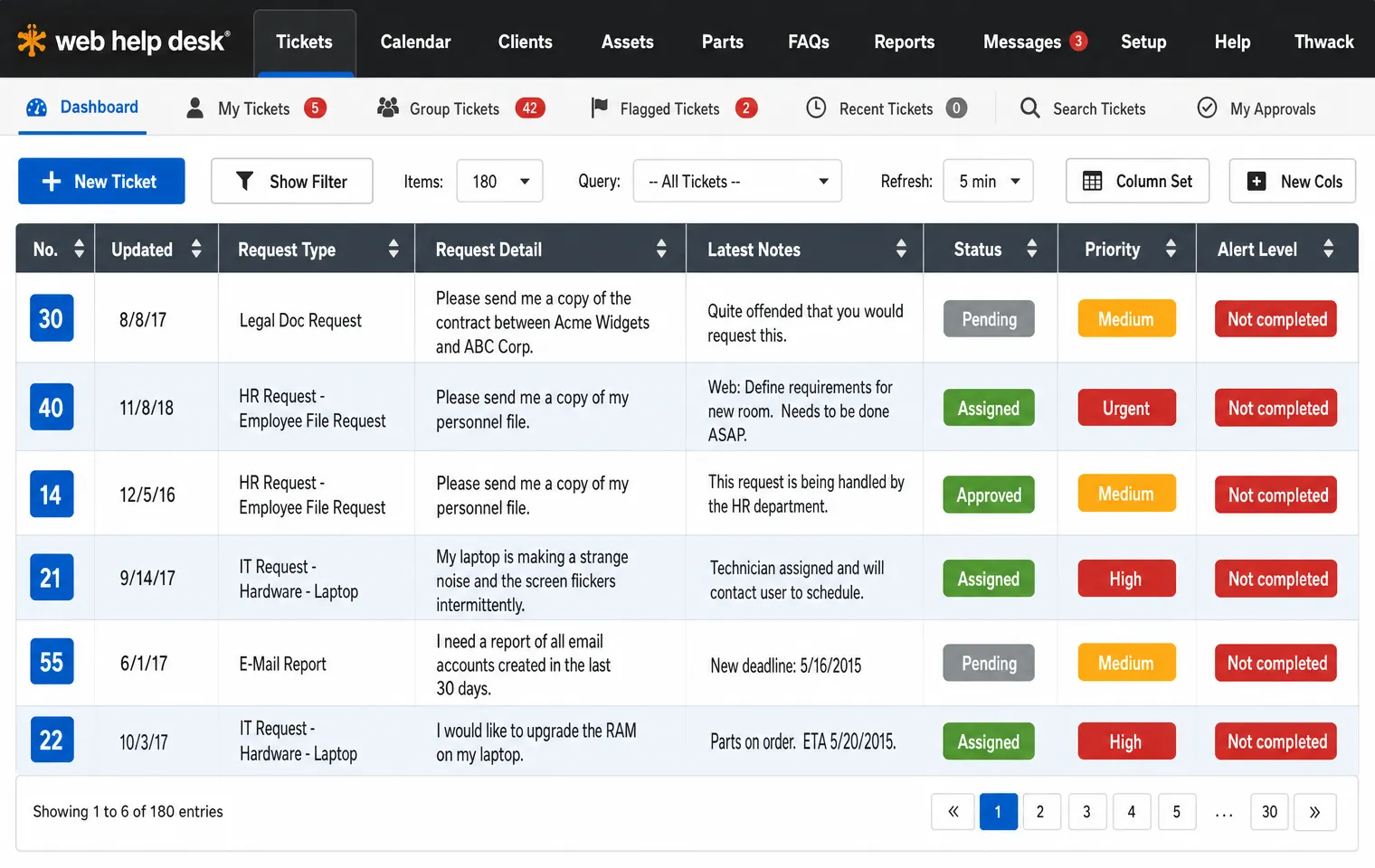
“The old system was passive,” a senior IT manager at HAID noted. “We would assign a ticket, and it would often sit in a queue for hours, or even days. Business teams were dissatisfied with the response speed, and we had no reliable way to measure or improve service performance.“
The Solution: A Three-Pronged Strategy for Digital Transformation
Faced with these challenges, HAID’s IT team devised a brilliant three-pronged strategy to transform their operations and empower the business. At the heart of this strategy was Jodoo, a no-code platform that would become the engine of their digital revolution.
Digitising the Core: Building a Smart Poultry Farming System
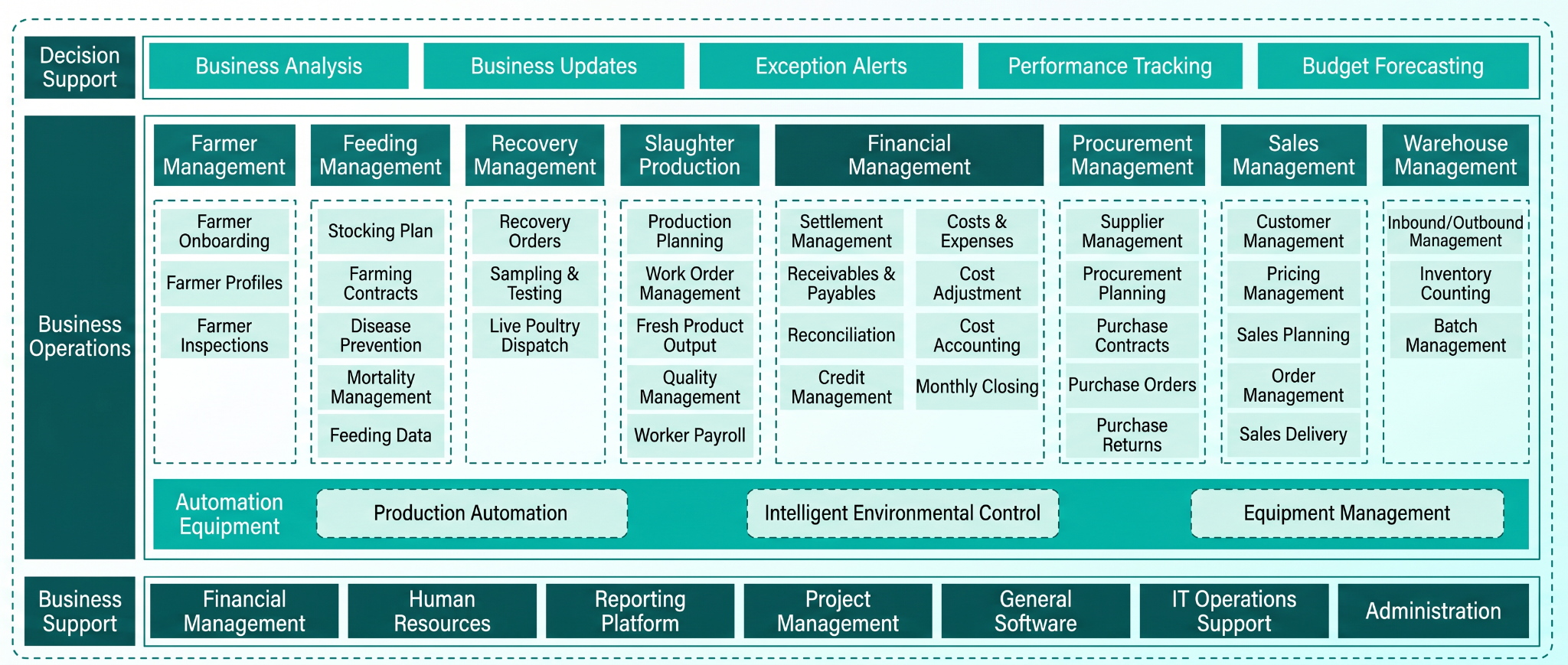
For the new poultry division, the first order of business was to replace paper-based records with shared digital workflows. Using Jodoo, the team built a comprehensive poultry management system from the ground up, covering both self-operated and contract farming models.
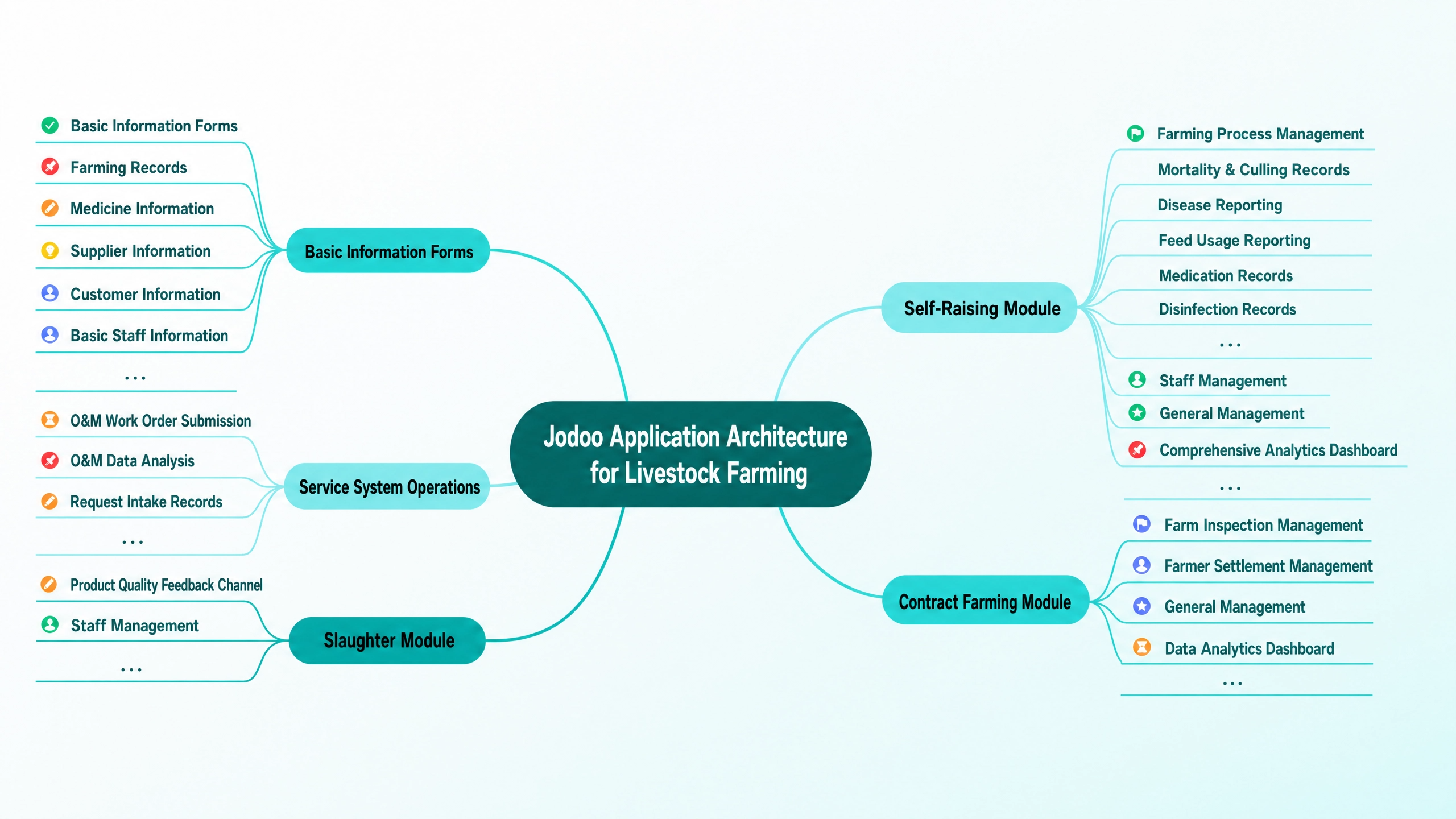
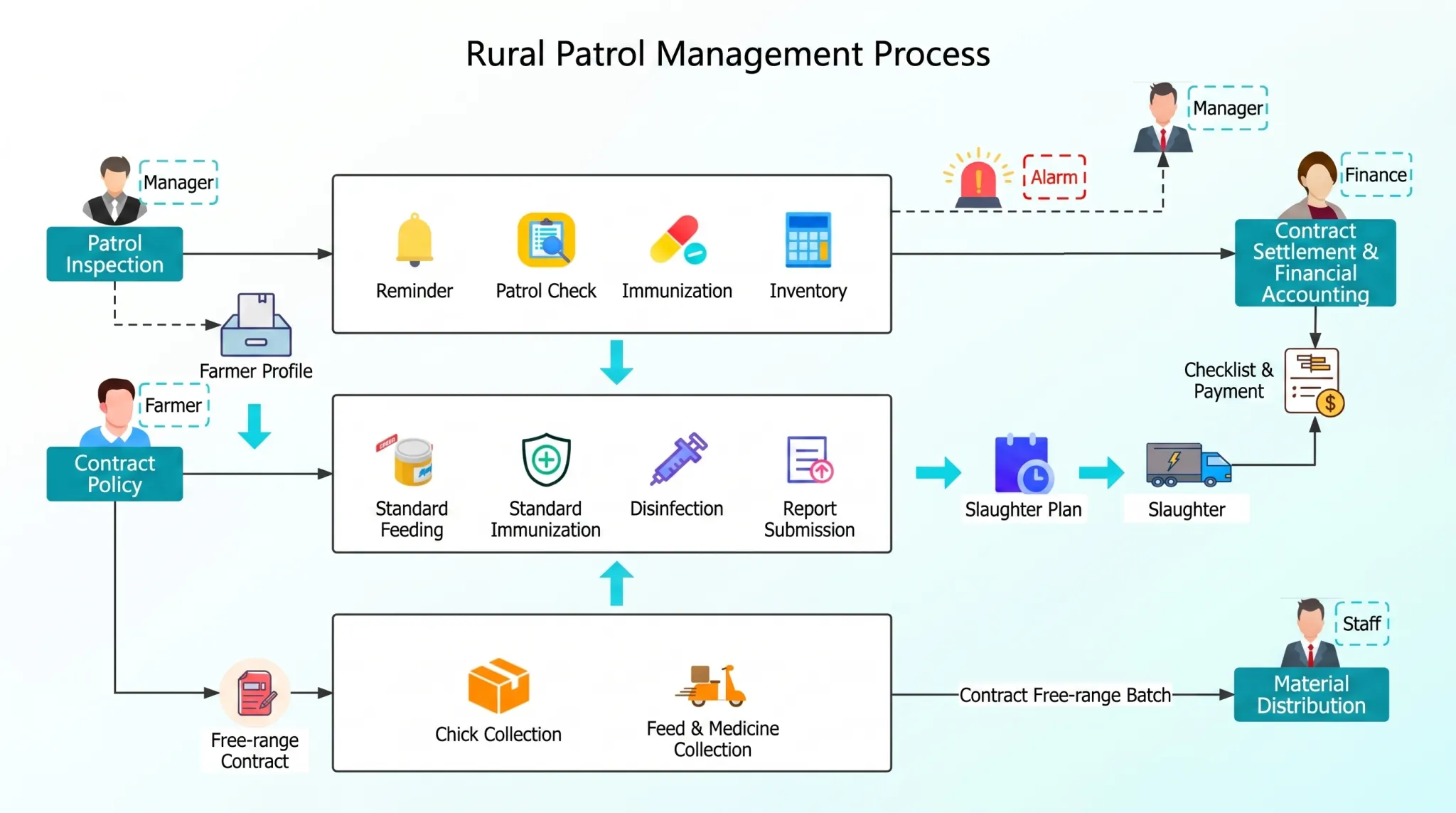
Full-Process Management: The system digitises the entire farming lifecycle, from chick procurement to slaughter settlement. This includes tracking feed and medicine usage, monitoring vaccination schedules, and recording daily mortality rates.
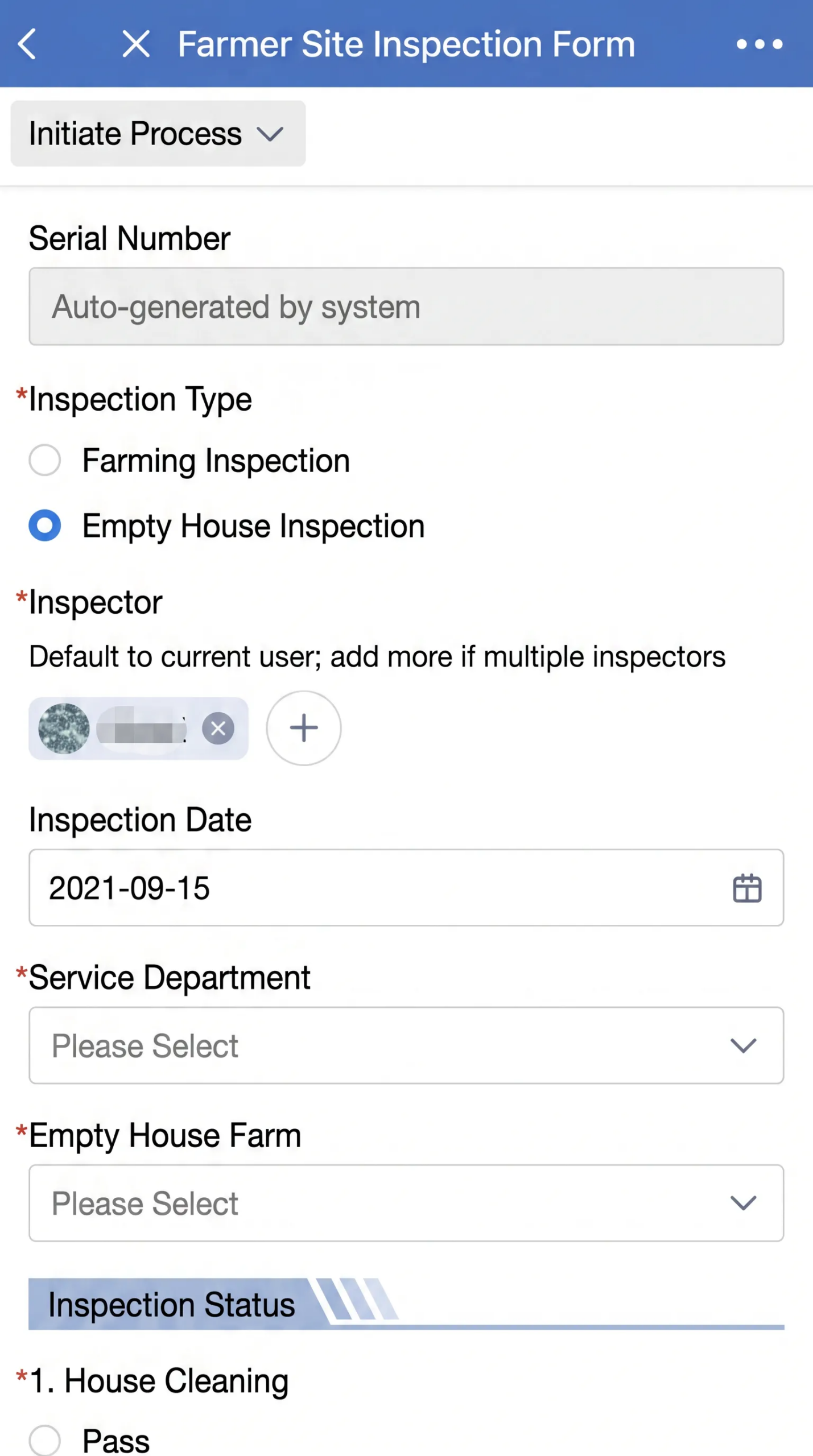
Mobile-First for the Field: Recognising that much of the work happens in the field, the team designed a mobile-first solution. Technicians can now use their phones to record data during field inspections, even in areas with no network coverage. A clever check-in feature, with a 1-kilometre error tolerance, ensures that all visits are logged and tracked.
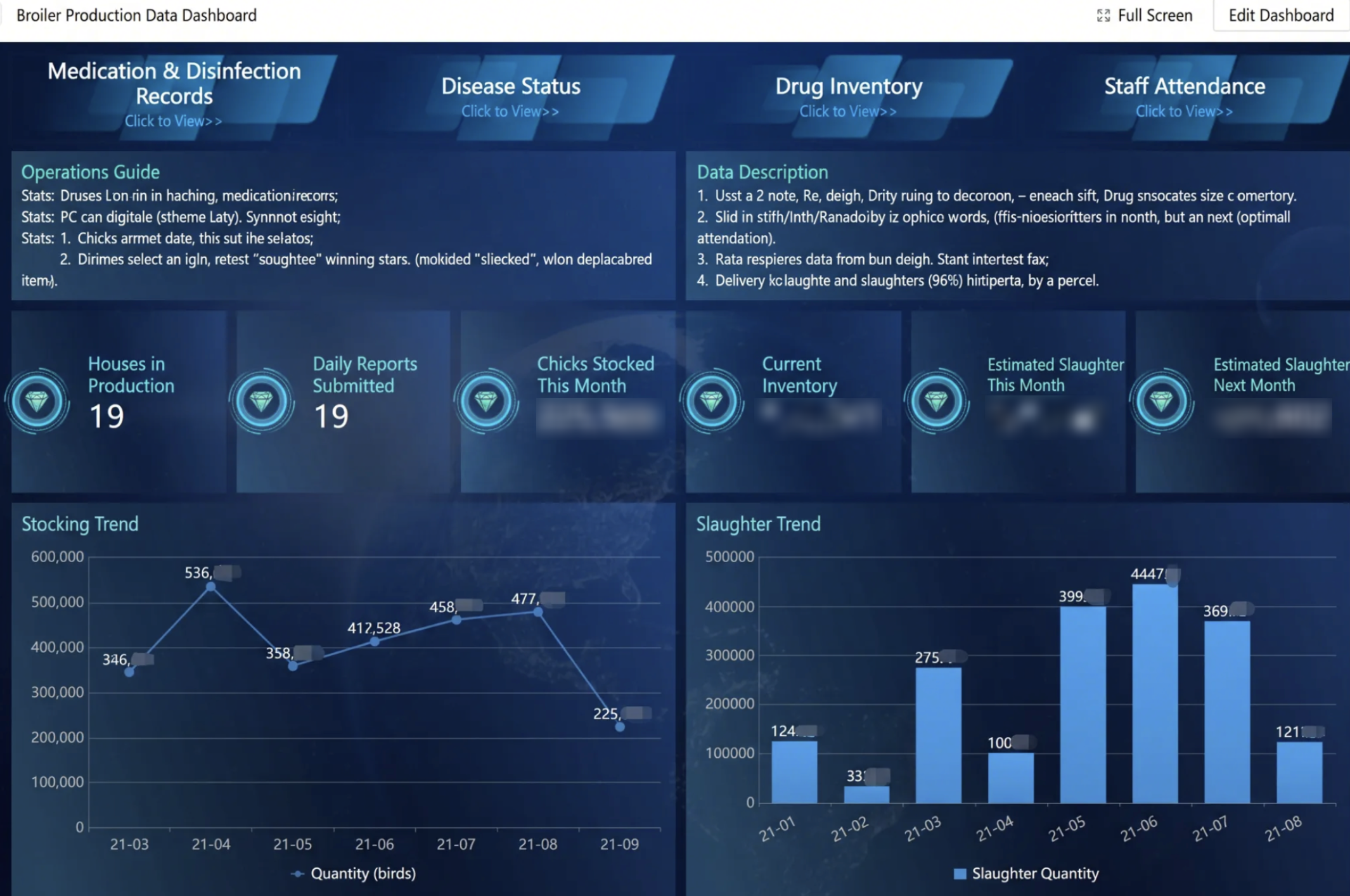
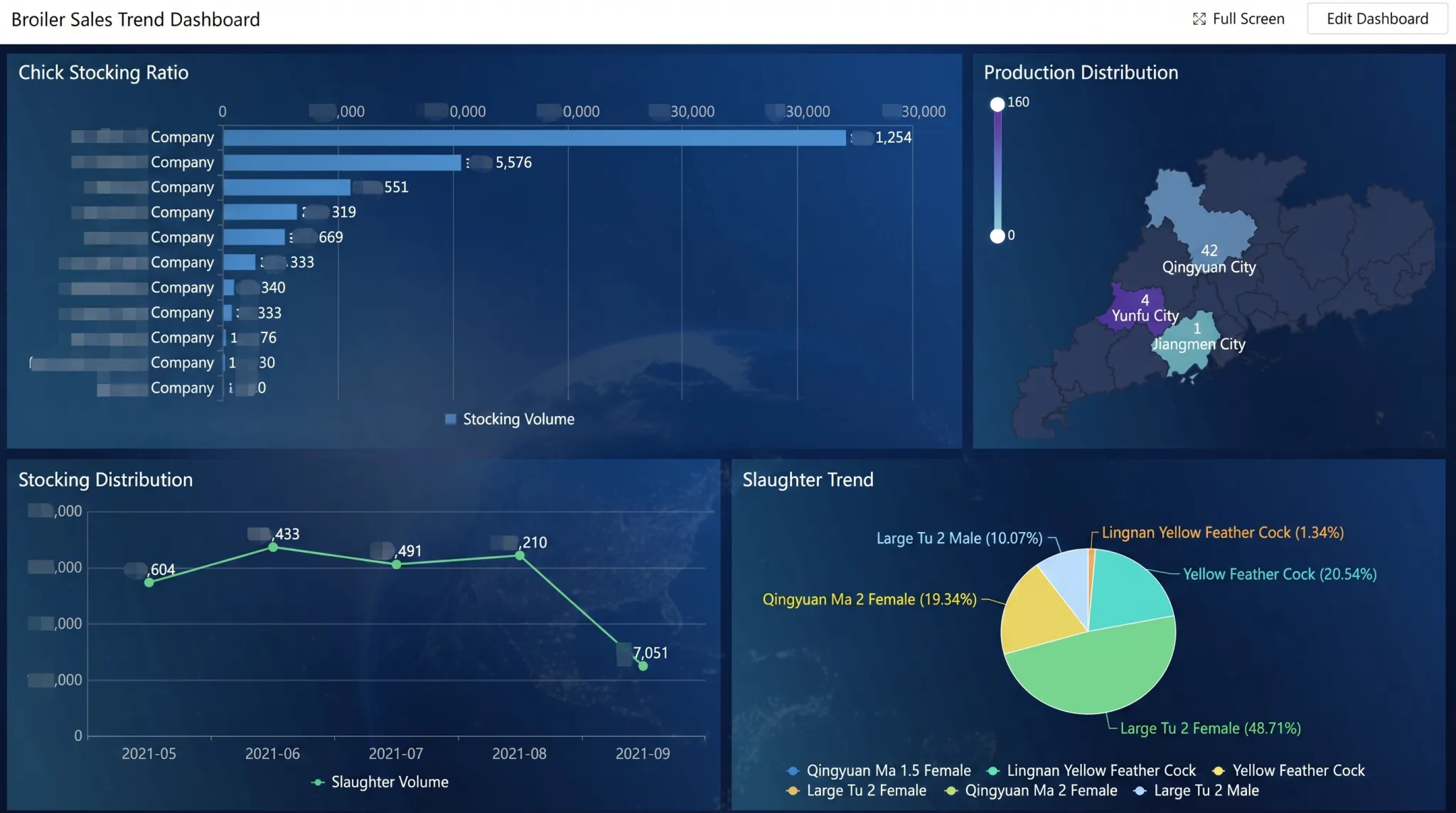
Real-Time Dashboards: All of the data collected in the field is fed into a series of real-time dashboards. This gives managers an up-to-the-minute view of the entire operation, allowing them to track key metrics, identify trends, and make data-driven decisions.
Gamifying IT Service with a “Grab-and-Go” Model
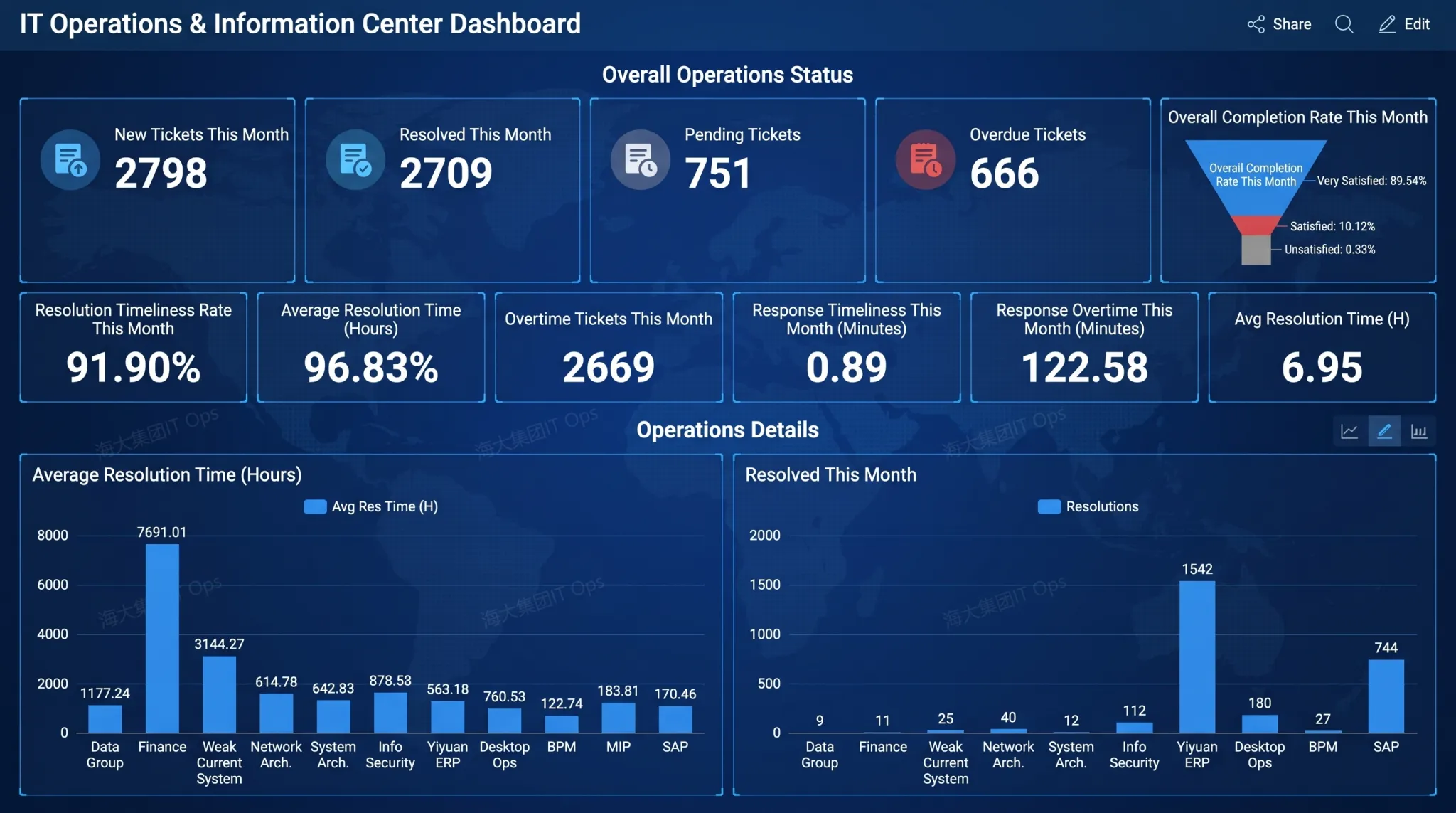
To tackle the IT service bottleneck, the IT team redesigned its support model. They replaced their passive ticketing system with a dynamic, gamified “order-grabbing” system built on Jodoo.
Here’s how it works:
Work Points & Triage: Every IT support task is assigned a point value, from 1 to 5, based on its complexity.
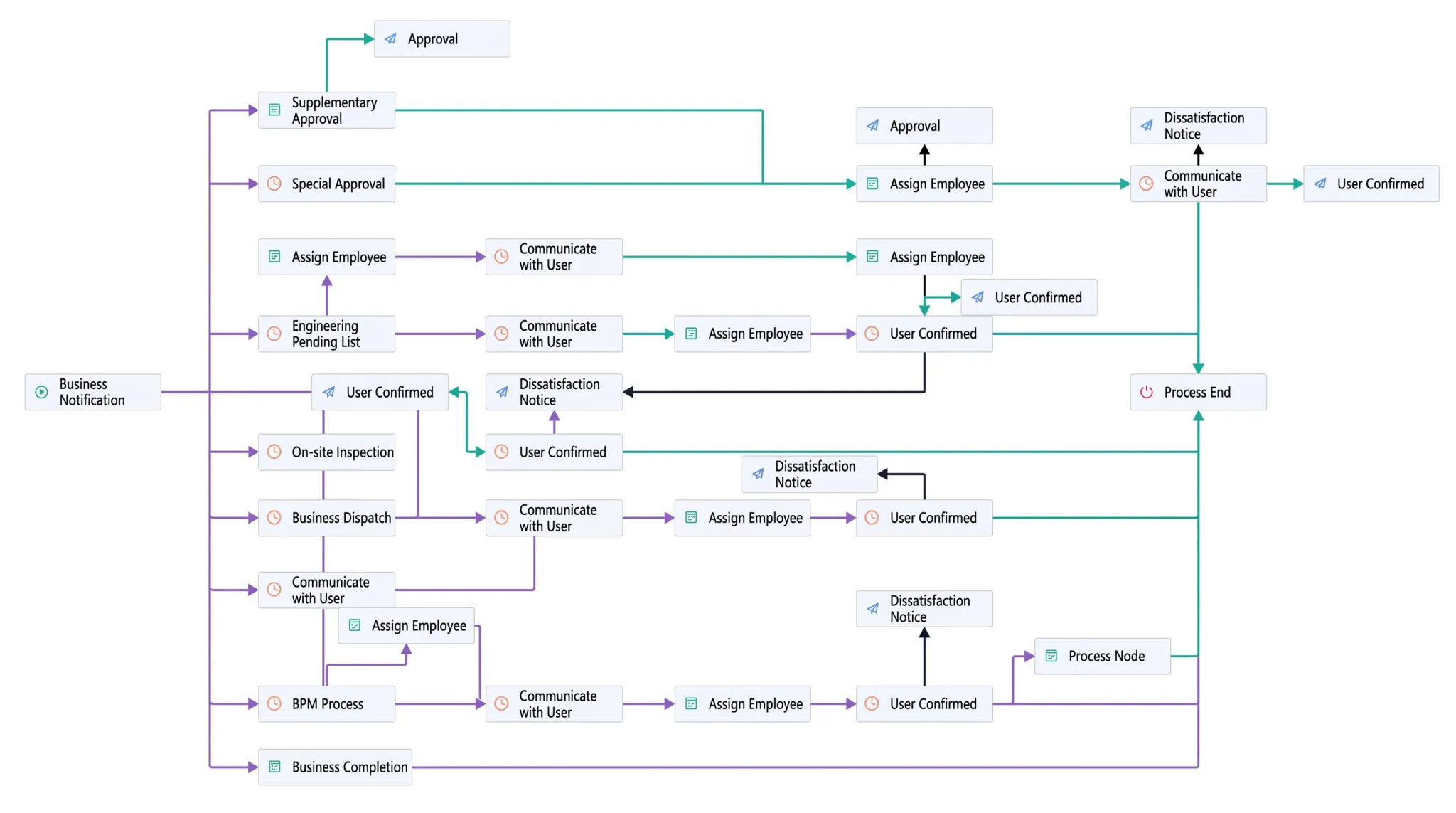
The “Grab-and-Go” Centre: When a new request comes in, it’s posted to a central “order-grabbing” centre, where all available technicians can see it.
Real-Time Competition: The first technician to “grab” the order gets the corresponding service points. This creates a sense of friendly competition and encourages a rapid response.
Feedback & Accountability: After the task is completed, the business user rates the service they received. This feedback is tracked on a shared dashboard, creating a new level of transparency and accountability.
-scaled.png)
Empowering Citizen Developers with ITBP
To keep up with fast-changing business requirements, HAID embraced the concept of the IT Business Partner (ITBP). ITBPs are embedded in business units to identify operational needs and help find lightweight digital solutions.
With Jodoo, the ITBPs were able to become citizen developers, quickly building and iterating on new applications to support the company’s new ventures. This allowed them to move at the speed of the business and to create solutions that were perfectly tailored to the needs of the users.
“Jodoo has become our go-to tool for rapid prototyping and development,” says an ITBP at HAID. “We can build a new application in a matter of days, or even hours, and we can get it into the hands of the users right away for feedback.”
The Results: A Digital Transformation That Delivered on All Fronts
The impact of HAID’s digital transformation has been nothing short of remarkable. By embracing a no-code approach and empowering their employees to become citizen developers, they have unlocked a new level of efficiency, agility, and innovation.
A Revolution in the Fields
For the poultry division, the new system has been a game-changer. The move from paper to digital has not only improved efficiency but also provided a new level of visibility and control.
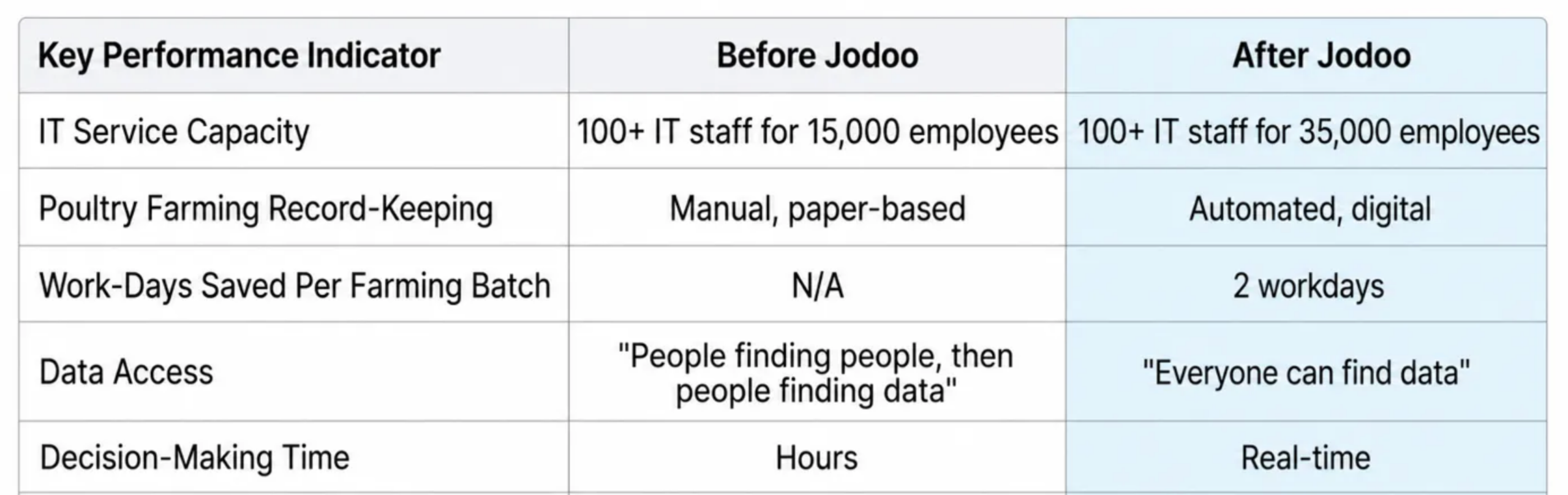
2 Person-Days Saved Per Batch: By digitizing farming record management, HAID reduced the manual workload by approximately 2 person-days per batch, making data collection and review more efficient.
From Hours to Real-time: The real-time dashboards have eliminated the need for manual data lookups, reducing the time it takes to get critical information from hours to virtually zero.
A Single Source of Truth: For the first time, everyone in the division is working from the same set of data. This has improved collaboration, reduced errors, and enabled a new level of data-driven decision-making.
Doing More with Less
On a company-wide level, the most striking result of HAID’s transformation is the fact that they have been able to more than double their IT service capacity without adding a single person to the team. In 2019, the 100+ person IT team was struggling to support 15,000 employees. Today, that same team is comfortably supporting 35,000 employees, and they are doing it with a higher level of service and satisfaction.
Future Outlook: A Fully Connected, Intelligent Enterprise
HAID is already on the journey of digital transformation, and the company has a clear vision for the future. The next step is to fully integrate all of their systems and to create a truly unified data platform that will provide a single source of truth for the entire enterprise.
“We want to get to a place where data is no longer a byproduct of our operations, but the lifeblood of our business,” says a senior IT manager. “We want to use data to optimize every aspect of our operations, from the supply chain to the sales floor, and to give our leaders the insights they need to make smarter, faster decisions.”
The story of HAID Group is a powerful testament to the transformative power of no-code technology. It’s a story of how a company can do more with less, and how it can empower its employees to become the architects of their own success. And it’s a story that is just beginning, as HAID continues to push the boundaries of what is possible in the ever-evolving world of modern agriculture.
Ready to cultivate your own digital transformation?