Browse by category

26%
Increase in Overall Business Efficiency
28
Hours Monthly Hours Saved Per Employee
$500,000+
Saved in IT Project Costs
CICO, an enterprise responsible for operating over 4,000 kilometers of expressways. With a workforce of over 12,000 people and annual revenues exceeding $2 billion, CICO is more than just a highway operator; it is a critical engine for regional growth and a national leader in transportation management.

CICO has been a pioneer in adopting smart technology, from achieving over 95% ETC (Electronic Toll Collection) coverage to piloting unmanned toll stations. However, as a mature enterprise, CICO faced a new and complex challenge: how to move from being a leader to a true innovator. The company had a wealth of data, but it was trapped in disconnected systems. Their processes were reliable, but they were slow and paper-based. They had a talented workforce, but they lacked the digital tools to unlock their full potential.
This is the story of how CICO embraced a new way of thinking about technology. Instead of launching another massive, top-down IT project, they empowered their own employees—the people who run the highways every day—to become “citizen developers.” Using a no-code platform, they built a new digital nervous system for the company, one application at a time. The results have been transformative, not just for the company’s bottom line, but for the very culture of the organization.
The Challenge: The Three Roadblocks to Digital Transformation
For a company that prides itself on efficiency, CICO knew that its internal processes were not keeping pace with its ambitions. The leadership team identified three major roadblocks that were holding the company back from reaching its full digital potential.
The Data Maze: Trapped in a Web of Disconnected Systems
Like many large organizations, CICO had accumulated a vast amount of data over the years. The problem was that this data was locked away in separate, disconnected systems. Information from toll collection, road maintenance, human resources, and finance all lived in their own digital silos. This created a data maze that was nearly impossible to navigate.

Employees wasted countless hours switching between different systems, manually searching for information, and then cutting and pasting it into spreadsheets. The process was slow, frustrating, and full of errors. It was impossible to get a single, unified view of the business. This data fragmentation made it difficult to spot trends, identify risks, and make informed, data-driven decisions. The company was data-rich but information-poor.
The Paper Jam: Drowning in Manual, Repetitive Workflows
Many of CICO’s most critical daily operations were still stuck in the past, relying on slow, paper-based processes. A perfect example was the daily toll collection report. Every day, at every toll station, employees had to meticulously fill out a mountain of paper forms. Much of the information was repetitive, but it had to be filled out by hand, every single time. A supervisor would then collect all the forms, manually check them for errors, and consolidate them into a summary report. The entire process took hours and was a major source of employee frustration and burnout.

This “paper jam” wasn’t just inefficient; it was risky. It created opportunities for errors, made it difficult to track performance in real-time, and delayed the flow of critical financial information to the head office. It was a clear example of how outdated processes were acting as a brake on the company’s performance.
The Talent Gap: The Struggle to Build and Maintain Custom Software
CICO’s leadership knew that technology was the answer, but they had been burned by traditional IT projects in the past. It was difficult to compete with private tech companies for top IT talent. Even when they did manage to build or buy a new software system, it often ended up as a “ghost system”—an expensive piece of software that nobody used.

As one manager explained, these custom-built systems often failed because the developers didn’t truly understand the needs of the business. The software was complicated, inflexible, and didn’t fit the way people actually worked. And once the system was built, there was no one on the inside with the skills to maintain or update it. CICO realized that they couldn’t just buy their way to digital transformation. They needed a new approach—one that would put the power of technology directly into the hands of their own people.
The Solution: Building a Digital Highway, One App at a Time
CICO’s breakthrough came when they shifted their mindset. Instead of trying to find a single, monolithic software to solve all their problems, they chose a flexible, no-code platform—Jodoo—and put it in the hands of their employees. They launched a “citizen developer” program, empowering the people who knew the business best to build the solutions they needed.
This strategy was a direct response to the talent and rigidity issues, allowing business experts to build applications that perfectly matched their operational reality.
This grassroots approach was a stunning success. Here’s how CICO’s own team solved their three biggest challenges.
Building a Bridge Over the Data Maze
To break down the data silos, CICO used Jodoo to build a unified data platform, creating a single source of truth for the entire organization. They connected all their different information systems, pulling data from every corner of the business into one central data warehouse. Today, the company has over 110 terabytes of data flowing through this central hub.
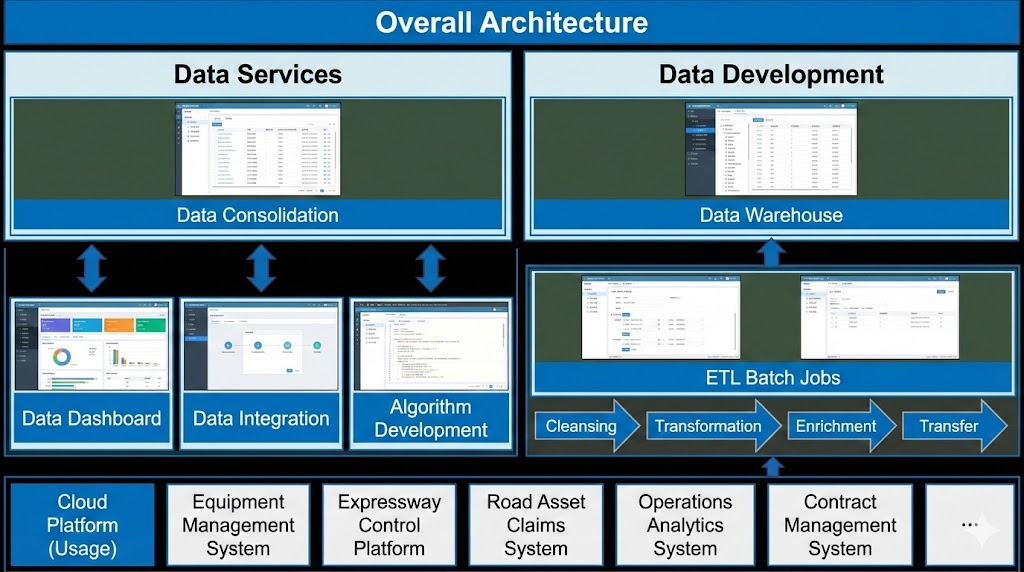
With all their data in one place, they could finally see the big picture. They built a series of “management cockpits”—custom dashboards for every level of the organization, from the local toll station to the executive boardroom. These dashboards provide a live, visual overview of key performance indicators, allowing managers to track everything from traffic flow and revenue to equipment maintenance and employee performance. They can now spot problems in real-time, predict future trends, and make decisions based on facts, not guesswork.
Clearing the Paper Jam with Digital Workflows
With the data foundation in place, the CICO team turned its attention to its slow, manual processes. They started with the most painful one: the daily toll report. Using Jodoo, they completely redesigned the workflow from the ground up.
Now, instead of filling out endless paper forms, an employee simply opens an app. The system automatically pulls in their employee information and the relevant data for their shift. The forms are pre-filled, and the employee only needs to verify the information and add any notes. With a single click, the report is submitted. The data is instantly available in the central system, and the supervisor’s summary report is generated automatically. What used to be a soul-crushing, multi-hour process of manual data entry is now a quick and easy task that takes just a few minutes.

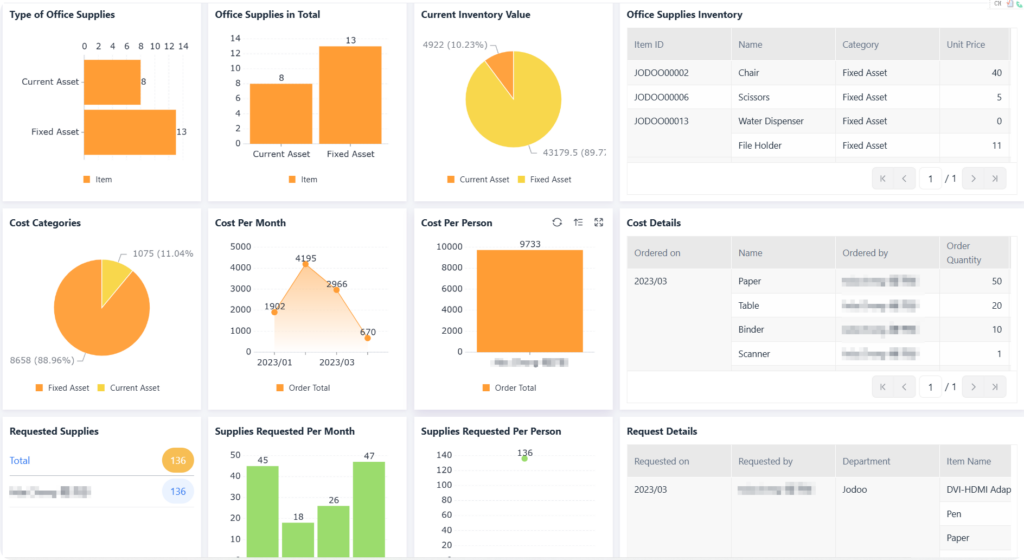
This was just the beginning. The team went on to digitize dozens of other workflows, from safety inspections and equipment maintenance to human resources and performance reviews. They used Jodoo’s intelligent automation tools to create 51 different types of smart alerts, ensuring that tasks are never missed and that important issues are escalated to the right person immediately.
Closing the Talent Gap by Empowering Citizen Developers
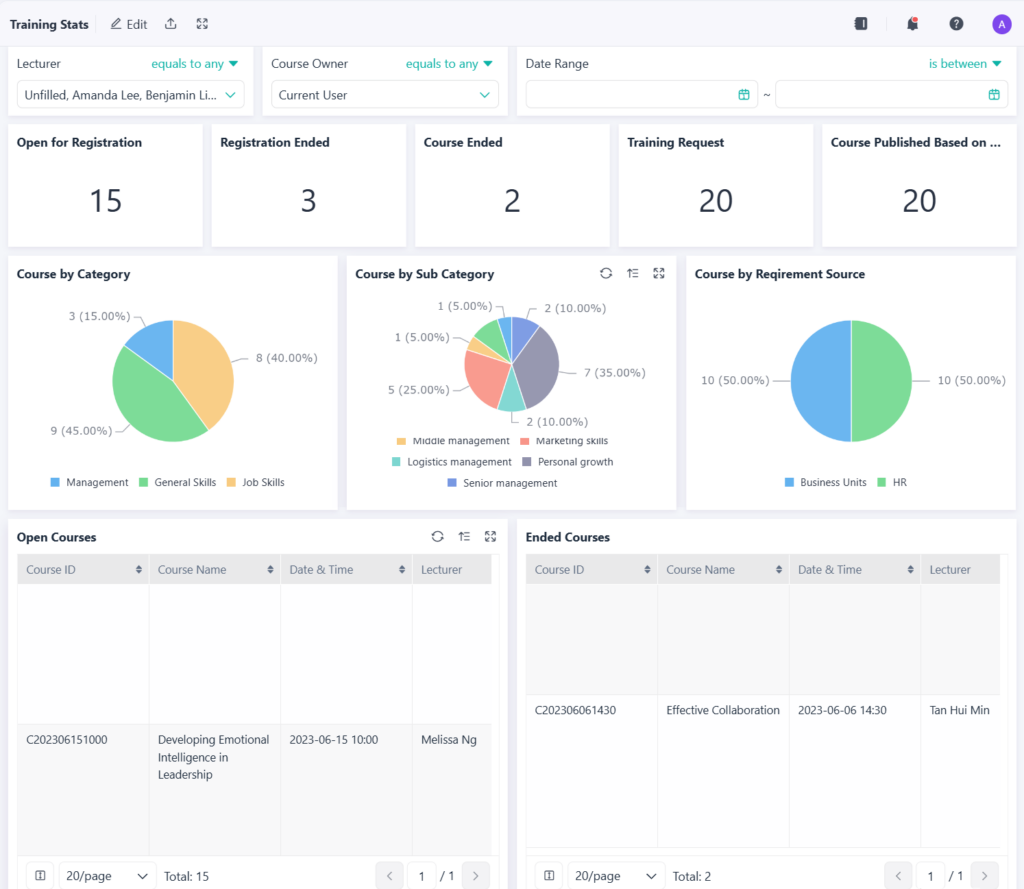
The most profound change at CICO was not just the technology itself, but the culture of innovation it created. The citizen developer program was a huge success. To encourage adoption and build skills, the company even launched an “Information Technology Skills Competition,” where teams from different departments competed to build the best applications.
This solved the “ghost system” problem for good. Because the applications were being built by the business users themselves, they were perfectly tailored to their needs. They were simple, intuitive, and they just worked. And because the Jodoo platform is so easy to use, the teams could easily update and improve their applications as their needs changed, without having to rely on a central IT department.
As one manager put it, “In the past, our custom-built systems failed because they didn’t fit our business reality. Now, the people who live the business reality every day are the ones building the systems. That’s why it works.”
The Results: A Clear Road to Higher Performance
The shift to a citizen-led, no-code development model has paid huge dividends for CICO. The company has not only streamlined its operations and cut costs, but it has also created a more agile, data-driven, and innovative culture. The numbers speak for themselves, painting a vivid picture of a company that is firing on all cylinders.
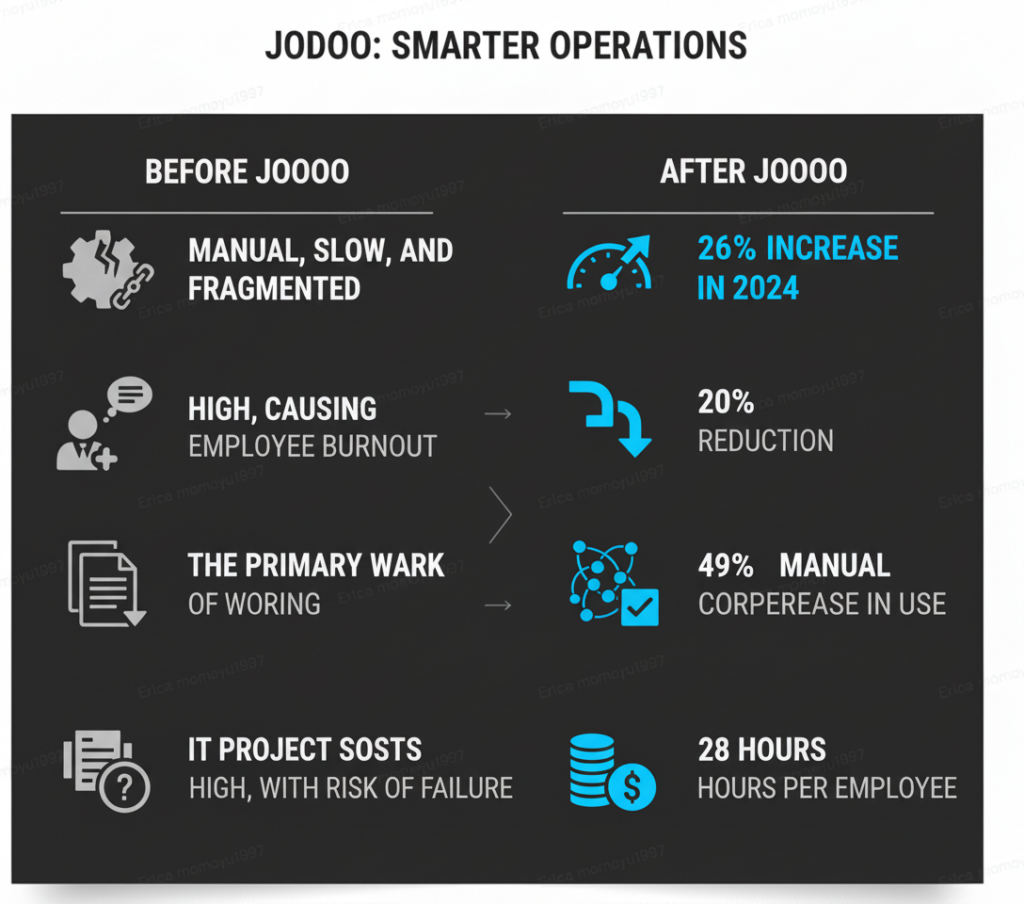
The 26% increase in overall business efficiency is a direct result of digitizing and automating dozens of core processes. The 20% reduction in repetitive work and the 49% drop in the use of manual paper ledgers have freed up employees to focus on more valuable, strategic tasks. This has led to a direct saving of 28 hours of work per employee, per month—time that is now being reinvested into improving customer service and driving innovation.
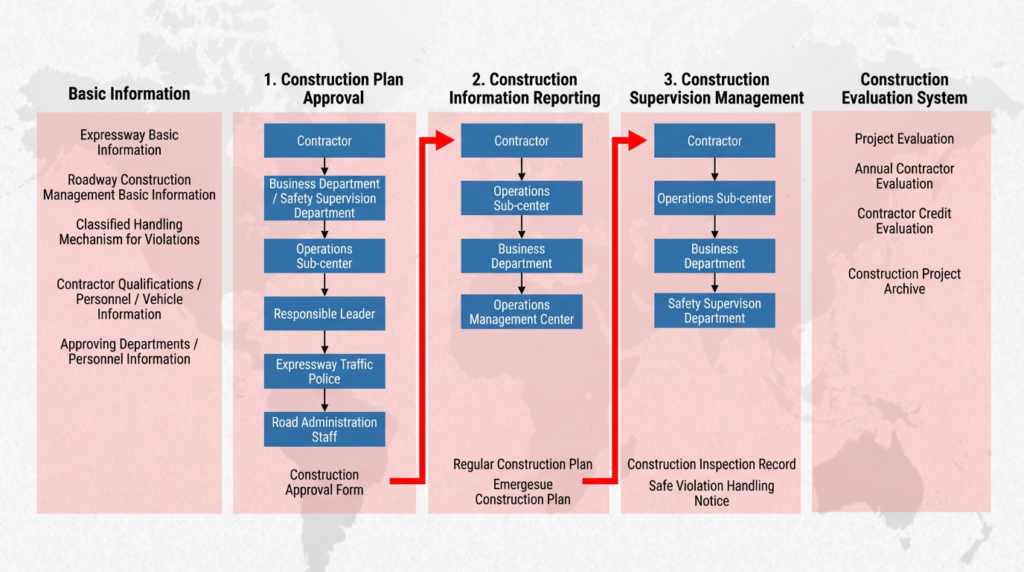
By empowering their own teams to build solutions, CICO has also achieved significant financial savings. They estimate that they have saved over $500,000 in software development and maintenance costs that would have been spent on traditional, custom-built systems. More importantly, they have eliminated the risk of building expensive “ghost systems” that fail to deliver value.
Beyond the numbers, the true impact can be seen in the way people work. The company is more connected, more collaborative, and more responsive. Data is no longer a source of frustration; it is a source of insight and a catalyst for action.
Future Outlook: The Road Ahead is Digital
For CICO, this is just the first mile of a long and exciting digital journey. The success of their citizen developer program has created a powerful momentum for change throughout the organization. The company’s vision is to build on this foundation, creating a fully integrated, data-driven ecosystem that touches every aspect of their business.
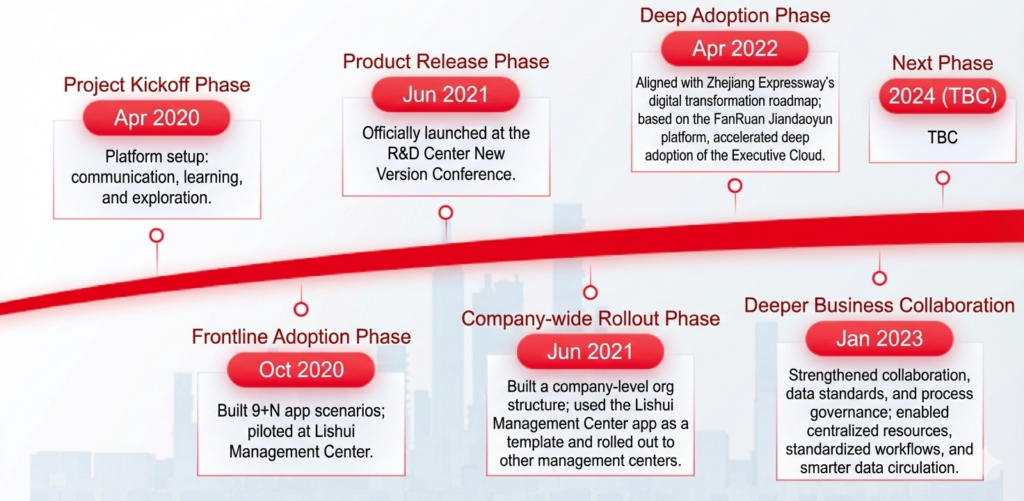
The transformation was driven by a clear, phased strategy:
Phase 1: Cultivating Digital Talent
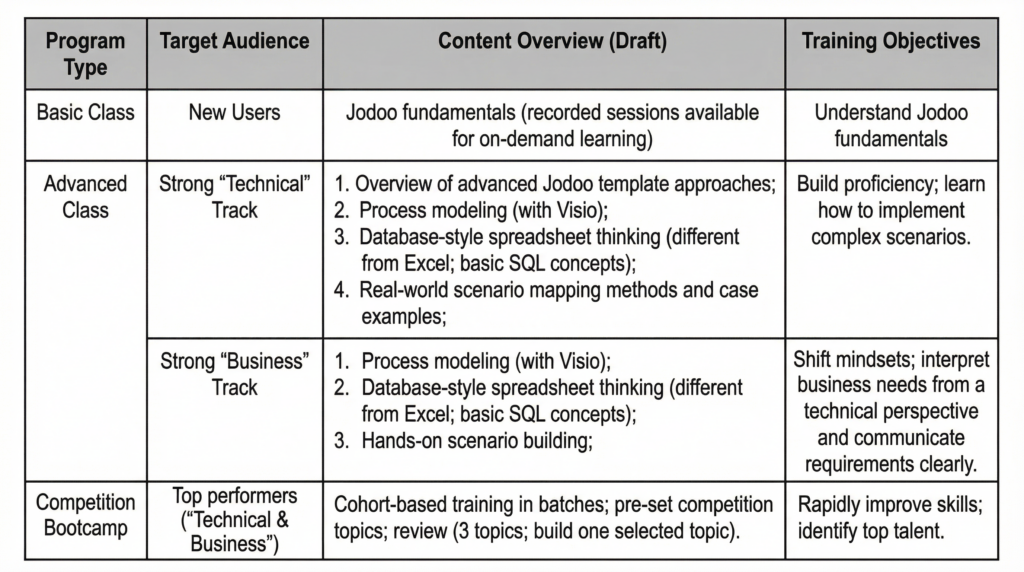
Recognizing that digitalization is impossible without talent, CICO focused on building an internal “A-Team” of Jodoo experts. The goal was to cultivate a batch of digital pioneers within one year—a mix of technical and business personnel—across the entire group.
- All-Staff Development: The company shifted to an “All-Staff Development” model, where the task of building applications was distributed across various personnel levels.
- Incentivized Learning: To accelerate this, CICO hosted Informatization Skills Classes and Competitions. Employees were tasked with building practical applications, such as Member Task Allocation, to solve real business problems, fostering a culture of practical, hands-on learning.
Phase 2: Establishing a Scientific Evaluation System
To address management’s skepticism, CICO sought to establish a scientific system for evaluating the value of its new digital applications.
- The Benchmark Comparison Model: CICO adopted a “Benchmark Comparison Method.” All branches could be compared and scored against a proven benchmark. This provided a simple, scientifically defensible model to justify the platform’s value to leadership.
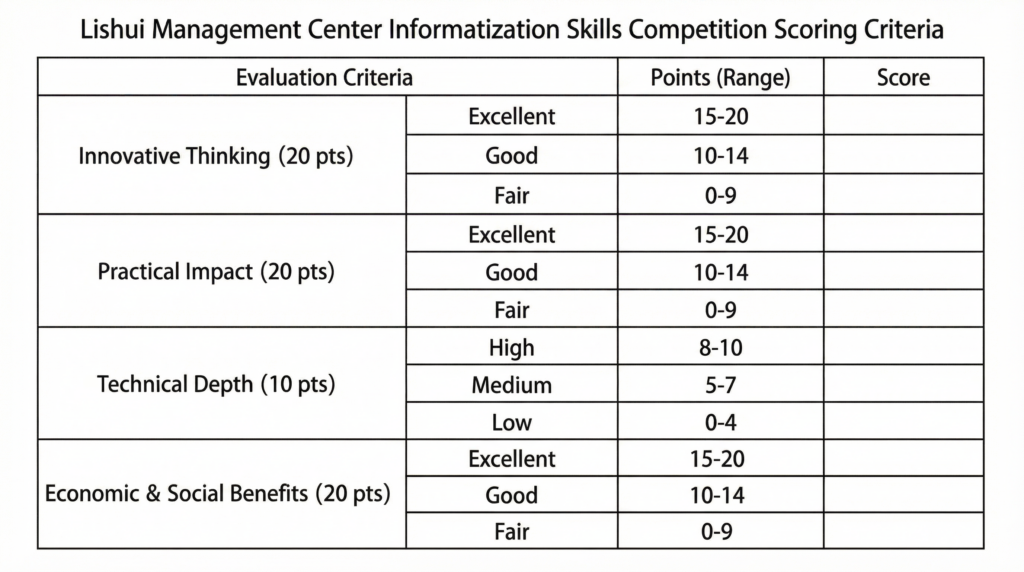
- Data-Driven Governance: The company established a comprehensive framework, which included a cloud platform and a data center. This framework was designed to be a single, unified entry point for digital construction, administrative management, and operational control, ensuring all data flowed into a central repository for analysis.
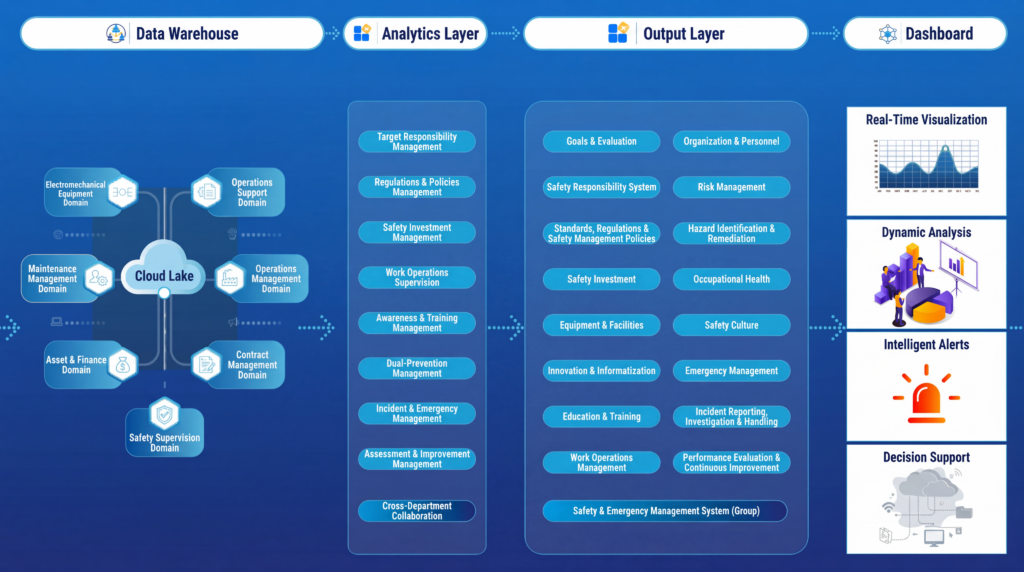
They are already exploring new ways to use their data, from predictive maintenance for their equipment to AI-powered traffic management systems. They are expanding their citizen developer program, with plans to train a new generation of “star students” who will lead the next wave of innovation. As one of the program leaders noted, “The development of information technology is inseparable from the cultivation of talent. We are thrilled to have found a tool that fits the current situation of our company so well.”
CICO’s story is a powerful testament to the idea that true digital transformation is not about technology; it’s about people. By trusting their employees and giving them the tools to solve their own problems, they have unlocked a new engine for growth and innovation. They have proven that even a large traditional public-sector operator can become a nimble and agile digital leader. CICO is not just operating the highways of today; they are building the digital highways of tomorrow.
Ready to empower your team and build your own road to digital success?