Browse by category

The old saying ‘adapt or die’ has gone from dramatic flair to a hard truth. With all the noise about AI dominating the news cycle, I’m watching leaders scramble, and it doesn’t matter if they are small business owners or top executives. Everyone is rushing to push Digital Transformation, banking on digital tools to save money and work smarter before their rivals figure it out.
But here’s the hard truth I often share with clients: you can’t transform a business if its internal engine is rusty. That engine is your Business Process Management (BPM). If your processes are broken, digitizing them just makes them broken faster.
In this article, I want to cut through the noise. We’ll look at why BPM is actually the secret source of digital success, the trends shaping the future, and why I believe tools like Jodoo are the smartest way to fix your workflow without needing a team of coders.
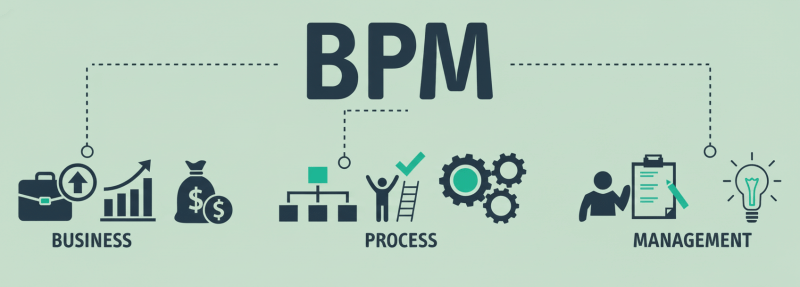
What is Business Process Management
Don’t look at Business Process Management (BPM) as a dusty rulebook. Think of it as your company’s operating system. It’s simply how you handle the daily grind, looking at the repetitive stuff that keeps the business running, and figuring out how to do it better. Unlike project management, which has a finish line, BPM never really ends. You’re constantly tuning the engine to cut out the junk and make things run smoother for your customers.
How does BPM work? First, we have to look at the “as-is” state, warts and all. We map the current flow to find friction points, like that approval step that inexplicably takes three days. Once we know what’s broken, we build the solution. We design a learner process, usually letting software handle the grunt work. You don’t just walk away. We watch the metrics. If the market moves, we adjust the process.
What are the Benefits of BPM? It can kill the busy work, so your team does actual work. Also, fewer errors mean less money burned fixing them. With less employee frustration, there is faster customer turnaround. In terms of transparency, you stop guessing the status of a file because the pipeline is visible. In the end, a robust process accommodates growth without breaking the system.
What is Digital Transformation
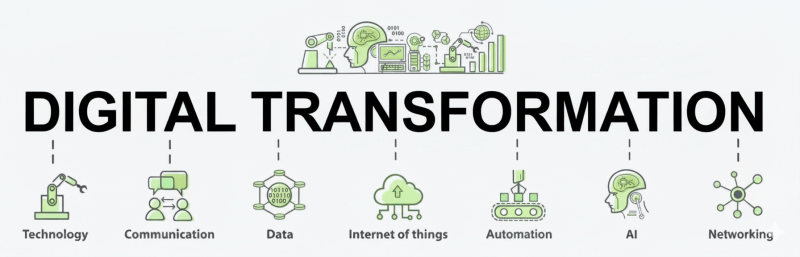
People throw “Digital Transformation” around a lot, but let’s get specific. It’s not just scanning forms or getting a Zoom account. It’s a total cultural overhaul. It’s about embedding tech into every corner of the business and changing how you deliver value. You have to stop protecting the status quo and start experimenting.
Why the urgency? Because your customers aren’t waiting around. They want Amazon speeds. If you’re still stuck on manual spreadsheets and email threads, you’re bleeding agility. You transform to unlock data trapped in cabinets and turn it into insight. Whether it’s AI for inventory or automating support, digital transformation is how you stay fast, smart, and relevant.
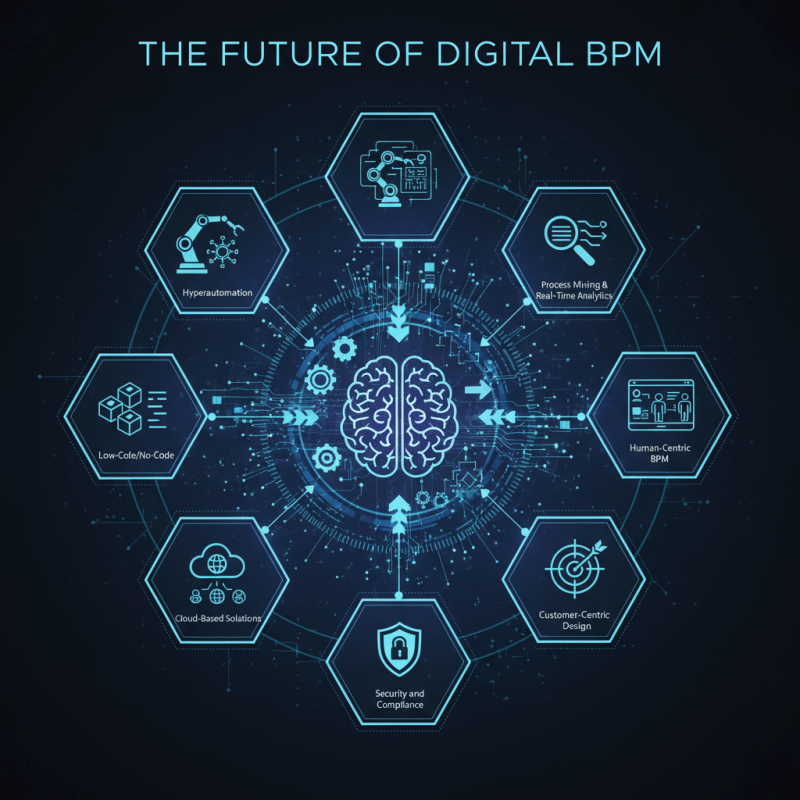
The Future of Digital BPM
BPM has evolved. It’s no longer about drawing flowcharts on a dusty whiteboard. Today’s “Digital BPM” is smart, automated, and predictive. Looking at the current landscape, here is where we are heading.
Security and Compliance: As we digitize, we expose more data. Modern BPM tools are baking in security protocols (like GDPR checks) directly into the workflow, so speed doesn’t compromise safety.
Hyperautomation: The big one. By mixing AI, ML, and RPA, we can automate end-to-end. The market is already at $46 billion and climbing, simply because businesses need to automate decisions, not just clicks.
Low-Code/No-Code (LCNC): This is democratizing development. Gartner predicts that by 2025, 70% of new enterprise apps will be built on low-code/no-code tech. This means your sales manager can build a CRM workflow without waiting six months for IT to help.
Cloud-Based Solutions: The shift is undeniable. With the Cloud BPM market set to hit $61 billion by 2030, the days of on-premise servers are numbered.It’s all about accessibility and remote work now.
Process Mining & Real-Time Analytics: You can’t fix invisible problems. Process mining is like an MRI for your business, using logs to find the bottlenecks. This area is growing at 40% annually because leaders are hungry for hard truths, not assumptions.
Human-Centric BPM: We’re finally realizing software needs to fit the human, not the other way around. There is a huge push on User Experience (UX), making tools intuitive so people actually enjoy using them.
Customer-Centric Design: Instead of asking “what’s easiest for accounting?”, we’re designing processes backwards from “what makes the customer smile?”
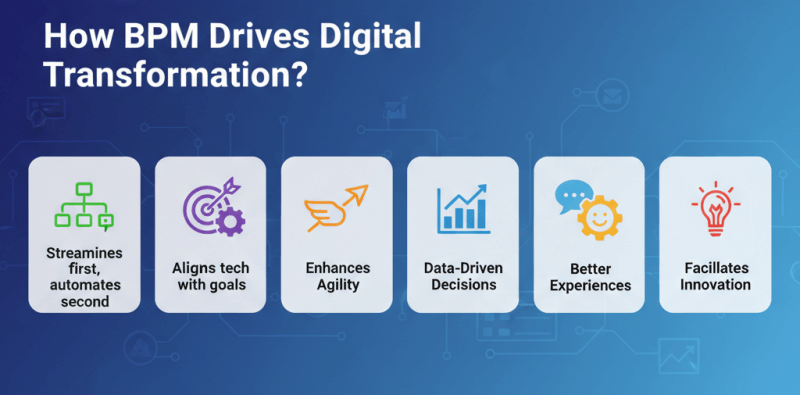
How BPM Drives Digital Transformation
Many companies make the mistake of buying technology first and thinking about process later. That’s just expensive chaos. BPM provides the roadmap that makes digital transformation actually work.
Here is how BPM acts as the driver:
Facilitates Innovation: When the boring “grunt work” is on autopilot, your team has the brainpower left to actually innovate.
Streamlines first, automates second: There is nothing worse than automating a bad process. BPM forces you to clean house before you bring in the robots.
Aligns tech with goals: It cures “shiny object syndrome.” BPM ensures every piece of software you buy serves a specific business goal.
Enhances Agility: In a digital world, five-year plans are useless. A solid BPM framework lets you pivot your workflows in days, not months.
Data-Driven Decisions: Digital transformation runs on data. BPM captures that data in real-time, letting you lead with facts rather than gut feelings.
Boosts Collaboration: It breaks down the walls between departments. Sales, IT, and HR stop fighting and start working in a unified flow.
Better Experiences: When internal friction disappears, employees are happier. Happy employees treat customers better. It’s a win-win.
How Jodoo Helps Your Business Succeed in Digital Transformation
If you are an SMB or a beginner, terms like “Hyperautomation” might sound expensive and intimidating. You need a tool that is powerful but doesn’t require a Computer Science degree to operate.
That’s why I recommend looking at the no-code platforms. Specifically, I’ve been impressed with Jodoo. It’s the best app builder that lets “regular people” build business software.
Introduction to Jodoo
Jodoo is a SaaS platform that essentially acts as a Lego set for your business operations. It combines online forms, custom apps, workflow automation, and analytical dashboards into one workspace. Whether you need a CRM, a Project Management tool, or an Order & Inventory system, you can build it here. Plus, it works seamlessly across Android, iOS, and the web.
What I love about Jodoo is that it respects your intelligence but doesn’t demand coding skills. You can create unlimited Apps, Forms, and Workflows even on the free plan. Speaking of the Free Version, it is surprisingly generous. It supports 5 seats for online collaboration, while most competitors force you to pay for that. You also get powerful Dashboards to visualize your data instantly.
If you need to scale, Jodoo is a beast. The paid versions support a massive 200,000 data volume, with a single field limit of 100,000. They also offer a Smart Assistant Pro as a paid feature that handles complex logic for you, meaning you don’t need to mess with API code to get sophisticated automation.
Why Jodoo beats the others in my book:
Complex Workflows: It handles complicated “if this, then that” automation logic better than many simple app builders.
Zero Code: Seriously, the barrier to entry is low.
Forever Free Tier: Unlike those “14-day free trial” traps, Jodoo has a legitimate permanent free version.
Huge Capacity: The data storage limits are significantly higher than most competitors.
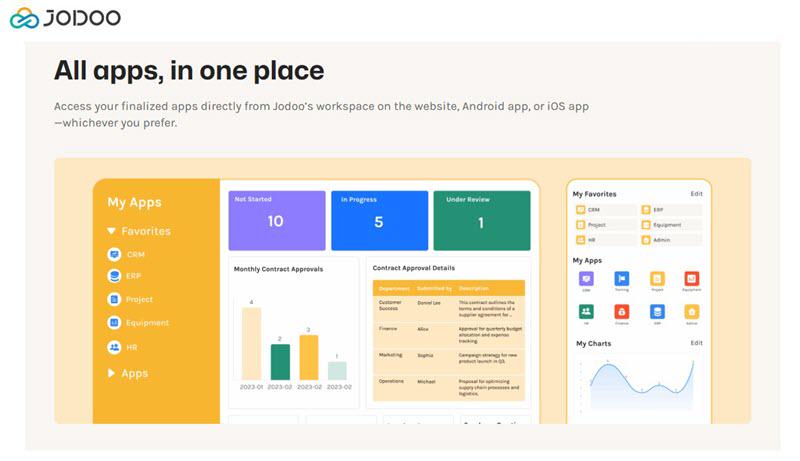
Benefits of Using Jodoo in Your Business
After testing it out, here are the specific wins I think you’ll get with Jodoo:
- Unbeatable Value: The free version is powerful, and the paid business version is only $12/month. That is cheaper than a business lunch and offers more features than expensive enterprise tools.
- Unlimited Apps: You don’t get charged “per app.” Build as many tools as you need—one for HR, one for Sales, one for Logistics.
- Visual Dashboards: Stop squinting at Excel rows. You can create unlimited dashboards to track KPIs and even export them as PDFs or images for your boss.
- Real Teamwork: With 5 free user seats, your core team can collaborate online in real-time.
- Task Automation: Set up workflows that automatically ping people when a task is due. No more chasing people down.
- Grab-and-Go Templates: Don’t know where to start? They have nearly 100 free templates. Install one, and you’re running in minutes.
- Bank-Level Security: They take security seriously with 2-Step Verification and dedicated data privacy pages.
- Custom Workspace: You can organize your digital desk exactly how you like it for quick access.
- Easy Sharing: You can generate public links to share data for online viewing with no download needed.
- Embed Anywhere: You can embed your forms and dashboards directly into your company website seamlessly.
To learn more about Jodoo, check here:
Jodoo App Builder Full Review: from Features to Pricing
Key Challenges in Digital Transformation of BPM
I won’t lie to you. This journey has speed bumps. Even with great tools like Jodoo, you need to be prepared for these challenges:
Security & Compliance: Moving data to the cloud means you must be vigilant about cybersecurity and laws like GDPR.
Resistance to Change: This is always the boss level. People love their comfort zones. You have to sell them on why this helps them, or they’ll fight you.
Lack of Strategy: Don’t just buy a tool and hope for the best. Without a clear plan, you’re just digitizing confusion.
Skill Gaps: While No-Code helps, your team still needs to adopt a digital mindset. There is a learning curve.
Legacy Systems: Trying to get modern tools to talk to ancient software is a headache. Integration is usually tougher than you expect.
Infrastructure Issues: If your internet is slow or your hardware is ancient, cloud tools won’t save you.
Final Thoughts
Digital Transformation is never “done”. It’s a state of constant improvement. Getting BPM right means you are building a business resilient enough to thrive in the long run.
If you want to start without hiring a massive IT team, I genuinely recommend Jodoo. It manages to be beginner-friendly while still having the power you need to scale. Ready to fix your processes? Jodoo has a 15-day free trial. Go test drive it, build something, and see how much efficiency you can unlock.