This 2026 guide is for procurement, operations, finance, and supplier management teams that need a clearer way to evaluate vendor risk before onboarding, renewal, or major purchasing decisions.
Supplier problems rarely begin with a major failure. In most cases, risk builds gradually through missed documents, inconsistent reviews, weak follow-up, or poor visibility into vendor performance.
That is why supplier risk assessment matters. A structured process helps teams identify issues before they lead to delays, compliance gaps, quality problems, or financial exposure.
This guide explains what supplier risk assessment is, which risks matter most, how to evaluate vendors step by step, and how procurement teams can create a more repeatable review process.
What is supplier risk assessment?
Supplier risk assessment is the process of evaluating a vendor before or during the business relationship to identify issues that could affect delivery, quality, compliance, cost, or operational continuity.
The goal is not to eliminate all risk. The goal is to identify the most important risks early enough to make better sourcing, onboarding, approval, and renewal decisions.
A strong supplier risk assessment process helps teams answer practical questions such as:
- Can this vendor deliver consistently?
- Are there compliance or documentation gaps?
- Is the supplier financially or operationally stable?
- What happens if this supplier fails or delays delivery?
- How much exposure does the business have if something goes wrong?
Why supplier risk assessment matters
Many teams assess suppliers informally. They rely on past experience, scattered notes, or assumptions based on price and availability. That may work in the short term, but it creates blind spots over time.
Without a consistent risk assessment process, procurement teams often run into the same problems:
- Vendors are approved without enough documentation
- Supplier performance issues are discovered too late
- High-risk vendors are treated the same as low-risk vendors
- Reviews are difficult to compare across suppliers
- Renewal or sourcing decisions depend too heavily on memory
A structured process makes supplier decisions easier to defend and easier to improve.
If your team needs a more consistent way to document supplier reviews, this supplier evaluation form is one practical reference.
What types of vendor risk should teams assess?
Supplier risk is not one thing. It usually includes several categories, and the right mix depends on your industry, spend profile, and supplier criticality.
Most teams should consider at least the following:
1. Operational risk
This covers the supplier’s ability to deliver products or services reliably. Common signs of operational risk include missed deadlines, low capacity, poor communication, or inconsistent service quality.
2. Financial risk
A financially unstable supplier may struggle to fulfill commitments, maintain service levels, or continue operating during market pressure.
3. Compliance risk
This includes missing certifications, regulatory exposure, weak data handling, labor issues, or policy non-compliance.
4. Quality risk
Quality risk appears when a supplier cannot consistently meet specifications, service expectations, or documentation standards.
5. Concentration risk
If one vendor handles too much of a critical category, the business may be exposed even if that vendor performs well today.
6. Reputation risk
A supplier’s legal issues, ethical failures, or public controversies can affect the buying organization as well.
Step 1: Define the supplier review scope
Before scoring risk, teams should decide what kind of supplier is being reviewed and why the review is happening.
That context matters because not every supplier should be assessed in the same way. A low-spend office supplier usually does not need the same review depth as a strategic manufacturing vendor or a data-sensitive software partner.
Start by clarifying:
- What category does the supplier support
- Whether the supplier is new or existing
- How critical the supplier is to operations
- What level of spend is involved
- Whether the relationship affects compliance, safety, or customer delivery
This first step helps set the right review threshold instead of treating all vendors the same.
Step 2: gather the right supplier information
A risk review is only as useful as the information behind it.
Most supplier assessments should include a combination of:
- business registration details
- tax and banking information
- insurance or compliance documents
- service or product scope
- past performance information
- references, audits, or certifications
- internal notes from procurement, operations, or finance
If this information is collected inconsistently, reviews become difficult to compare. That is why many teams separate supplier onboarding from supplier evaluation, but make sure the two processes still connect.
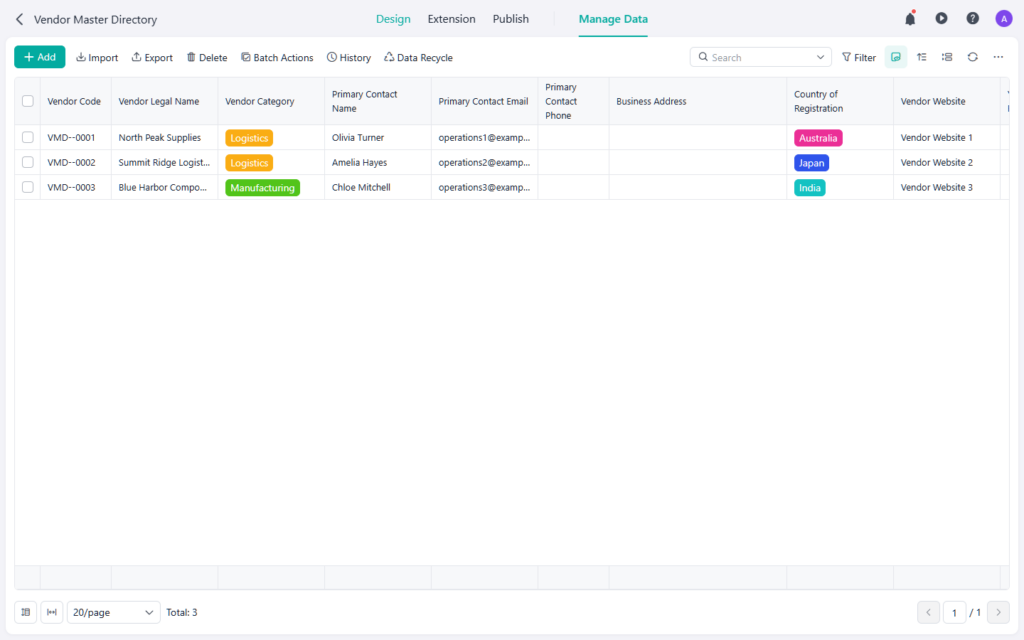
Supplier risk reviews are more reliable when key business, compliance, and document data is stored in one structured record.
If your team still collects supplier records in email threads or shared folders, a structured vendor onboarding form can make risk reviews easier to support.
Step 3: define the evaluation criteria
Once the core supplier data is available, teams need a consistent set of criteria for evaluating risk.
Common criteria include:
- delivery reliability
- quality consistency
- documentation completeness
- regulatory or policy compliance
- responsiveness
- financial stability
- issue resolution history
The important thing is not to create a huge scoring system. The important thing is to define criteria clearly enough that different reviewers can apply them consistently.
For example, if one reviewer interprets “high risk” as a missing insurance certificate and another uses it only for major financial instability, the scoring system quickly becomes unreliable.
Step 4: score suppliers using a repeatable method
After the criteria are defined, each supplier should be reviewed using the same scoring logic.
A simple model often works best. Teams may use:
- low/medium/high risk labels
- 1-5 numeric ratings
- weighted category scores for more critical suppliers
What matters most is consistency, not complexity.
In most cases, teams should also record supporting notes so that a score is not just a number. If a supplier receives a weak rating for compliance or delivery, the reviewer should explain why.
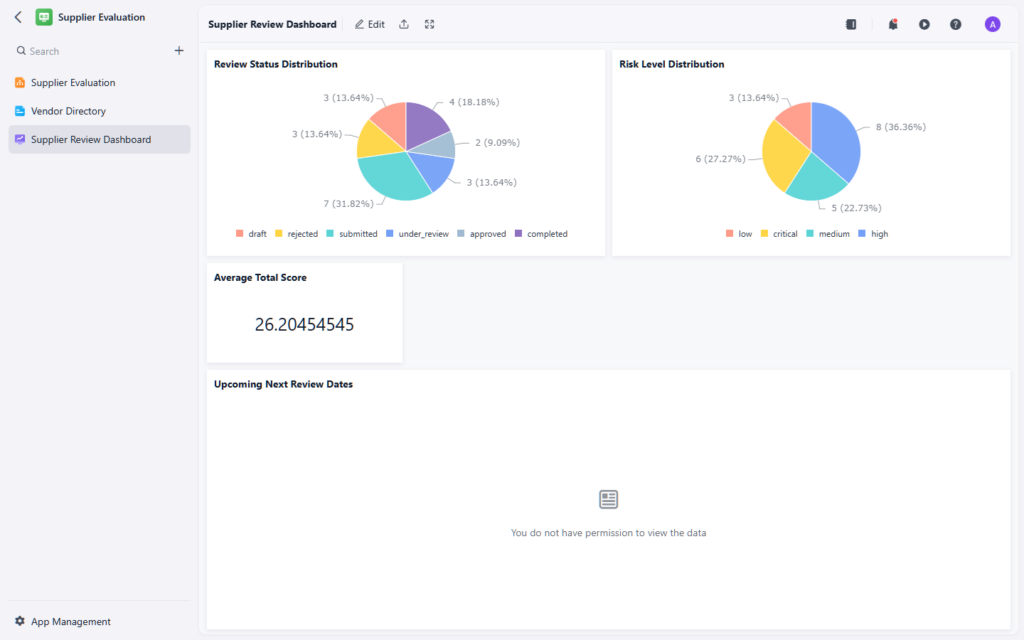
A supplier scorecard works best when ratings, evidence, and reviewer notes are captured together.
If you want a more structured way to compare vendors, this supplier evaluation form can help standardize scoring and documentation.
Step 5: decide what action each risk level should trigger
A supplier risk score is only useful if it leads to a clear next step.
For example:
- Low-risk suppliers may move forward with standard onboarding
- Medium-risk suppliers may require additional documents or conditional approval
- High-risk suppliers may require management review, corrective action, or rejection
This step is often where supplier assessments become more than a static report. A practical risk process should connect assessment outcomes to procurement decisions.
If approval routing is part of your process, a defined purchase order approval workflow can help ensure that higher-risk purchases receive the right level of review.
Step 6: Review supplier risk over time
Supplier risk assessment should not be treated as a one-time onboarding task.
Vendor risk changes over time. A supplier that looked strong during selection may later show delivery issues, documentation gaps, or service decline. A low-risk supplier may become a high-dependency supplier as spend concentration grows.
That is why strong procurement teams usually review suppliers at defined intervals or trigger reassessment when something changes, such as:
- major spending increases
- repeated delivery issues
- quality failures
- expired compliance documents
- contract renewal
- category expansion
A repeatable review cycle helps risk management stay useful instead of becoming stale paperwork.
Common supplier risk assessment mistakes
Even when teams already assess suppliers, a few recurring mistakes can weaken the process:
- reviewing only price and ignoring operational risk
- using inconsistent scoring criteria across reviewers
- approving suppliers before the required documents are complete
- treating onboarding and evaluation as unrelated workflows
- never updating assessments after the initial review
These issues usually do not come from a lack of effort. They usually come from weak process structure and inconsistent handoffs between procurement, finance, operations, and compliance teams.
How supplier risk assessment supports better procurement decisions
A stronger supplier risk process improves more than vendor screening. It also supports better purchasing, approval, and renewal decisions.
When risk information is visible, procurement teams can:
- compare suppliers more consistently
- route higher-risk vendors for deeper review
- reduce onboarding delays caused by missing documents
- make renewal decisions with better evidence
- identify where supplier issues are likely to affect delivery or spend control
That makes procurement more proactive and less dependent on reactive cleanup.
Final takeaway
Supplier risk assessment is not just a compliance task. It is a practical way to improve supplier decisions before problems become expensive.
When teams define consistent criteria, collect the right information, and connect risk levels to real actions, vendor reviews become easier to compare and easier to use.
If your team wants a structured way to capture supplier scores, evidence, and review notes, Jodoo’s supplier evaluation form provides a practical starting point.