Browse by category

Introduction: Why Purchase Order Management Matters in Manufacturing
In manufacturing, a delayed or poorly controlled purchase order can stop production faster than most teams expect. Procurement delays and poor data quality are not small administrative issues: they directly affect material availability, cash flow, and supplier performance. For plants running lean inventories, even one missing approval or duplicate order can trigger line interruptions, premium freight, or unplanned stock buildup.
A purchase order is more than a buying document. It is the control point that connects demand from production, stock signals from inventory, commercial terms from procurement, and budget accountability from finance. When the purchase order process is clear, teams can trace what was requested, who approved it, what the supplier confirmed, what was received, and what should be paid.
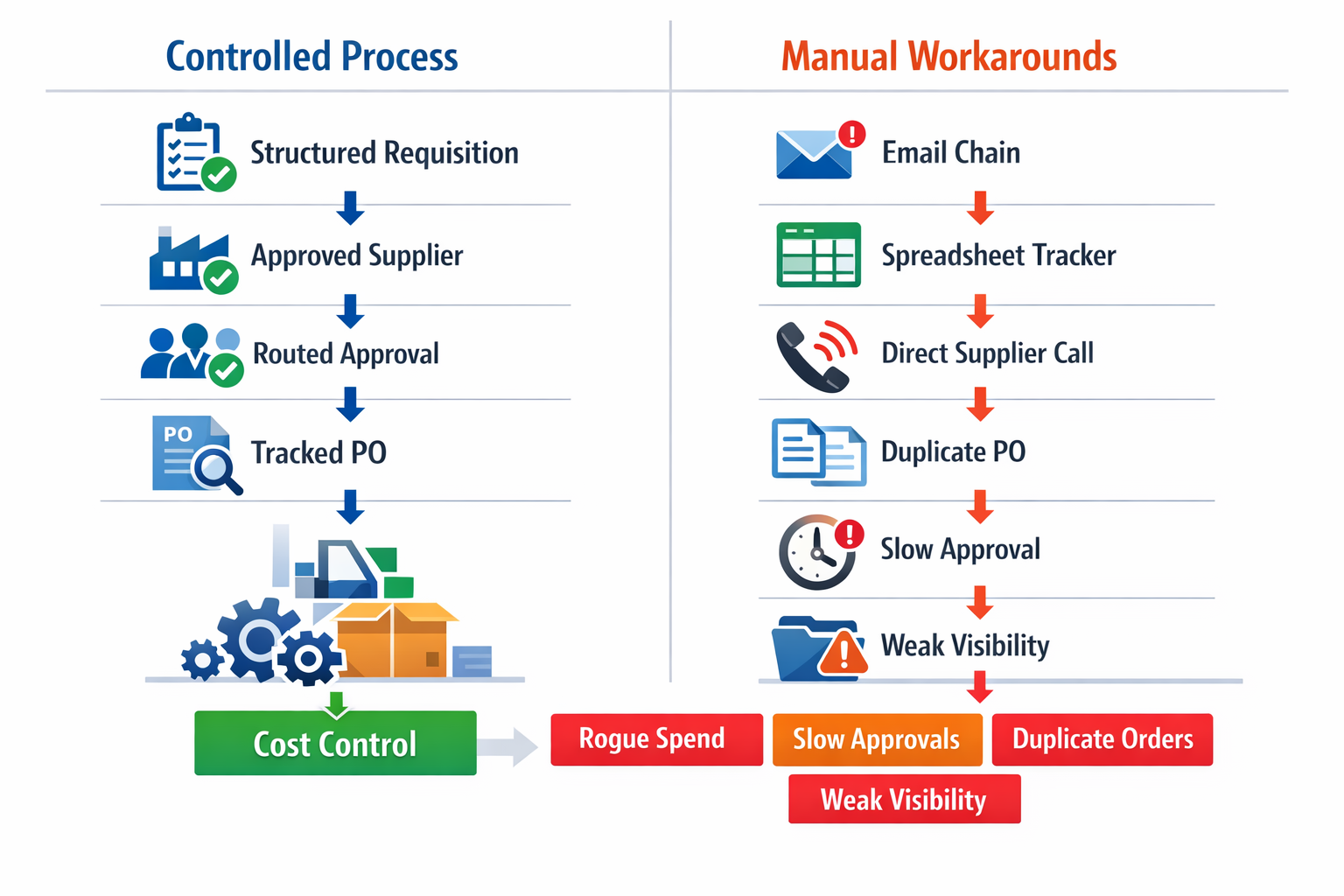
The problem is that many manufacturers still manage this flow through email chains, spreadsheets, and disconnected ERP workarounds. That creates three familiar risks: rogue spending outside approved suppliers or budgets, slow approvals that delay material release, and weak visibility across the procure-to-pay cycle. In the sections that follow, we will break down how the process works, where manual purchase order management fails, and what practical controls help procurement teams move faster without losing discipline.
How the Purchase Order Process Works from Requisition to Payment
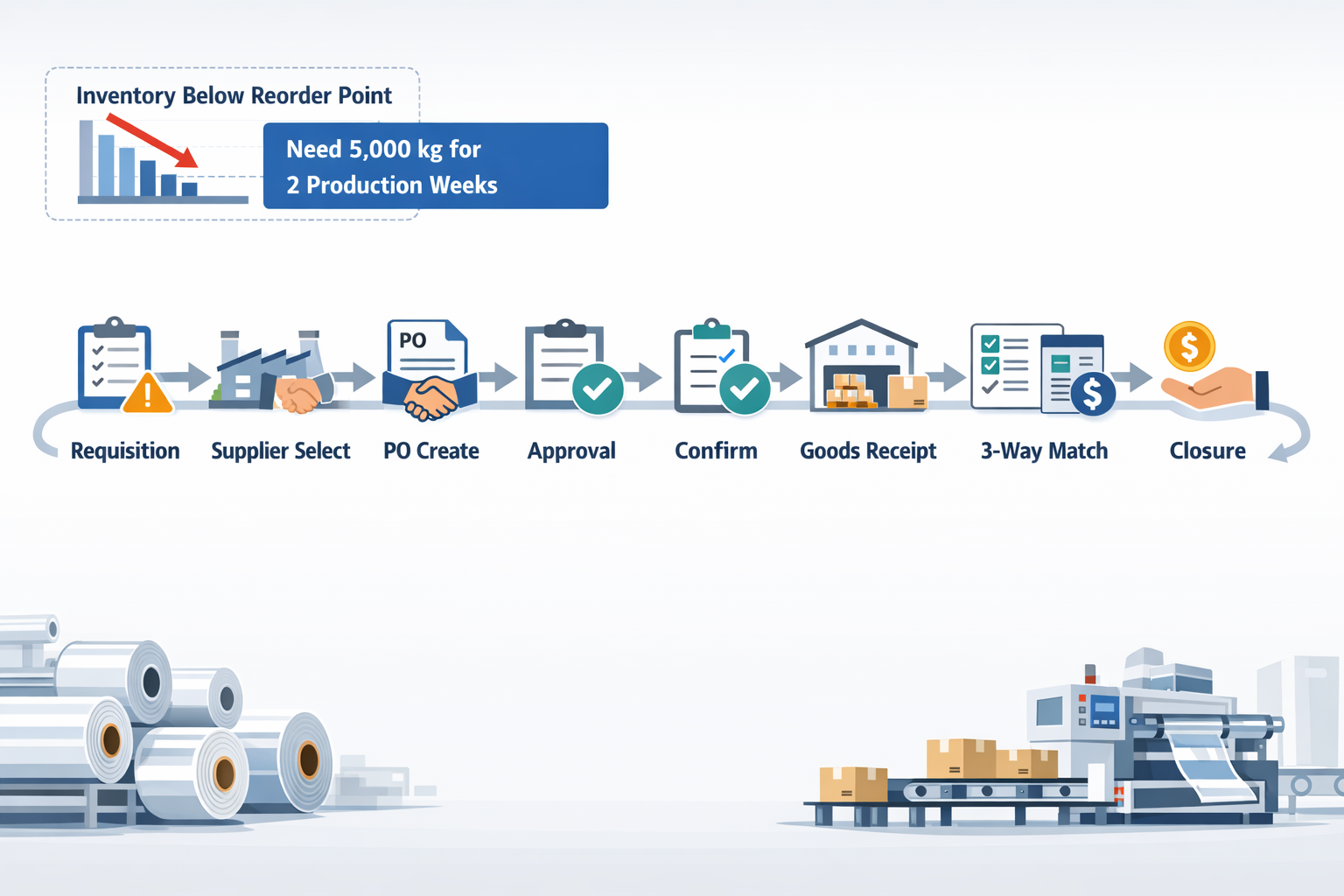
In manufacturing, the purchase order process works best when every step converts one operational signal into a controlled transaction. Consider a packaging plant that sees its laminated film inventory drop below the reorder point after a weekly MRP run. The buyer’s job is not just to place an order quickly, but to move that demand through a documented procure-to-pay flow that protects supply continuity, cost, and accountability. That sequence is the foundation of how to manage purchase orders efficiently.
The full flow typically runs in this order: purchase requisition, supplier selection, purchase order creation, approval, supplier confirmation, goods receipt, invoice matching, and closure. In our example, a planner identifies the need for 5,000 kg of laminated film for the next two production weeks, procurement converts that need into a formal request, and finance later pays only after quantity, price, and receipt records align. When manufacturers follow this sequence consistently, the purchase order becomes a live control record rather than a static document.
Requisition Starts with a Verified Demand Signal
The process begins when planning or production raises a purchase requisition based on a real requirement, not a verbal request. In the packaging plant, the planner attaches current stock, open sales orders, lead time, and required delivery date, showing that existing inventory will cover only nine days of demand. A strong requisition gives procurement enough context to check urgency, quantity, and budget before any supplier is contacted.
Supplier Selection and Purchase Order Creation
Once the need is validated, the buyer selects a supplier using approved vendor rules, pricing history, lead time, and quality performance. For the laminated film order, the preferred supplier offers a 12-day lead time and contract pricing, while a backup supplier can deliver faster at a higher cost. Procurement chooses the preferred source, then creates the purchase order with item code, specification, quantity, unit price, payment terms, delivery location, and required date. At this stage, the PO must be complete enough for both supplier commitment and internal approval.
Approval and Supplier Confirmation
The purchase order then moves through review based on company policy, often by amount, material category, or plant. In our example, the film order exceeds the buyer’s authority, so it goes to the procurement manager and then to finance for budget confirmation. This is where automating the purchase order approval process becomes valuable.
Receiving, Invoice Matching, and Closure
When the material arrives, warehouse staff record the goods receipt against the PO and verify that the film matches the specified width, thickness, and quantity. The supplier invoice is then checked against three records: the PO, the receipt, and the invoice itself. If the PO shows 5,000 kg but only 4,800 kg are received, finance can hold payment until the variance is resolved. The transaction closes only after receipt, matching, and payment status are complete, creating a clean record for procurement, inventory, and finance.
Where Manual Purchase Order Management Breaks Down
Manual purchase order workflows often create small control gaps that compound across procurement, inventory, and finance until costs rise and accountability weakens. In manufacturing, that usually means buyers chasing approvals in email, planners working from outdated spreadsheet trackers, and accounts payable trying to reconcile incomplete records at month-end. If you want to manage purchase orders efficiently, the starting point is not speed alone, but process control.
Rogue Spending and Off-Contract Buying
The first breakdown happens when employees can buy outside approved channels. A maintenance supervisor with a line-down issue may call a local supplier directly, then ask procurement to “regularize” the order afterward. The part arrives quickly, but the plant loses price control, supplier compliance, and traceability on why the spend happened in the first place.
Controlled spend follows approved suppliers, negotiated terms, and defined authorization limits. Rogue spend bypasses those controls, often because the official process feels too slow or unclear to frontline teams. According to industry estimates, maverick spending can account for 10% to 20% of total indirect procurement spend in poorly controlled environments, eroding savings that procurement already negotiated.
Approval Delays Create Operational Risk
A second failure point is the approval chain itself. In many factories, a buyer creates a PO, exports it for review, emails a PDF to department heads, and waits for replies that may sit unread for hours or days. For urgent direct materials, that delay can disrupt production schedules far more than the administrative team expects.
Consider a packaging plant that needs resin additives before the next shift cycle. If the approval sits with a manager who is traveling, procurement may either wait and risk a stockout or push the order through informally and create a policy exception. Neither outcome is healthy, and both show why automating the purchase order approval process becomes a practical control issue, not just a convenience.
Duplicate Orders and Missing Documentation
Manual environments also struggle with document integrity. When PO requests are tracked across inboxes, shared drives, and spreadsheets, teams can easily raise the same request twice, especially when suppliers are contacted before the internal record is updated. Duplicate orders are common during demand spikes, engineering changes, or handovers between shifts.
Missing quotations, delivery acknowledgments, or receiving records create a second problem at the invoice stage. Finance then spends extra time on three-way matching, while procurement cannot prove whether a variance came from price, quantity, or process failure. That weakens both cost control and supplier dispute resolution.
Best Practices for Manufacturing Purchase Order Management
Standardize Requisition Data at the Source
If you want to manage purchase orders efficiently, start before the PO is created. A standardized requisition form should capture the fields procurement needs to make a fast, compliant decision: item or service description, part number, quantity, required date, cost center, plant, budget code, preferred supplier, and justification. This reduces clarification loops and makes downstream approval, receiving, and invoice matching more reliable.
Set Clear Supplier and Budget Controls
Good PO control depends on two linked rules: buy from approved suppliers where possible, and assign clear budget ownership before approvals begin. Approved supplier lists should be tied to category, plant, and risk level so buyers know when they can issue a routine order and when sourcing or quality review is required. Budget ownership should sit with the department actually consuming the spend, not only with procurement.
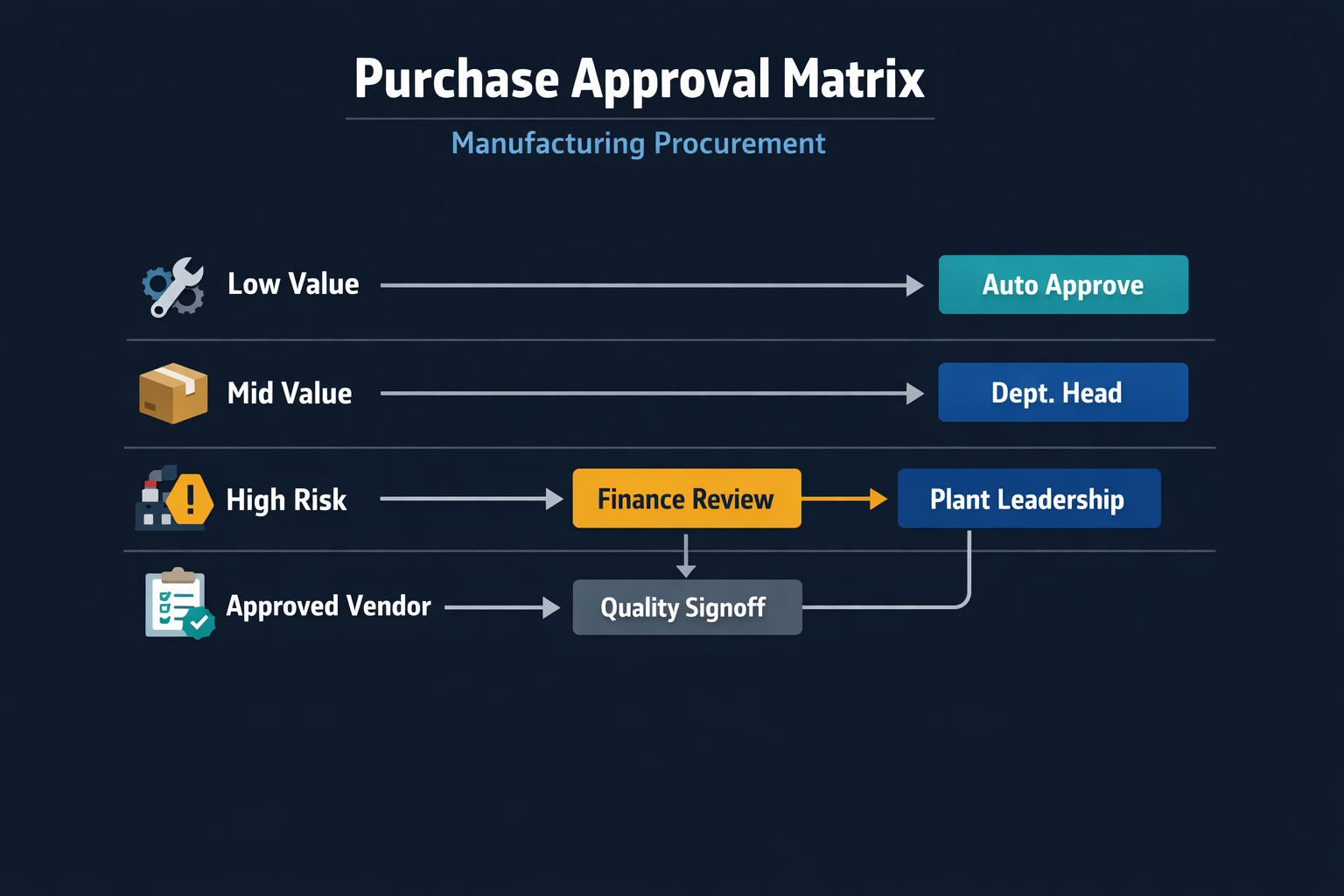
Build an Approval Matrix That Matches Spend Risk
Approval design should reflect value, category, and operational impact rather than forcing every request through the same chain. A practical matrix might auto-approve low-value MRO purchases within budget, require department head approval for mid-value indirect spend, and trigger finance or plant leadership review for high-value capex or non-contracted buys.
Enforce Three-Way Match and Exception Rules
A strong purchase order process does not end at approval. Procurement, receiving, and finance should follow the three-way match discipline by reconciling the PO, goods receipt, and supplier invoice before payment. Tolerances should be predefined, such as allowing a small unit price variance but escalating quantity overages or partial deliveries that affect production scheduling.
Track KPIs That Show Control and Speed
The best control framework is measurable. Track cycle time from requisition to approved PO, first-pass approval rate, percentage of spend on approved suppliers, match exception rate, and PO change frequency by plant or category. These metrics show whether policy is working in practice, not just on paper. They also help procurement leaders balance compliance with responsiveness, which is essential in manufacturing.
Automating the Purchase Order Approval Process with Jodoo
Digitize the Request at the Source
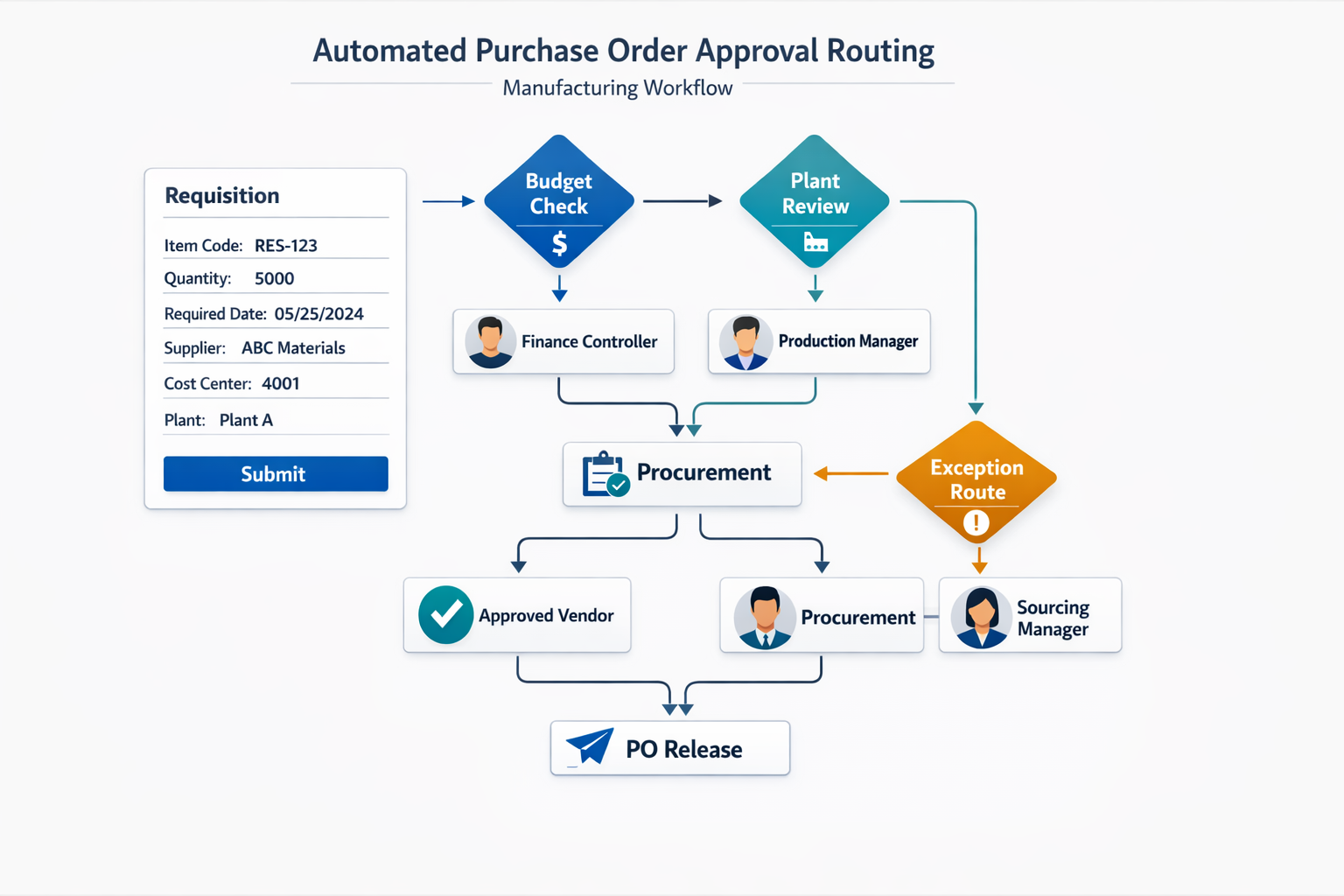
A practical way to manage purchase orders efficiently is to start before the PO exists. In Jodoo, a manufacturer can replace email requests and spreadsheet trackers with a standardized purchase requisition form that captures the fields procurement actually needs: item code, quantity, required date, supplier, cost center, plant, and supporting quotes or specifications. That creates clean input data for the approval workflow instead of forcing buyers to chase missing details later. For plants with frequent repeat buys, this also makes best practices for manufacturing procurement easier to enforce at the point of request.
Route Approvals Based on Policy, Not Inbox Habits
Jodoo workflows can route approvals by amount, department, plant, commodity category, or exception type, so a low-value MRO request does not follow the same path as a high-value direct material purchase. For example, the resin request might go first to the production manager, then to the plant finance controller if it exceeds a budget threshold, and finally to procurement for PO issuance. If the request uses a non-approved supplier or exceeds contract pricing, the workflow can automatically escalate it to a sourcing manager instead of letting it move forward by default.
Keep Every Decision Visible and Auditable
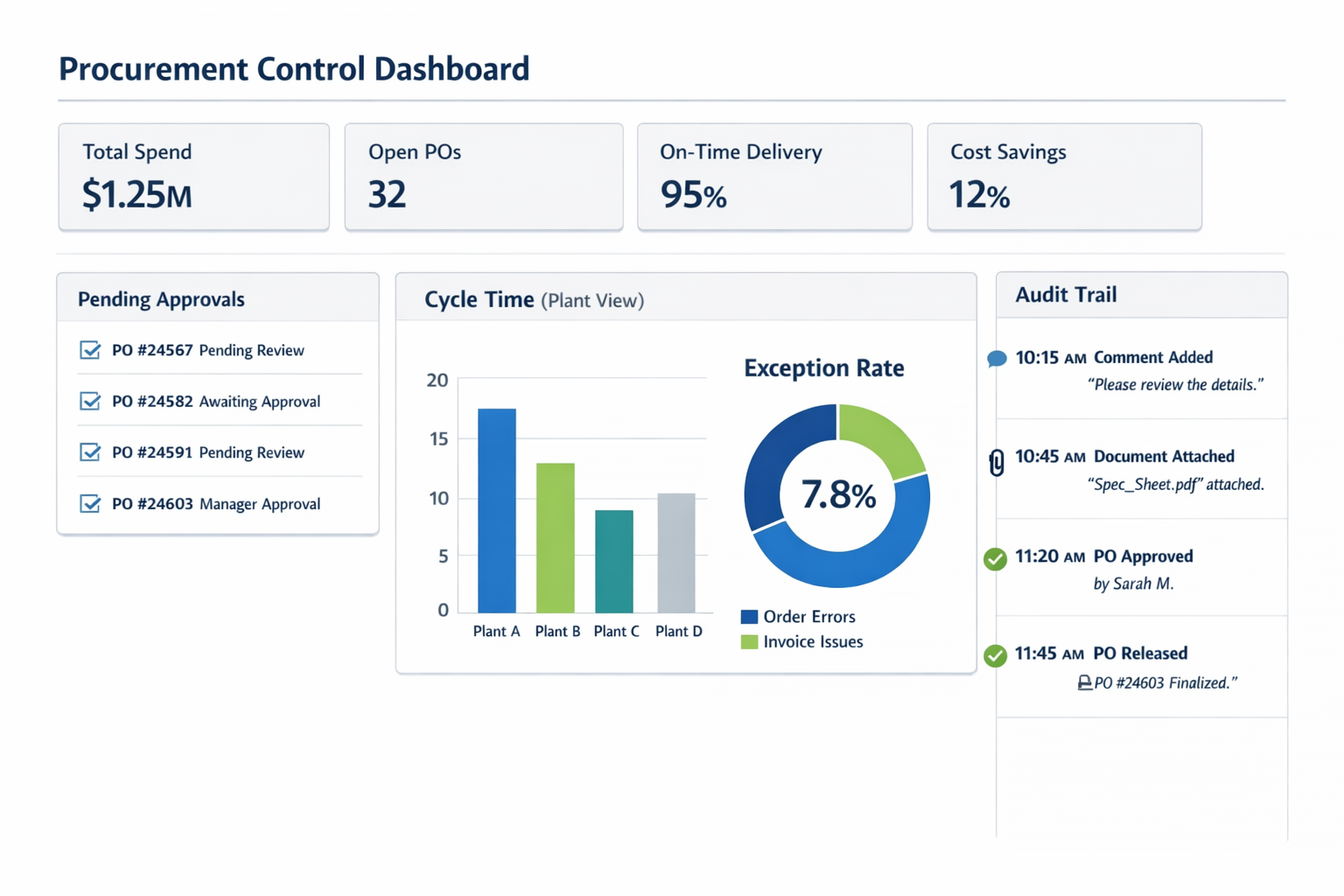
Once the requisition moves through review, Jodoo records each action, comment, attachment, and status change in one audit trail. In the resin example, the budget reviewer can note that the request is within the monthly materials plan, the plant manager can approve based on schedule risk, and procurement can document the final PO number after release. That history is especially useful when a supplier lead time changes, a requester asks why an order was delayed, or finance reviews spend compliance at month-end. Instead of reconstructing decisions from inboxes, teams can trace the full approval record in minutes.
Jodoo can also surface this workflow data in live dashboards for procurement and plant leadership. You can track pending approvals, cycle time by plant, exception rates, and requisitions stuck at specific approval levels, which helps teams spot where policy or capacity is slowing execution. In practice, that means faster decisions on routine purchases and tighter control over non-standard ones. For manufacturers, it is a practical step toward automating purchase order approvals while keeping ERP execution and financial posting in place.
Conclusion: Build a More Controlled and Efficient Purchase Order Process
In manufacturing, a purchase order is not just an administrative record. It is a control point that links demand, supplier commitment, goods receipt, invoice validation, and budget accountability in one traceable process. When that process is weak, the result is usually familiar: slower approvals, uncontrolled spend, mismatched invoices, and avoidable supply risk. When it is well managed, procurement gains better cost control, finance gets cleaner matching, and production teams face fewer disruptions.
The core lesson is straightforward: effective purchase order management depends on clear requisition rules, defined approval thresholds, disciplined three-way matching, and real-time visibility across every transaction. These controls matter even more in manufacturing environments where material shortages, urgent maintenance buys, and multi-site purchasing can quickly create exceptions. A strong process helps you handle those exceptions without losing compliance or speed.
If you want to standardize requisitions and automate approvals without rebuilding your entire ERP landscape, Jodoo provides a practical option. As a no-code lean manufacturing platform, Jodoo helps teams digitize purchasing workflows, route approvals by policy, and maintain a complete audit trail. You can start a free trial or book a demo to see how it fits your procurement process.