Browse by category

Introduction: What a Toolbox Talk Means in Manufacturing
In manufacturing, a toolbox talk is a short, focused pre-shift safety discussion that highlights one immediate risk, one work condition, or one behavior workers need to pay attention to that day. It is not the same as formal safety training, which is longer, scheduled, and designed to build broader knowledge over time.
For Safety Officers and Shift Supervisors, the value is practical. A toolbox talk helps teams reset attention before production pressure takes over, especially in plants where operators move quickly between machines, materials, forklifts, and maintenance activity. When done well, it connects safety to the actual jobs, people, and conditions on that shift instead of repeating generic rules workers have already heard.
This article explains what a good toolbox talk looks like on the plant floor, how to run one without wasting production time, and which topics work best for manufacturing teams. You will also see how to make these briefings more consistent, trackable, and useful across shifts.
Why Daily Toolbox Talks Matter on the Plant Floor
They Surface Today’s Hazards Before Production Starts
The main reason daily toolbox talks matter is timing. A short pre-shift discussion catches attention before operators settle into routine, when small changes in materials, staffing, machine condition, or production targets can create new exposure. In manufacturing, many incidents do not come from unknown dangers; they come from familiar tasks performed under slightly different conditions. A daily safety briefing helps supervisors make those changes visible before work begins.
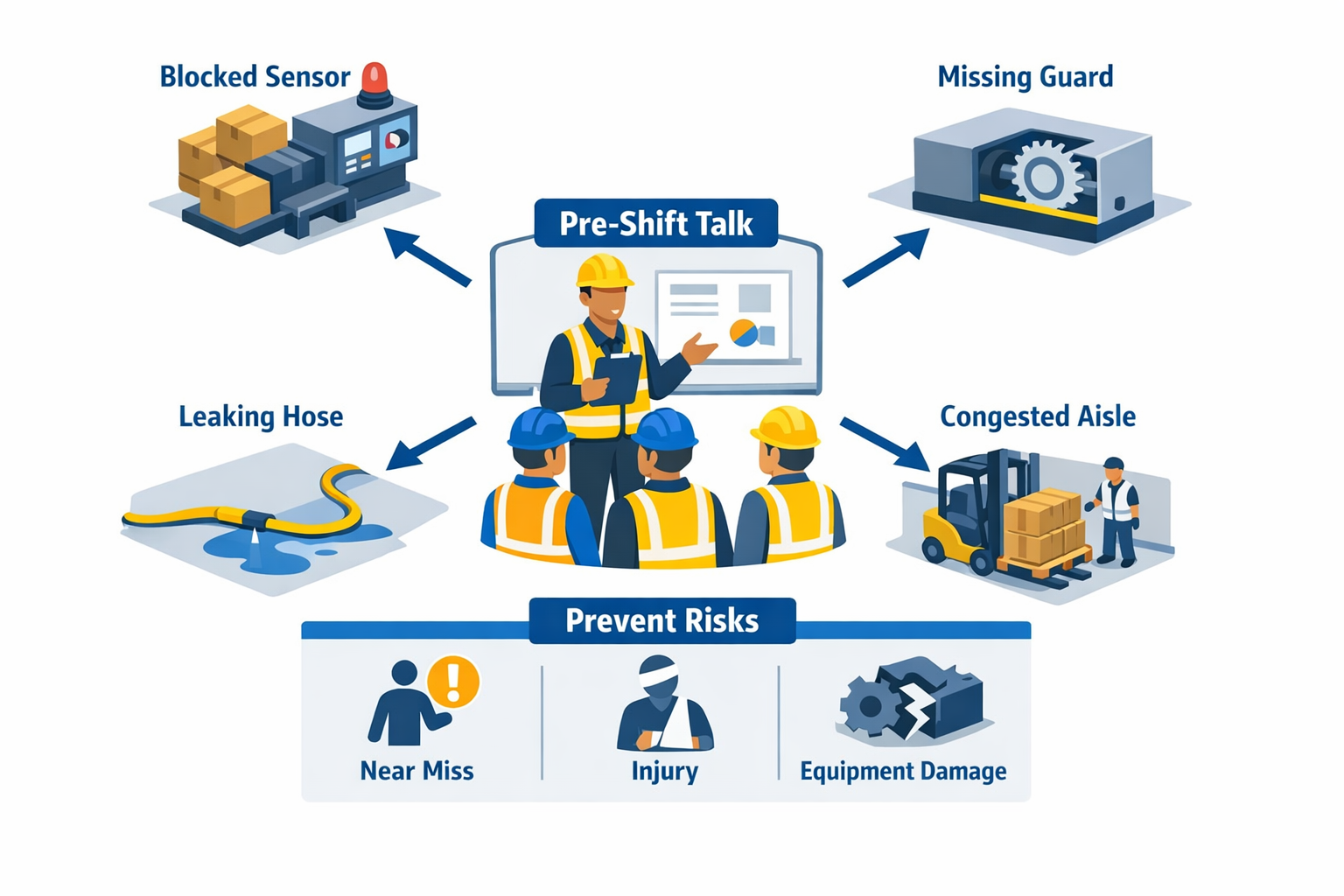
If a team raises a blocked sensor, missing guard, leaking hose, or congested aisle during the talk, the plant can act before the issue becomes a recordable incident, near miss, or equipment damage event. Plants that consistently track pre-shift hazard observations and corrective actions often see stronger safety performance because they are managing risk earlier, not only reviewing lagging metrics after an accident. This is also why any guide on how to run an effective toolbox talk starts with relevance to the day’s work.
They Align Each Area Around Different Risk Profiles
Not every department needs the same message. On a packaging line, the day’s concern may be changeover speed, temporary labor, and the temptation to bypass interlocks to clear jams faster. A two-minute reminder on guarding, restart checks, and hand placement is far more useful than a generic lecture on “working safely.” Daily talks work because they let supervisors match the message to the actual line condition.
In a machining cell, the risk profile shifts. A toolbox talk may need to focus on chip buildup, coolant spills, chuck security, or glove misuse near rotating equipment. Here, the value is not only awareness but precise shift alignment: everyone starts with the same understanding of the setup, the controls that matter, and what to stop and report. That kind of consistency reduces unsafe variation between crews.
They Reinforce Safe Behaviors Through Repetition
Short, repeated reminders shape behavior better than occasional long sessions. Research from occupational safety programs consistently shows that frequent reinforcement improves recall and compliance, especially for routine tasks where complacency is the real hazard. On the plant floor, workers are more likely to follow PPE rules, housekeeping standards, and isolation steps when those expectations are reinforced in context, not buried in annual training slides.
This is where supervisors often see the difference between training and execution. Formal instruction builds knowledge, but daily talks keep standards active at the point of work. That is also why the best toolbox talk topics for manufacturing are usually practical, specific, and repeated when conditions justify it.
They Improve Follow-Through on Known Plant Risks
In a warehouse-forklift area, the biggest value may be follow-through. Most sites already know the common risks: blind corners, mixed pedestrian traffic, battery charging zones, and rushed loading during peak periods. The issue is not awareness alone; it is whether the team acts on yesterday’s near miss, today’s congestion, or a damaged floor marking that still has not been fixed.
A daily toolbox talk creates a routine checkpoint for those open items. It gives Safety Officers and Shift Supervisors a simple way to confirm controls, assign accountability, and keep risk controls from fading into the background once production pressure rises.
How to Run an Effective Toolbox Talk Step by Step
Step 1: Choose One Risk That Matches Today’s Work
A good toolbox talk starts before the team gathers. In a supervisor-led pre-start meeting on a metal fabrication line, the shift supervisor should pick one risk tied to that shift’s actual tasks, not a generic safety theme pulled from last month’s file. If a die change, blade replacement, or jam-clearing task is scheduled, machine isolation is the right focus; if overtime created fatigue on the previous shift, hand-injury exposure during manual handling may be more relevant. This is the first rule in how to run an effective toolbox talk: choose one issue people will face in the next few hours.
Step 2: Keep the Talk Short and Structured
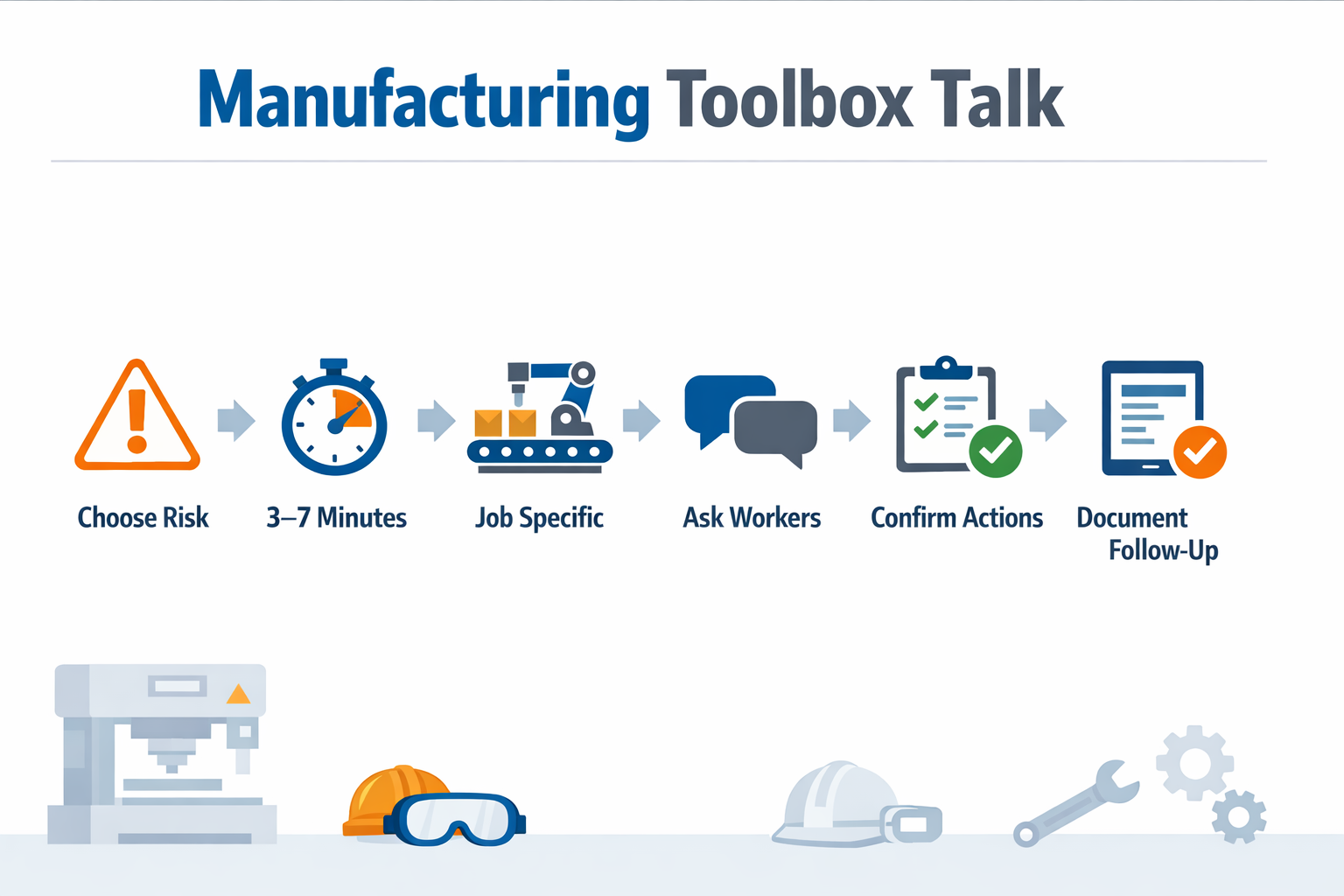
Once the crew is assembled, the supervisor should keep the talk to roughly 3 to 7 minutes. That is usually long enough to cover the risk, the expected controls, and one or two worker questions without losing attention before startup. A simple flow works well: state the topic, explain where the risk will appear today, confirm the required controls, ask for input, and close with actions. The best toolbox talk topics for manufacturing only work when they are delivered in a format operators can absorb quickly at shift start.
This step-by-step flow keeps the toolbox talk practical from topic selection to action-item follow-up, instead of turning it into a long reminder session that delays production without improving control.
Step 3: Connect the Message to the Day’s Job
In the fabrication example, the supervisor should avoid saying only, “Be careful around machines.” A stronger approach is: “We have a die change on Press 4 at 9:00 a.m., so nobody removes guarding or reaches in until lockout is verified by the authorized technician.” That level of specificity helps the team translate policy into behavior. It also reinforces why daily safety briefings matter: workers can immediately see what applies to this shift, this line, and this task.
Step 4: Ask Workers What Could Go Wrong
A toolbox talk should not be one-way. The supervisor can ask, “Where are we most likely to bypass the control today?” or “What usually gets missed during a jam clear?” In many plants, frontline operators identify practical gaps faster than written SOPs do, especially during startup pressure or changeovers. If one operator mentions a damaged interlock latch seen on the prior shift, that input becomes an action, not just a comment.
Step 5: Confirm Expectations and Close With Actions
Before the team breaks, the supervisor should restate who does what. In this case: maintenance verifies lockout, operators report any guard issue immediately, and no restart happens without sign-off. Clear verbal confirmation reduces ambiguity, especially across mixed-experience crews and relief operators. If corrective actions are needed, assign an owner and deadline on the spot.
Step 6: Document Attendance and Follow Through
After the talk, record attendance, topic, and any hazards or actions raised. Documentation matters most when it leads to follow-up, such as checking whether the interlock latch was repaired before the next shift. This is where a toolbox talk becomes part of a real safety routine rather than a completed checkbox.
10 Best Toolbox Talk Topics for Manufacturing Teams
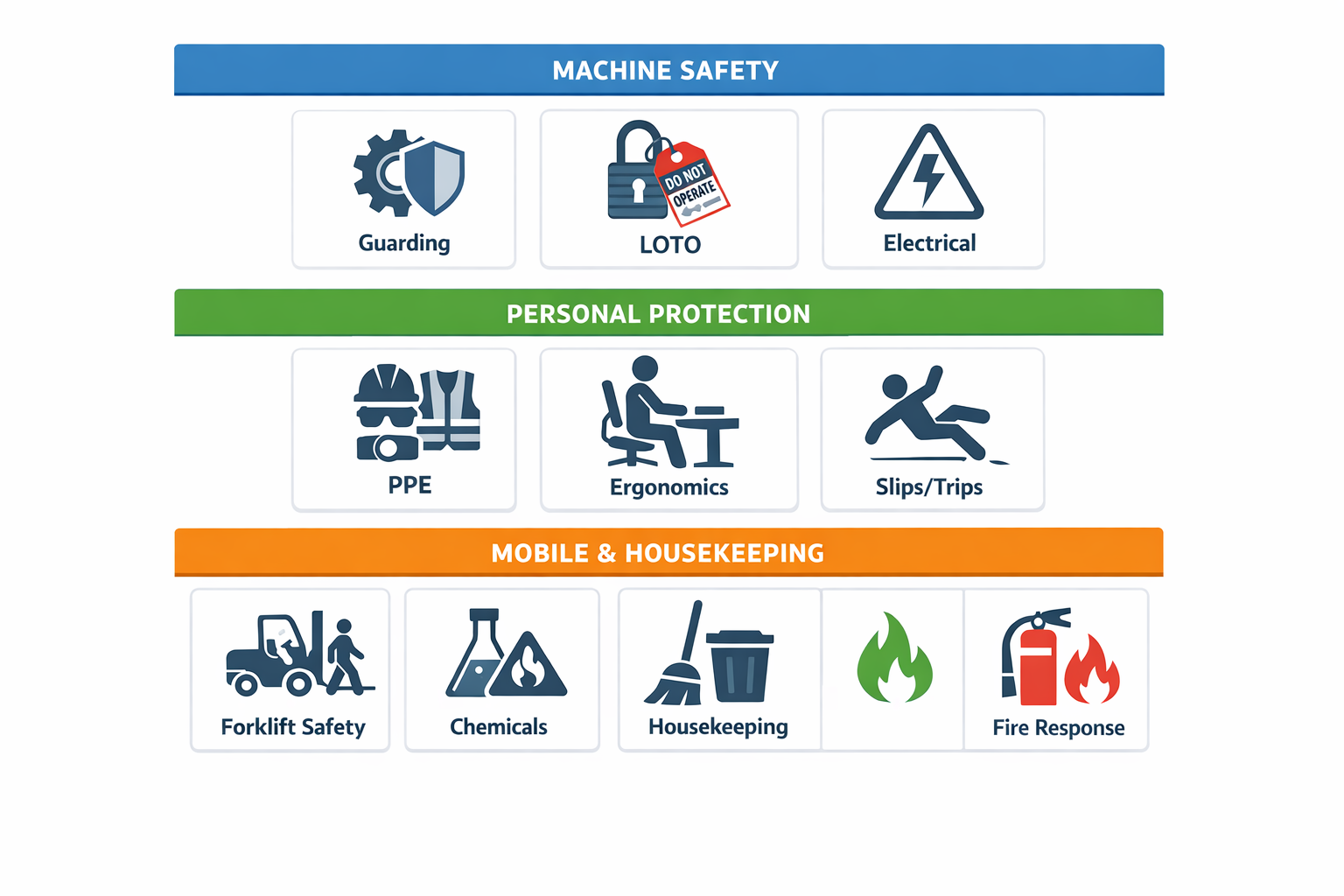
The best toolbox talk topics for manufacturing are the ones that match the actual work in front of the team. A stamping department does not need the same pre-shift discussion as a forklift-heavy warehouse or a paint mixing area handling solvents. To run an effective toolbox talk, supervisors should choose topics by department risk, recent incidents, maintenance activity, staffing changes, or unusual production conditions such as overtime, line changeovers, or contractor presence.
Machine and Equipment Safety Topics
1. Machine Guarding
Use this topic after guard adjustments, new machine installation, or any near miss involving moving parts. It fits press operators, CNC teams, packaging lines, and maintenance technicians working around rotating or pinch-point hazards. Discussion prompt: Which guard on this line is most likely to be bypassed during clearing jams, and what should happen instead?
2. Lockout/Tagout (LOTO)
Use LOTO talks before planned maintenance, changeovers, or shutdown work that exposes stored energy. This is most relevant for maintenance crews, setup technicians, electricians, and operators who assist with equipment isolation. Discussion prompt: At this workstation, where could hazardous energy remain even after the machine is switched off?
3. Electrical Safety
Use this topic when temporary wiring, panel access, or troubleshooting activity increases exposure. It fits maintenance, facilities, machine technicians, and any team working near energized equipment.
Discussion prompt: What electrical shortcuts do people sometimes take during urgent troubleshooting, and what is the safer alternative?
Personal Protection and Body Movement Topics
4. Personal Protective Equipment (PPE)
Use PPE talks when tasks change, visitor traffic increases, or audit findings show non-compliance. It fits nearly every department, but especially welding, grinding, chemical processing, and cutting operations.
Discussion prompt: Which PPE item is most often worn incorrectly in this area, and why does that matter?
5. Ergonomics and Manual Handling
Use this topic when production volume rises, new packaging sizes are introduced, or operators report fatigue. It fits assembly, packing, kitting, and material handling teams with repetitive lifting or awkward reaches.
Discussion prompt: Which motion in today’s job causes the most strain, and how can we reduce it before discomfort becomes an injury?
6. Slips, Trips, and Falls
Use this after spills, poor cable routing, rain exposure at loading bays, or clutter around workstations. It fits all plant areas, especially warehouse aisles, washdown zones, and high-traffic production cells.
Discussion prompt: Where is the most likely trip point on this shift, and who is responsible for removing it immediately?
Mobile Equipment, Chemicals, and Housekeeping Topics
7. Forklift and Pedestrian Safety
Use this topic after route changes, congestion, or a rise in near misses at crossings. It fits warehouse teams, logistics staff, shipping crews, and line-side material handlers.
Discussion prompt: Which crossing in this area has the weakest visibility, and what rule should both drivers and pedestrians follow there?
8. Chemical Handling
Use this before new chemical use, cleaning campaigns, or storage reviews. It fits paint shops, plating lines, maintenance, sanitation, and process manufacturing teams.
Discussion prompt: If a splash or spill happens here, does everyone know the first three actions without checking a poster?
9. Housekeeping and Waste Control
Use this when scrap builds up, aisles narrow, or tool discipline slips. It fits all departments, especially fast-paced cells where small obstructions quickly become hazards.
Discussion prompt: What item in this area is usually “left for later,” and how could that create a safety risk today?
10. Fire Prevention and Emergency Response
Use this during hot work, peak storage periods, or before seasonal electrical load increases. It fits maintenance, warehouse, utilities, and chemical storage areas. Discussion prompt: If an alarm sounds during this shift, what should each person here do in the first 60 seconds?
How to Standardize, Track, and Improve Toolbox Talks Across Shifts
Build a Repeatable Toolbox Talk Process
Once supervisors know how to run an effective toolbox talk, the next challenge is consistency. A good system defines when talks happen, who leads them, what must be covered, and how completion is recorded across every shift. In most plants, that means setting a recurring cadence by area or line, assigning ownership to shift supervisors, and using a standard talk record that captures topic, date, attendees, hazards raised, and follow-up actions.
Standardization matters because variation between shifts quickly weakens safety execution. One team may discuss a relevant hazard and log actions properly, while another signs a sheet with no real discussion. If your goal is plant-wide improvement, toolbox talks must be managed as an operating process, not just a supervisor habit.
Replace Paper Records With Structured Tracking
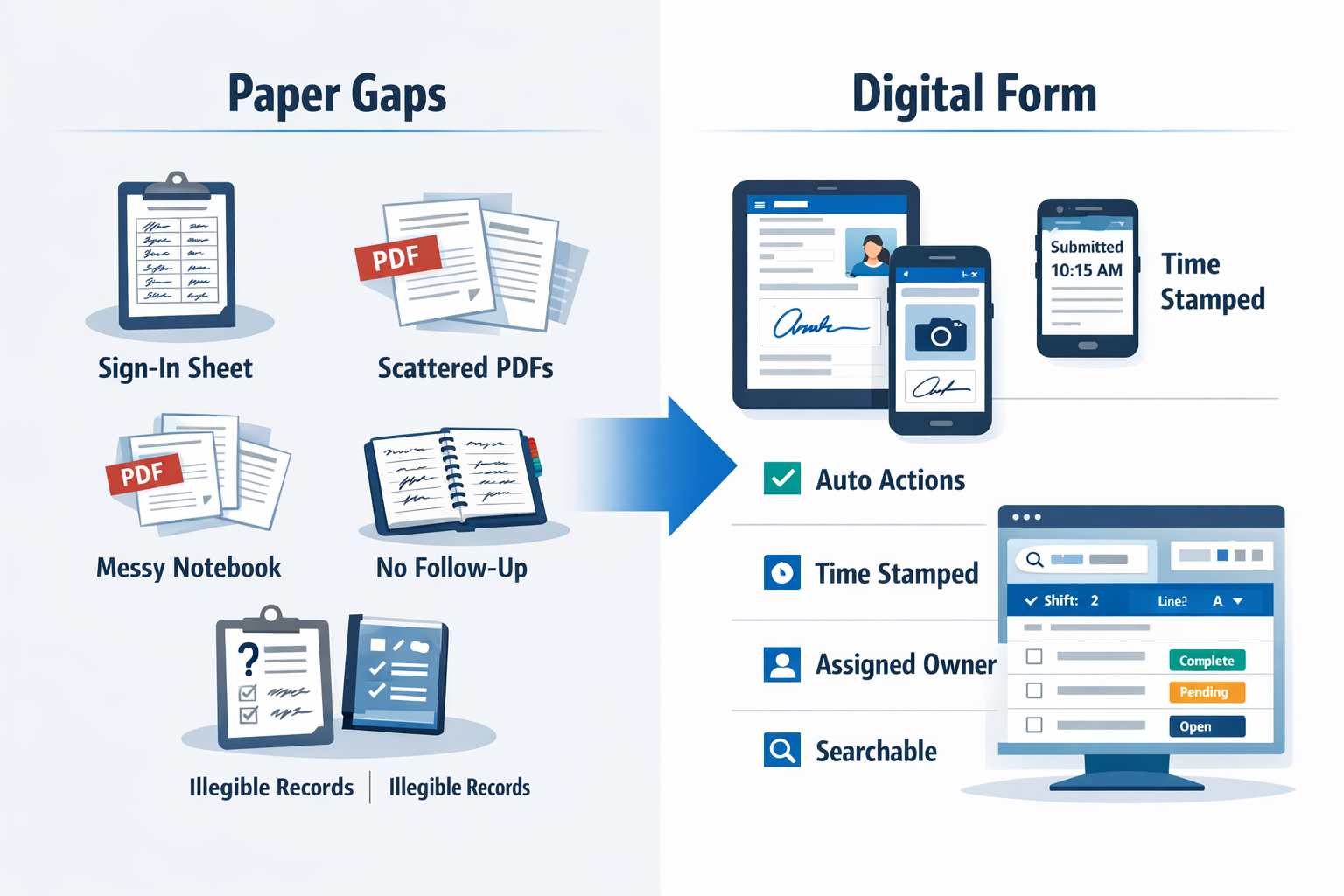
Paper sign-in sheets and scattered PDFs create gaps that are hard to see until an audit, incident review, or customer inspection. Attendance may be illegible, topics may be duplicated without regard to current risk, and action items often disappear into notebooks or WhatsApp chats. That makes it difficult to prove completion, trace hazard acknowledgments, or confirm whether corrective actions were closed.
A structured digital workflow solves those issues by requiring the same fields every time, time-stamping submissions, and linking each talk to actions and owners. With a platform such as Jodoo, a plant can create a mobile toolbox talk form, require photo or signature evidence, route corrective actions automatically, and keep a searchable record by department, line, and shift. The result is not just better compliance documentation, but a cleaner execution loop for why daily safety briefings matter in practice.
Track More Than Attendance
Attendance is necessary, but it is not enough to judge whether toolbox talks are working. You also need to capture whether workers acknowledged the key hazard, whether any unsafe conditions were reported, and whether supervisors assigned actions with deadlines. This turns the meeting from a communication event into a traceable control point.
Useful records typically include the talk topic, production area, shift, leader, headcount present, exceptions, and any hazards or near misses raised during discussion.
Monitor Participation and Risk Trends Across the Plant
At the leadership level, the most useful dashboard measures are completion rate by shift, attendance rate by department, repeat hazard frequency, open corrective actions, and overdue action closures. These indicators show whether talks are happening reliably and whether the issues raised are being addressed. They also reveal weak spots, such as one shift missing talks regularly or one area reporting the same housekeeping hazard for three weeks.
A dashboard built in Jodoo can consolidate toolbox talk records from multiple workshops or sites and display them in real time for EHS managers and operations leaders. Role-based views let supervisors see their own completion status while plant leadership sees cross-shift trends and unresolved actions.
Use the Data to Improve the Next Talk
The final step is review. If participation drops, hazards repeat, or actions stay overdue, adjust the schedule, coaching, or topic selection rather than treating completion alone as success. The strongest toolbox talk systems create a simple feedback loop: run the talk, capture the record, close the action, and refine the next discussion based on what the data shows.
Conclusion: Turn Every Toolbox Talk Into a Trackable Safety Workflow with Jodoo
A good toolbox talk does not need to be long to be effective. It needs to be relevant to the shift, specific to the work in front of the team, clearly understood by operators, and followed by visible action when a risk is raised. When talks become routine box-checking exercises, participation drops and the value to safety performance drops with it.
For Safety Officers and Shift Supervisors, the real goal is consistency across people, shifts, and departments. That means using the same structure, documenting attendance, recording hazards or concerns, and making sure open actions do not disappear after the meeting ends. In practice, a toolbox talk works best when it is part of a repeatable safety workflow rather than a loose verbal reminder.
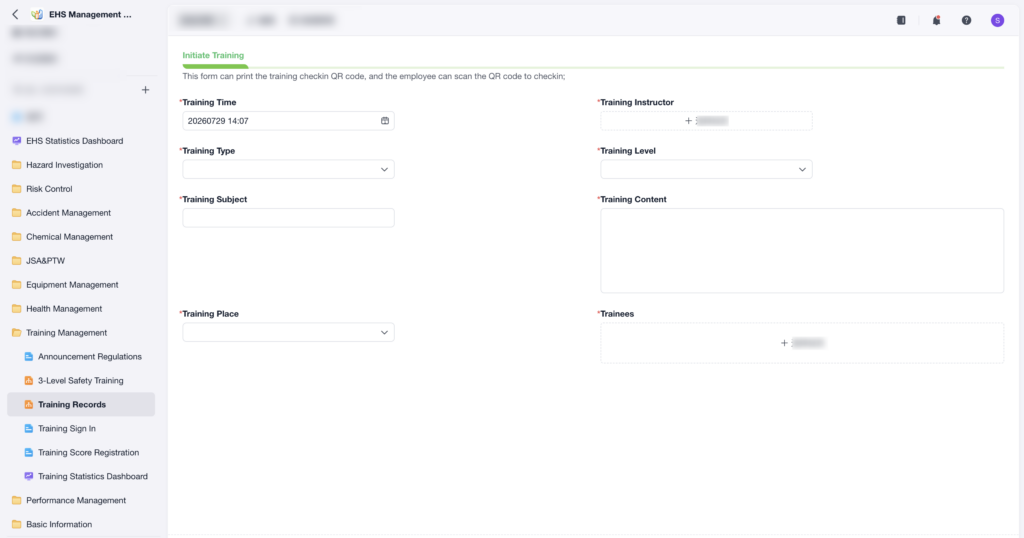
As a no-code lean manufacturing platform, Jodoo lets manufacturers send digital toolbox talk topics to supervisors’ mobile devices, capture worker attendance with QR-code sign-in, assign follow-up actions, and monitor participation across lines, shifts, and sites on an EHS dashboard. If you want to standardize toolbox talks without adding admin burden, you can start a free trial or book a demo now.