Browse by category

10%
Boost in Production Performance
100%
Hazard Correction Rate
Over $50,000
Saved Annually
Hoshimei Beverage, a leading regional producer of drinking water, was struggling with the inefficiencies of paper-based factory management. By embracing a lean digital strategy, the company transformed its quality, equipment, production, safety, and inventory management, leading to an 80% increase in form-filling efficiency, a 10% boost in production performance, and a 100% quality inspection pass rate.
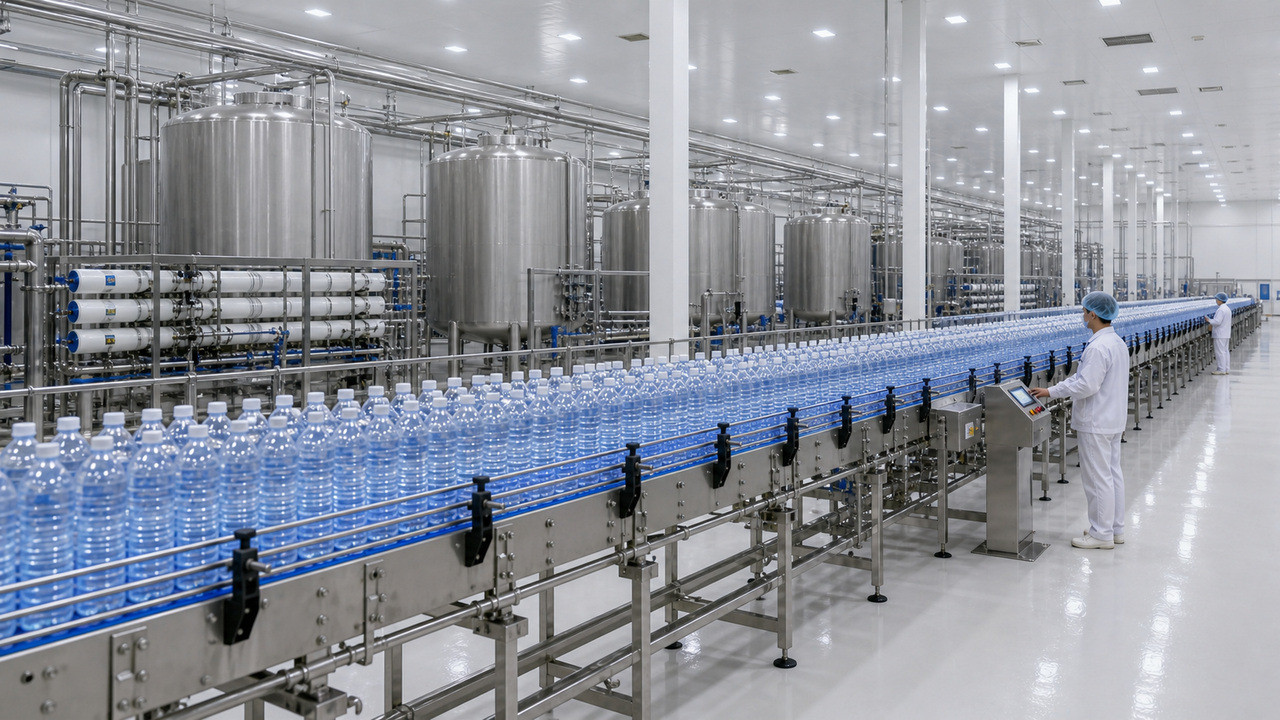
For Hoshimei Beverage, a key regional water producer, maintaining product quality and consistency is essential to its market reputation. With a diverse product line that includes bottled water, large-format returnable water containers, and OEM services for well-known national brands, the company’s 40-person team operates a complex, assembly-line-based production facility. However, as the business grew and industry standards evolved, the cracks in its traditional, paper-based management system began to show.
This reliance on outdated methods created a host of problems that are all too familiar to many growing manufacturers: critical management processes were undefined, responsibilities were blurred, and valuable data was trapped in stacks of paper. The company’s leadership knew that to sustain its growth and maintain its competitive edge, it needed a smarter, leaner, and more agile approach. They needed to bring their factory operations into the digital age.
This is the story of how Hoshimei Beverage, driven by a vision for a more efficient and data-driven factory, empowered its team to build a comprehensive digital management system from the ground up. By focusing on their most critical pain points—from quality control to inventory management—they not only solved deep-rooted operational challenges but also cultivated a culture of continuous improvement that has positioned them for a new era of success.
The Challenge: The Hidden Costs of a Paper-Based Factory
The Process Black Box: A Lack of Clarity and Accountability
Standardized processes are the foundation of quality and efficiency. However, at Hoshimei Beverage, key management areas like quality, equipment, production, and safety lacked clear, standardized workflows. Operations were heavily dependent on the experience of individual employees, and the lines of responsibility between departments were often blurred.
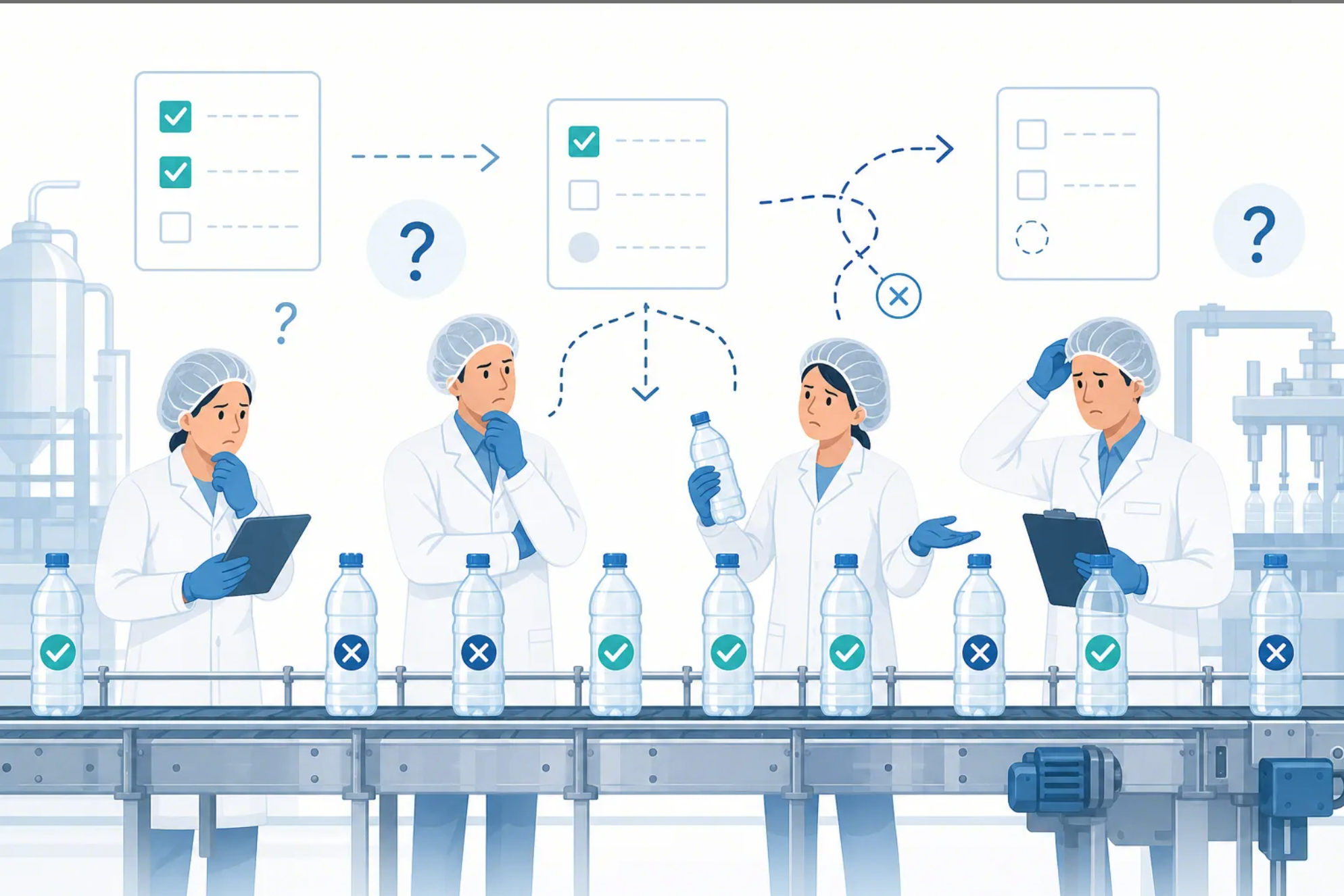
- Undefined Workflows: In the quality inspection process, for example, there were no fixed procedures to define inspection points or feedback mechanisms. This ambiguity meant that quality checks could be inconsistent, and when problems arose, it was difficult to trace them back to a specific point in the process.
- Blurred Responsibilities: In equipment management, the responsibilities for inspections, maintenance, and repairs were not clearly defined. This ambiguity sometimes led to delayed responses, as it wasn’t always immediately clear which team was responsible for addressing specific issues.
Data Silos: The Limitations of Paper Records
Accurate, real-time data is the lifeblood of any modern manufacturing operation. Yet, Hoshimei Beverage was trying to manage its complex operations with data collection methods that were slow, error-prone, and created more problems than they solved.
The Inventory Management: A Disconnect Between a Digital Ledger and Physical Reality
The company’s inventory management was a prime example of the disconnect between its digital tools and its physical operations. While they used Excel to track inventory, the data was rarely up-to-date, leading to a constant state of uncertainty.
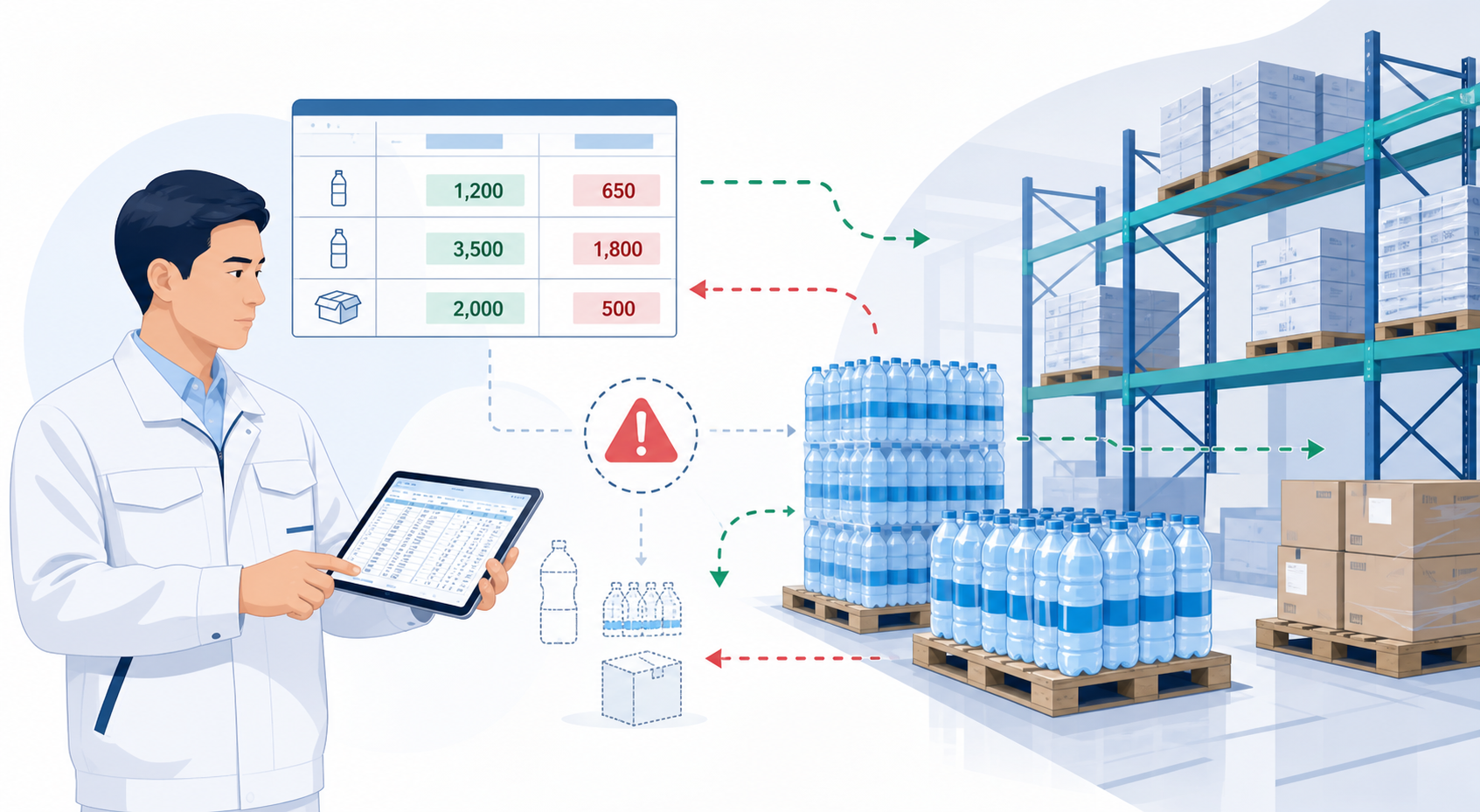
- “Phantom” Inventory: The lag in data entry meant that the numbers in the Excel spreadsheet often didn’t match the reality on the warehouse floor. Finished goods were sometimes put into storage without being recorded, and raw materials were used without being deducted from the inventory count. This “phantom” inventory made it impossible to plan production effectively or fulfill customer orders with confidence.
The Collaboration Bottleneck: Drowning in a Sea of Signatures
Cross-departmental collaboration was a slow and cumbersome process that relied on face-to-face communication and manual signatures. Simple tasks like submitting a finished product for inspection could take days to complete as the paperwork was physically carried from one department to another.
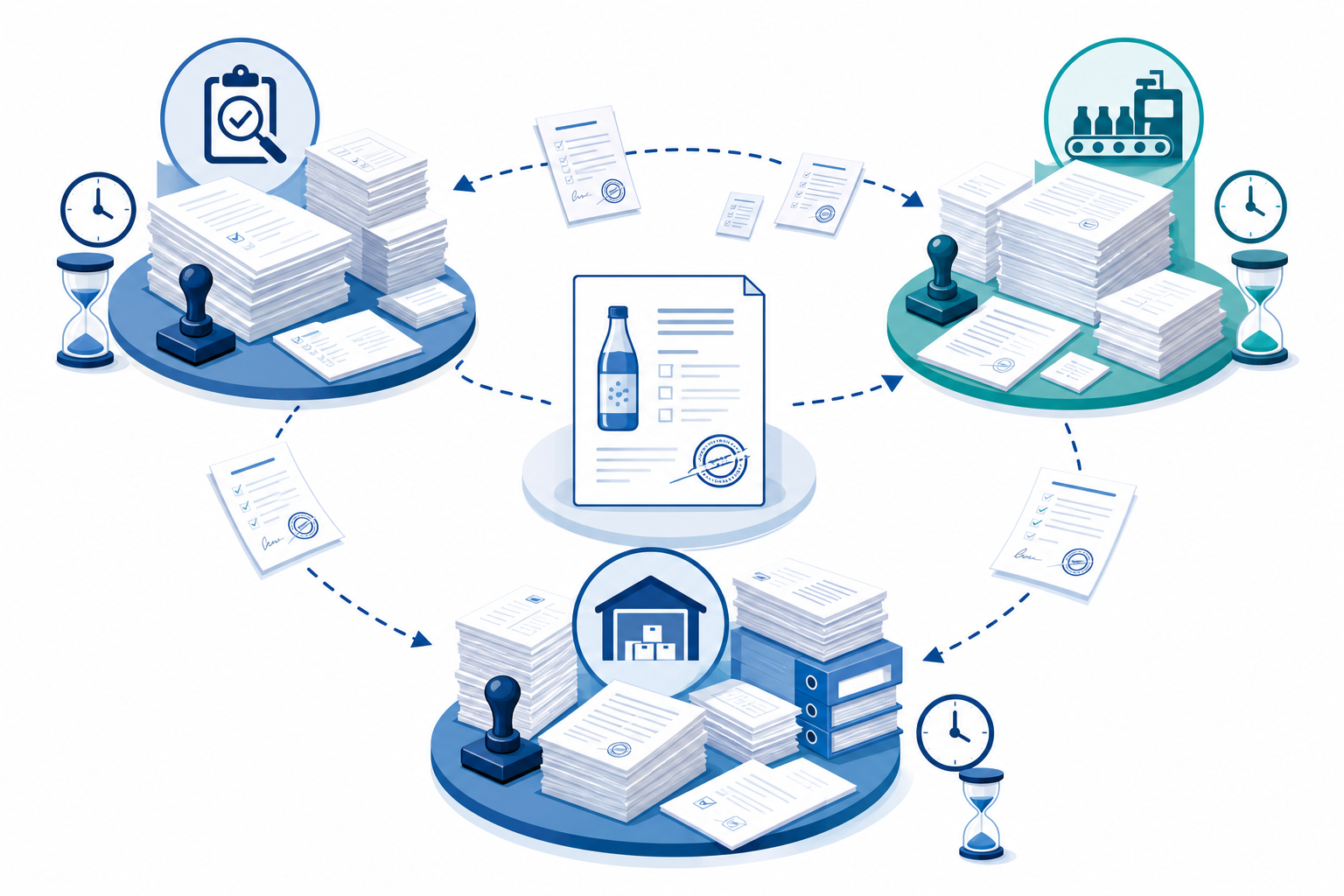
- Delayed Approvals: A single request for a finished product inspection required signatures from the quality, production, and warehousing departments. This manual, multi-step process took an average of three days to complete, creating a significant bottleneck that delayed the shipment of finished goods.
Hoshimei Beverage was at a critical juncture. They had a strong product and a dedicated team, but their outdated processes were holding them back. They needed a way to eliminate the waste, break down the data silos, and empower their teams with the real-time information needed to drive a truly lean operation. The answer lay not in a massive, top-down IT project, but in a flexible, grassroots approach to digital transformation.
The Solution: A Phased Approach to Building a Lean Digital Factory
Instead of attempting a massive, all-at-once IT project, Hoshimei Beverage took a more strategic and agile approach. They chose to partner with a no-code platform provider that could offer the flexibility, affordability, and ease of use they needed to build a custom solution tailored to their unique workflows. While a previous attempt to manage some reports using Lark’s Bitable proved insufficient due to limited functionality, Hoshimei found its ideal partner in Jodoo, a no-code, growth-oriented platform.
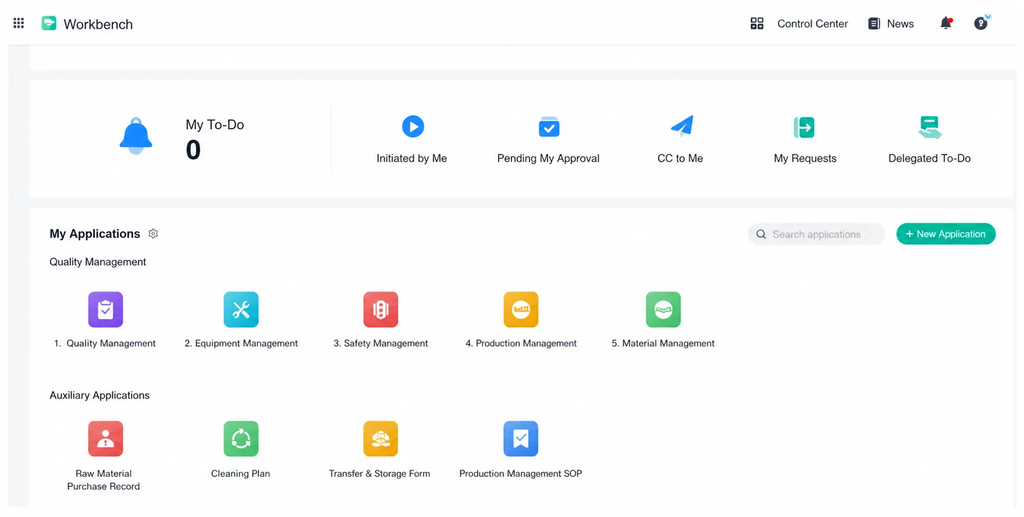
Their implementation strategy was guided by a simple principle: “solve the biggest pain points first, then gradually expand.” This phased approach allowed them to deliver value quickly, get buy-in from all levels of the organization, and build a solid foundation for a truly smart, connected factory.
Phase 1 (Month 1): Building the Foundation with Quality and Equipment Management
The first phase focused on tackling two of the factory’s most critical and paper-intensive processes: quality management and equipment management.
- Digitizing Quality Control: The team built a series of online forms to replace the cumbersome paper-based quality checklists. These forms, which covered everything from raw water inspection to workshop patrols and finished product testing, were designed with mandatory fields and data validation rules to ensure that all necessary information was captured accurately and completely. They also built an automated workflow that would automatically route completed forms to the appropriate supervisor for review, cutting the review cycle from a week to a single day.
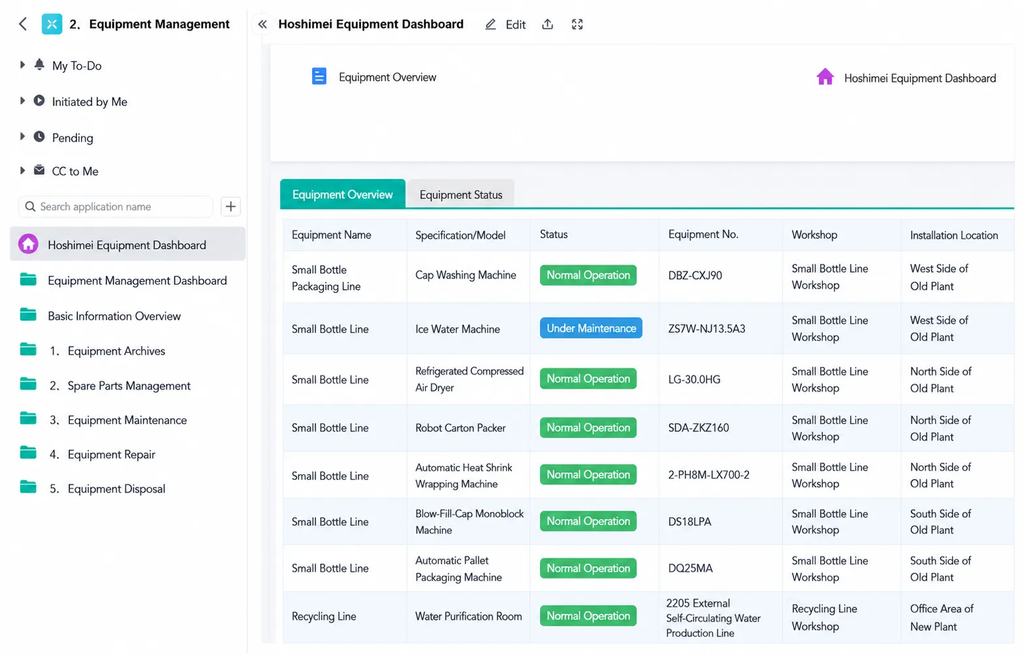
- Creating a Digital Equipment Hub: To bring order to their chaotic equipment management process, the team created a centralized online database for all of their equipment. This “digital equipment archive” contained everything from technical specifications and purchase information to user manuals and maintenance records, allowing quick access to information for specific equipment, such as the “Carton Forming Machine (DRZ-CXI40)” or “Chiller Unit ① (205TB-N12.5AI3)”. They also built a proactive maintenance system that would automatically generate and assign maintenance tasks based on a predefined schedule, ensuring that no piece of equipment was ever overlooked.
Phase 2 (Months 2-3): Expanding to Production and Safety Management
With a solid foundation in place, the team moved on to digitizing their production and safety management processes.
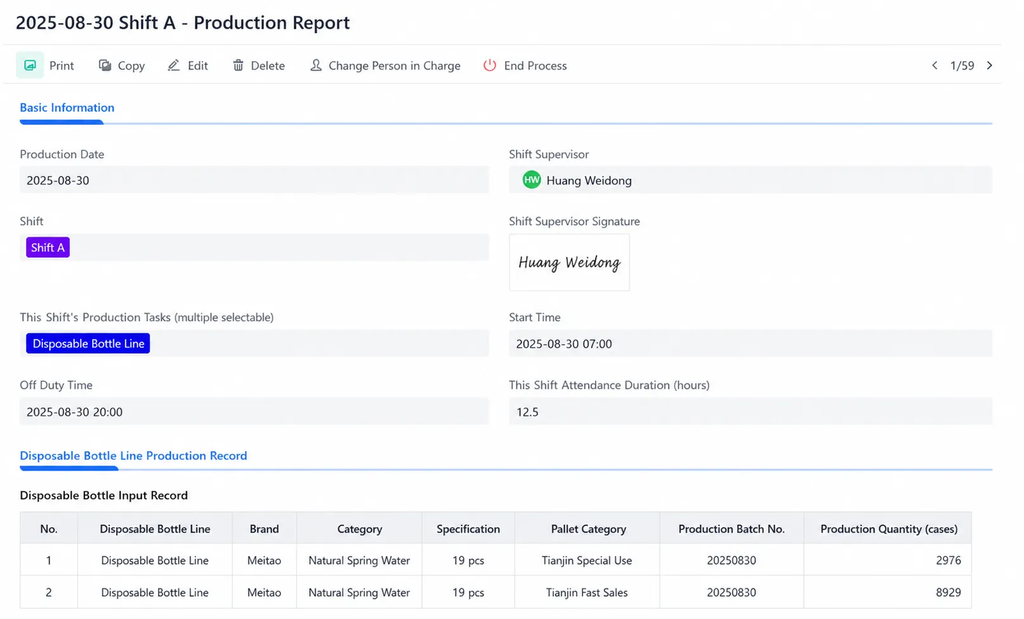
- Real-Time Production Reporting: They designed a mobile-friendly “Production Report” form that allowed workers to submit their daily production data directly from the shop floor. The form was designed to be as simple and intuitive as possible, with features like automatic calculation of shift duration and seamless integration with the finished goods inventory system to prevent data entry errors.
- A Comprehensive Safety Management System: To create a safer and more compliant work environment, the team built a suite of safety management applications that covered everything from safety training and inspections to the distribution of personal protective equipment (PPE) and incident reporting. They also created a closed-loop workflow for hazard identification and correction, ensuring that every identified risk was assigned to a specific person and tracked until it was resolved.
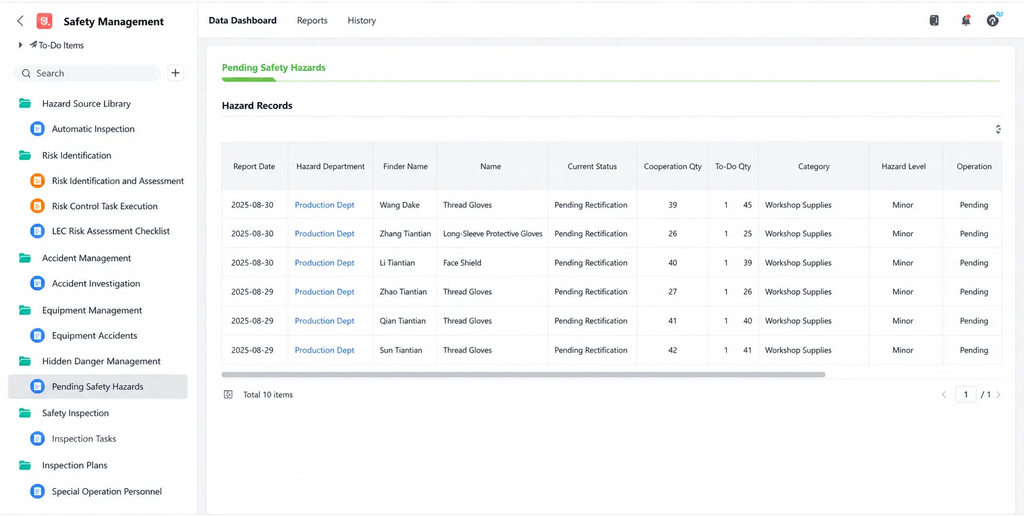
Phase 3 (Months 3-4): Achieving Full Visibility with Inventory Management and Dashboards
The final phase of the initial implementation focused on closing the loop with a fully integrated inventory management system and a series of high-level dashboards.
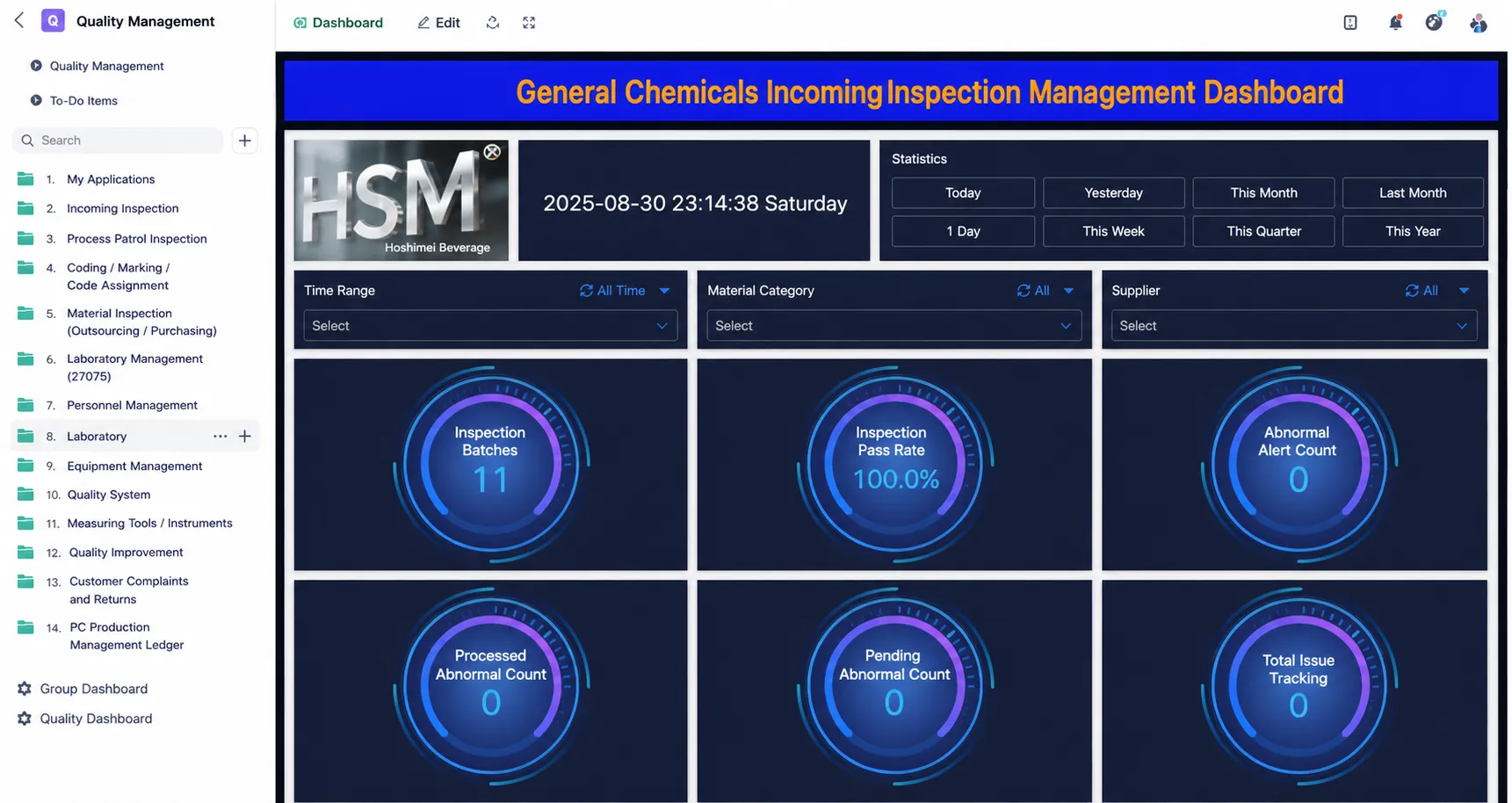
- From Excel to Real-Time Inventory: The team built a comprehensive inventory management system that covered everything from office supplies and raw materials to finished goods and shipping pallets. Every movement of inventory was now tracked in real time through a series of simple online forms, and the system was configured to automatically send alerts when inventory levels fell below a predefined threshold.
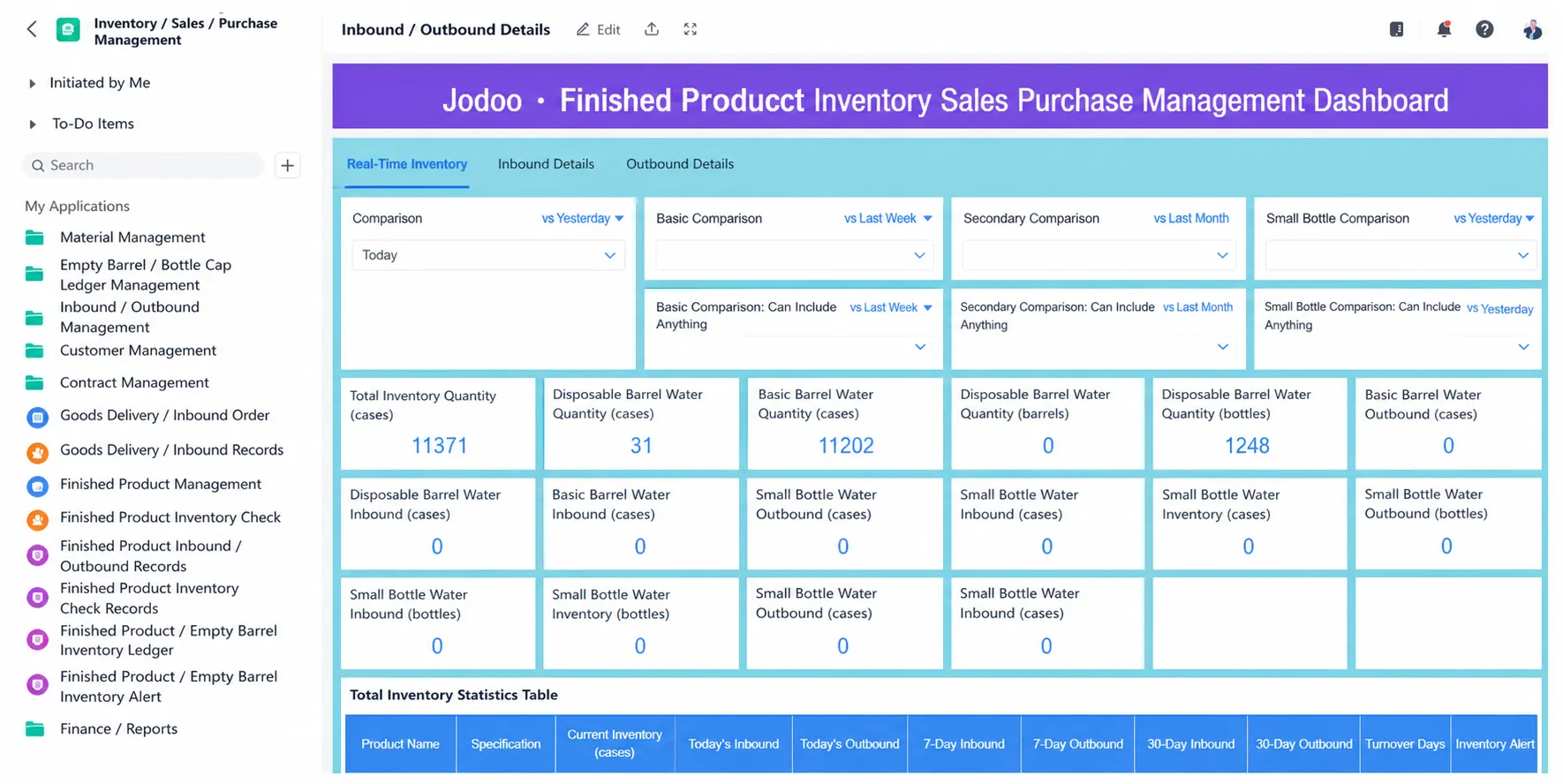
- Data-Driven Decision-Making: The culmination of their efforts was a series of real-time dashboards that provided a holistic, at-a-glance view of the entire factory’s performance. These dashboards, which pulled data from all of the different applications, allowed managers to track key performance indicators (KPIs), identify trends, and make proactive, data-driven decisions.
By putting the power of digitalization directly into the hands of the people who knew the processes best, Hoshimei Beverage didn’t just build a few applications; it built a new engine for continuous improvement. This lean, grassroots approach allowed them to solve their most pressing problems with incredible speed and agility, laying the groundwork for a smarter, more connected factory of the future.
The Results: A Leaner, Faster, and More Profitable Factory
The impact of Hoshimei Beverage’s grassroots digital transformation was both immediate and profound. By replacing their clunky, paper-based workflows with agile, data-driven applications, they unlocked a new level of operational excellence. The results went far beyond simply digitizing forms; they fundamentally changed how the company managed its production, quality, and continuous improvement processes.
| Key Performance Indicator | Before: The Paper-Based Way | After: The Lean Digital Way |
|---|---|---|
| Form-Filling Efficiency | Manual, time-consuming | 80% improvement |
| Cross-Departmental Collaboration | 3-day manual approval cycle | 1-day digital workflow |
| Production Performance | Based on delayed, manual data | 10% improvement with real-time data |
| Warehouse Efficiency | Inaccurate Excel data | 30% improvement with real-time tracking |
| Quality Inspection Pass Rate | Inconsistent | 100% |
| Hazard Correction Rate | Difficult to track | 100% with closed-loop workflow |
| Annual Cost Savings | High paper and printing costs | $50,000 in savings |
A Clear View of the Shop Floor
The most significant change was the newfound transparency. The real-time data flowing from the shop floor gave managers an unprecedented, up-to-the-minute view of their entire operation.
- Dramatic Efficiency Gains: The move to digital forms and automated workflows had a massive impact on efficiency. The time it took to fill out forms was reduced by 80%, and the time it took to complete cross-departmental collaborations was cut from three days to just one. This newfound speed and agility allowed the company to get its products to market faster and respond more quickly to changing customer demands.
- A 10% Boost in Production Performance: The real-time production data and the automated calculation of key performance indicators (KPIs) like production efficiency, energy consumption, and material loss allowed managers to spot inefficiencies and make targeted improvements. This data-driven approach to production management led to a 10% increase in overall production performance.
- A 30% Improvement in Warehouse Efficiency: With a clear and accurate view of their real-time inventory management system, the warehouse team was able to operate with a new level of efficiency, leading to a 30% improvement in overall warehouse productivity.
A Culture of Quality and Continuous Improvement
The digital QMS and the streamlined safety management system fostered a powerful new culture of quality and accountability.
- 100% Quality Compliance: The digital quality management system, with its standardized checklists and automated workflows, ensured that every quality check was performed consistently and to the correct standard. This led to a 100% pass rate on all quality inspections and a significant reduction in customer complaints.
- A Safer Work Environment: The comprehensive safety management system, with its closed-loop hazard tracking and digital record-keeping, created a safer and more compliant work environment. The company achieved a 100% hazard correction rate and had zero safety incidents after implementing the new system.
This combination of organizational mechanisms (ITBP) and cultural empowerment (citizen development), all guided by a clear governance framework, completely transformed the efficiency of requirement delivery. The feedback loop from idea to deployed solution was shortened from months to weeks, and in many cases, to just days. CVTE had successfully built a system that combined the agility of a startup with the scale and governance of a large enterprise.
Future Outlook: Deepening the Digital Transformation
For Hoshimei Beverage, this successful digital transformation is not the end of the journey; it is a powerful launching pad for a new phase of growth and innovation. The company is now looking to build on the solid foundation it has created, deepening the integration of its systems and expanding the use of data to drive even greater efficiency and intelligence.

Connecting the Dots for Deeper Insights
The next step in their evolution is to create a more deeply integrated data ecosystem. Their vision is to connect the data from their different applications in new and powerful ways. For example, they plan to create a real-time link between their production data, their equipment status data, and their quality data. This will allow them to perform more sophisticated analysis, such as identifying how a particular piece of equipment’s performance is impacting product quality or how a change in the production schedule is affecting energy consumption.
Expanding the Mobile-First Experience
The company is also committed to making its digital tools even more accessible and user-friendly for its frontline workers. They plan to continue to expand the use of mobile applications, putting more power and information directly into the hands of the people who are closest to the work. The goal is to create a truly mobile-first work environment, where every employee can access the information they need and perform their tasks from anywhere, at any time.
A Model for Growth and Agility
Hoshimei Beverage’s journey offers a powerful blueprint for other small and medium-sized manufacturing companies that are looking to embrace a lean digital future. Their success demonstrates that you don’t need a massive budget or a large IT team to achieve a dramatic transformation. By taking a phased, problem-focused approach and empowering their own people to build the solutions they need, they have created a powerful and sustainable model for growth and agility.
They have proven that with the right strategy and the right tools, any manufacturing company can turn its own employees into a powerful engine for digital transformation, building a leaner, smarter, and more competitive future, one application at a time.
[Request a Demo of Jodoo]