Nach Kategorien durchsuchen

100%
Paperless Factory
90%
Boosted Workflow Efficiency
60%
Increase in Delivery Timeliness
Number One Winery, a historic distillery with roots dating back to 1661, was struggling to modernize its traditional, paper-based operations. By embracing a lean digital strategy, the company transformed its brewing, packaging, and quality management processes, leading to a 90% increase in workflow efficiency, a 60% improvement in on-time delivery, and a 100% paperless factory floor.
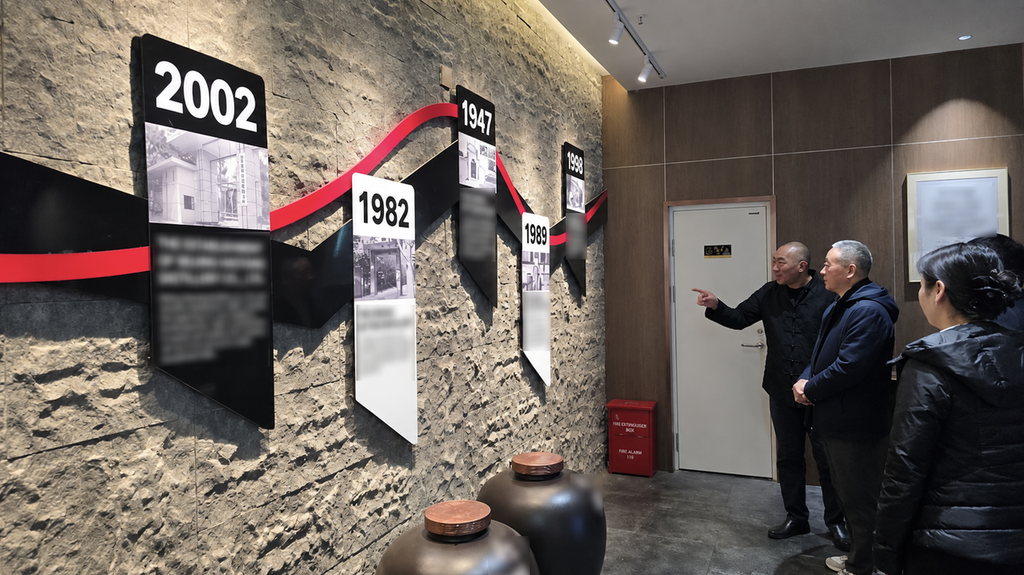
In the world of traditional brewing, heritage and craftsmanship are everything. Number One Winery traces the heritage of its traditional baijiu-making technique to a distillery dating back to 1661; its immediate predecessor was founded in 1947. Today, the company operates a site covering approximately 50 acres and employs more than 500 people, generating over $80 million in annual revenue.
However, preserving ancient techniques in a modern, fast-paced market presents a unique set of challenges. While the art of brewing remained unchanged, the business of running a large-scale manufacturing facility was becoming increasingly complex. As production expanded, paper records and daily manual summaries made it harder to monitor brewing, bottling, inventory, and quality processes in a timely way, hindering their ability to scale, ensure consistent quality, and respond quickly to market demands.
The leadership team recognized that protecting their heritage and securing their future meant modernizing their operations. The challenge was to bring the precision and efficiency of lean manufacturing to their historic distillery without disrupting the delicate art of brewing. This is the story of how Number One Winery built a fully digital, paperless factory from the ground up, empowering its master brewers and frontline workers with the tools to drive a new era of operational excellence.
The Challenge: Limited Visibility Across Paper-Based Workflows
Paper forms and manual summaries had supported the winery’s operations for years. As production and management needs expanded, however, these methods made it harder to standardize records, connect data across processes, and give managers timely visibility into operations.
Delayed and Fragmented Production Data
In the digital age, data is the lifeblood of any modern manufacturing operation. But at Number One Winery, valuable data was trapped on paper, scattered across different departments in handwritten logs, forms, and reports. Core production metrics, such as the quality of raw materials, the status of the yeast blocks, and the all-important alcohol yield rates, were recorded manually by the master brewers and summarized later.
Limited Visibility in Production
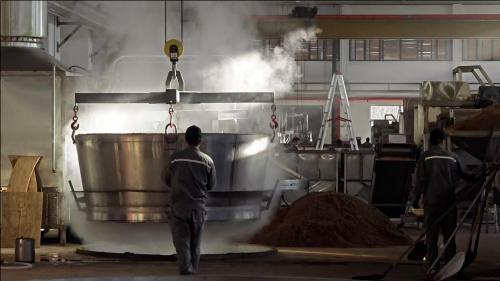
Brewing still relied heavily on hands-on work and the judgment of master brewers. Their experience was vital to the craft, but much of that know-how remained undocumented, making the process difficult to monitor consistently and the knowledge difficult to preserve.
Furthermore, the packaging and bottling line, a high-volume, fast-paced environment, was managed with the same paper-based approach. Production tasks were assigned manually, and progress was tracked through verbal updates and daily summary reports. This left the team without a timely, consolidated view of production progress or an effective way to spot issues as they emerged.
Inaccurate and Inefficient Inventory Updates
At Number One Winery, inventory management was essential to keeping production supplied and finished products ready for market. Yet both raw materials and packaging supplies were tracked using paper forms. Warehouse staff would manually record incoming shipments, and production teams would fill out paper requisitions to get the supplies they needed.
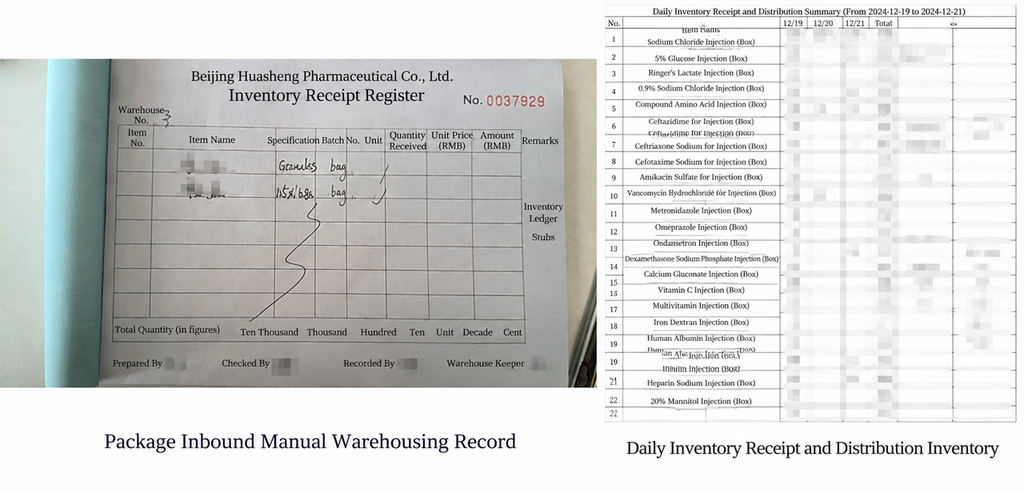
This manual system was slow, inefficient, and prone to errors. It was difficult to know the exact quantity of raw materials on hand, leading to the risk of stockouts that could halt production. On the packaging side, the high volume of consumables like bottles, caps, and boxes made manual tracking a nightmare. The lack of accurate, real-time inventory data made it impossible to implement lean principles like just-in-time (JIT) inventory, leading to excess stock, wasted capital, and a constant time-consuming stock reconciliations.
Gaps in Quality Traceability
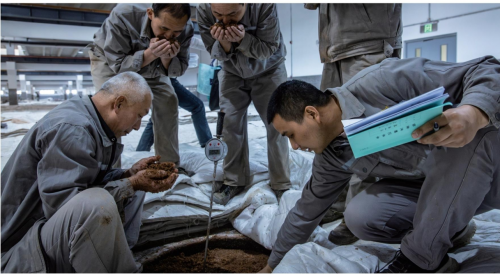
For a premium beverage company, quality is non-negotiable. Number One Winery had a rigorous quality inspection process, but it was entirely paper-based. Quality inspectors would conduct spot checks during the bottling process, recording their findings on paper forms. The finished products were then marked with a production code before being shipped out. Critical production data, such as the amount of fermentation starter used and the liquor yield between first and second distillations, were primarily recorded manually on paper. This manual data entry was often inconsistent and lacked standardization, it was incredibly difficult to connect the dots. If a quality issue was discovered later, tracing it back to a specific batch, production line, or raw material supplier was a time-consuming and often impossible task.
The leadership team at Number One Winery knew that this paper-based system was unsustainable.They needed a way to capture the data generated each day and give their teams real-time information to work more efficiently. They needed a digital transformation, but one that was flexible enough to adapt to their unique processes and simple enough for everyone, from the master brewers to the packaging line workers, to embrace.
The Solution: Building a Digital Distillery from the Ground Up
Faced with these challenges, Number One Winery explored various solutions. Traditional options, such as updating existing financial software or developing a fully customized management system through coding, were considered but dismissed due to concerns about inflexibility, lengthy development cycles, and prohibitive costs. It was during this search that Oriental Junxing, a partner with deep industry experience in winery production management, introduced Jodoo to Number One Winery.
Oriental Junxing quickly demonstrated Jodoo’s capabilities by creating preliminary demos, facilitating technical and business discussions. Their professional project implementation, extensive industry knowledge, combined with Jodoo’s powerful technical support, led to the successful deployment of a comprehensive business management system tailored specifically for the Number One Winery.
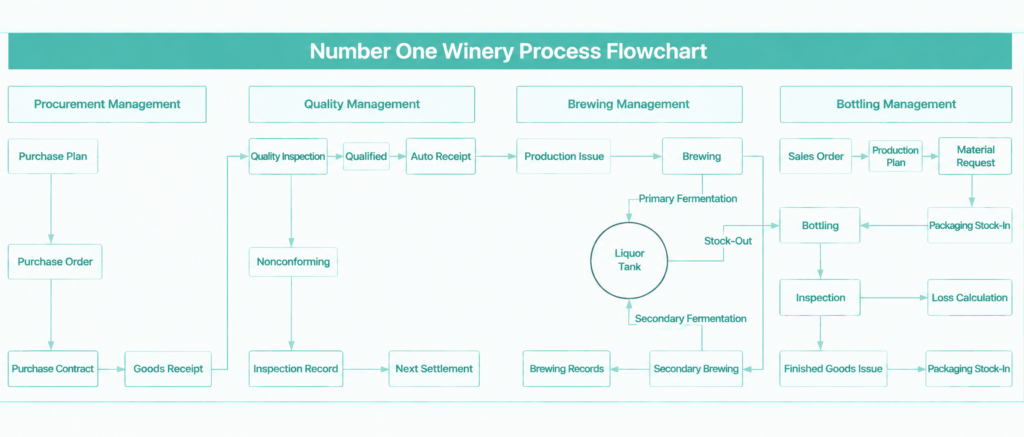
Their approach was systematic and focused on the biggest pain points first, transforming their operations one process at a time.
Digitizing the Core: A Smart Brewing Management Platform
The first step was to tackle the heart of the operation: the brewing process itself. The goal was to bring real-time visibility and data-driven decision-making to the ancient art of brewing.
- From Paper to Mobile App: The team designed a simple, mobile-friendly application that replaced the old paper logs. Now, when a shipment of raw materials like sorghum or soybeans arrives, the quality inspector can use a tablet to record the inspection results, take photos, and upload the data instantly. Any issues are automatically flagged and routed to the right person for immediate action.
- Empowering the Master Brewers: The master brewers, who were initially hesitant to adopt new technology, were given a simple, intuitive interface to log their process data. With just a few taps on a screen, they could record the key parameters for each batch—such as the status of the yeast blocks, water levels, and acidity. This not only standardized the data collection process but also preserved their invaluable expertise in a digital format.
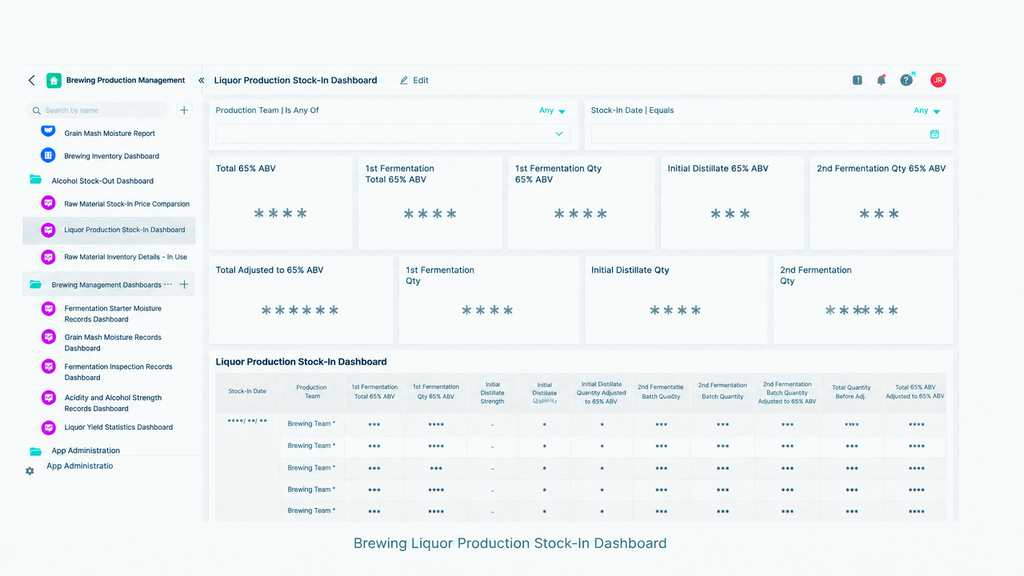
- Echtzeit-Dashboards: All this data flows into a live dashboard, which provides a real-time view of the entire brewing operation. Managers can now track the alcohol yield rate for each batch, compare it against historical data, and identify trends. This allows them to work with the master brewers to make scientific, data-driven adjustments to the process, optimizing for both quality and efficiency.
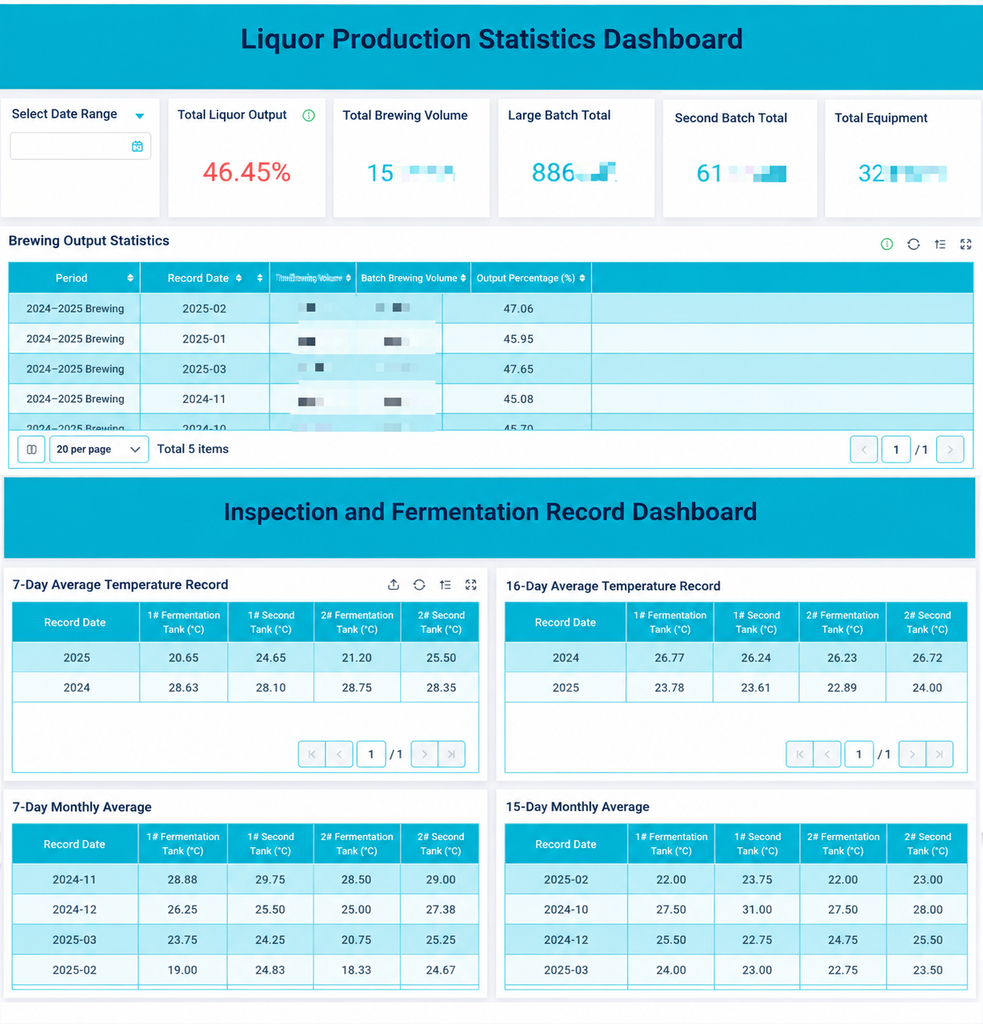
End-to-End Traceability: The Digital Bottling and Quality Management System
Next, the team focused on the high-volume bottling and packaging line. They built an integrated system that connected sales orders, production tasks, quality control, and inventory management into a single, seamless workflow.
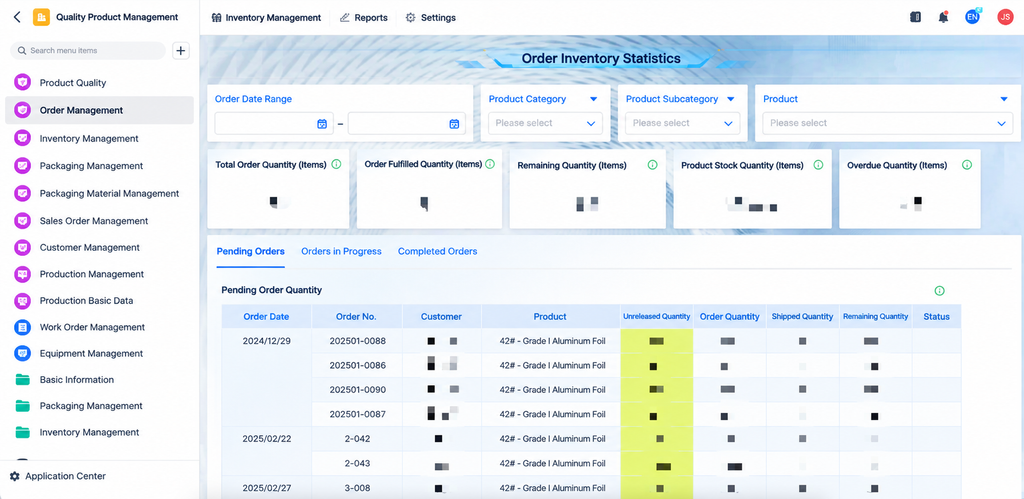
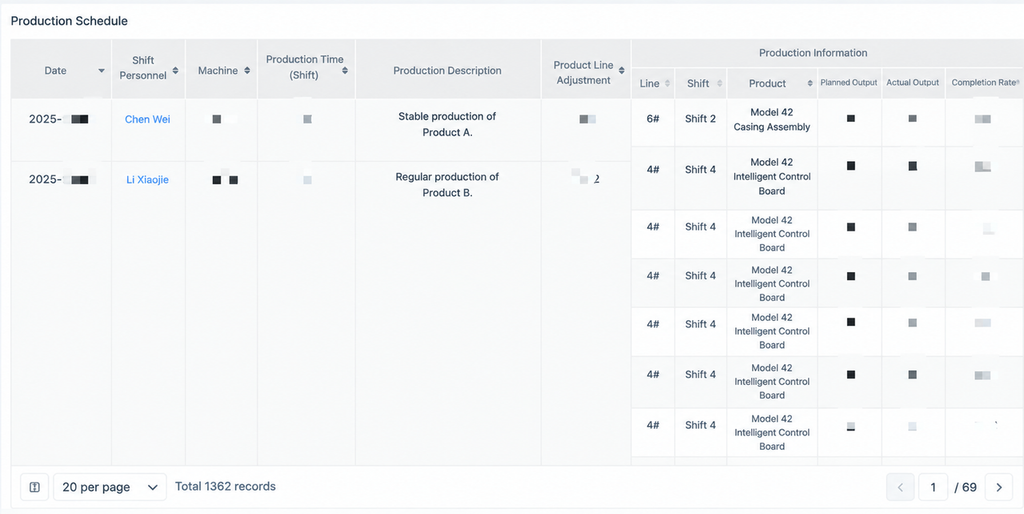
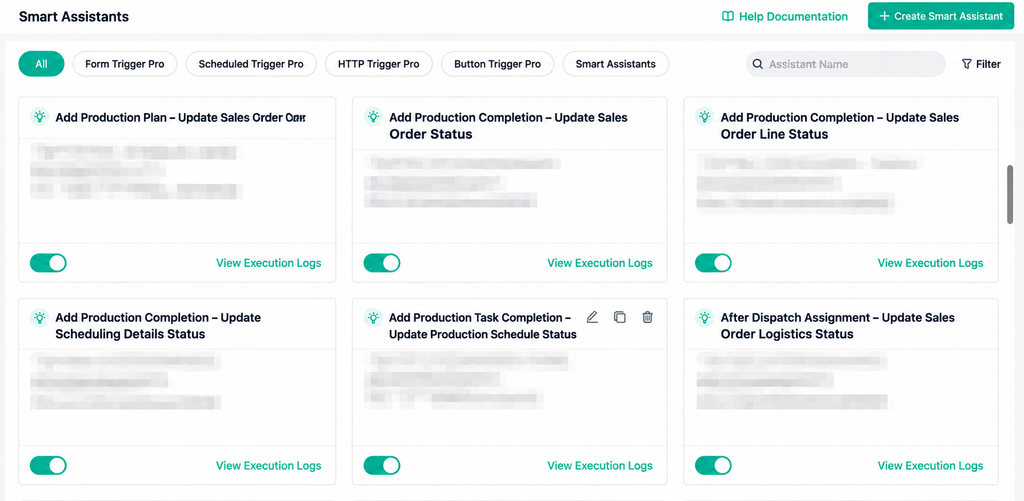
- Automated Production Tasks: Instead of manually creating and distributing production schedules, the system now automatically generates production tasks based on incoming sales orders. These tasks are assigned to the appropriate production line and team, ensuring that everyone knows exactly what they need to do and when.
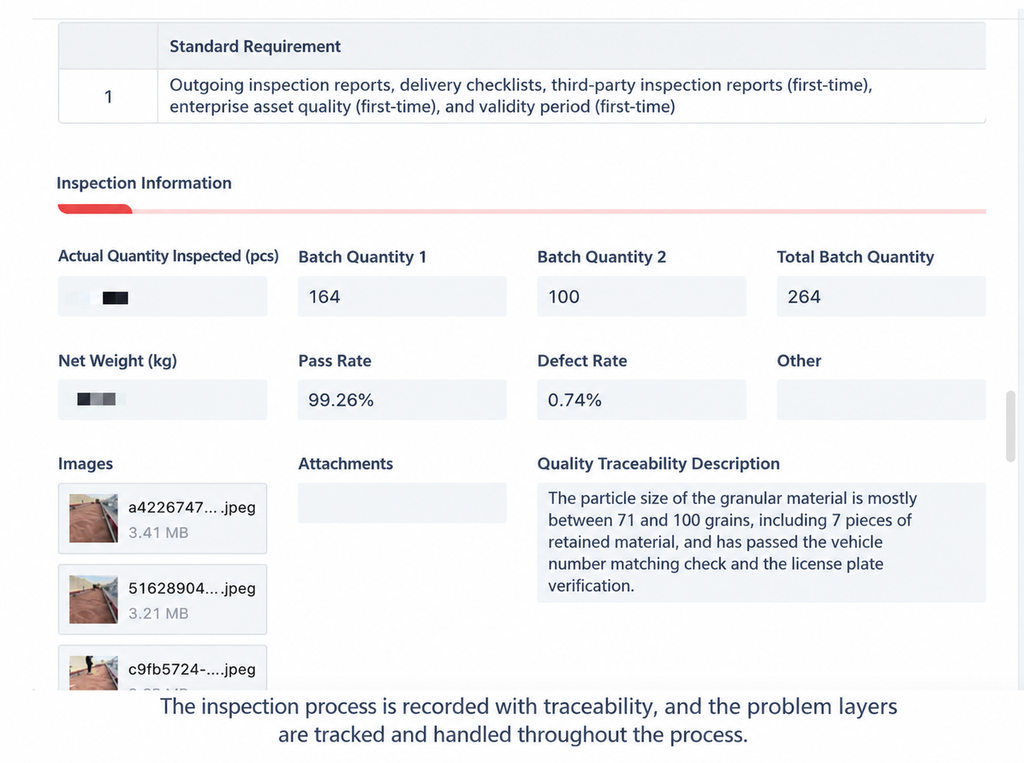
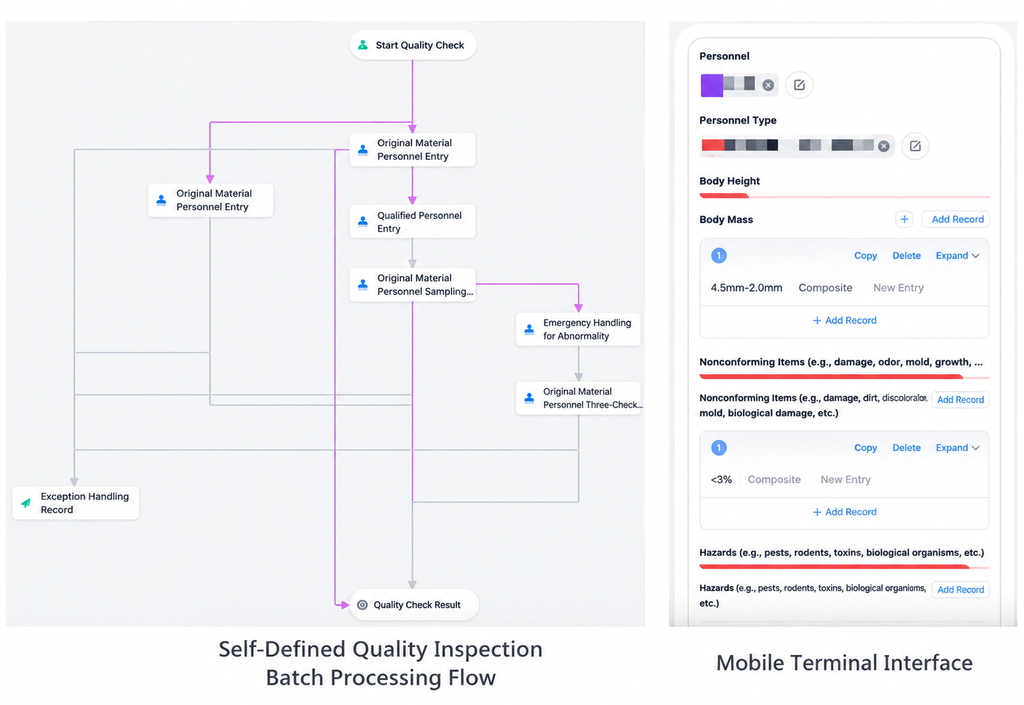
- Digital Quality Inspections: The paper-based quality inspection forms were replaced with a mobile app. Quality inspectors can now scan a batch’s QR code, conduct their checks, and record the results directly in the system. This creates a digital, time-stamped record of every inspection, linked directly to the production batch. This provides complete traceability from the finished product back to the raw materials, allowing for instant root cause analysis if any issues arise.
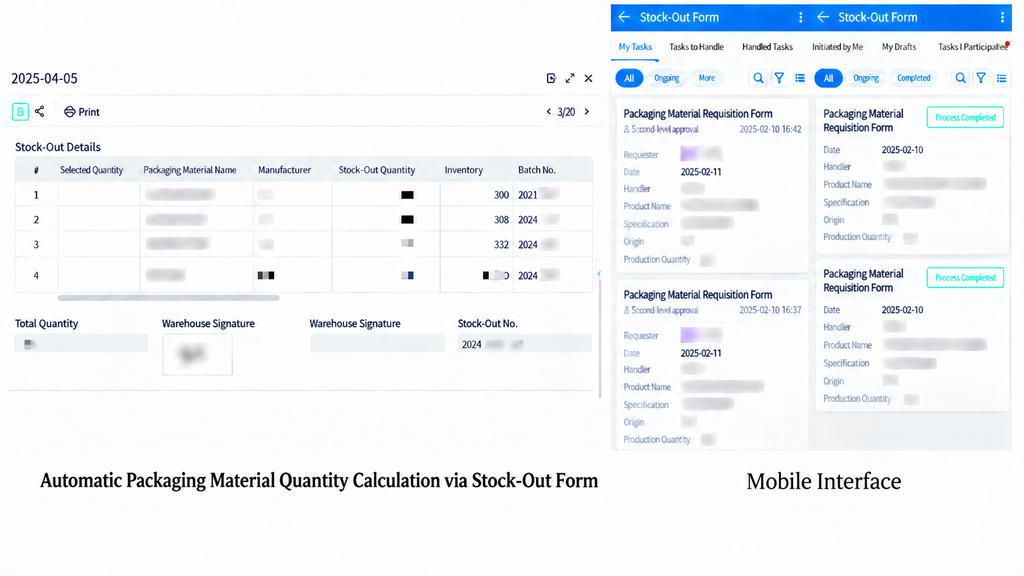
- Smart Packaging Management: The system includes a Bill of Materials (BOM) for each product. When a production task is initiated, the system automatically calculates the required packaging materials (bottles, caps, labels, boxes) and allocates them from inventory. This eliminates guesswork, reduces waste, and ensures that the correct packaging is always used.
Proactive Maintenance: The Smart Equipment Management Platform
To further enhance operational efficiency and prevent costly downtime, the team developed a proactive equipment management system. This was a critical step in implementing a truly lean manufacturing environment.
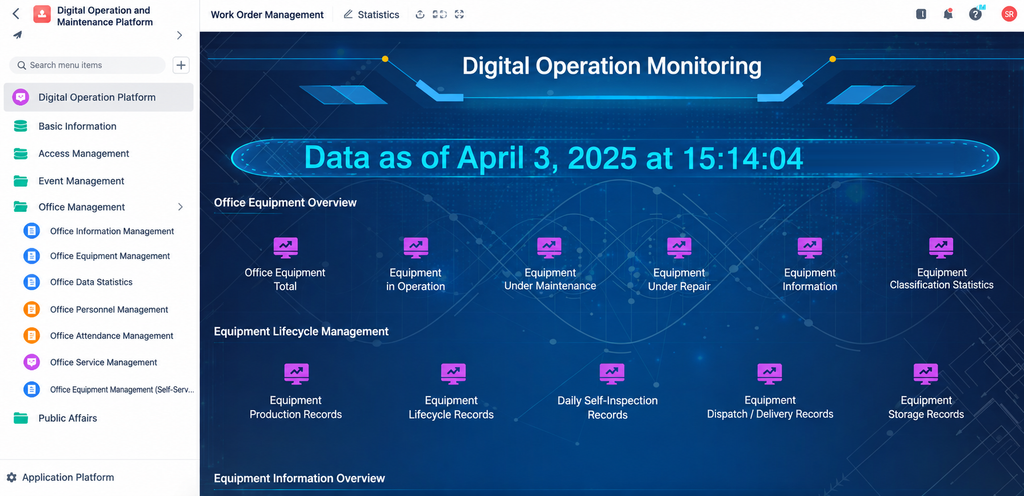
- QR Code-Based System: Every piece of equipment in the distillery, from the fermentation tanks to the bottling machines, was tagged with a unique QR code. Maintenance staff can now simply scan the code with a mobile device to access the equipment’s entire history, including past maintenance records, technical specifications, and operating manuals.
- Streamlined Workflows: When a piece of equipment needs maintenance, a work order is created and assigned directly through the app. The maintenance technician receives an instant notification and can use the app to log their work, record the parts used, and close out the order. This has dramatically reduced response times and improved the efficiency of the maintenance team.
- Von reaktiv zu proaktiv: The system also enables a proactive, preventive maintenance schedule. Based on the equipment’s operating hours or a set schedule, the system automatically generates maintenance tasks and sends reminders to the team. This helps to prevent breakdowns before they happen, maximizing uptime and extending the life of the equipment.
The Paperless Factory: A Cultural Transformation
The cumulative effect of these solutions was the creation of a 100% paperless factory. From the moment raw materials arrive to the final shipment of finished goods, every step of the process is now managed digitally. This extends beyond the core production process to include administrative and support functions as well.
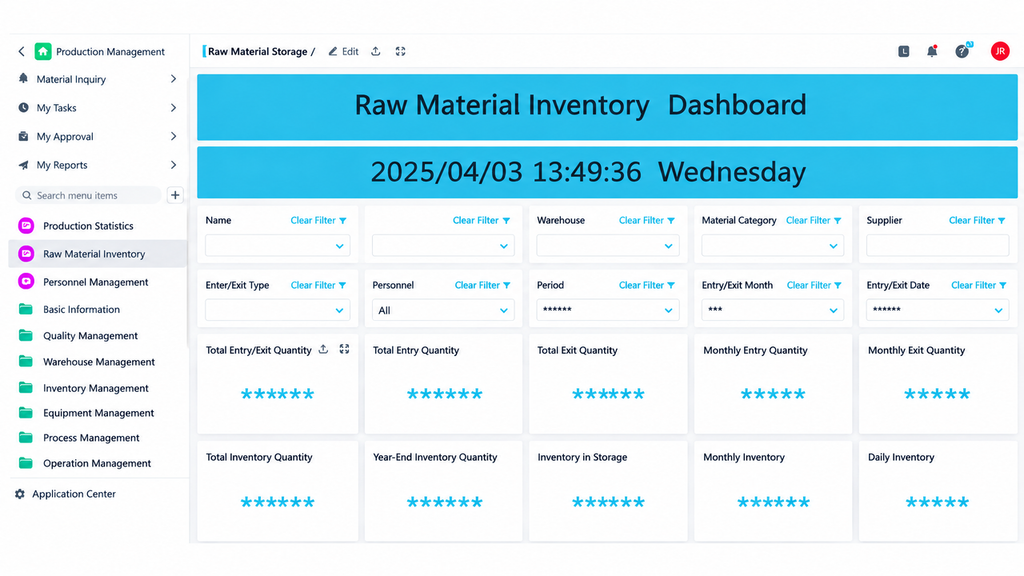
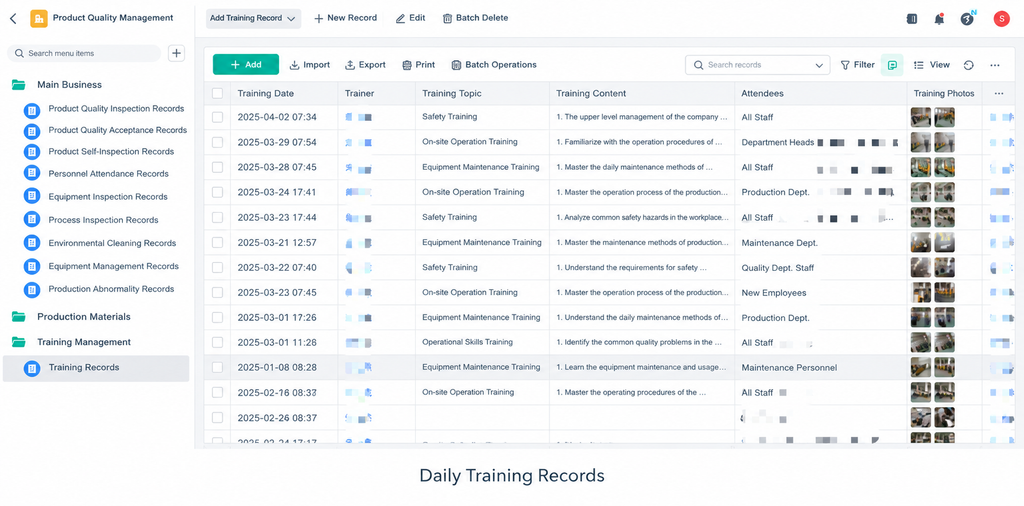
Daily environmental checks, employee sanitation records, and even HR processes like leave requests and performance reviews are now all handled through the same unified platform. This has not only eliminated the costs and inefficiencies of paper but has also driven a profound cultural shift within the company. Employees are more engaged, data is more accessible, and decisions are made faster and with greater confidence. The distillery has successfully bridged the gap between its historic past and its digital future.
The Results: A Vintage Year for Efficiency and Growth
Since the introduction of Jodoo in the second half of 2024, the winery has achieved significant results in production and operation management.
The Number One Winery has successfully achieved a breakthrough from 0 to 1 in enterprise digital transformation, comprehensively standardizing brewing production, inventory, and packaging material business management, significantly improving data timeliness and accuracy.
—— The winery’s leadership
The numbers speak for themselves. The once-siloed, slow, and inefficient processes have been replaced by a streamlined, transparent, and data-driven operation.
| Leistungskennzahl | Vorher: Papierbasiertes System | After: Lean Digital System |
|---|---|---|
| Overall Workflow Efficiency | Manual, slow, disconnected | Automated, real-time, integrated |
| Data Timeliness & Accuracy | Days-old, error-prone | +90% Timeliness, 99% Accuracy |
| On-Time Delivery Rate | High risk of delays | 60% Increase in Delivery Timeliness |
| Quality Inspection Efficiency | Manual, slow documentation | Mobile app, instant reporting |
| Inventory Accuracy | Manual counts, frequent errors | Real-time, automated tracking |
| Packaging Material Waste | High, un-tracked | BOM-based, controlled |
A New Culture of Data-Driven Excellence
The most significant result has been the cultural shift. With production, inventory, and quality records consolidated online, managers can review current information without waiting for separate daily summaries. Frontline teams can enter data within the same workflows used to complete their tasks. This transparency has empowered employees at all levels to take ownership of their work and make smarter, faster decisions.
This new level of visibility has led to measurable operational improvements. The 90% increase in workflow efficiency means that processes that used to take days—like approving a quality inspection report or reconciling inventory—now take minutes. The 60% improvement in on-time delivery has strengthened relationships with distributors and customers, solidifying their reputation as a reliable partner.
The Financial Impact
The move to a paperless factory and the implementation of lean principles have also delivered significant financial benefits. The 15% reduction in packaging material waste, achieved through the BOM-driven consumption system, has led to direct cost savings. The 95% improvement in inventory accuracy has reduced the amount of capital tied up in excess stock and minimized the risk of costly production stoppages.
By eliminating paper, streamlining workflows, and automating manual tasks, the company has been able to significantly reduce its operational overhead. While the cultural and efficiency gains are paramount, the financial impact has been substantial, with an estimated annual saving of over $200,000 in operational costs.
Future Outlook: Brewing a Smarter Future
The successful implementation of their digital factory management system is just the beginning for Number One Winery. Having built a solid foundation for data-driven operations, the company is now looking to the future, with a clear vision for how to leverage technology to further enhance its competitive edge.
Their roadmap is focused on building a truly “smart winery,” where data is not just used to manage the present but to predict and shape the future.
Deepening the Digital Footprint
The immediate plan is to expand the use of the platform across all aspects of the business. While the core production processes are now digitized, there are still opportunities to bring the same level of efficiency and transparency to other areas, such as sales management, financial reporting, and human resources. The goal is to create a single, unified platform that manages every aspect of the business, from grain to glass.
Turning Data into Insights
With a wealth of high-quality, real-time data now at their fingertips, the next frontier is advanced analytics. The company plans to invest in data mining and business intelligence tools to uncover deeper insights from their operational data. They envision a future where they can use predictive analytics to forecast demand more accurately, optimize production schedules, and even predict potential quality issues before they occur.
A Connected Supply Chain
The company plans to use its digital platform to build a more connected and collaborative supply chain. By sharing real-time data with their key suppliers and distributors, they can improve coordination, reduce lead times, and create a more resilient and efficient ecosystem.
The Rise of the Smart Winery
The ultimate goal is to integrate their digital platform with Internet of Things (IoT) technology. By placing sensors on fermentation tanks, aging barrels, and production equipment, they can capture an even more granular level of data and achieve a higher degree of automation. This will allow them to monitor and control the brewing environment with unparalleled precision, ensuring perfect quality in every single batch.
Number One Winery’s journey is a powerful testament to the fact that tradition and technology can go hand in hand. By embracing a lean digital strategy, they have not only preserved their centuries-old heritage but have also built a modern, agile, and data-driven operation that is ready for the challenges of the 21st century. They have proven that even the most traditional industries can be transformed by the power of digital technology, and in doing so, they have brewed a recipe for sustainable, long-term success.