Browse by category

Introduction: Why ESG Reporting Is Becoming a Manufacturing Priority
A growing number of manufacturers are being asked for sustainability data before they win business, not after. In fact, large buyers increasingly use supplier assessments to screen for emissions, labor practices, safety performance, and governance controls as part of sourcing decisions. That is why ESG reporting is no longer just an investor exercise. For many manufacturers, it has become a practical requirement for customer qualification, supply chain access, and risk management.
In simple terms, ESG reporting is the process of collecting and disclosing data on your environmental, social, and governance performance. In a manufacturing setting, that can include energy use, waste generation, injury rates, workforce training, supplier compliance, and the policies that govern how plants operate. Even if your company is not yet subject to formal disclosure rules, your customers, lenders, and board may still expect credible, traceable ESG data.
This article explains what ESG reporting looks like in manufacturing, which frameworks matter, how to start without creating more spreadsheet chaos, and which metrics are most useful at the plant level. It also shows how teams can move from scattered requests and manual files to a more structured reporting process.
What ESG Reporting Means in a Manufacturing Context
In manufacturing, ESG reporting is not an abstract corporate exercise. It is a structured way to show how a plant uses resources, protects people, controls risks, and governs decisions that affect customers, regulators, lenders, and supply chain partners. For a factory, that means turning daily operational records into credible evidence, not just broad sustainability statements. This is why measuring ESG performance in manufacturing usually starts on the shop floor, not in a board presentation.
Environmental Reporting
The environmental side of ESG reporting focuses on how production affects energy use, emissions, waste, and natural resources. In a machining plant, that may mean tracking electricity consumed by compressed air systems, scrap metal rates, coolant disposal, and fuel used by internal logistics vehicles. In a food packaging factory, the priority may shift toward water consumption, wastewater quality, packaging waste, and the energy intensity of heating or drying processes. The point is that environmental reporting must reflect the real resource profile of the operation.
For many manufacturers, energy is the first place to start because the data is often available and financially material. Manufacturing accounts for roughly one-third of global energy use, so even basic reporting on electricity, gas, and fuel consumption can reveal both carbon exposure and cost reduction opportunities.
Social Reporting
The social dimension is often reduced to safety, but manufacturing stakeholders usually expect a wider view. Safety metrics such as TRIR, lost-time incidents, near misses, and corrective action closure rates remain central because they show whether risk controls work in practice. Yet labor stability, training completion, working hours, grievance mechanisms, and contractor management also matter, especially in labor-intensive sectors like electronics assembly, garments, and consumer goods production.
A manufacturer supplying multinational brands may be asked to document not only accident rates but also evidence of wage compliance, anti-harassment policies, and onboarding records for temporary workers. In that sense, social reporting is partly about workforce conditions and partly about management discipline. If a plant cannot prove that required training was completed or that incidents were reviewed consistently, the issue becomes one of credibility as much as performance. That is a recurring theme across ESG reporting frameworks for manufacturers.
Governance Reporting
Governance in manufacturing is often the least understood part of ESG reporting because it sounds removed from operations. In practice, it covers the systems that define who is responsible, what policies apply, how exceptions are handled, and whether records are auditable. This includes anti-bribery policies, supplier codes of conduct, whistleblower processes, internal audits, approval controls, and board or management oversight of ESG risks.
Which ESG Reporting Frameworks Manufacturers Should Know
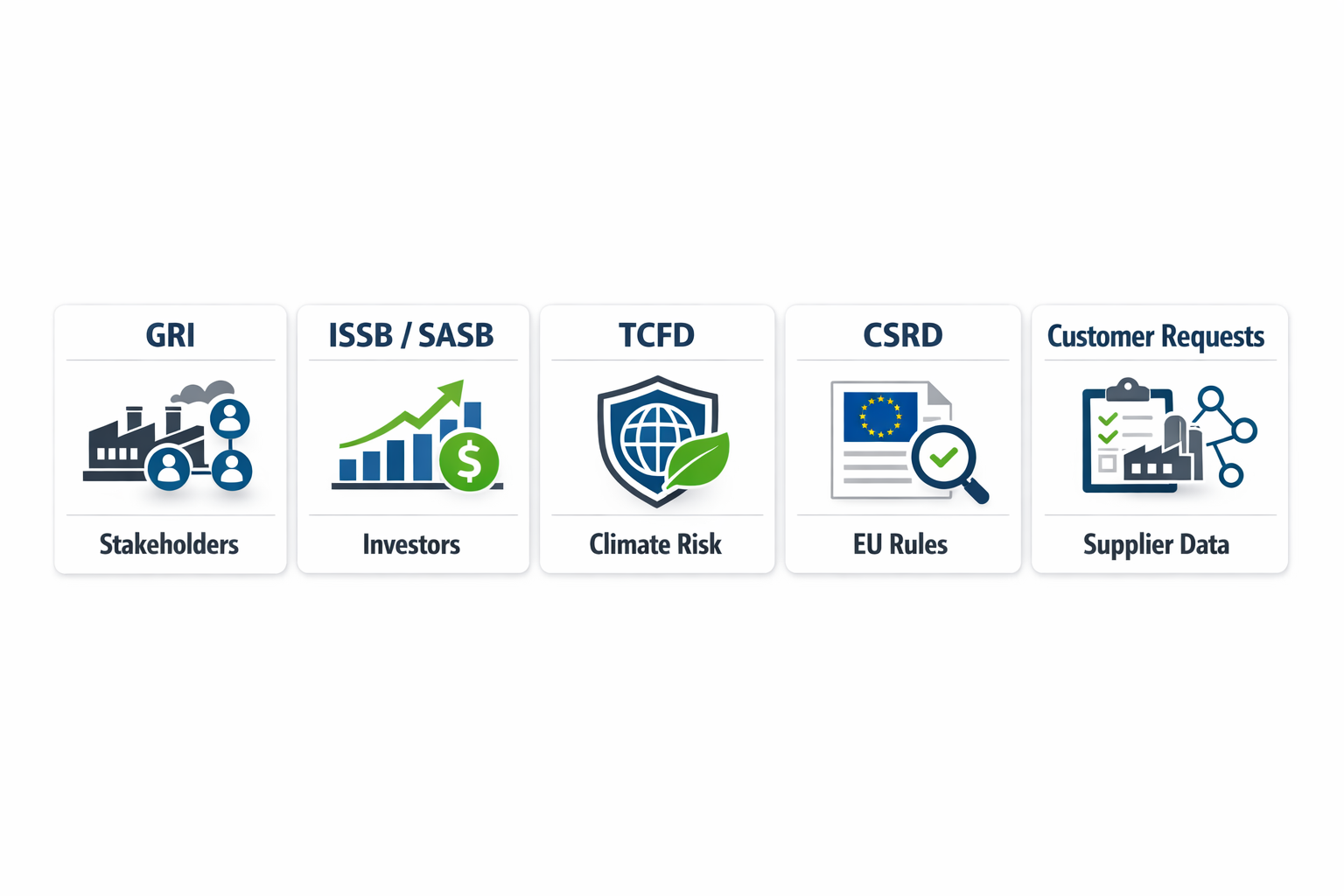
Manufacturers rarely need to master every ESG framework at once. The practical question is which framework matches your reporting trigger: investor expectations, customer disclosure requests, regulatory exposure, or internal management priorities. In practice, most companies start by organizing internal data first, then map that data to the framework their stakeholders actually use. That approach is usually more efficient than choosing a framework first and discovering later that the plant-level data does not exist in a usable form.
GRI: Broad Stakeholder Reporting
The Global Reporting Initiative (GRI) is the most widely used framework for broad sustainability reporting. It is designed for a wide stakeholder audience, including customers, employees, communities, lenders, and regulators, so it covers a wide set of environmental, social, and governance topics. For manufacturers, GRI is useful when you want a comprehensive report that explains impacts across energy, emissions, waste, labor practices, occupational health and safety, and supply chain management. It is often a good fit for companies that need a public-facing sustainability report rather than a narrow investor disclosure.
SASB and ISSB: Financial Materiality for Investors
SASB, now incorporated into the ISSB approach, is more focused on financially material sustainability issues. That means it helps manufacturers identify which ESG topics are most likely to affect enterprise value, margins, capital access, or operational resilience. A metal fabricator, for example, may focus more heavily on energy intensity, worker safety, and business ethics controls than on a long list of community disclosures. If your board, investors, or parent company want decision-useful metrics with strong comparability, SASB- and ISSB-aligned reporting is often the better starting point.
TCFD-Style Climate Disclosure: Risk and Resilience
TCFD-style climate disclosure is less a full ESG framework than a structure for reporting climate-related governance, strategy, risk management, and metrics. For manufacturers, it is particularly relevant when climate risk affects energy cost exposure, water availability, physical asset risk, or customer decarbonization requirements. Even where TCFD is being absorbed into broader ISSB standards, many companies still use its logic to organize climate reporting. If your biggest reporting pressure is around emissions, transition risk, or scenario planning, this is the lens to understand first.
CSRD: Detailed Requirements for Companies Tied to Europe
The Corporate Sustainability Reporting Directive (CSRD) matters most for manufacturers with operations in Europe, EU-listed entities, or significant exposure to European customers and supply chains. Compared with other ESG reporting frameworks for manufacturers, CSRD is more prescriptive, more detailed, and more demanding on auditability and data quality. It uses the concept of double materiality, meaning you report both how sustainability issues affect the business and how the business affects people and the environment. Even non-EU manufacturers may feel its impact indirectly when European customers ask suppliers for structured emissions, labor, and governance data.
How to Choose a Sensible Starting Point
A practical starting point depends on your business model and maturity. If you need a public sustainability narrative, start with GRI; if investor-grade materiality is the driver, lean toward ISSB logic; if Europe is in scope, assess CSRD early; and if your immediate pressure comes from major OEMs or retailers, begin with their supplier disclosure requirements. Many manufacturers begin by aligning internal metric definitions, evidence rules, and reporting ownership before worrying about perfect framework mapping. That sequencing also supports later work on measuring ESG performance in manufacturing because the same core data often feeds multiple frameworks.
How to Start ESG Reporting Without Creating More Spreadsheet Chaos
For many manufacturers, the real problem is not deciding whether to report ESG data. It is figuring out how to start ESG reporting when the inputs sit across utility bills, safety logs, HR records, supplier files, and plant spreadsheets. A practical rollout starts by narrowing scope, naming owners, and defining what counts as acceptable evidence before you worry about broad alignment with ESG reporting frameworks for manufacturers. Think of the first phase as building a reliable operating process, not publishing a perfect report.
Start With a Narrow, High-Value Scope
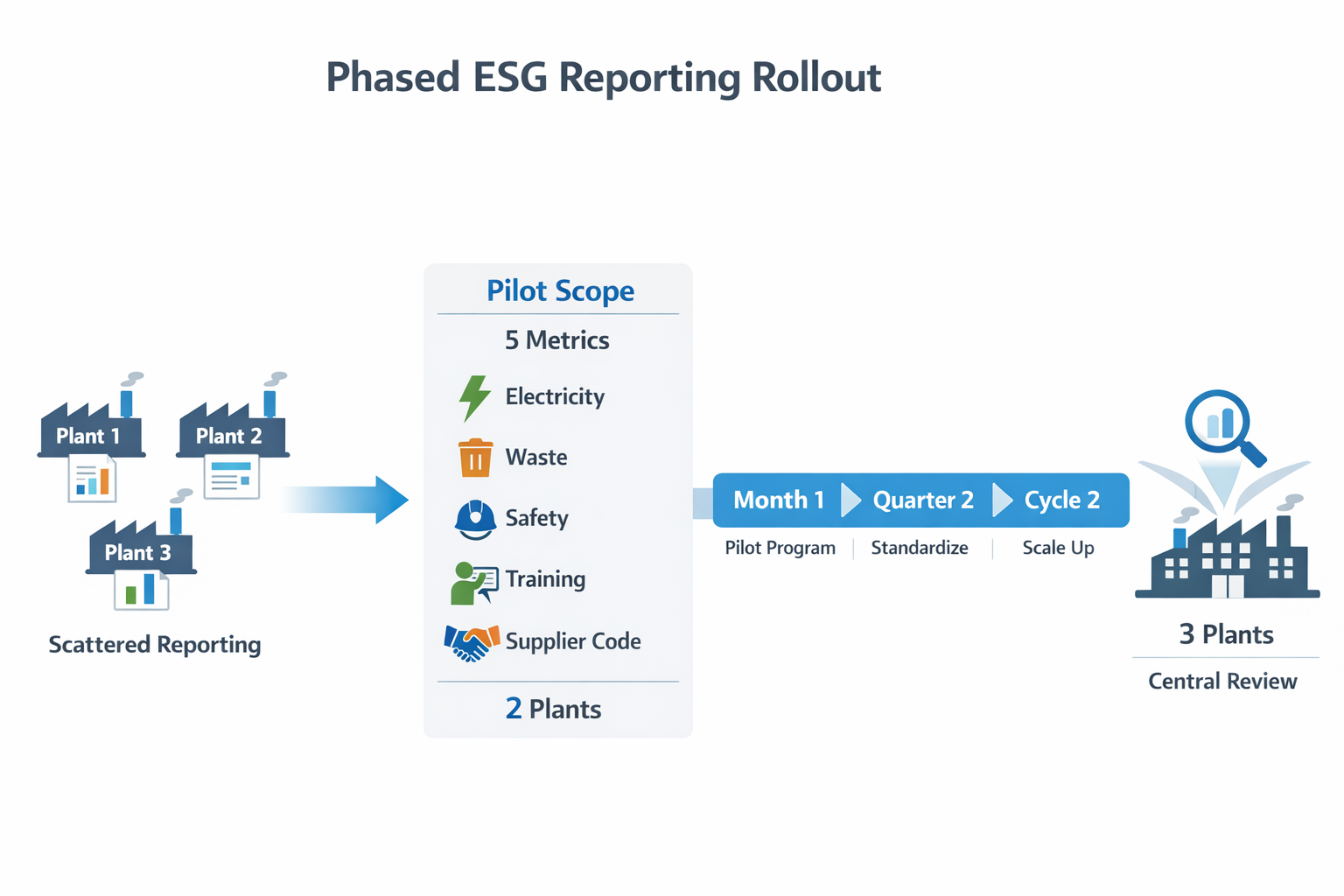
Take a regional electronics manufacturer with three plants in Thailand, Vietnam, and Malaysia. At first, each site responds differently to customer ESG requests: one sends monthly electricity data, another submits annual totals, and a third cannot trace waste figures back to source documents. The company’s first step is not to collect everything, but to choose a small set of metrics that matter to both customers and internal management.
A sensible pilot scope might include electricity consumption, total waste generated, recordable safety incidents, training completion, and supplier code-of-conduct acknowledgment. These metrics cut across environmental, social, and governance topics without overwhelming plant teams. They also give the company an early foundation for later work on measuring ESG performance in manufacturing. Starting with five to eight metrics is usually far more effective than launching with 40 poorly defined ones.
The rollout should also be phased by organizational readiness. In month one, the company tests two plants and a small metric set. In quarter two, it adds the third plant, standard definitions, and a central review process. By the second reporting cycle, it can expand from a customer-response exercise into a cross-functional ESG reporting process with clearer controls.
Assign Metric Owners and Define Submission Rules
Once scope is set, each metric needs a named owner at both plant and corporate level. In the electronics example, the plant engineering manager owns energy data, the EHS lead owns waste and safety, HR owns training completion, and procurement owns supplier acknowledgment status. Finance or sustainability then acts as the consolidator, checking completeness and consistency before figures move upward.
Ownership alone is not enough if sites submit data in different formats. Each metric should have a short data rule covering unit of measure, reporting boundary, submission deadline, and supporting evidence. For example, electricity may be reported in kWh by plant per month, supported by invoices or meter exports, while safety data may require incident logs closed by the EHS manager.
Set Cadence Before You Build Complexity
Many teams assume ESG data should be annual because formal reports are annual. In practice, monthly or quarterly collection is usually better because it reduces backtracking and improves data quality. In the example company, monthly collection works for electricity and safety, while quarterly submission is enough for training and supplier compliance.
This cadence should reflect operational reality, not reporting ambition. If one plant still tracks waste through manual contractor receipts, monthly reporting may create noise instead of control. A mixed cadence is acceptable as long as deadlines, review dates, and escalation rules are documented.
Establish Evidence and Approval Workflows
The next step is to formalize what proof is required and who signs off. In the electronics group, plant owners upload invoices, incident logs, training exports, or supplier records with each submission, and corporate reviewers can reject incomplete entries. That simple rule prevents the common problem of “final numbers” that cannot be traced back during an audit or customer review.
Ownership and approval flow should mirror existing accountability. Plant teams submit, department heads review, and a central ESG or finance lead approves consolidated results for management use. Operations, EHS, HR, procurement, and finance each check the data they understand best instead of pushing everything into one sustainability inbox.
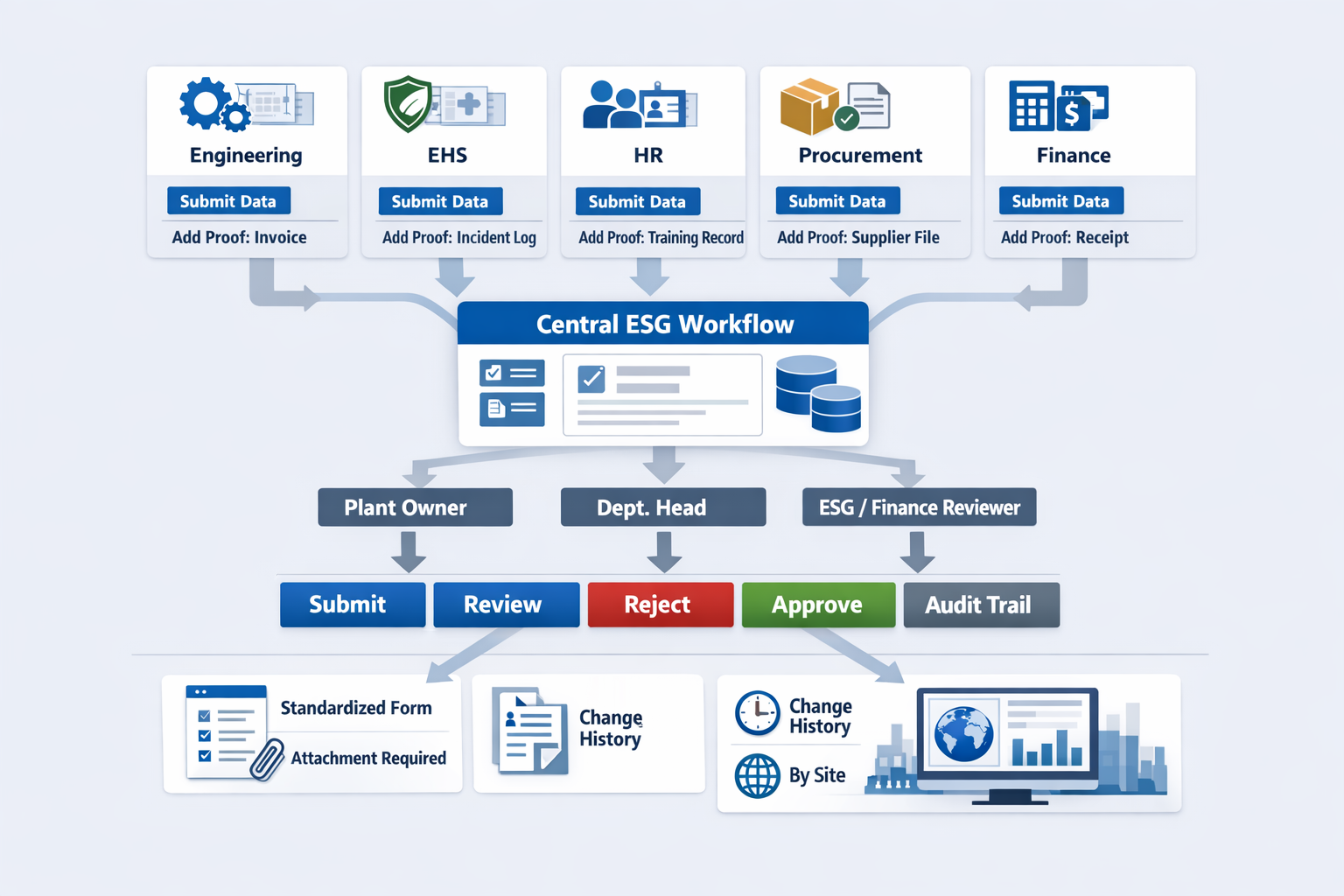
This is where a workflow platform such as Jodoo becomes useful. Instead of chasing spreadsheets by email, you can build standardized submission forms, route records to the right approvers, require attachments, and keep a visible history of changes by site and metric. That gives multi-site manufacturers a controlled process they can improve over time, especially before they map data to external frameworks.
Measuring ESG Performance in Manufacturing: The Core Metrics That Matter
Once you move from learning how to start ESG reporting to actually measuring it, the key question becomes practical: which metrics are worth tracking every month, quarter, or year? In manufacturing, the best ESG metrics are not just the easiest numbers to export from utility bills or HR files. They are the numbers that help you explain operational impact, show progress over time, and stand up to customer, auditor, or board review.
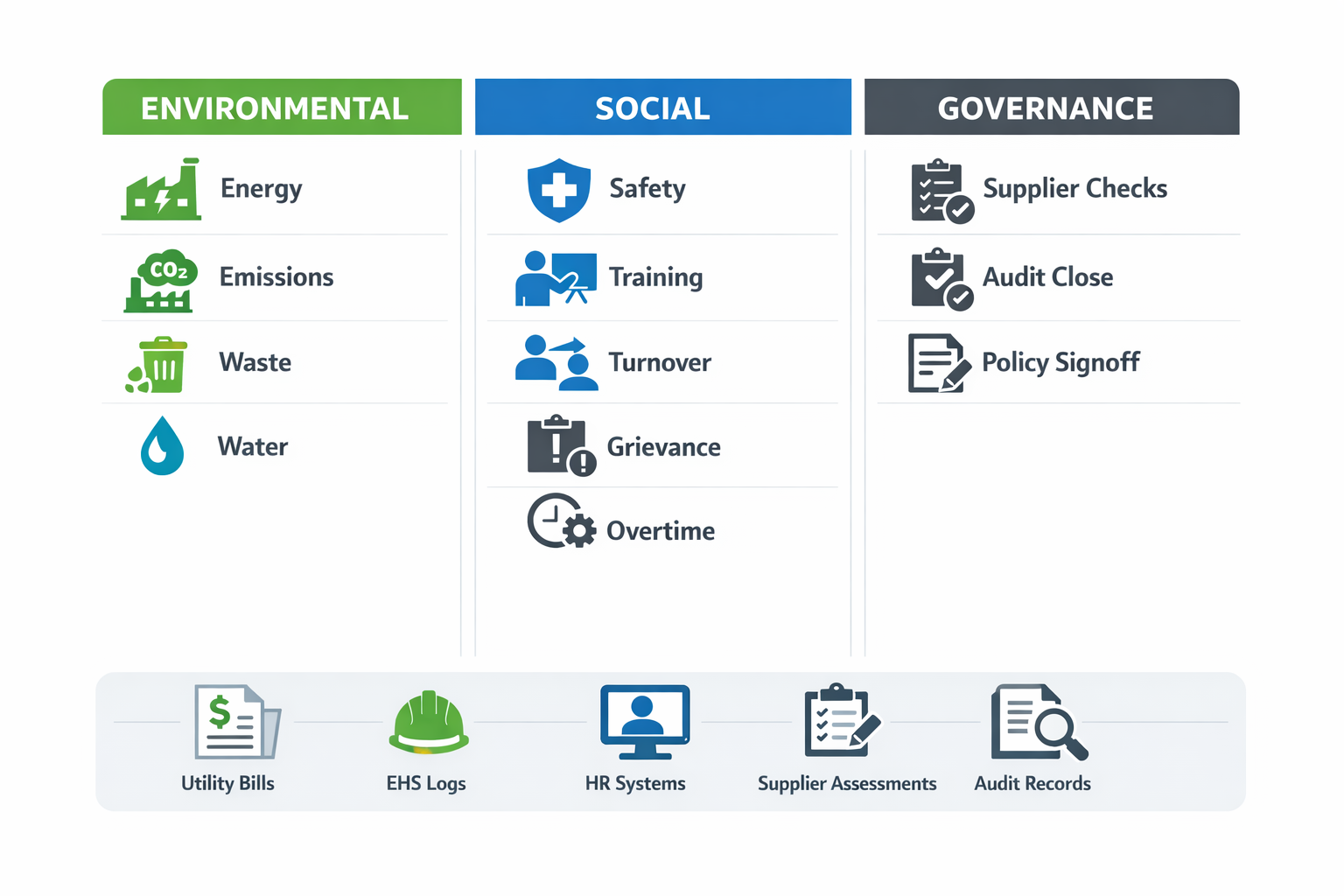
For most manufacturers, the core categories are straightforward. Environmental metrics usually come from utility bills, sub-meter systems, production records, waste manifests, and water logs. Social metrics often rely on EHS incident records, HR systems, training logs, and grievance or turnover data. Governance metrics typically come from internal audit findings, supplier assessments, policy attestations, approval records, and compliance registers.
Environmental Metrics: Focus on Intensity, Not Just Totals
Energy consumption is usually the starting point because it is measurable and financially material. Track total electricity and fuel use, but also normalize it into energy per unit produced, per machine hour, or per revenue band where appropriate. A plant that increases output by 20% may show higher total energy use while still improving efficiency, which makes intensity metrics far more decision-useful than raw totals alone.
Emissions should follow the same logic. Many manufacturers begin with Scope 1 and Scope 2 emissions because fuel use and purchased electricity are easier to quantify than upstream or downstream impacts. If your ESG reporting frameworks for manufacturers include customer carbon disclosure requests, you will need a clear method for converting utility and fuel data into emissions factors consistently across facilities.
Waste metrics matter most when they show what operations can change. Total waste generated is useful, but segregation by hazardous versus non-hazardous waste, landfill versus recycled output, and waste per unit produced gives management a clearer improvement path. In electronics assembly, for example, solvent waste and rejected boards often reveal more about process control than a single annual waste total.
Water should be treated as a priority metric where process use, or local water stress, makes it material. Track total withdrawal, discharge, recycling rate, and water use per unit produced if washing, cooling, dyeing, plating, or food processing is involved. In lower-water-intensity plants, a simpler monitoring approach may be enough unless customers or regulators ask for more detail.
Social Metrics: Use Indicators That Reflect Real Workforce Conditions
Safety performance is the most established social metric set in manufacturing, but not all indicators are equally useful. Recordable incident rate, lost-time injury frequency rate, near-miss reporting, and corrective action closure time together give a better picture than injury counts alone. A factory with rising near-miss reporting may actually be improving reporting culture, even before incident rates decline.
Training completion is another common metric, but completion percentage alone can be misleading. It is more useful when split by mandatory safety training, role-specific technical certification, refresher completion, and overdue training by department or shift. This helps operations and HR see whether risk is concentrated in certain lines, contractors, or newly hired teams.
Other social indicators may include employee turnover, absenteeism, grievance cases, and overtime compliance. The right mix depends on labor profile, customer expectations, and site risk. A labor-intensive garment plant, for instance, will usually need a deeper workforce dataset than a highly automated metal parts facility.
Governance Metrics: Measure Control Strength, Not Just Policy Existence
Governance reporting in manufacturing should show whether controls are functioning in daily operations. Useful metrics include supplier compliance assessment rates, policy acknowledgment completion, internal audit closure rates, open corrective actions, and on-time regulatory filing performance. These indicators connect governance to execution, which is what most buyers and auditors actually want to see.
Supplier compliance deserves special attention because many ESG requests now extend beyond the plant gate. Track how many critical suppliers have signed your code of conduct, completed self-assessments, passed audits, or submitted required labor and environmental documents. That makes ESG reporting more credible than simply stating that supplier standards exist on paper.
Conclusion: Build a More Reliable ESG Reporting Process With Jodoo
Effective ESG reporting in manufacturing is not just about publishing a polished report once a year. It depends on whether you can collect consistent data from the shop floor, verify it across departments, and turn it into information that management, customers, and auditors can trust. For most manufacturers, the real challenge is not choosing a framework. It is building a reporting process that works across plants, functions, and reporting cycles without creating more spreadsheet rework.
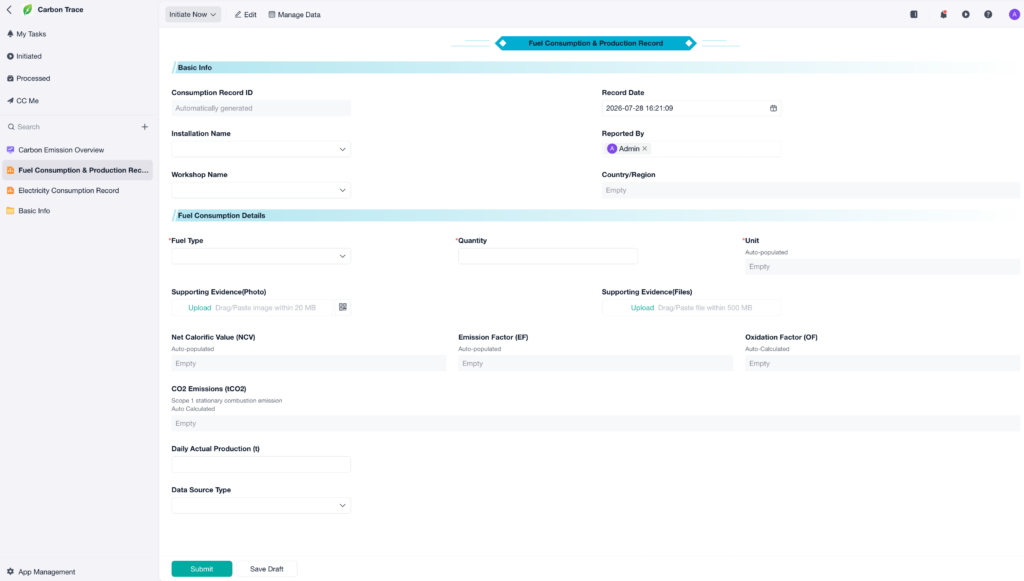
As a no-code lean manufacturing platform, Jodoo gives operations teams a practical way to digitize ESG data collection through mobile forms, route submissions through approval workflows, connect data from existing systems through APIs, and monitor progress in real time with dashboards. This makes it easier to bring together energy records, safety incidents, waste tracking, training logs, and supplier compliance data in one controlled process.
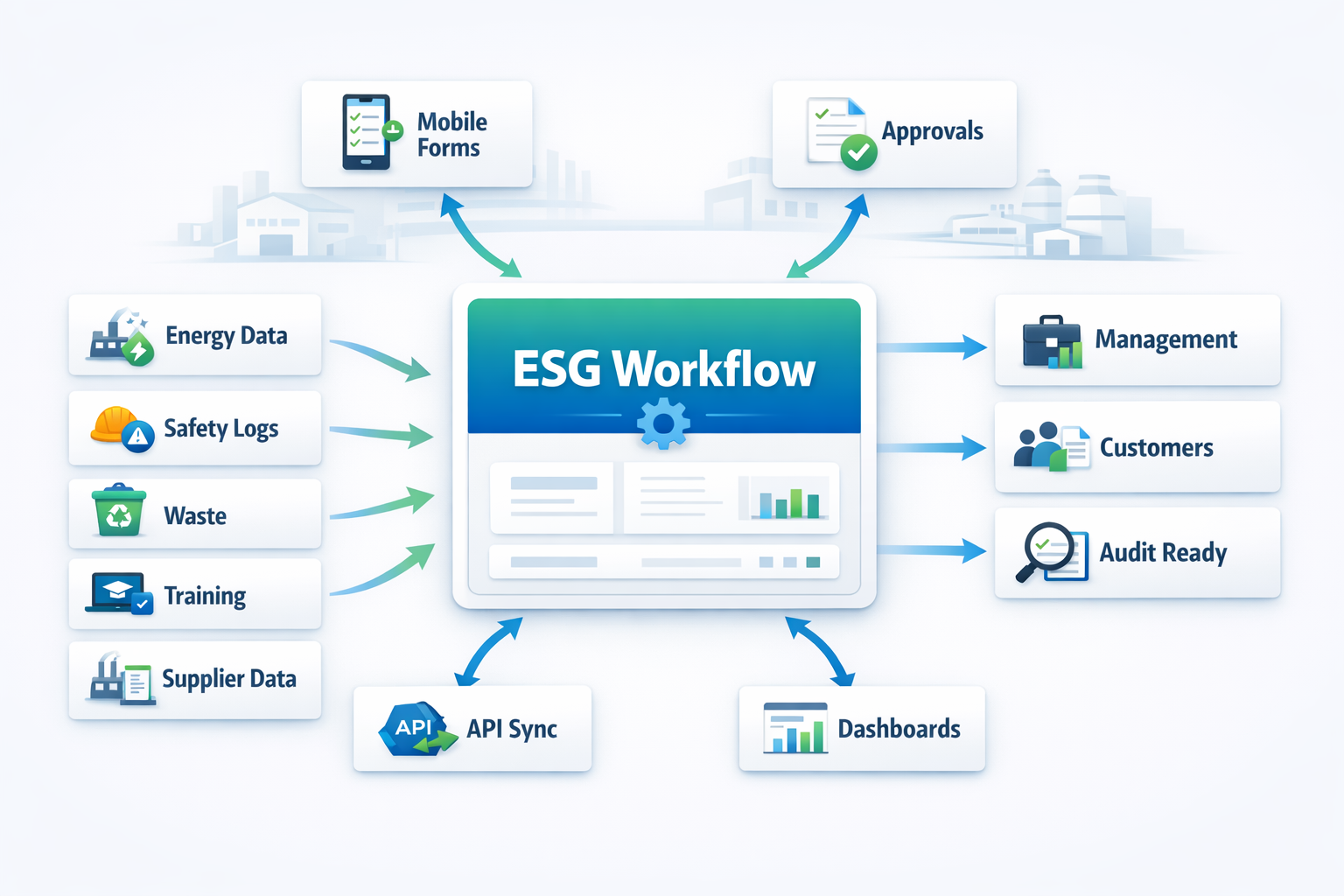
If you want to move ESG reporting from manual chasing to a repeatable operational workflow, Jodoo offers a practical next step. You can start with one plant or one metric set, then scale the process as reporting requirements grow. Start a free trial or book a demo to see how Jodoo can support your manufacturing ESG workflows.