Browse by category

Over $7 Million
Saved in IT investment
Over 80%
Reduction in Workload of On-Site Safety Reporting
Over 50
Contractor Violations Reduced Per Month

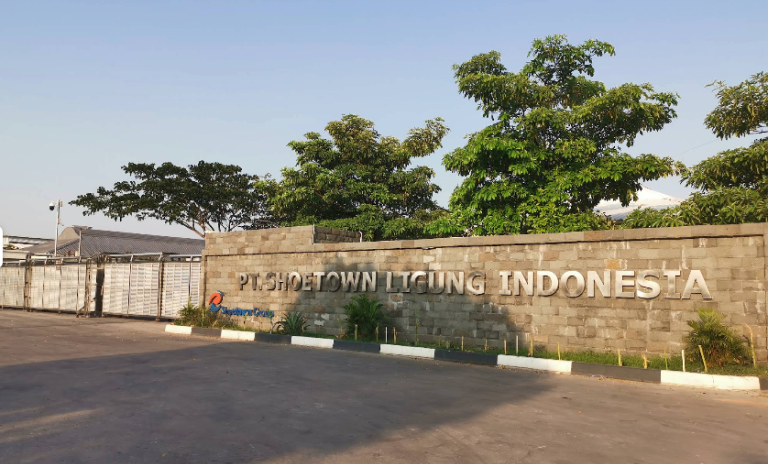
Sinopec Maoming Petrochemical Company (Sinopec Maoming), established in 1955, is a major cornerstone in the global energy sector. As a key player in the global market, Sinopec Maoming has always been at the forefront of industrial innovation. With nearly 8,000 employees and a sprawling complex of refining, chemical, and power facilities, the company’s commitment to operational excellence is unwavering.
But in today’s hyper-competitive market, operational excellence demands more than scale; it requires real-time visibility into how work actually gets done on the ground. For Sinopec Maoming, this meant pursuing a digital transformation rooted in lean management principles to fundamentally reshape how work gets done, empowering every employee to drive efficiency and safety.
This is the story of how Sinopec Maoming turned that ambition into reality by building a grassroots innovation ecosystem that is solving long-standing challenges and paving the way for a smarter, leaner future.
The Challenge: The Data Blind Spots in Lean Management
For years, Sinopec Maoming had championed lean management principles, but a series of deep-rooted operational hurdles stood in the way of achieving their full potential. By 2018, the company’s advanced information systems, while excellent for top-level decision-making, had failed to reach the “last mile” of its vast operation. The core of the problem was a disconnect between their ambition for lean efficiency and the reality of their day-to-day data management. This created several critical blind spots:
The Grassroots Data Gap
The complexity of the petrochemical business—with its numerous specialized units like chemical, thermal power, port, and railway transport—meant that management requirements at the grassroots level were constantly changing. Traditional IT development was too slow, too costly, and too rigid to keep up.
While high-level operations were supported by robust information systems, frontline teams—including workshops and maintenance crews—still relied heavily on manual processes and spreadsheets for daily management. This wasn’t just inefficient; it was a direct contradiction of lean principles. The process was slow, prone to errors, and placed a heavy administrative burden on the very people responsible for hands-on production. Without accurate, real-time data from the ground up, true continuous improvement was impossible.

The On-Site Disconnect
In a facility as vast as Sinopec Maoming’s, managers and safety officers spend most of their time on-site. However, their digital tools were not mobile-friendly. So critical tasks such as safety inspections, hazard reporting, and equipment checks were still done on paper, then manually entered into a system back at the office— sometimes hours later. This gap between observation and data entry meant information was often incomplete or based on memory, making it difficult to respond to issues in real time.

The Untapped Data Goldmine

Sinopec Maoming was sitting on a mountain of data, but much of it was inaccessible and underutilized. Lean Management is fundamentally driven by data, but Sinopec Maoming’s traditional systems lacked the flexible, user-friendly analytics tools needed to turn raw data into actionable insights. Decisions were often based on experience and intuition rather than quantitative evidence. For a company committed to data-driven lean management, this was a major roadblock. They needed a way to empower every department to mine their own data, identify trends, and make smarter, faster decisions without relying on a central IT team for every single report.
The Contractor Black Box
With an average of 300 construction operations daily, there are over 200 external contractors and thousands of temporary workers on-site daily. Managing this extended workforce was a massive challenge. The company lacked a unified platform to track contractor performance, manage safety compliance, and coordinate complex projects. Communication was fragmented, standards were inconsistent, and historical data was difficult to retrieve. This “black box” created significant risks and inefficiencies, undermining the company’s ability to apply lean principles to its entire value chain.

Sinopec Maoming realized that to truly unlock the power of lean management, they needed to do more than just tweak their existing processes. They needed a digital revolution from the ground up, one that would put data at the heart of every decision and empower every employee to become a problem-solver.
The Solution: A Grassroots Revolution in Lean Data Management
Sinopec Maoming’s answer was not a top-down, multi-million dollar IT overhaul. Instead, they sparked a grassroots revolution, empowering their own business experts to become citizen developers. By adopting a flexible, no-code platform, they began to systematically eliminate their data blind spots, building a suite of custom applications tailored to their unique lean management needs, which they branded internally as the HSE Platform.
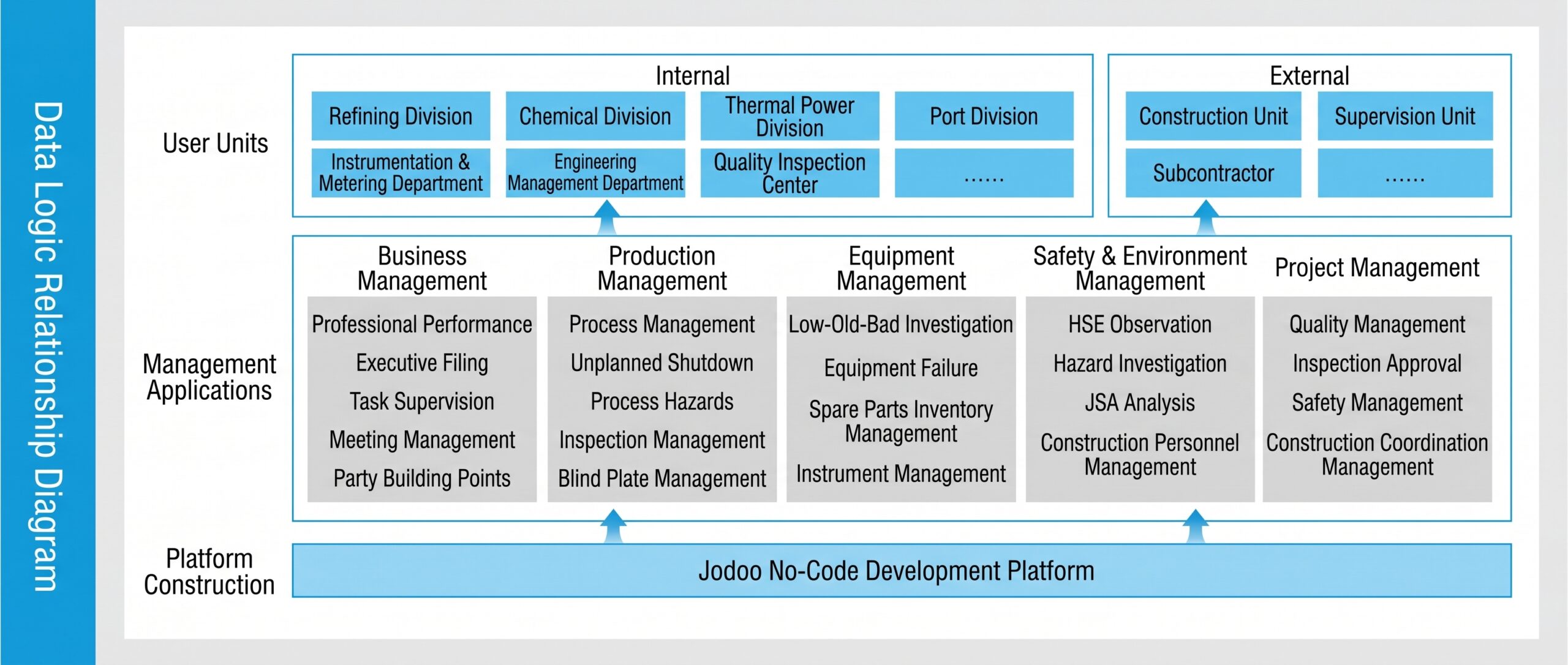
This strategy was built on the philosophy of bridging the gap between technology and business. The implementation followed a three-phase strategy: Platform Empowerment, Data Mining, and Innovation Ecosystem.
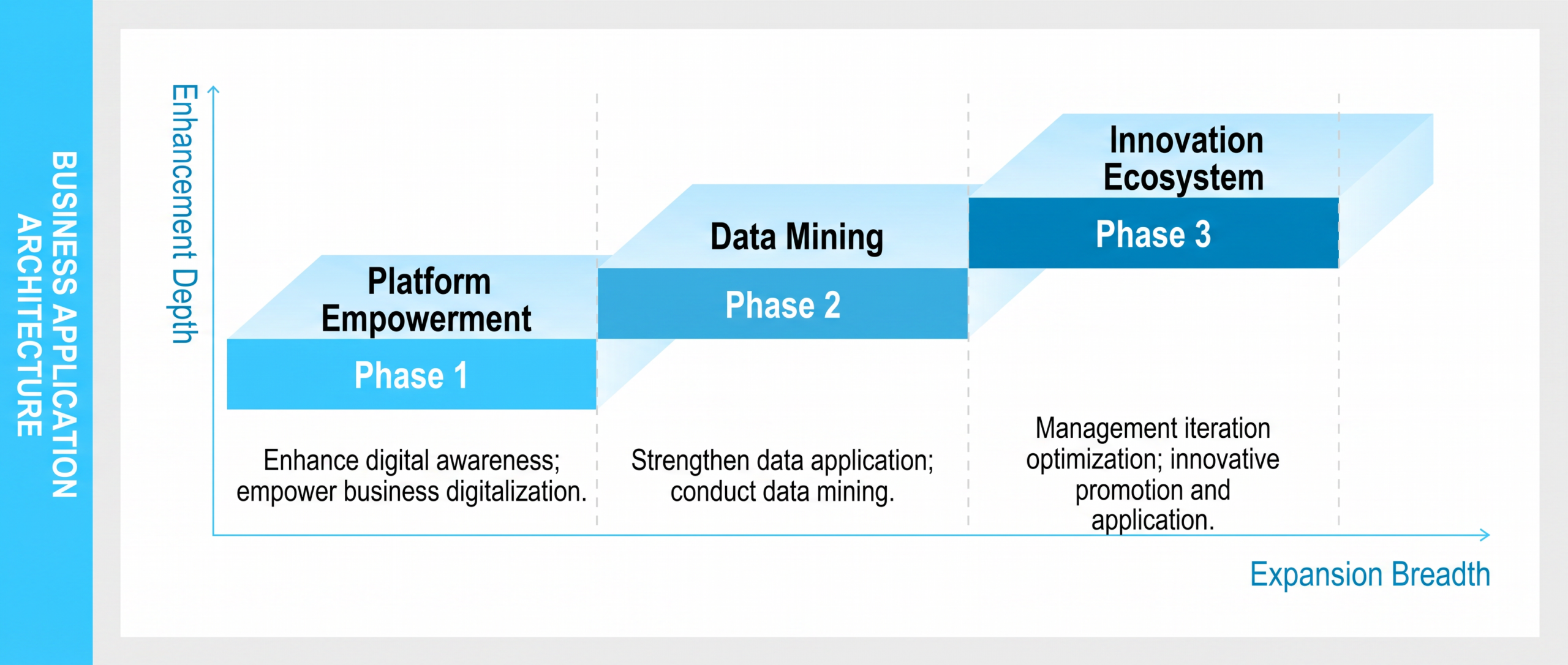
This strategy was built on four key pillars:
Lean Datafication: Digitizing Performance from the Ground Up
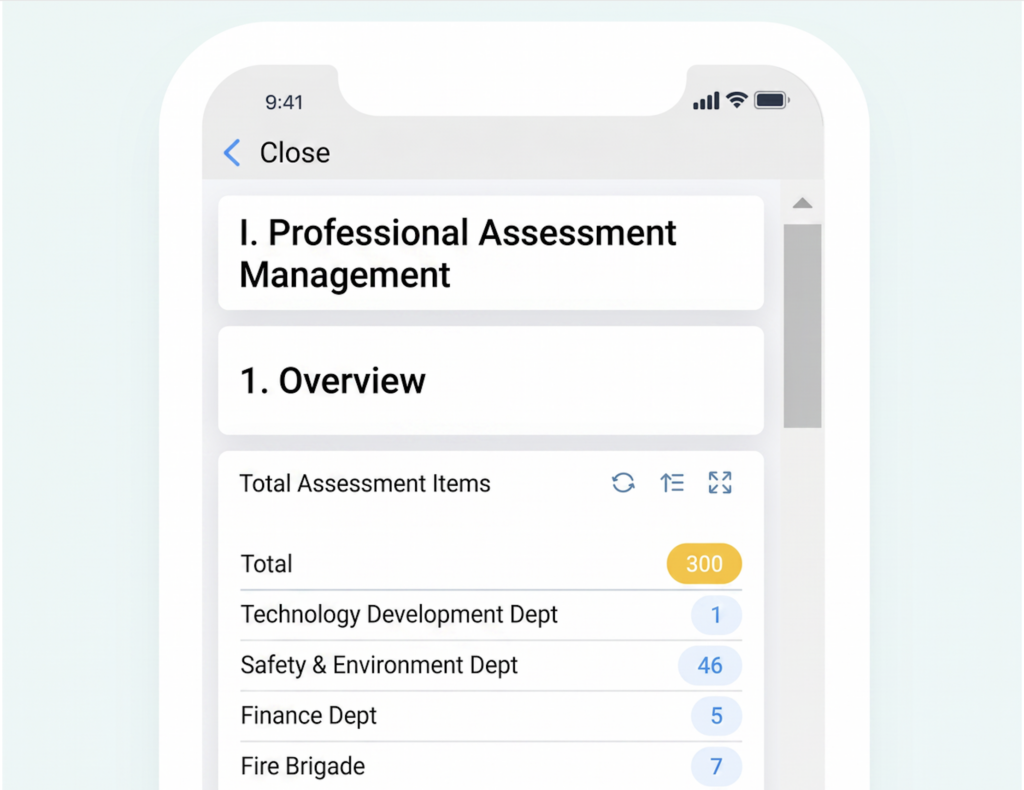
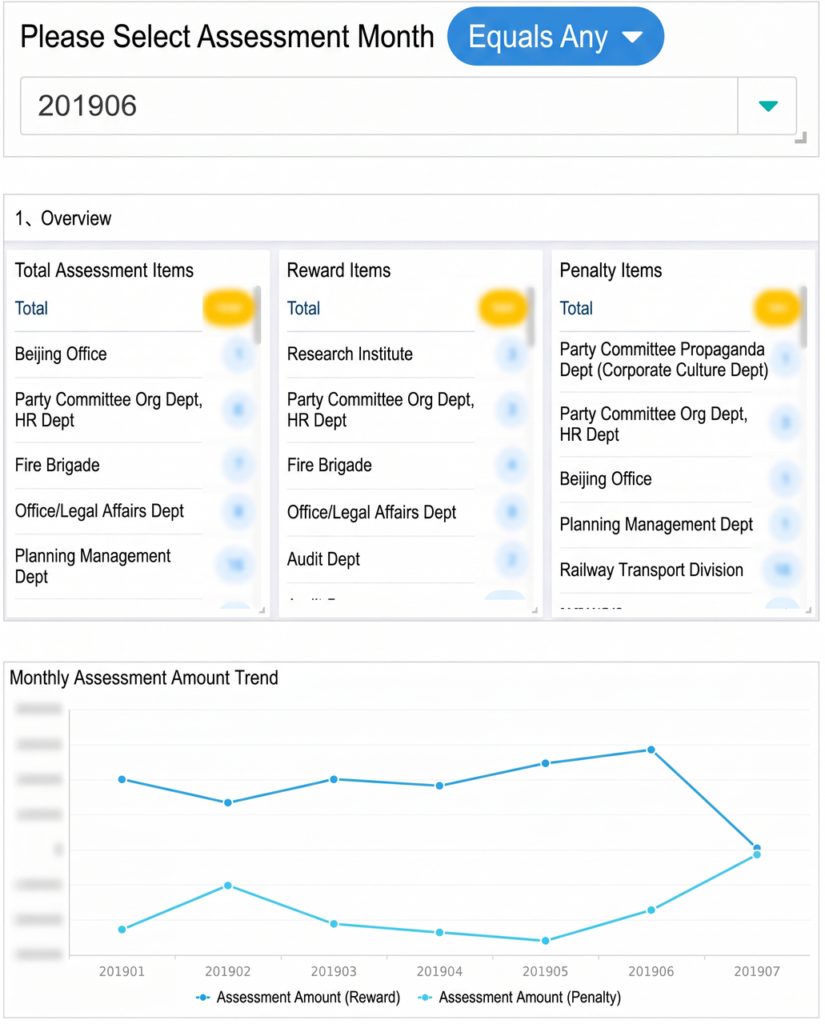
The first step was to tackle the paper-based chaos in performance management. Business leaders in the chemical, port, and thermal power divisions were trained to build their own professional performance assessment applications. This wasn’t just about replacing paper with screens; it was about re-engineering the entire workflow. Now, assessment data is entered once, flows automatically through different levels of approval (from teams to workshops to departments), and is aggregated in real-time. This “datafication” of the lean process provided a single source of truth, eliminating errors and freeing up managers to focus on what the data was telling them—identifying management weak spots and driving targeted improvements.
EHS Hazard Identification: A Mobile-First Approach to Safety
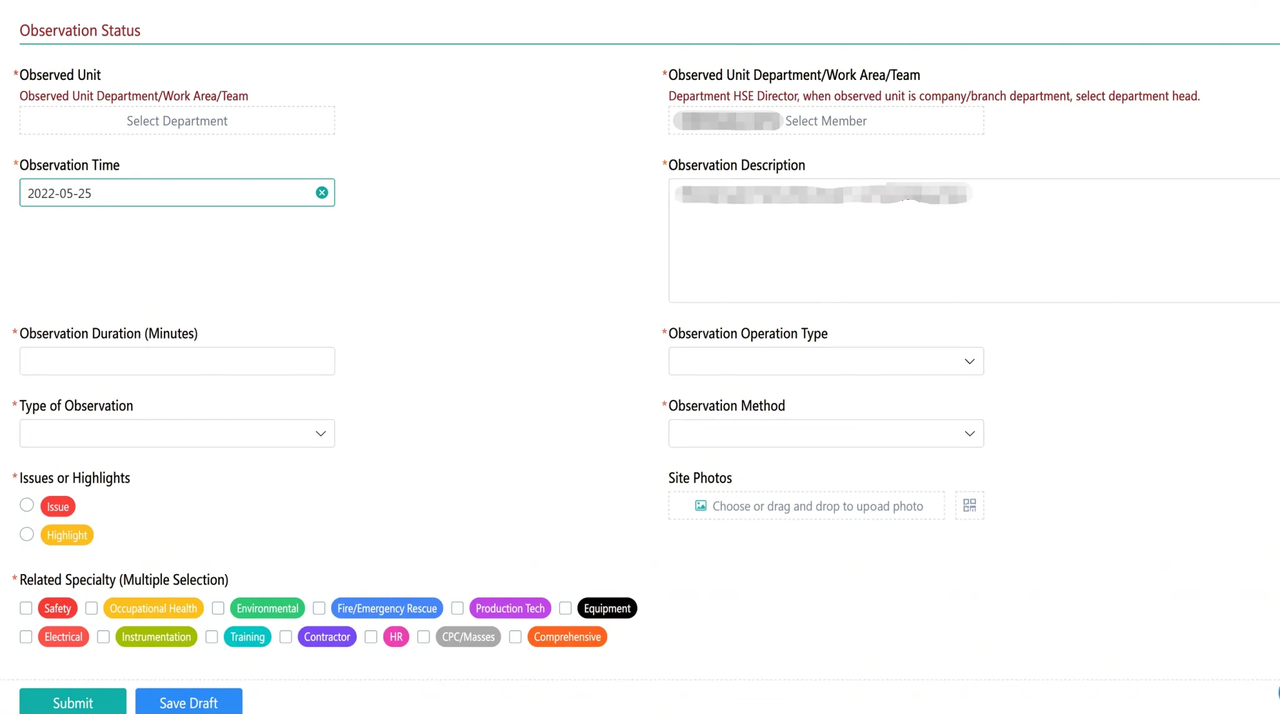
To address the on-site disconnect, the safety and environmental team built a mobile-first HSE (Health, Safety, and Environment) Observation application. Instead of logging hazards on paper and entering data hours later, inspectors can now report issues in real time from the field.
Mobile-First Hazard Reporting: Safety inspectors can use their phones to log safety hazards, upload photos, and initiate a response workflow directly from the field. This eliminated the need to return to the office for data entry, reducing the workload by over 80% and ensuring timely, accurate data capture.
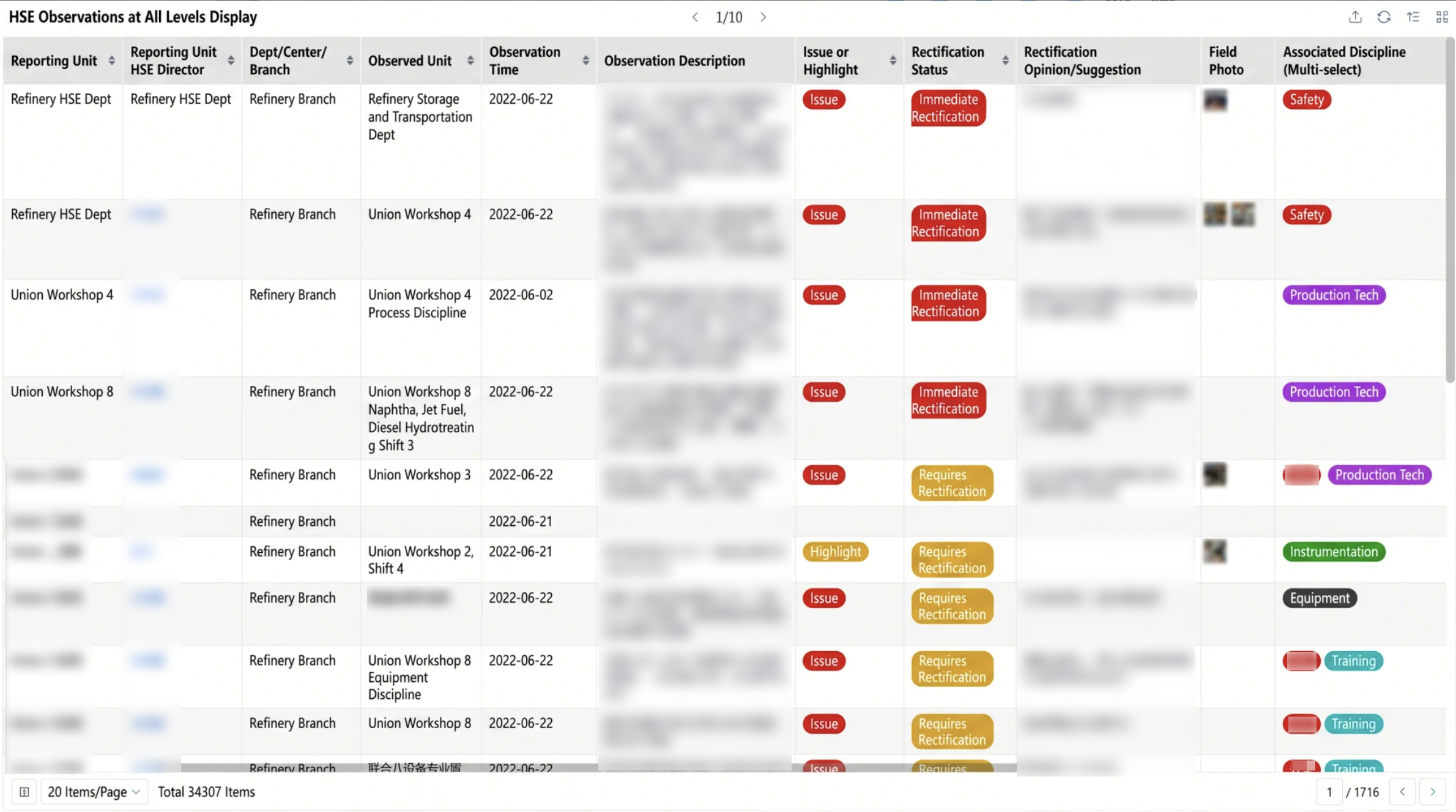
Automated Workflow and Risk Control: The system automatically routes the issue to the correct department and tracks it until closure. Real-time dashboards provide a clear, visual overview of all outstanding hazards, their status, and the effectiveness of control measures, allowing managers to predict trends and prevent accidents.
Material/Spare Parts Sharing: Unlocking Hidden Value
To break down the information silos that led to costly and wasteful procurement, the equipment management team created a centralized, company-wide spare parts sharing platform. They built a digital ledger of all surplus materials across different warehouses and workshops. Now, before purchasing a new part, a production unit can quickly search the platform to see if another unit has a spare. This simple but powerful application has fostered a culture of sharing and reuse, turning idle inventory into a valuable, cost-saving asset.
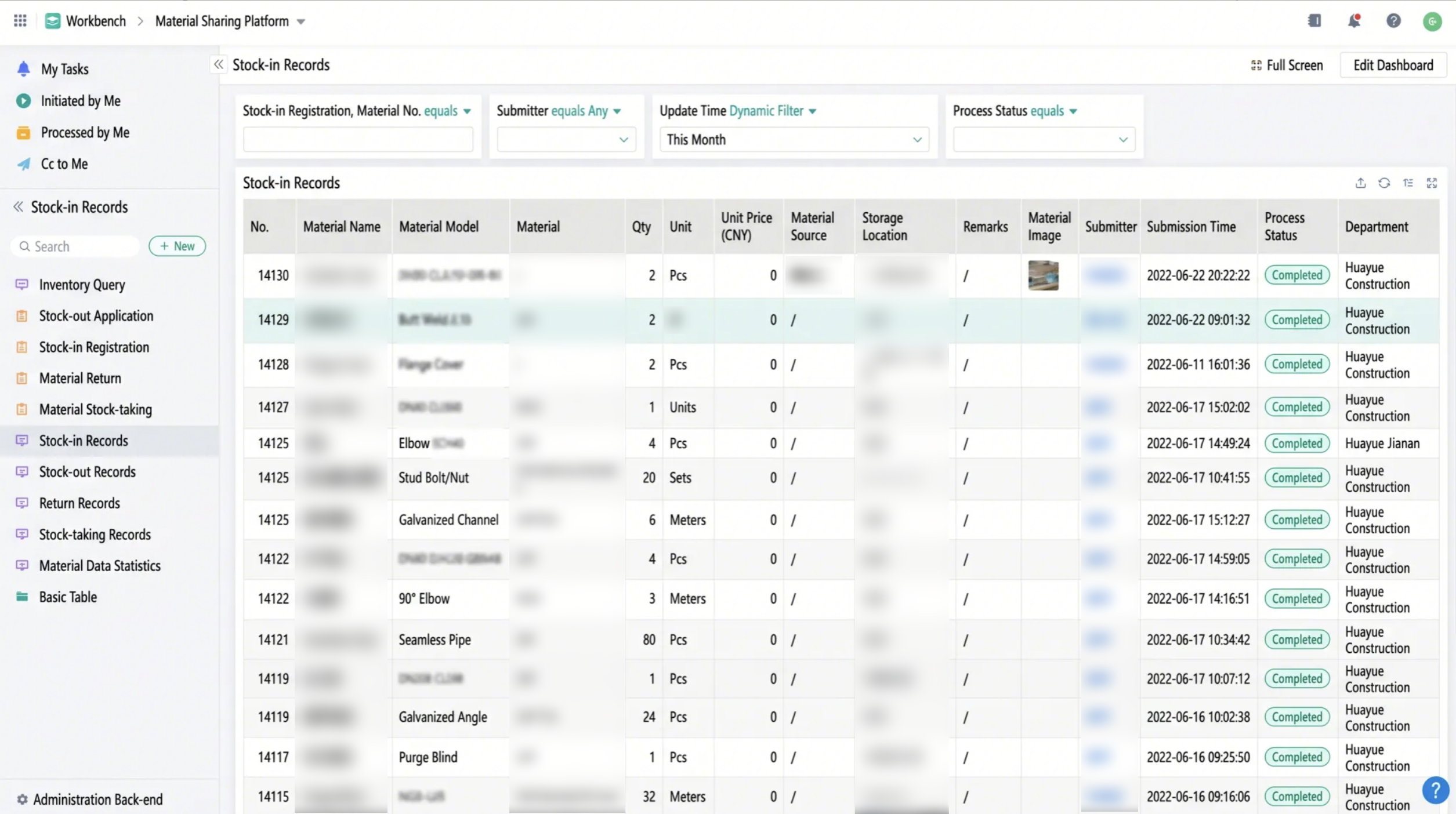
- Standardized Digital Ledger: The platform was used to create a unified, standardized digital ledger for all spare parts and construction materials across the company’s production areas.
- Real-Time Inventory Management: Using automated workflows, the system digitized the entire process of material entry, exit, borrowing, and inventory.
- Cost Reduction: By enabling efficient sharing and reducing unnecessary repurchasing, the company was able to significantly lower its material procurement costs.
Contractor Management: Bringing Transparency to the Extended Workforce
Finally, to manage their vast network of contractors, the chemical division developed a comprehensive contractor management database. Each construction worker is issued a QR code.
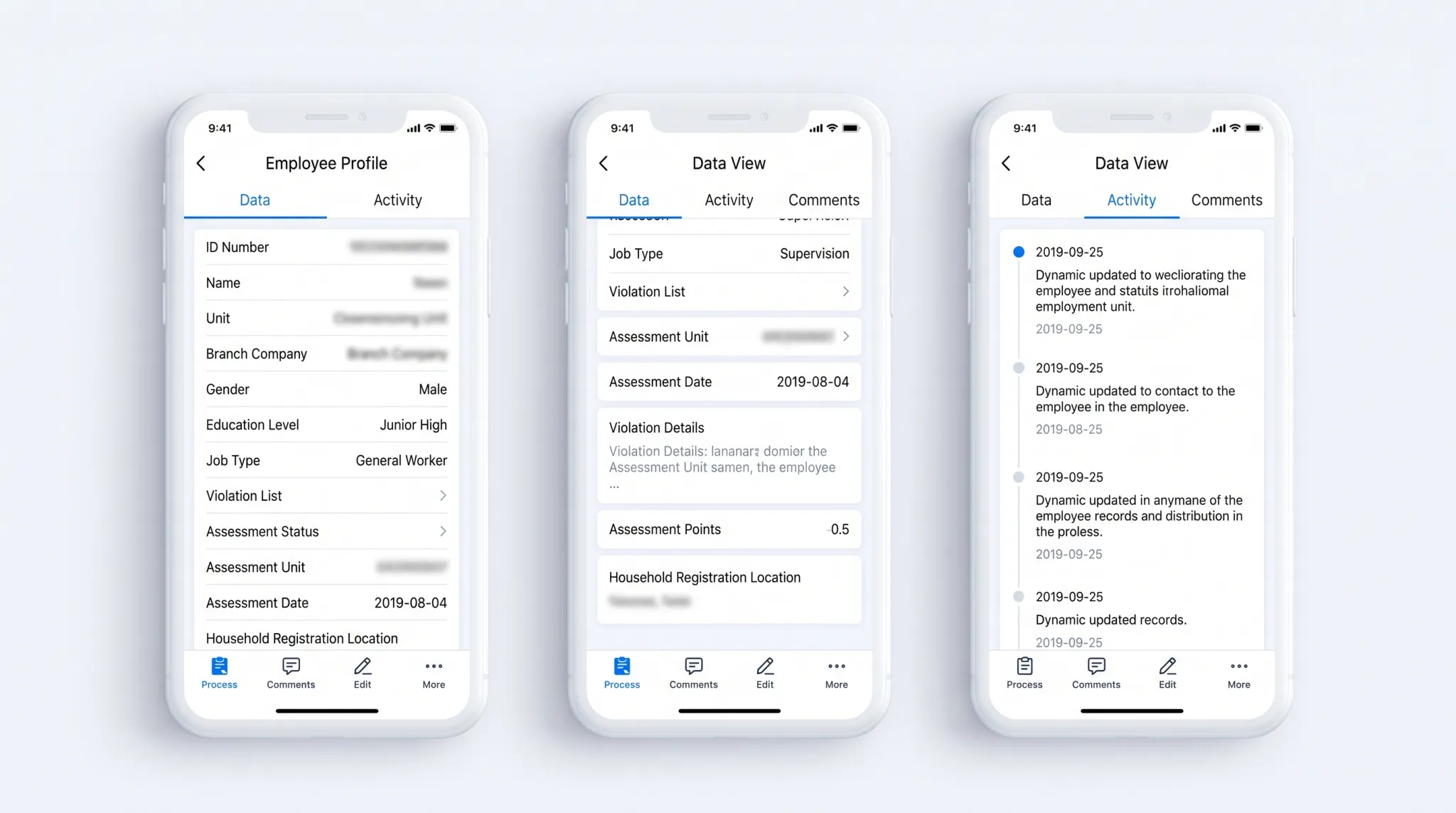
On-Site Compliance Check: On-site managers can scan the code with their phones to instantly verify the worker’s qualifications, track their work history, and log any safety violations.
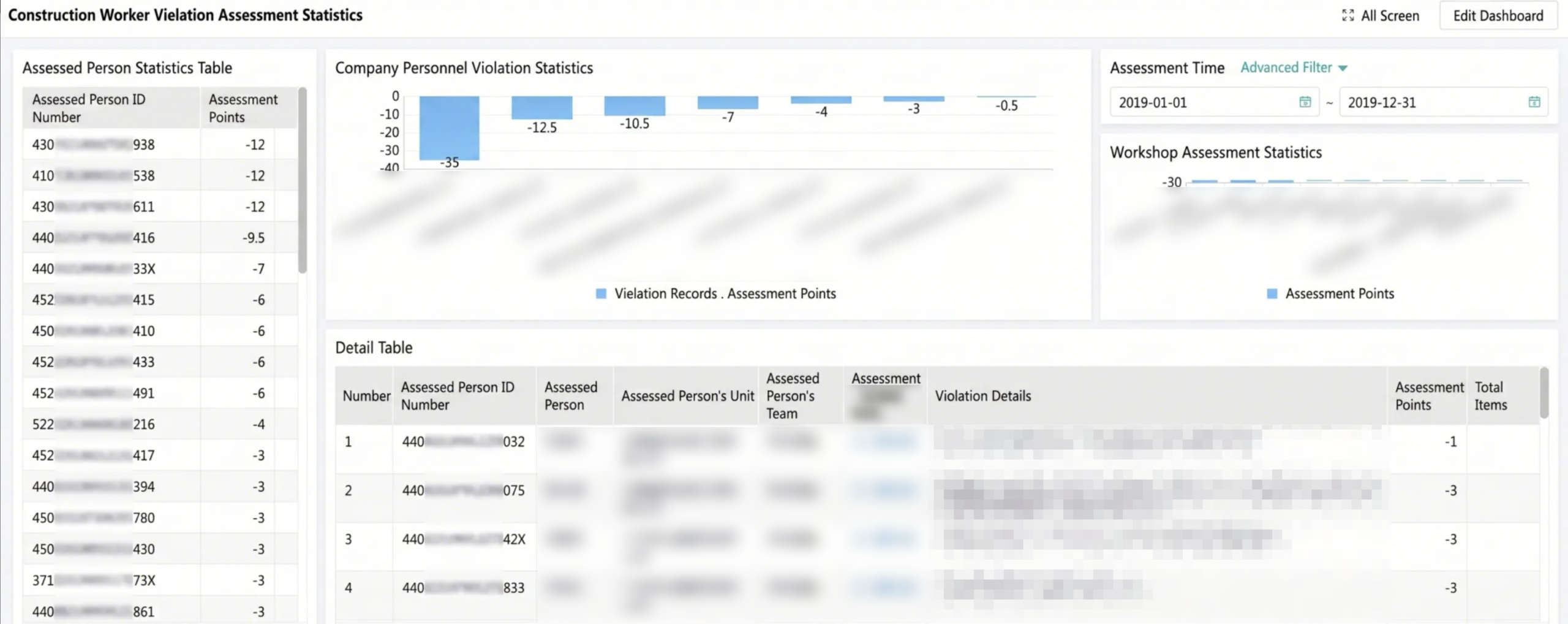
Violation Reduction: This real-time, digital oversight led to a reduction of approximately 50 construction violations per month, bringing unprecedented transparency and control to their contractor management, improving safety compliance and providing a clear, data-driven basis for evaluating contractor performance.
The Results: Data-Driven Lean Management Delivers Transformative Value
The shift from traditional, paper-based processes to a data-driven, citizen-led digital ecosystem has delivered transformative results for Sinopec Maoming. The impact has been felt across the organization, from improved efficiency and cost savings to a fundamental change in the company’s culture. The numbers speak for themselves:
| Key Performance Indicator | Before: The Old Way | After: The Lean, Data-Driven Way |
|---|---|---|
| Cost Savings | High procurement and IT costs | Over $7 million saved in IT investment |
| Performance Management | Paper-based, slow, error-prone | 90%+ improvement in efficiency, real-time data |
| Application Development | Months-long cycles, high cost | 80%+ improvement in efficiency, same-day deployment |
| On-Site Safety Reporting | Manual, delayed | 80%+ reduction in workload, real-time, proactive |
| Contractor Violations | Difficult to track and manage | 50 fewer violations per month, 60%+ efficiency gain |
| Inventory Management | Manual counting, information silos | 75% reduction in inventory counting workload |
A New Culture of Innovation
Beyond the impressive metrics, the most profound change has been cultural. Sinopec Maoming has successfully cultivated a vibrant community of over 70 citizen developers who have built more than 30 platforms and 1,000 custom applications. This grassroots movement has not only filled the critical “last mile” gap in their digital infrastructure but has also fostered a company-wide culture of innovation, problem-solving, and continuous improvement.
“No-code agile development is a successful innovative practice for the company to break through the traditional information development technology model,” a manager at Sinopec Maoming noted. “We’ve saved millions in investment, but more importantly, we’ve empowered our people to solve their own problems.“
Future Outlook: Building a Dual-Layer Digital Ecosystem
Sinopec Maoming’s journey is far from over. They are now focused on building a sophisticated, dual-layer digital architecture. The upper layer will be a standardized, unified system for company-wide data governance, while the lower layer will be the agile, innovative ecosystem of citizen-developed applications. This hybrid model will give them the best of both worlds: the stability and control of a centralized system, combined with the speed and flexibility of a decentralized, grassroots movement.
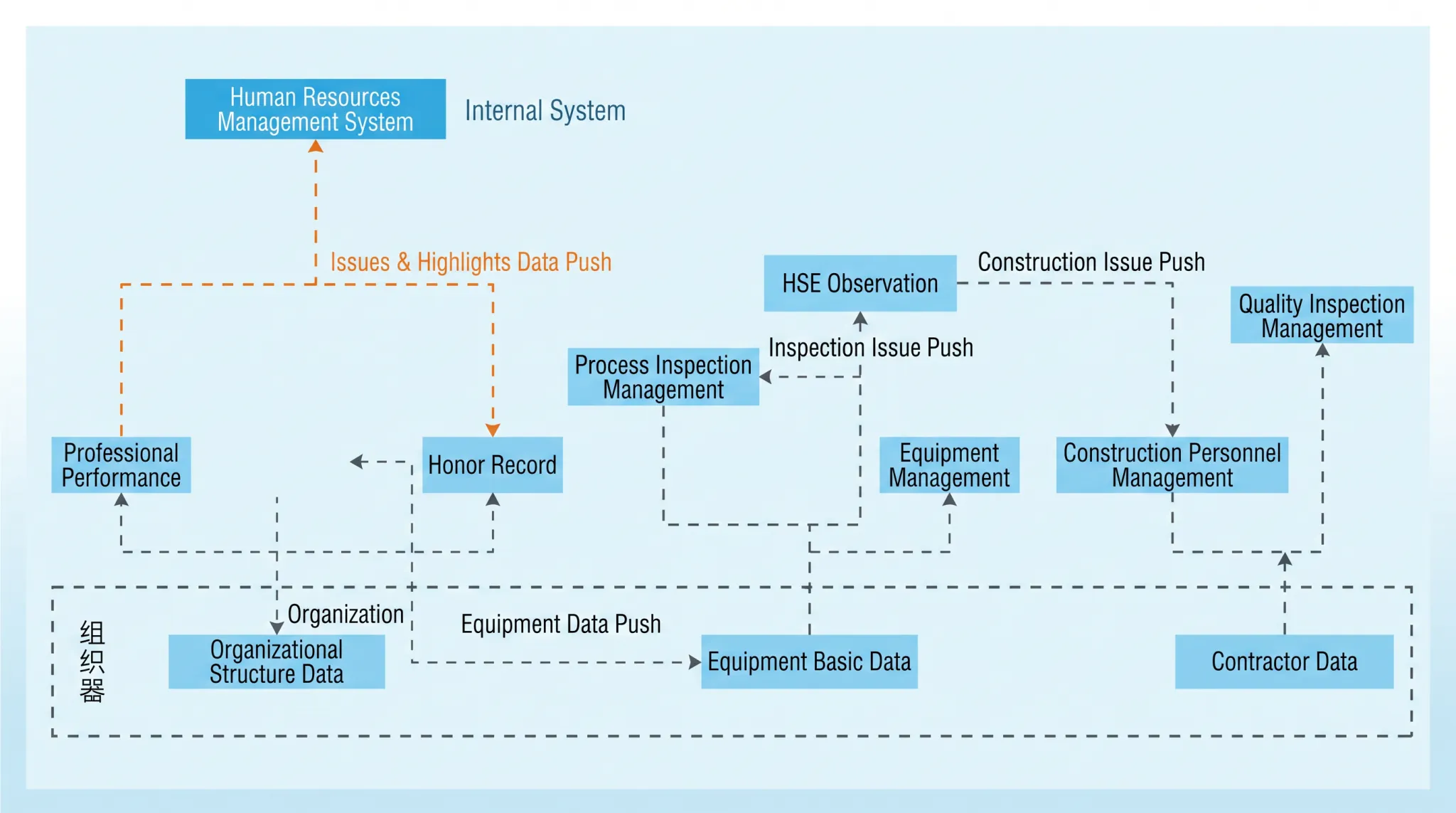
The ultimate goal is to create a fully integrated, intelligent enterprise where data flows seamlessly from the field to the boardroom, empowering everyone to make smarter, faster, and more data-driven decisions. By putting the power of data into the hands of their people, Sinopec Maoming is not just optimizing their operations; they are building a more resilient, more innovative, and more competitive future.
Ready to start your own lean management revolution? Discover how you can empower your teams to build the tools they need to drive efficiency, improve safety, and unlock new value.