Browse by category

50%
Faster MTTR (Mean Time to Repair)
15%
Annual Savings in Operation Cost
30%
Improvement in User Satisfaction
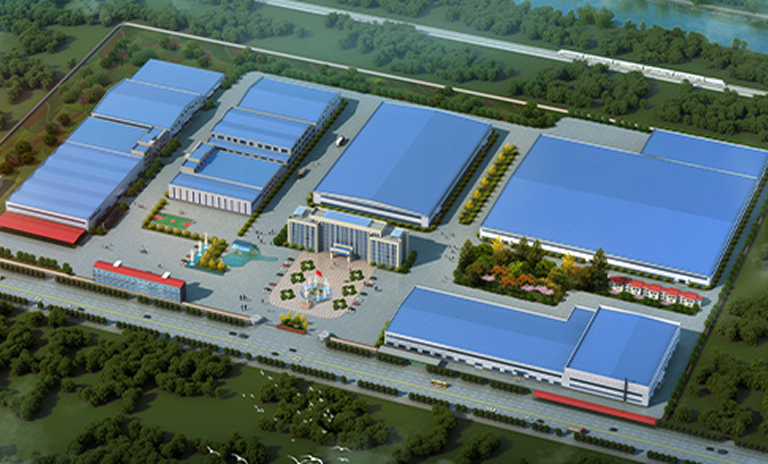
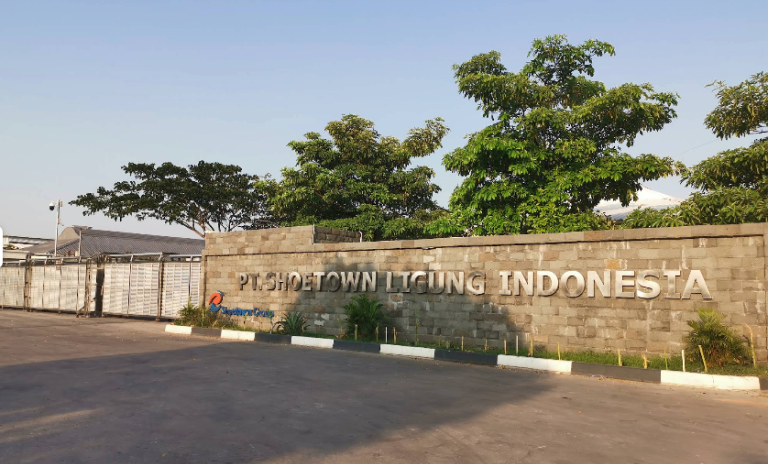
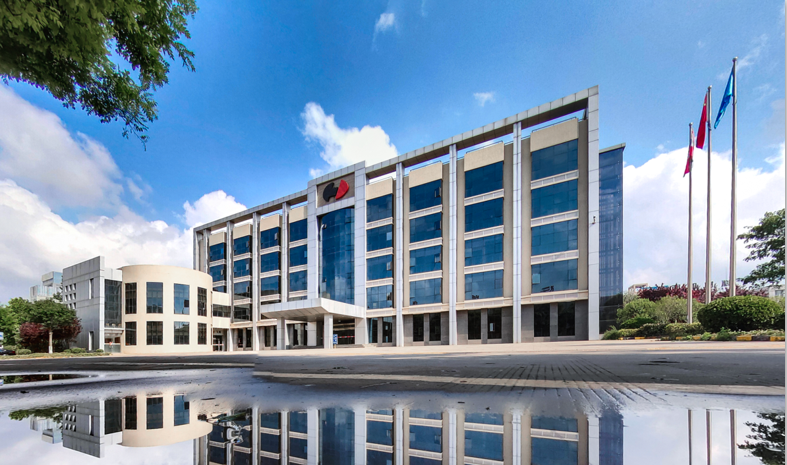
HANDE AXLE, a powerhouse in the global automotive industry since 1968, has built its legacy on a foundation of quality, innovation, and an unwavering commitment to customer satisfaction. HANDE is a high-tech giant with an annual production capacity of 1.5 million axle assemblies and a workforce of over 5,200 employees. Their products are the backbone of countless trucks, buses, and engineering vehicles worldwide.
In the relentless pursuit of excellence, HANDE has embraced a “smart factory” strategy, guided by the principles of lean management. However, true lean efficiency in a complex manufacturing environment requires more than just optimizing physical workflows; it demands a deep, real-time understanding of every operational detail. The company recognized that to stay ahead, it needed to close the gap between its ambitious lean goals and its day-to-day operational data.
This is the story of how HANDE transformed its lean management practices by empowering its own teams to build data-driven solutions—focusing on two critical areas: production line efficiency and IT operations—to unlock new levels of productivity, reduce waste, and create a culture of continuous improvement.
The Challenge: Data Blind Spots in the Lean Factory
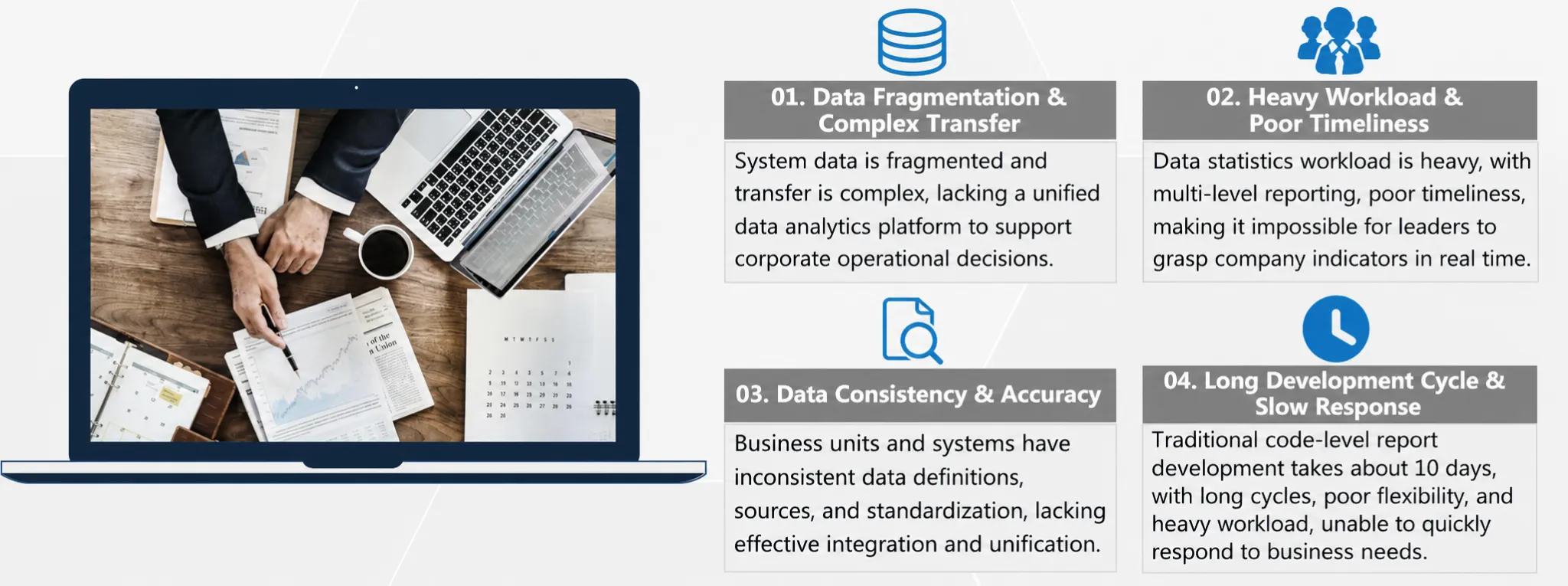
HANDE’s dedication to lean principles had already streamlined many of its core processes. Yet, as the company pushed for even higher levels of efficiency, it encountered a fundamental roadblock: data blind spots. Critical operational data was either inaccessible, inaccurate, or too slow to collect. This created two major obstacles that stood in the way of their smart factory ambitions.
The Black Box of the Production Line
For a manufacturer of HANDE’s scale, every second of production time counts. The leadership team knew that unplanned downtime, slow changeovers, and minor stoppages were chipping away at their overall equipment effectiveness (OEE), a cornerstone of lean manufacturing. The problem was, they couldn’t precisely see where, when, or why these losses were happening.
“We couldn’t accurately monitor our production capacity losses,” a manager from the production department noted. “Data for things like equipment downtime or model changeovers had to be collected manually by people on the factory floor. It was slow, labor-intensive, and the data wasn’t always accurate.”
This reliance on manual, paper-based tracking created a black box around their most critical assets. By the time data was collected, compiled, and analyzed, it was often too late to take meaningful action. Without real-time visibility, the team found it difficult to move beyond reactive problem-solving and toward the proactive, data-driven decision-making that true lean manufacturing demands.
The IT Operations Bottleneck
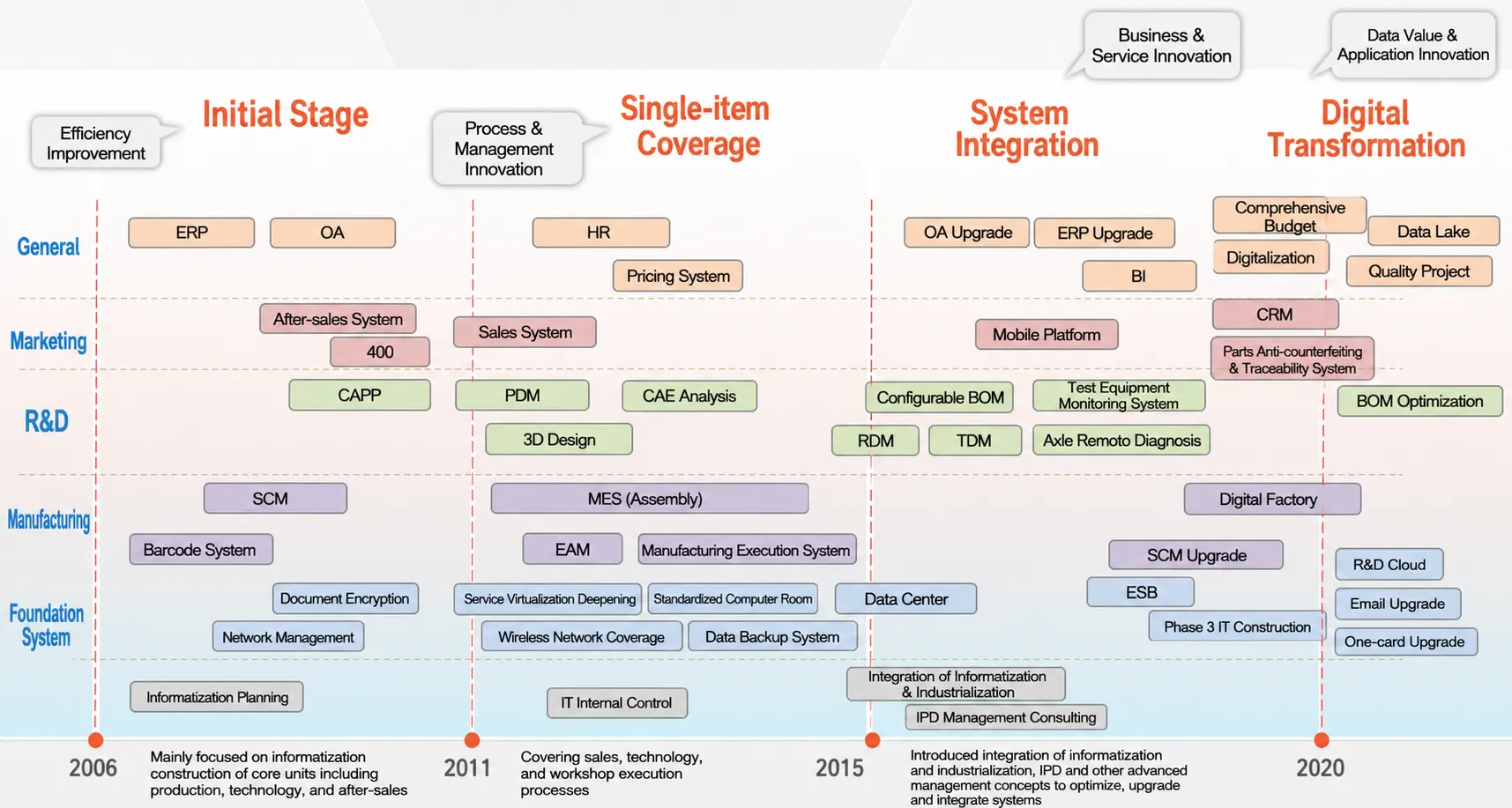
Over the years, HANDE had invested heavily in its information technology infrastructure, building a portfolio of over 40 sophisticated IT systems. These included Product Data Management (PDM), Computer-Aided Process Planning (CAPP), Enterprise Resource Planning (ERP), Supply Chain Management (SCM), Enterprise Asset Management (EAM), Human Resources (HR), Manufacturing Execution Systems (MES), and Customer Relationship Management (CRM). With over 40 complex business systems to manage and a growing list of user needs, the traditional IT support model was struggling to keep up. The process for handling IT work orders (from simple troubleshooting to new requests) was slow and opaque.
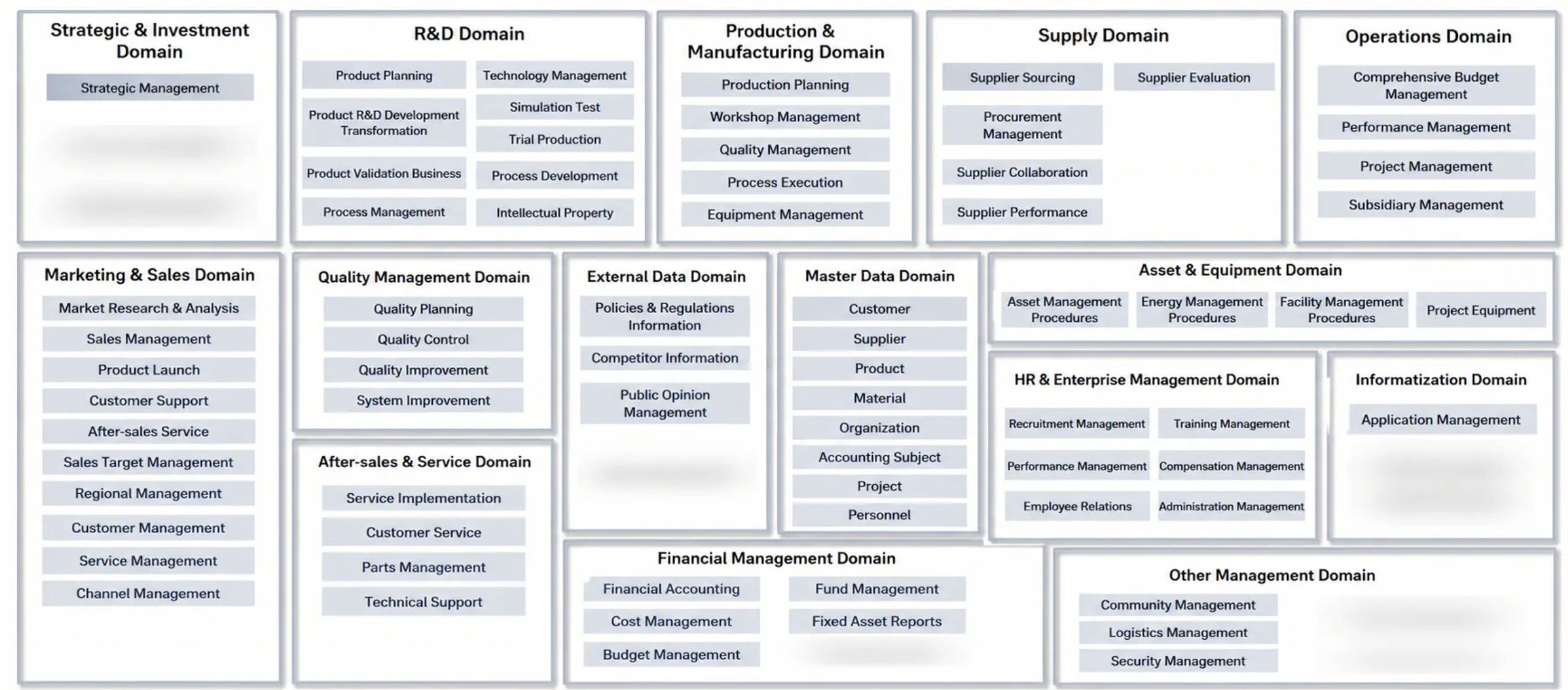
“As our IT systems grew, our traditional operations and maintenance management style became inefficient,” explained the head of the IT department. “We had slow response times, it was hard to allocate resources effectively, and we couldn’t easily analyze the quality of our work order processing.”
Business units with urgent needs experienced longer wait times, while the IT team found itself increasingly occupied with administrative tasks, leaving limited bandwidth for higher-value strategic initiatives. The lack of a centralized, efficient IT operations platform meant that problems took longer to solve, and there was no clear way to measure and improve the quality of IT services. To support a lean enterprise, the IT department first needed to become lean itself.
The Solution: A Citizen-led Revolution in Lean Data Management
Facing these challenges, HANDE didn’t turn to a massive, multi-year software development project. Instead, they embraced a more agile, bottom-up approach. They empowered their own teams—the people closest to the problems—to build the exact solutions they needed using a flexible, no-code platform.
The strategic implementation unfolded in three phases:
- Phase One: Centralized Control with Subsidiary Autonomy.
HANDE restructured its organization, granting subsidiaries autonomy to develop applications while encouraging independent management. The headquarters leveraged the no-code platform to design cross-organizational processes, achieving a balance between centralized control and personalized subsidiary needs, laying the groundwork for efficient collaboration.
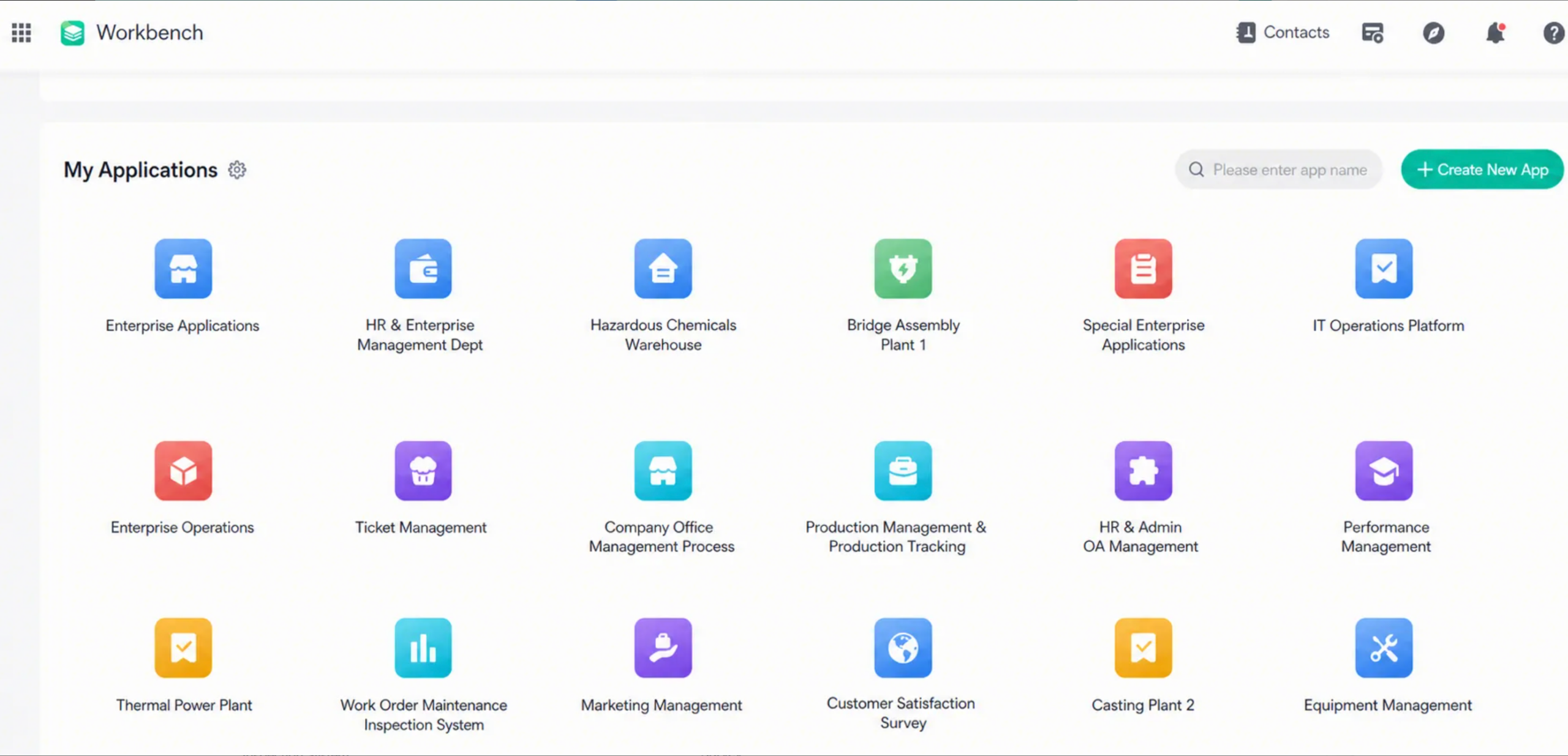
- Phase Two: Empowering the Frontline and Talent Development.
With IT teams mastering the platform, focus shifted to empowering departments. Frontline personnel actively participated in process design, accelerating application deployment and fostering digitally skilled talent, strengthening the foundation for internal digital transformation.
- Phase Three: Open Connectivity and Ecosystem Collaboration.
Leveraging the platform’s open API capabilities, HANDE built cross-enterprise applications that enabled seamless information flow across its supply chain and partner network, strengthening multi-party collaboration and operational alignment.
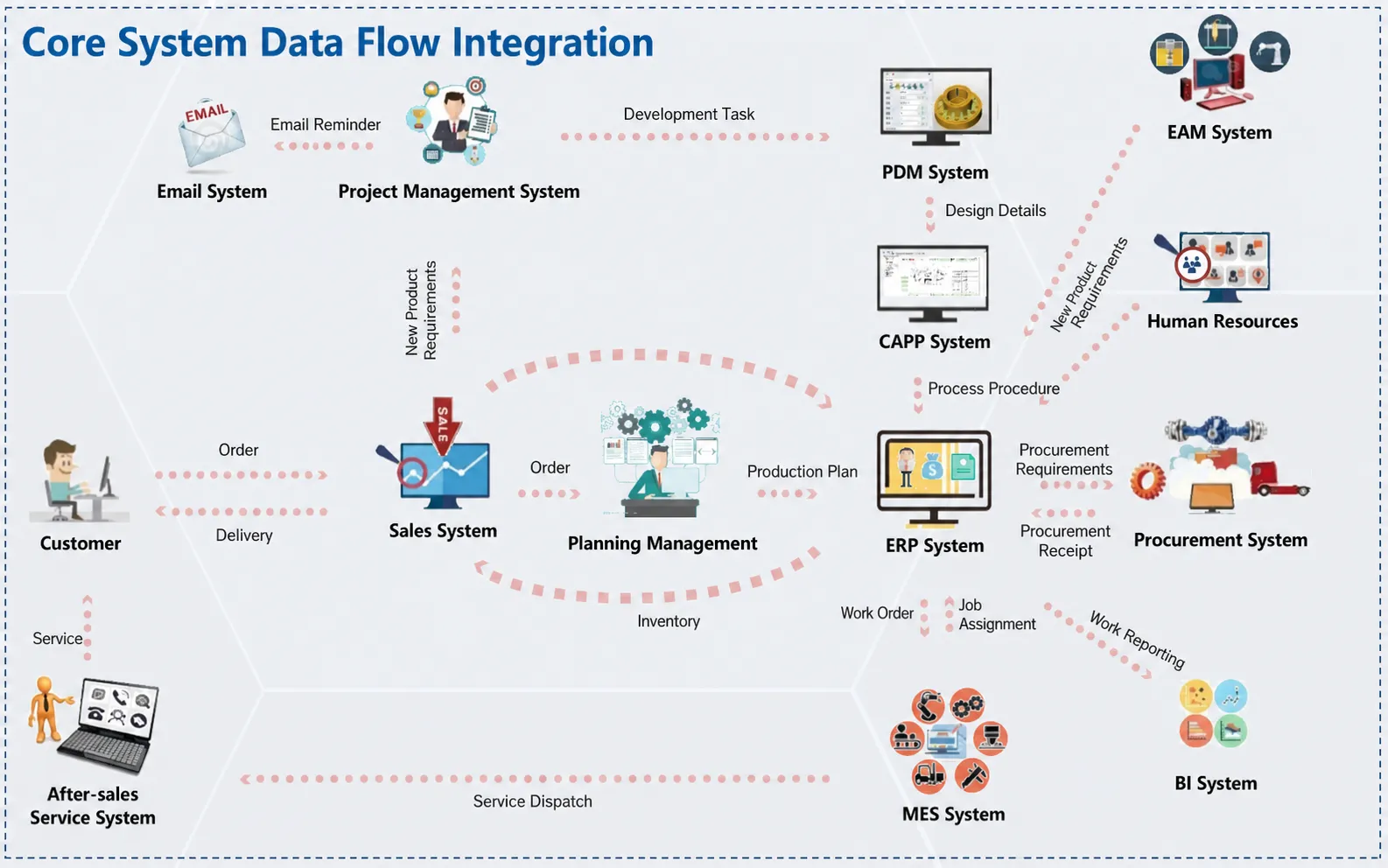
This strategy allowed them to rapidly develop and deploy targeted applications that directly addressed their data blind spots.
Illuminating the Black Box: The Production Line Efficiency Monitoring Model
To tackle the mystery of production losses, the manufacturing team designed and built a Production Line Efficiency Loss Monitoring Model. This wasn’t just a static report but a dynamic, real-time window into the health of their production lines, built from the ground up to serve the needs of the shop floor.
The solution was elegantly simple. They created a system to digitally capture every second of lost production time and categorize it instantly. Instead of relying on paper and manual data entry, operators and line supervisors could use tablets or mobile devices to log downtime events as they happened.
Real-Time Data Capture: When a machine stopped, the operator could select the reason from a predefined list (e.g., unplanned maintenance, material shortage, model changeover). The system would automatically log the start and end times, creating a precise, accurate record of the event.
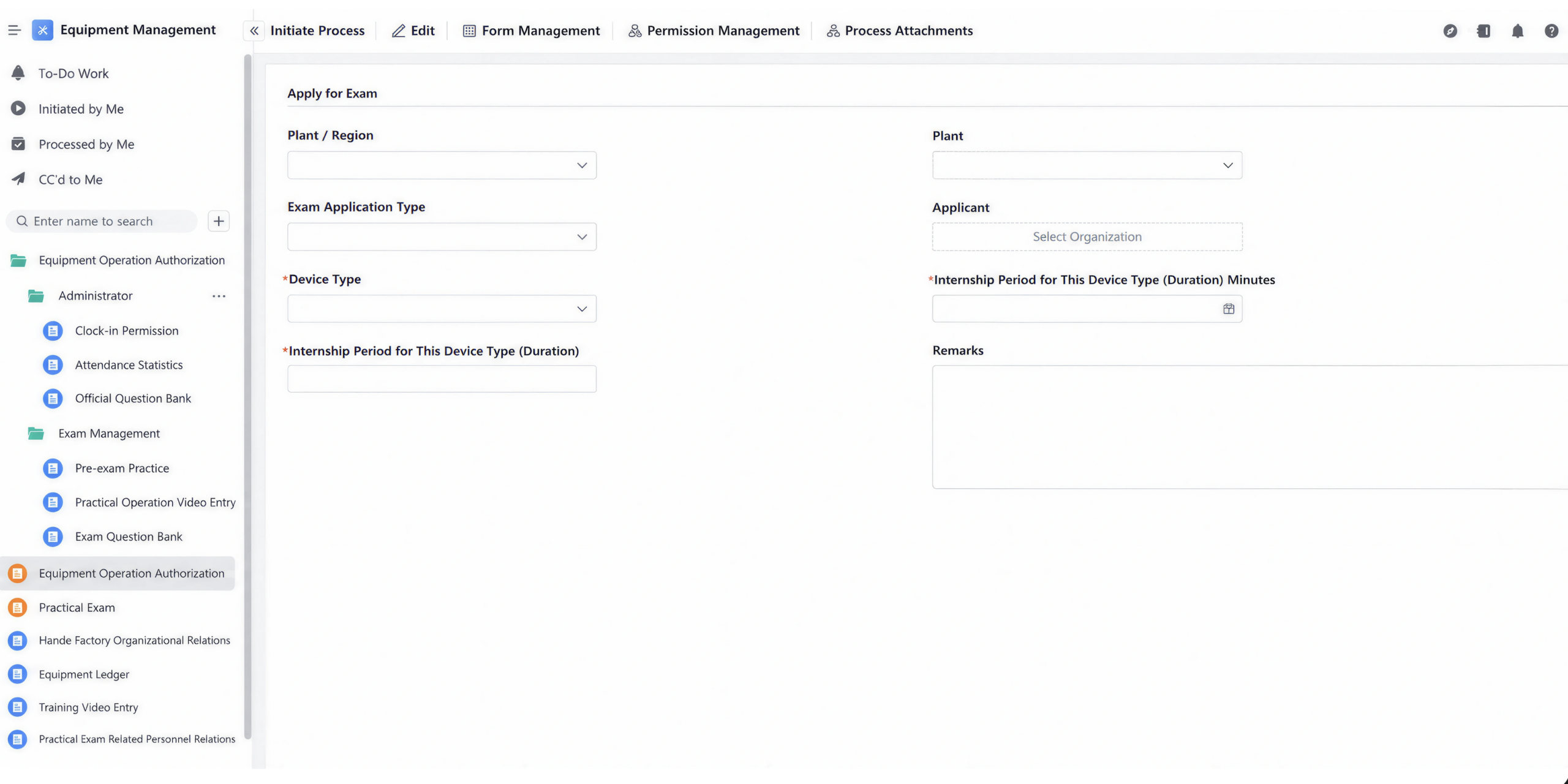
Visualizing the Losses: This real-time data fed directly into a series of intuitive dashboards. Managers could now see, at a glance, the biggest sources of lost time for any production line, shift, or machine. They could visualize trends, compare performance across different factories, and drill down into specific incidents to understand the root cause.
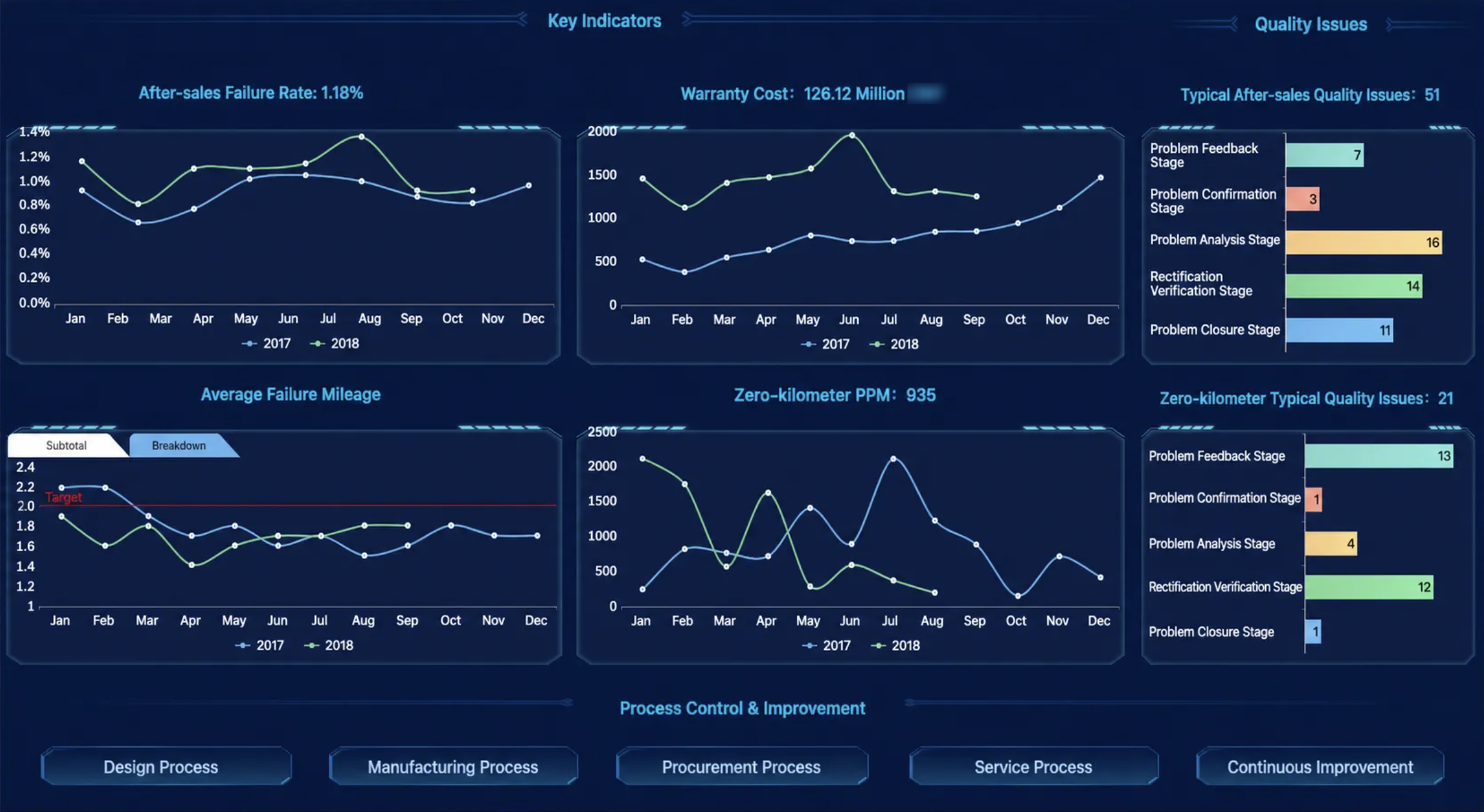
This model effectively shattered the black box. The production team was no longer flying blind. They had a clear, data-driven picture of their operations, enabling them to apply lean principles with surgical precision. They could finally move from reacting to problems to proactively preventing them.
Building a Lean IT Engine: The IT Operations and Maintenance Platform
To solve their internal bottleneck, the IT department applied the same lean principles to their own work. They used the no-code platform to build a comprehensive IT Operations and Maintenance Platform that transformed their service delivery from a slow, manual process into a streamlined, automated, and transparent system.
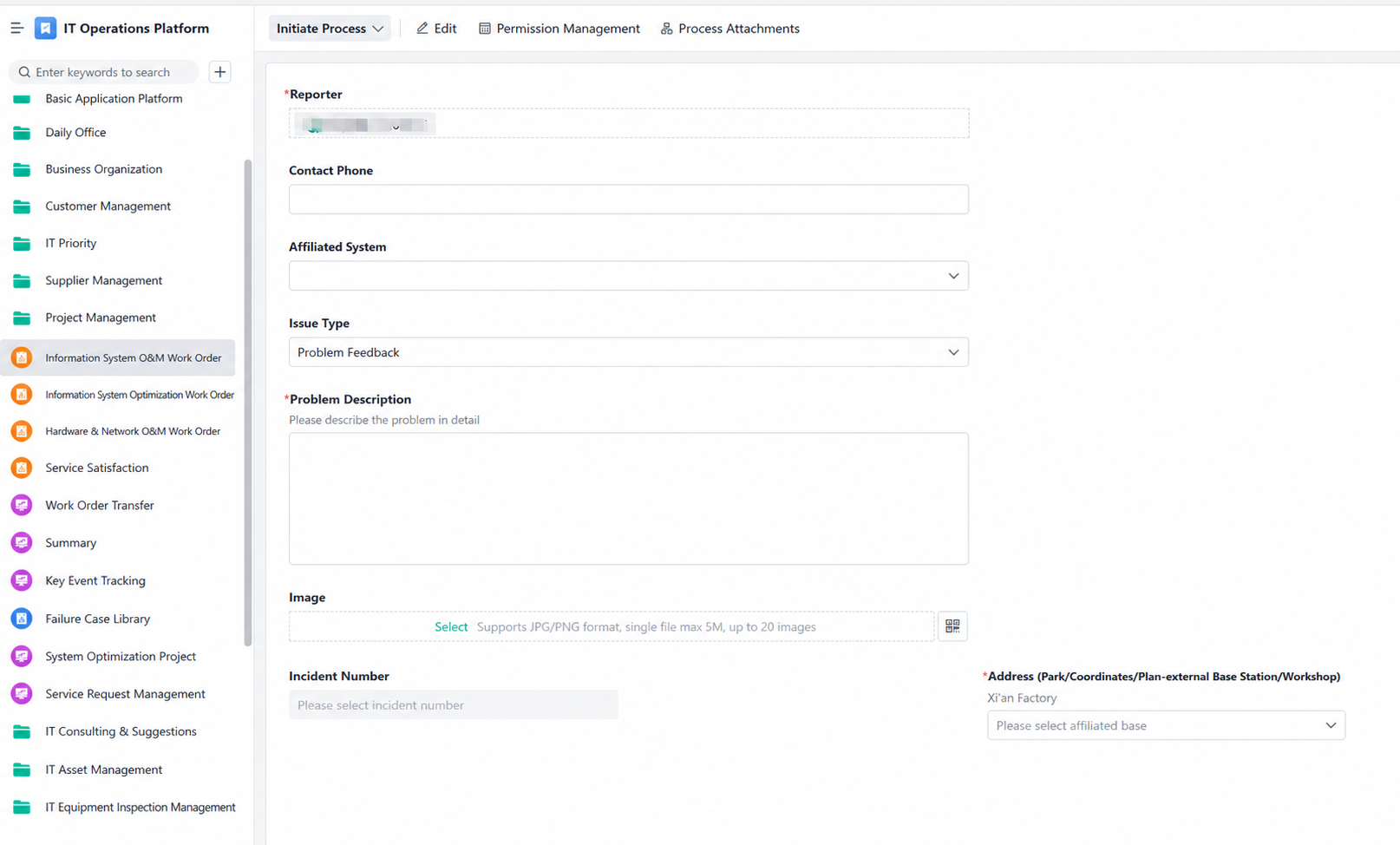
This new platform was built around a few key pillars:
Automated Workflows: The entire lifecycle of an IT work order, from submission to resolution, was digitized. When an employee submitted a request, it was automatically routed to the right person or team. Approvals, escalations, and notifications were all handled by the system, eliminating manual handoffs and delays.
A Centralized Command Center: A real-time dashboard became the single source of truth for the entire IT team. It displayed key metrics like the total number of open tickets, their status (pending, in progress, resolved), and the average time to resolution. This gave managers a clear overview of the workload and helped them allocate resources more effectively.
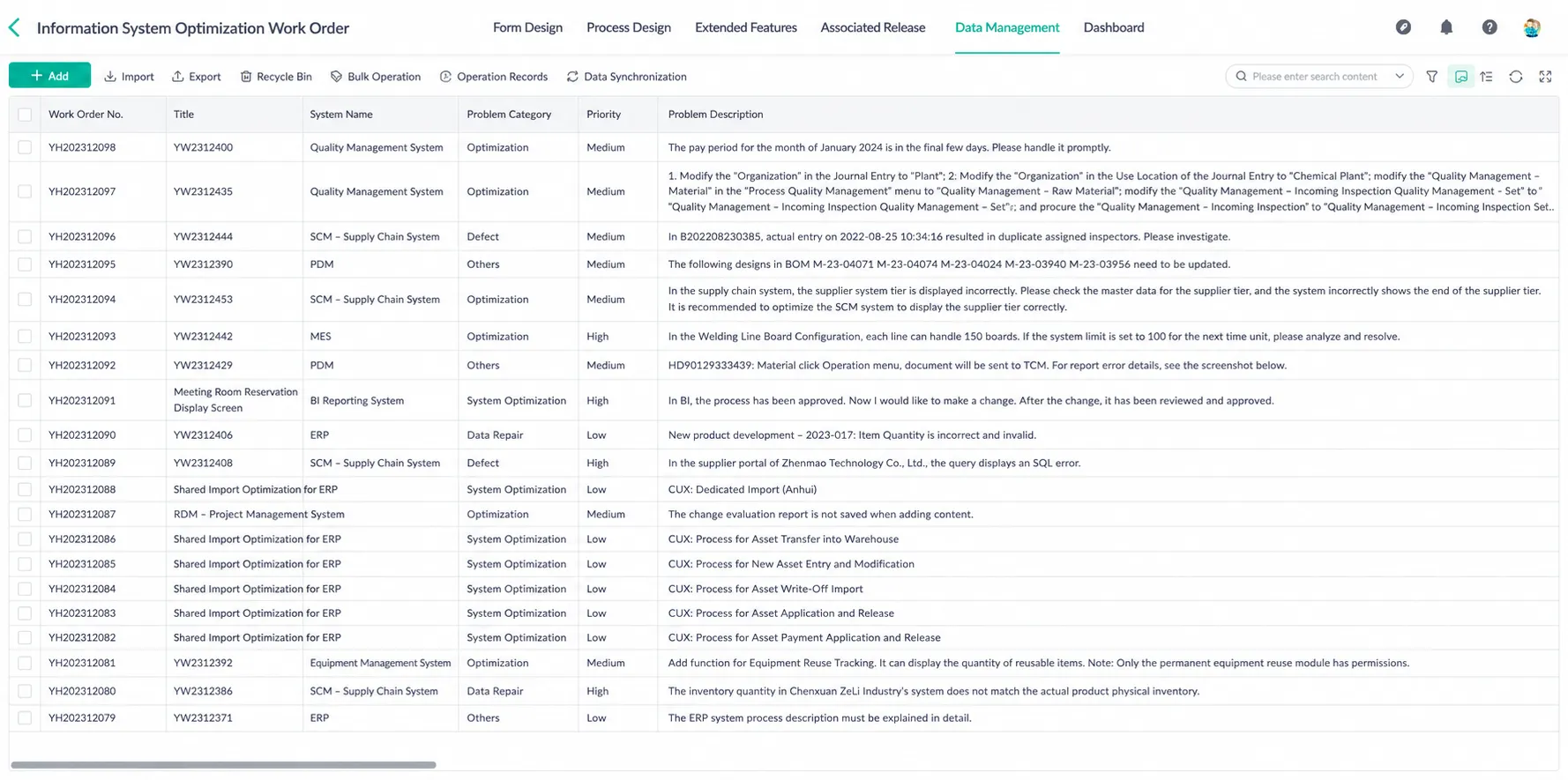
Proactive Monitoring and Alerts: The platform was integrated with third-party monitoring tools. If a critical system showed signs of a problem, an alert was automatically triggered, creating a high-priority ticket and notifying the on-call team before it could impact the business.
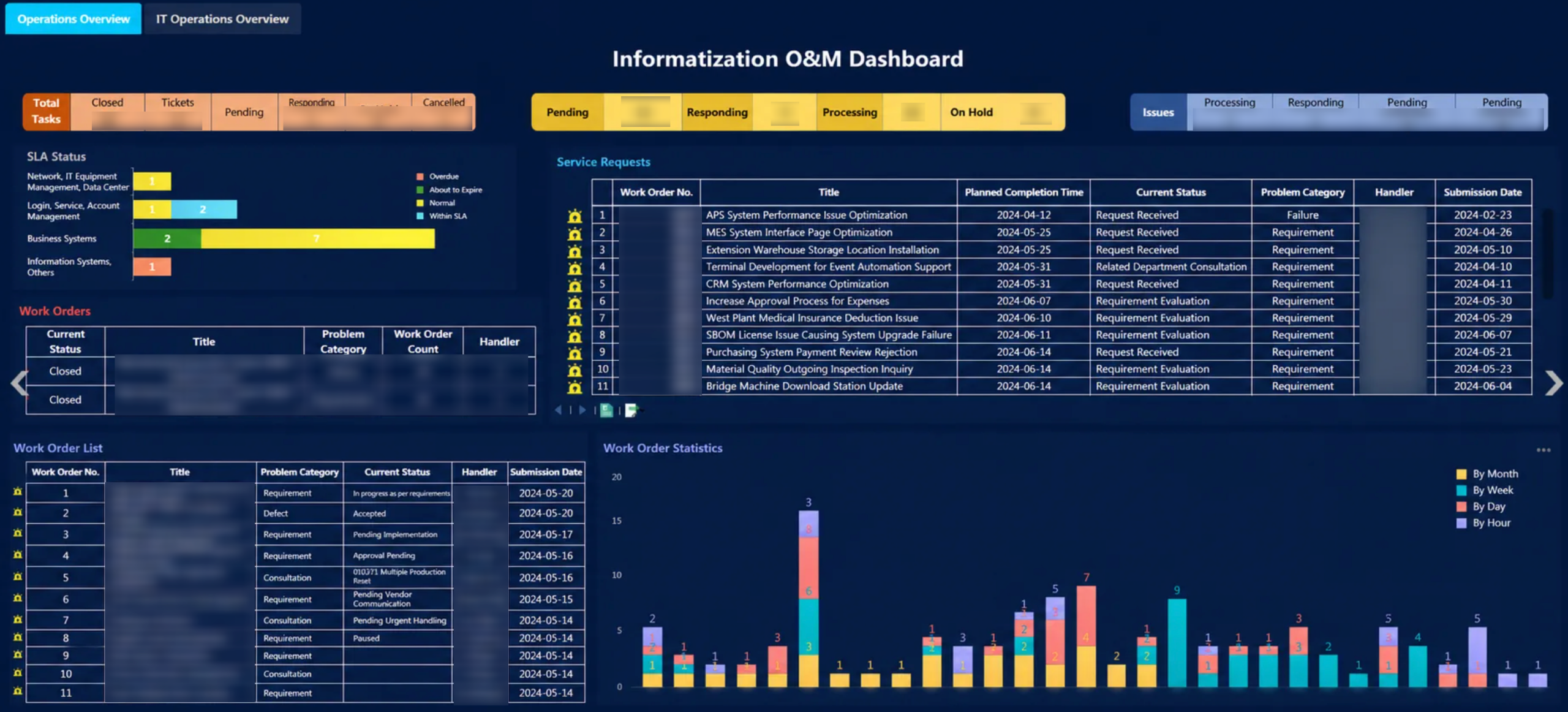
By building this platform, the IT department transformed itself into a lean, agile service provider. They dramatically improved their efficiency and responsiveness, enabling them to better support the digital transformation initiatives happening across the entire organization.
The Results: Data-Driven Wins for a Leaner Enterprise
The shift from manual tracking and opaque processes to real-time, data-driven platforms delivered immediate and significant results. By empowering its teams to solve their own problems, HANDE didn’t just build applications; they built a more efficient, agile, and intelligent manufacturing operation.
| Key Performance Indicator | Before: Traditional IT Support | After: Lean IT Platform |
|---|---|---|
| Issue Resolution Time | Slow, manual handoffs | 50% Faster (MTTR) |
| User Satisfaction | Average | 30% Improvement |
| Implementation Cost | High (custom development) | $ 70,000 Saved |
| Operational Cost | Standard | 15% Annual Savings |
| System Stability | Reactive | 5% of Failures Proactively Prevented |
| Team Focus | Firefighting, administrative tasks | Strategic initiatives, continuous improvement |
A New Level of Clarity on the Production Line
The Production Line Efficiency Loss Monitoring Model was a game-changer. For the first time, managers had a clear, accurate, and real-time view of factory floor performance. This newfound clarity translated into tangible improvements.
While the journey of optimizing production based on this new data is ongoing, the initial impact was profound. Teams could finally have data-driven conversations about performance. Instead of debating what the problems were, they could focus their energy on solving them. The ability to instantly visualize bottlenecks and drill down into the root causes of downtime has laid the foundation for significant future gains in OEE.
Within the first six months of implementation, HANDE AXLE was able to identify and address the top three causes of unplanned downtime at its main assembly plant, leading to a 15% reduction in minor stoppages and a 5% increase in overall production line uptime. This early success has provided a clear roadmap for a factory-wide rollout.
A Lean, Responsive IT Service Engine
The impact of the IT Operations and Maintenance Platform was even more direct and quantifiable. The IT department transformed from a bottleneck into a high-performance service engine, enabling the entire organization to move faster.
Key achievements include:
- Significant Improvement in Efficiency: By automating workflows and providing a centralized platform, the average time to resolve IT issues (MTTR) was cut by 50%.
- Enhanced User Satisfaction: With faster response times and a self-service knowledge base, satisfaction among internal users jumped by 30%.
- Significant Cost Savings: The platform was built and deployed at a fraction of the cost of a traditional software solution, saving an estimated $ 70,000 in initial implementation costs. Furthermore, the increased efficiency and resource optimization led to an annual operational cost saving of around 15%.
- Proactive Problem Prevention: The integrated monitoring and alert system helped the team proactively prevent an estimated 5% of potential system failures, reducing the risk of business disruptions.
By applying lean principles to its own operations, the IT team not only solved its own challenges but also created a powerful template for digital transformation that could be replicated across the entire company.
Future Outlook: Building a Culture of Data-Driven Excellence
The success of these initial projects has ignited a grassroots movement within HANDE. The company has proven that by putting powerful, easy-to-use tools in the hands of its employees, it can unlock a new wave of innovation and efficiency. The journey is far from over; it’s just the beginning.
“Investing in the cultivation and development of data talent, and building a corporate culture with data as its core competitiveness, will be the key to winning a competitive advantage and achieving sustainable development for manufacturing enterprises in the future.”—HANDE AXLE
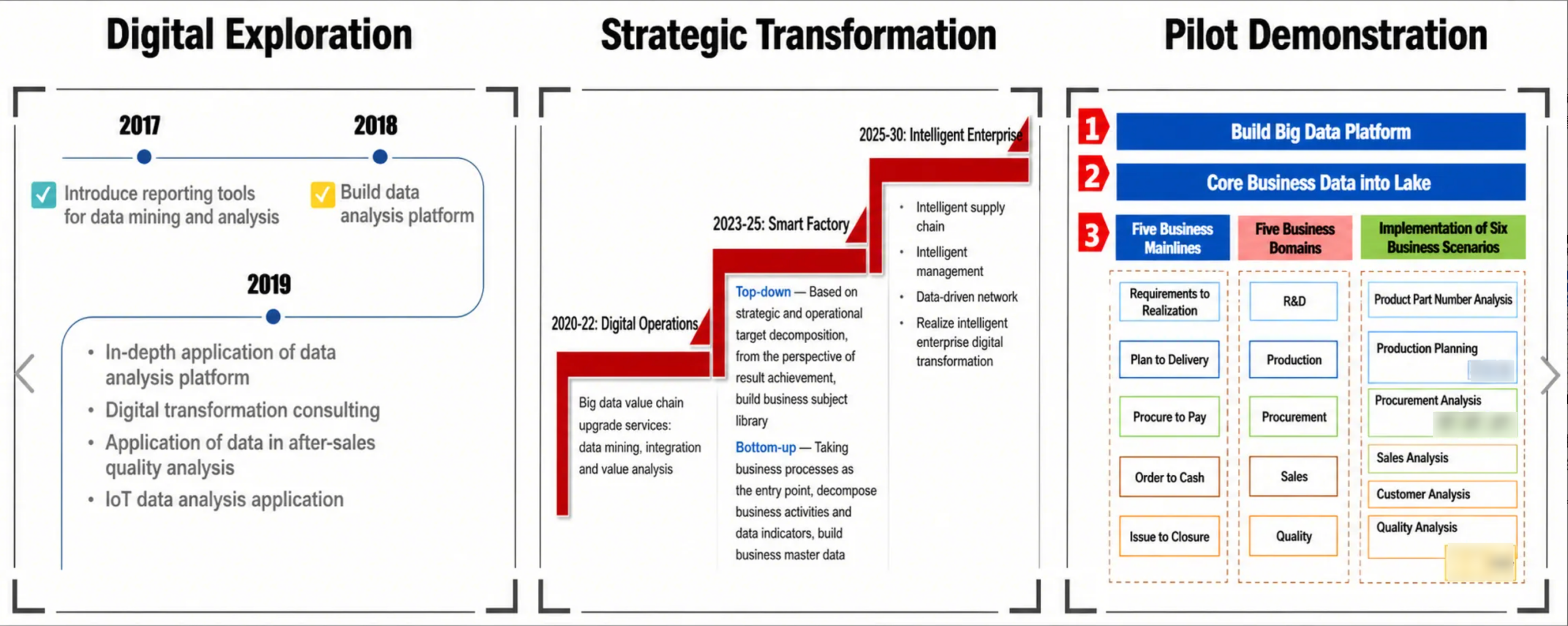
The vision for the future is clear. HANDE plans to expand this citizen-led development model across more departments and business units. The goal is to break down the remaining data silos, connect disparate systems, and create a truly integrated information ecosystem that spans the entire value chain—from R&D and manufacturing to sales and after-sales service.
The success of the production line and IT operations platforms has created a powerful blueprint. The next step is to apply this model to other critical areas, such as equipment qualification management, after-sales parts returns, and third-party contractor management. By continuing to empower its teams to turn data into insights and insights into action, HANDE is not just building a smart factory; it’s building a smarter, more agile, and more competitive organization, ready to lead the future of manufacturing.
Ready to unlock the lean potential in your own operations? Discover how a no-code platform can empower your teams to build the data-driven solutions you need to thrive.
[Request a Demo of Jodoo]